Kathaluwa Poorwarama Viharaya

Kathaluwa Poorwarama Viharaya Kathaluwa Poorwarama Viharaya Kathaluwa Poorwarama Viharaya

Kathaluwa Poorwarama Viharaya is a Buddhist temple located in Kathaluwa village in the Galle District of Sri Lanka. While local traditions suggest its origins date back to the Anuradhapura Period, evidence indicates the temple was established in 1840 by Kathaluwe Gunarathana Thera.

The temple is renowned for its intricate murals housed within the image house. Although the year 1886 is inscribed above the entrance, the style and details of the paintings suggest they were created earlier. The image house features an elevated platform, kabok (laterite) walls plastered with lime mortar, and comprises inner, middle, and outer chambers. A notable feature above the main entrance is the British crest with a portrait of Queen Victoria and the year 1886, possibly indicating a later addition or renovation.

The Poorwarama temple is popular among visitors for its valuable murals housed in the image house. Although the year 1886 A.D. is mentioned above the entrance door to the image house, the technique and the details in the paintings inside indicate that they have been executed much earlier than 1886.

The temple complex is divided into two terraces: the upper terrace houses the stupa, image house, Bodhi tree, belfry, and library, while the lower terrace contains the monks' dwellings.

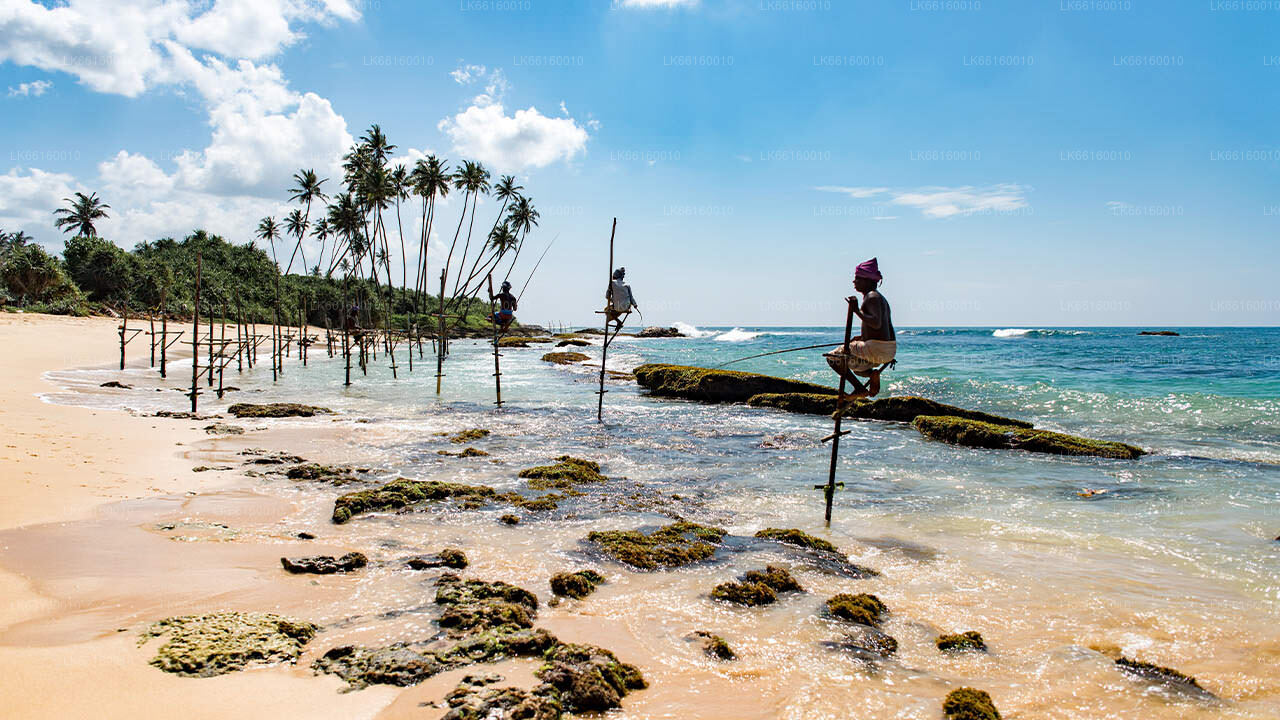
Kathaluwa Poorwarama Viharaya is located near Koggala, a small coastal town situated at the edge of a lagoon on Sri Lanka's south coast. Koggala is known for its long beaches and proximity to attractions such as the Martin Wickramasinghe Folk Museum and traditional stilt fishermen.

Kathaluwa Poorwarama Viharaya Kathaluwa Poorwarama Viharaya Kathaluwa Poorwarama Viharaya

Om Galle-distriktet
Galle er en by beliggende på den sydvestlige spids af Sri Lanka, 119 km fra Colombo. Galle er det bedste eksempel på en befæstet by bygget af europæere i Syd- og Sydøstasien, hvilket viser samspillet mellem europæiske arkitektoniske stilarter og sydasiatiske traditioner. Galle-fortet er et verdensarvssted og den største tilbageværende fæstning i Asien bygget af europæiske besættere.

Galle er det bedste eksempel på en befæstet by bygget af europæere i Syd- og Sydøstasien, hvilket viser samspillet mellem europæiske arkitektoniske stilarter og sydasiatiske traditioner. Galle-fortet er et verdensarvssted og den største tilbageværende fæstning i Asien bygget af europæiske besættere.

Galle er en betydelig by efter srilankanske standarder og har en befolkning på 91.000, hvoraf størstedelen er af singalesisk etnicitet. Der er også et stort srilankansk maurisk mindretal, især i fortområdet, som nedstammer fra arabiske købmænd, der bosatte sig i den gamle havn i Galle.

Om den sydlige provins
Den sydlige provins i Sri Lanka er et lille geografisk område, der består af distrikterne Galle, Matara og Hambantota. Selvforsynende landbrug og fiskeri er den primære indtægtskilde for langt størstedelen af ​​befolkningen i denne region.

Vigtige vartegn i den sydlige provins omfatter naturreservaterne Yala og Udawalawe Nationalparker, den hellige by Kataragama og de gamle byer Tissamaharama, Kirinda og Galle. (Selvom Galle er en gammel by, er der næsten intet bevaret fra før den portugisiske invasion.) I den portugisiske periode var der to berømte singalesiske digtere ved navn Andare, der var fra Dickwella, og Gajaman Nona, der var fra Denipitiya i Matara-distriktet, som komponerede digte om almindelige mennesker.