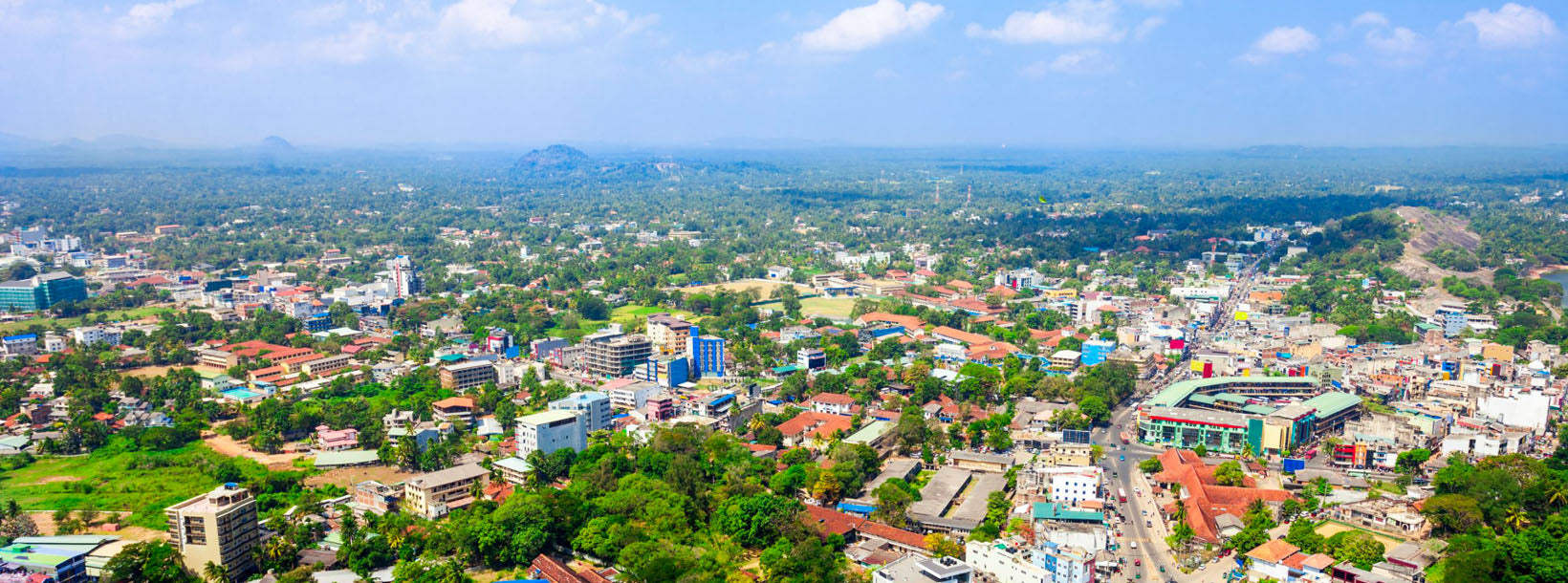
Kurunegala City
Kurunegala: Bustling city in Sri Lanka's North Western Province, featuring historic sites, vibrant markets, and a blend of modern and traditional culture.
Dambadeniya
Dambadeniya (DMBD) je zničené starověké město nacházející se v Severozápadní provincii (Wayamba), Srí Lanka na hlavní silnici Kurunegala–Negombo. Sloužilo jako hlavní město Srí Lanky v polovině 13. století. Velká část Dambadeniya je stále pohřbena na obrovské opevněné skále. Dambadeniya se nachází asi 31 km od Kurunegaly, moderního hlavního města Severozápadní provincie. Dambadeniya leží asi 4 km od Giriully.
Dambadeniya, asi 30 km jihozápadně od Kurunegaly, se stala významnou v polovině 13. století.[1] Byla vybrána jako hlavní město království Srí Lanky králem Vijayabahu III (1232–36). Suverenita země byla ohrožena v důsledku invazí, které vytlačily Polonnaruwa z pozice hlavního města. Vijayabahu, král dynastie Dambadeniya, bojoval proti útočníkům a založil Dambadeniya. Na vrcholu skály Dambadeniya vybudoval opevnění, pevné zdi a brány. Město bylo zabezpečeno příkopem, bažinami a valy kolem královského paláce. Během vlády krále Parakramabahu II (1236–70) dosáhla Dambadeniya vrcholu své slávy. Bezvadná poetická mistrovská díla krále Parakramabahu II "Kavisilumina" a "Visuddi Marga Sannasa" znamenala zlom v sinhálské literatuře. Éra Dambadeniya byla důvodem, proč se sinhálská literatura neomezovala pouze na malby ani nápisy.
O okrese Kurunegala
Kurunegala je okres v Severozápadní provincii na Srí Lance. Skládá se z 4812,7 km² (48 1270 hektarů) a zahrnuje 30 divizních sekretariátů, 1610 divizí Grama Niladari a celkem 4476 vesnic. Skládá se ze 14 volebních divizí, 2 městských rad, 19 městských zastupitelstev, 15 parlamentních ministrů, 47 členů provinční rady, 15 ministrů a 337 členů místních zastupitelstev.
Z hlediska geografické polohy okresu Kurunegala sousedí s pěti okresy. Na severu s okresem Anuradhapura, na východě s okresem Matale, na jihu s Gampahou a okresem Kegalle a na západě s okresem Puttalam. Zeměpisná poloha okresu je severní šířka 228–333 a východní délka 104–178.
About Kurunegala District
Kurunegala is the capital of the Wayamba Province in Sri Lanka and the Kurunegala District.Kurunegala was a royal capital for only 50 years, from the end of the 13th century to the start of the next, though even before this it was strategically placed in the middle of other majestic strongholds such as Yapahuwa to the north, Dambadeniya to the south and Panduwasnuwara in the east. Ethagala a rock reaching 316 meters, towers over the town, which is located at an altitude of 116 meters above sea level. The shape of Ethagala resembles an Elephant. A transport hub, it has a railway station, and several main roads linking important parts of the country.Kurunegala is situated about 94 km from Colombo, and 42 km from Kandy.
Most of Kurunegala's residents belong to the Sinhalese majority. Other ethnic minorities include the Sri Lankan Moors, Sri Lankan Tamils, Burghers and Malays. Residents from ethnic minorities live in all parts of the city, however, sizeable communities of Moors and Tamils also live in the areas of Teliyagonna and Wilgoda.
About North Western Province
North Western Province is a province of Sri Lanka. The districts of Kurunegala and Puttalam formulate North Western or Wayamba. Its capital is Kurunegala, which has a population of 28,571. The province is known mainly for its numerous coconut plantations. Other main towns in this province are Chilaw (24,712) and Puttalam (45,661), which are both small fishing towns. The majority of the population of Wayamba province is of Sinhalese ethnicity. There is also a substantial Sri Lankan Moor minority around Puttalam and Sri Lankan Tamils in Udappu and Munneswaram. Fishing, prawn farming and rubber tree plantations are other prominent industries of the region. The province has an area of 7,888 km² and a population of 2,184,136 (2005 calculation).
Wayamba is the third largest paddy producing area in Sri Lanka .Wayamba has a highly developed agricultural economy, growing a variety of fruits and vegetables, flowering plants, spices, oil-seeds in addition to the traditional plantation crops such as Coconut, Rubber and Rice. Rich soils and varied climate give Wayamba a potential for growing of virtually any crop.
In Wayamba or North western province, home for ancient Buddhist rock temples, magnificent citadels Panduwasnuwara, Dambadeniya, Yapahuwa and Kurunegala. Impressive remains of those citadels, palaces, Buddhist temples and monasteries provide exciting sight seeing to the visitors.