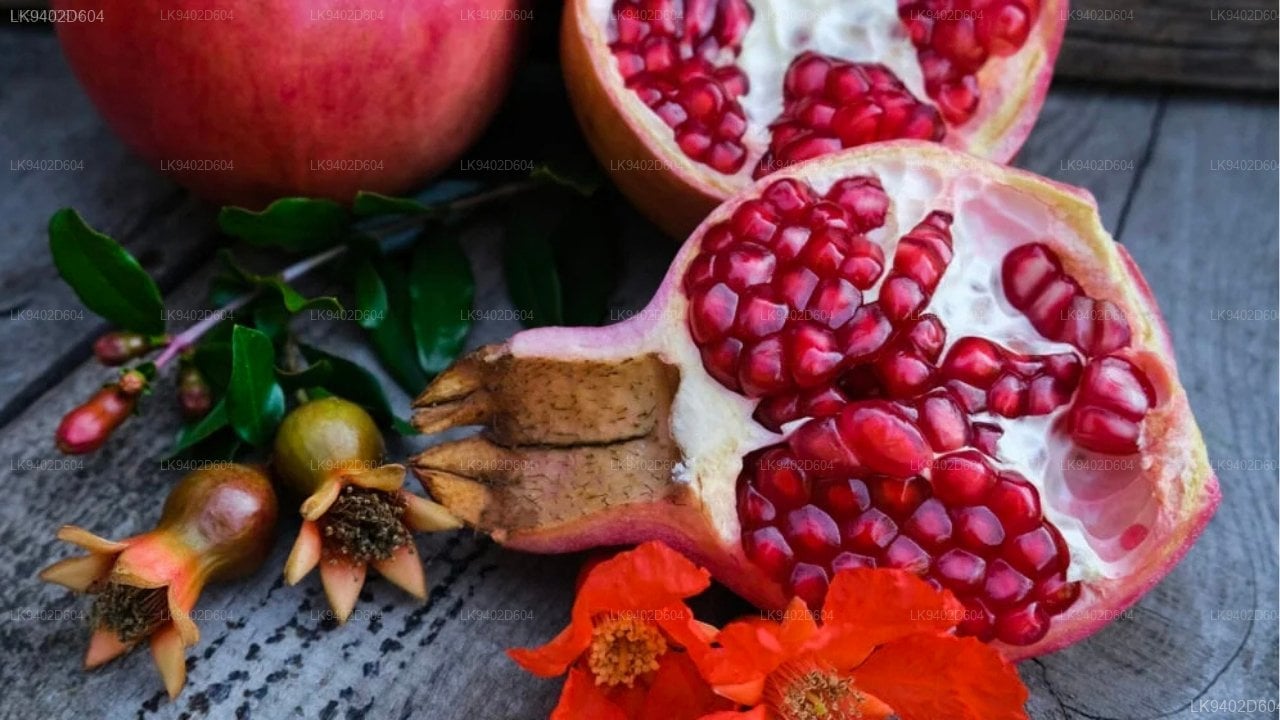
Punica granatum, known in Sinhala as Delum, is one of the oldest cultivated fruits in human history. Native to the region spanning modern-day Iran to northern India, it has been grown across South Asia — including Sri Lanka — for millennia. Today it appears in home gardens, traditional medicine, and increasingly in commercial cultivation across the island's drier zones.
What does the pomegranate plant look like?
The pomegranate is a large shrub or small tree, typically growing between two and three metres tall. It tends to be multi-stemmed with a dense, bushy habit. In Sri Lanka's tropical climate, the plant remains evergreen year-round, whereas in temperate regions it sheds its leaves seasonally.
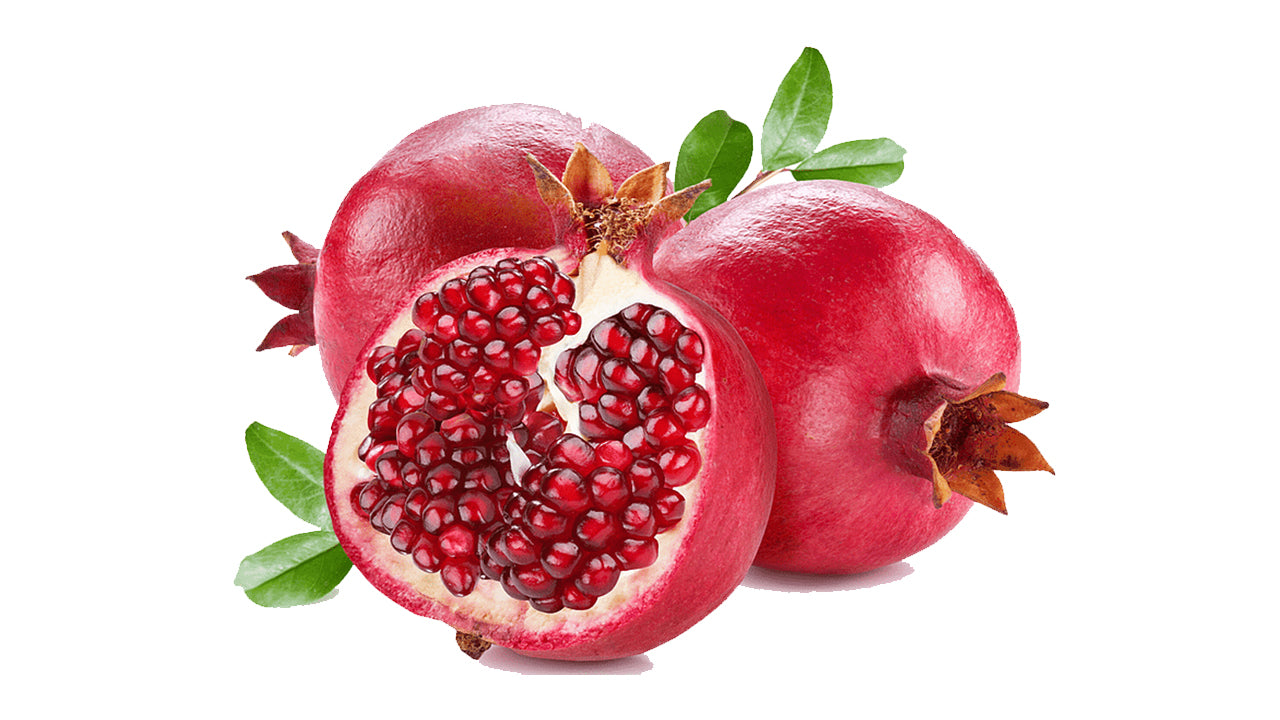
The fruit itself is immediately recognisable: spherical and leathery, ripening to a deep red-brown, and measuring up to around 12 cm across. Inside, yellowish membranes divide the fruit into compartments, each packed with seeds wrapped in juicy, edible pulp known as arils. The vivid scarlet flowers appear before the fruit and are ornamentally striking in their own right.
What are the health benefits of pomegranate?
Modern nutritional science has confirmed what traditional healers observed centuries ago: pomegranate is exceptionally rich in bioactive compounds. The fruit, seeds, flowers, and leaves all contain significant concentrations of polyphenols, tannins, and flavonoids that confer antioxidant, antimicrobial, and anticarcinogenic properties.
- Cardiovascular support: Regular consumption of pomegranate juice has been associated with reduced blood pressure and slower progression of atherosclerosis.
- Blood sugar regulation: The dried rind, ground and taken with water, is a traditional remedy for diabetes management.
- Digestive health: Pomegranate juice is used to treat jaundice and diarrhoea; the dried pericarp, decocted with complementary herbs, addresses colic and dysentery.
- Antiparasitic action: The plant is a recognised Ayurvedic remedy for tapeworm infestation and intestinal worms, using leaves, seeds, and flowers in combination.
- Skin health: Research suggests pomegranate extracts may have potential as active ingredients in formulations targeting skin ageing, particularly in post-menopausal women.
It is worth noting that while these benefits are supported by a growing body of research, pomegranate should complement — not replace — medical treatment for serious conditions.
How is Delum used in Sri Lankan traditional medicine?
Sri Lanka has a long tradition of Ayurvedic formulation, and Delum features in several classical preparations. Nearly every part of the plant has a documented application in indigenous medicine:
- Flowers: Used to treat dysentery, stomach ache, and cough. The juice of the flowers is also applied to stop nosebleeds.
- Leaves: Used alongside seeds and flowers to expel intestinal worms.
- Fruit juice: A traditional remedy for jaundice and diarrhoea.
- Fruit rind (pericarp): Ground dried rind in water is taken by those managing diabetes; decocted with other herbs it addresses leucorrhoea and colic.
- Seeds: Combined with other plant parts for antiparasitic treatments.
These uses align closely with the plant's pharmacological profile and reflect a sophisticated empirical knowledge developed over generations of practice.
Where does pomegranate grow in Sri Lanka?
Delum is well adapted to Sri Lanka's dry and intermediate zones, where lower rainfall and well-drained soils suit the plant's preferences. It appears commonly in home gardens across the North Central, Northern, and Eastern provinces, as well as in drier pockets of the Southern and Uva regions. The plant tolerates drought once established, making it a practical choice for smallholder cultivation.
In areas around the ancient city of Polonnaruwa, where dry-zone agriculture has been practised for over a thousand years, pomegranate trees remain a familiar sight in village gardens. Visitors exploring rural Sri Lanka will frequently encounter the plant fruiting between roughly July and September, though the season can vary with local rainfall patterns.
How is pomegranate used in Sri Lankan cooking?
While Delum is more prominent in medicine than in everyday Sri Lankan cooking, it does appear in the local culinary tradition. The arils are eaten fresh as a snack or added to fruit salads. Pomegranate juice is consumed on its own, sometimes blended with other tropical fruits. In some households, a light sambola — similar in spirit to lunu dehi — is prepared with pomegranate arils, chilli, and onion as a fresh condiment.
The fruit also appears at fruit farms accessible to visitors, where seasonal harvests offer a chance to taste Delum alongside other Sri Lankan produce.
What makes pomegranate an important plant historically?
Pomegranate is referenced in ancient texts across Persian, Greek, Hebrew, and Sanskrit traditions. In Sri Lanka, the plant's long association with healing places it within the Deshiya Chikitsa — the indigenous system of medicine practised alongside Ayurveda. Historical Sinhalese texts and inscriptions at ancient sites reference medicinal gardens that would have included Punica granatum among their cultivars.
The fruit also carries symbolic weight in several cultures. In Buddhist iconography it appears as one of three blessed fruits alongside the wood apple and the mangosteen. This symbolism reinforces its deep cultural embedding in South and Southeast Asian societies.
What skincare products contain pomegranate from Sri Lanka?
Sri Lanka's cosmetics industry has recognised the antioxidant potential of Delum, and pomegranate extract now appears in a range of locally produced skincare and personal-care formulations. Products combining pomegranate with other botanically active ingredients — such as sandalwood — are particularly common, leveraging the fruit's ability to support skin tone and reduce oxidative damage.