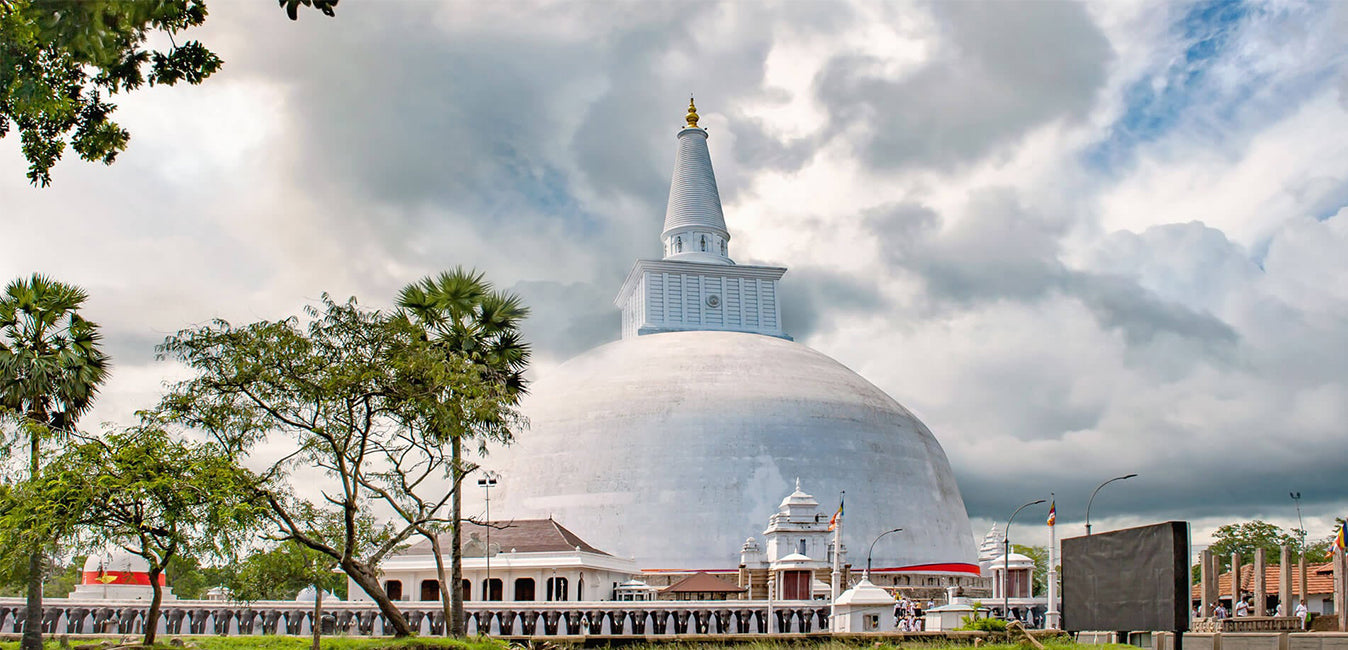
Cidade de Anuradhapura
Anuradhapura pertence à Província Centro-Norte do Sri Lanka. É uma das antigas capitais do Sri Lanka, famosa por suas ruínas bem preservadas da antiga civilização cingalesa. A cidade, agora Patrimônio Mundial da UNESCO, fica 205 km ao norte da atual capital, Colombo, no Sri Lanka.
Medirigiriya Vatadage
Medirigiriya Watadageya in Sri Lanka is a monastery located in the kingdom of Polonaruwa, dating back to over two millennium. The centerpiece or point of interest of the whole monastery is the Medirigiriya Vatadage. It was an architectural masterpiece of those early eras which housed the Stupa completely within it. Only 7 such stupa houses remain today in Sri Lanka.
The earliest references to this monastery were recorded in the 2nd century AD, though many clues point towards an even longer history.
The History
Records during the time of King Kanitta Tissa (AD 192 – 194) of Anuradhapura show that this Vatadage was much worshipped and respected at that time. However the ancient brahmi characters engraved in the bricks and the stone carvings, which pre date carvings found in the other Vatadages, point towards a long history dating from the pre-Christian Era. The monastery was supported by, and was donated to by many kings throughout Sri Lanka’s history. In particular, the stupa which forms the centerpiece of the Vatadage appears to have been built in the time of Aggabodhi I (564 – 598 AD).
The Medirigiriya Watadageya in Sri Lanka was a building supported by three concentric rings of pillars, and housed the stupa completely. The pillars and ruins still stand today.
The Structure
The Medirigiriya Watadageya in Sri Lanka was built on a rocky outcrop. It had a single entrance facing north. The doorway was a huge carved stone frame built at the bottom of a staircase. The frame measured 9.75 feet in height and 4.75 feet in breadth. The doorway was followed by a climb of 27 stone steps to a large resting area. Four steps lead from the resting area to the actual Stupa house. The Stupa House had a low stone wall, about a meter tall, which ran around it. Seated against the wall facing the four cardinal directions were four exquisite stone Buddha statues. There was a huge 33 feet-long sleeping Buddha in the Stupa House. The Stupa reigned in the center.
The stupa was surrounded by stone pillars in three concentric rings. The outer ring had 32 pillars standing at nine feet, the middle ring 20 pillars standing at 16 feet, and finally, the inner ring had 16 pillars standing at 17 feet. Some archaeologists argue that there never was a roof, while other’s say that the remaining pillars in the ruins still standing prove that they supported a roof. The heights of the rings of pillars point toward a roof that would have been very tall in the center to accommodate the spire of the Stupa, while sloping downward in a dome-like fashion to a comparatively lower point at the outer edges.
The ruined but still elegant Medirigiriya Vatadage is a prime example of the advanced stone crafting practiced by the craftsmen of Ceylon throughout the ages.
Other Features
The other features that the Monastery of Medirigiriya once had were the two bathing ponds, a cave with signs of use by the ancient monks, a toilet, a hospital that was quite advanced for its time and a medicine boat made of hard rock shaped to fit any type of body structure. There are also three stone inscriptions still to be seen. Two of them are about the management of the hospital and the provision of food. The third is inscribed in ancient Tamil lettering.
The Medirigiriya Vatadage was rediscovered in the late 1800s.
Abandonment and Present State
Medirigiriya was abandoned after the invasion of Kalinga Magha. Over half a millennium later in 1897, Mr H.C.P Bell rediscovered it during a trek in the jungle and immediately realised its importance. He called it an architectural jewel and had restoration work done on it. The restoration was completed in 1945 and declared open to the
-
Sri Maha BodhiyaJaya Sri Maha Bodhi é uma árvore sagrada bo nos Jardins Mahamewna, em Anuradhapura, Sri Lanka. É o ramo sul da histórica Sri Maha Bodhi em Buddha Gaya, na Índia, sob a qual Buda atingiu a Iluminação. Foi plantada em 288 a.C. e é a árvore viva mais antiga do mundo, plantada pelo homem, com data de plantio conhecida.
-
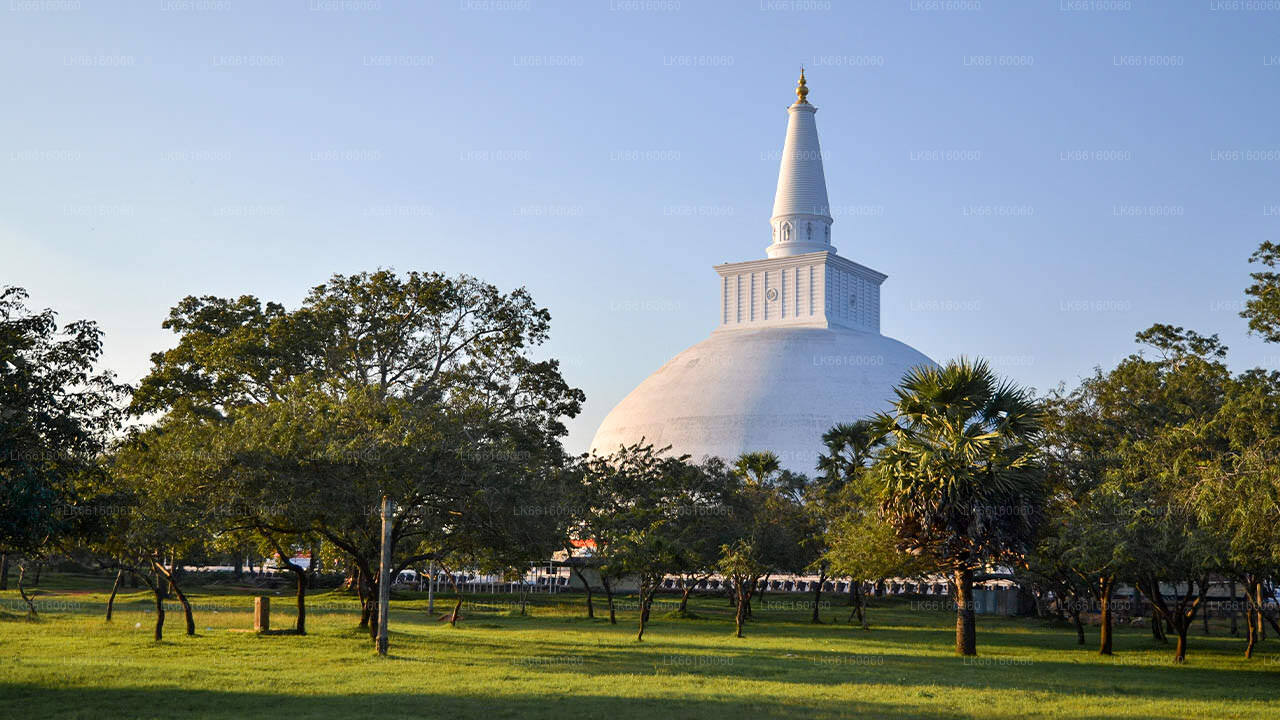
RuwanweliseyaO Ruwanweli Maha Seya, também conhecido como Mahathupa (o Grande Thupa), é um stupa (estrutura hemisférica contendo relíquias) em Anuradhapura, Sri Lanka. Dois quartos ou um Dona das relíquias do Buda estão guardados no stupa, tornando-o a maior coleção de suas relíquias em qualquer lugar. Foi construído pelo rei cingalês Dutugemunu por volta de 140 a.C., que se tornou rei do Sri Lanka após uma guerra na qual o rei chola Elāra (Ellalan) foi derrotado.
-
ThuparamayaThuparamaya é o primeiro templo budista construído após a chegada do mahinda thero (mahindagamanaya) ao Sri Lanka. Localizado na área sagrada do Parque Mahamewna, o Stupa Thuparamaya é o primeiro Dagoba construído na ilha, datando do reinado do Rei Devanampiya Tissa (247-207 a.C.). O templo foi formalmente reconhecido pelo Governo como um sítio arqueológico no Sri Lanka.
-
LovamahapayaLovamahapaya é um edifício situado entre Ruwanweliseya e Sri Mahabodiya, na antiga cidade de Anuradhapura, Sri Lanka. Também é conhecido como Palácio de Bronze ou Lohaprasadaya, pois o telhado era coberto com telhas de bronze. Antigamente, o edifício incluía o refeitório e o uposathagara (casa de Uposatha).
-
Abhayagiri DagobaAbhayagiri Vihāra foi um importante mosteiro de budismo Mahayana, Theravada e Vajrayana, situado em Anuradhapura, Sri Lanka. É uma das maiores ruínas do mundo e uma das cidades de peregrinação budista mais sagradas do país.
-
JetavanaramayaA estupa de Jetavanarama, ou Jetavanaramaya, é uma estupa, ou monumento relicário budista, localizada nas ruínas do mosteiro de Jetavana, na cidade de Anuradhapura, Patrimônio Mundial da UNESCO, no Sri Lanka. Com 122 metros (400 pés), era a estupa mais alta do mundo e a terceira estrutura mais alta do planeta quando foi construída pelo Rei Mahasena de Anuradhapura (273-301).
-
Estupa MirisawetiyaA Estupa Mirisaweti é um edifício memorial, uma estupa, situada na antiga cidade de Anuradhapura, no Sri Lanka. O Rei Dutugamunu (161 a.C. a 137 a.C.) construiu a Estupa Mirisaveti após derrotar o Rei Elara. Após colocar as relíquias do Buda no cetro, ele foi a Tissa Wewa para um banho, deixando o cetro.
-
LankaramaLankarama é uma estupa construída pelo Rei Valagamba, em um local antigo em Galhebakada, no antigo reino de Anuradhapura, Sri Lanka. Nada se sabe sobre a forma antiga da estupa, que foi posteriormente restaurada. As ruínas mostram fileiras de pilares de pedra e não há dúvida de que uma casa foi construída ao redor da estupa (vatadage) para cobri-la.
-
IsurumuniyaIsurumuniya é um templo budista situado perto de Tissa Wewa (tanque de Tisa) em Anuradhapura, Sri Lanka. Há quatro esculturas de especial interesse neste Vihara: "Os Amantes de Isurumuniya", "O Lago dos Elefantes" e "A Família Real". O antigo Meghagiri Vihara ou Meygiri Vihara é atualmente identificado como Isurumuni Vihara.
Sobre o distrito de Anuradhapura
Anuradhapura pertence à Província Centro-Norte do Sri Lanka. Anuradhapura é uma das antigas capitais do Sri Lanka, famosa por suas ruínas bem preservadas da antiga civilização cingalesa. A cidade, agora Patrimônio Mundial da UNESCO, fica 205 km ao norte da atual capital, Colombo, no Sri Lanka. Na cidade sagrada de Anuradhapura e nas proximidades, há um grande número de ruínas. As ruínas consistem em três classes de edifícios: dagobas, edifícios monásticos e pokuna (lagos). A cidade possuía alguns sistemas de supervisão mais complexos do mundo antigo; Situado na zona seca do país, a administração construiu muitos tanques para irrigar a terra. A maioria dos civis é cingalesa, enquanto os tâmeis e mouros do Sri Lanka vivem no distrito.
Sobre a Província Centro-Norte
Província Centro-Norte, que é a maior província do país, cobre 16% da área total do país. A Província Centro-Norte consiste em dois distritos chamados Polonnaruwa e Anuradhapure. Anuradhapura é o maior distrito do Sri Lanka. Sua área é de 7.128 km². A Província Centro-Norte tem vários potenciais para investidores iniciarem seus negócios, especialmente agricultura, agroindústrias e setores pecuários. Mais de 65% da população da Província Centro-Norte depende da agricultura básica e das agroindústrias. O NCP também é chamado de "Wew Bendi Rajje" porque há mais de 3.000 tanques de médio e grande porte situados na província. Sri maha bodiya, Ruwanweli seya, Thuparama dageba, Abayagiri Monastry, Polonnaruwa Rankot wehera, Lankathilake estão assustados