Jaya Sri Maha Bodhiya


Jaya Sri Maha Bodhiya é uma árvore sagrada bo histórica (Ficus religiosa) no Jardim Mahamewuna, na cidade histórica de Anuradhapura, Sri Lanka. Acredita-se que esta árvore tenha crescido a partir de um corte do ramo sul da histórica árvore bo sagrada, Sri Maha Bodhi, que foi destruída durante o reinado do imperador Ashoka, em Buddha Gaya, na Índia, sob a qual Siddhartha Gautama (Buda) alcançou a iluminação. A freira budista Sangamitta Maha Theri, filha do imperador indiano Ashoka, trouxe o corte da árvore para Sri Lanka em 288 a.C., durante o reinado do rei singalês Devanampiya Tissa. Com mais de 2.300 anos, é a árvore mais antiga plantada pelo homem no mundo, com uma data de plantio conhecida. O Mahavamsa, ou a grande crônica dos sinhalês, fornece um relato detalhado sobre o estabelecimento de Jaya Sri Maha Bodhiya na ilha e o subsequente desenvolvimento do local como um importante local de peregrinação budista.
Hoje, Jaya Sri Maha Bodhiya está situada em um alto terraço, cerca de 6,5 metros acima do solo, e rodeada por outras 4 terraplanagens mais baixas com árvores bo chamadas "Parivara Bodhi", plantadas para sua proteção. O local é atualmente administrado pelo principal sacerdote de Atamasthana e pelo Atamasthana Palakasabha, o corpo administrativo de Atamasthana, e recebe milhões de peregrinos todos os anos. O local está aberto para visitantes e continuamente hospeda numerosos atos de adoração ao longo do ano. No entanto, o acesso ao terraço mais alto, onde a árvore bo está localizada, é restrito devido à idade avançada da árvore e aos vários atos de vandalismo que ela sofreu ao longo da história, incluindo um ataque terrorista do LTTE em 1985, onde cerca de 146 peregrinos foram mortos.
História
Jaya Sri Maha Bodhiya é uma árvore sagrada bo, que fica nos Jardins Mahamewna em Anuradhapura, Sri Lanka. Não é apenas o elo vivo mais autêntico com Gautama Buda, mas também a árvore mais antiga plantada pelo homem no mundo, com uma data de plantio conhecida e uma história registrada. Há cerca de 2.600 anos, o Senhor Gautama Buda se sentou com as costas contra uma árvore Esathu (Asvattha) nas margens do rio Neranjana em Bodhgaya, Índia. Foi nesse momento, enquanto ele estava sentado contra a árvore, que se diz que Buda alcançou a iluminação. Ao fazer isso, a árvore também adquiriu status venerado. Ela ficou conhecida como a árvore Bodhi, e os peregrinos vieram vê-la mesmo durante a vida de Buda.
Mais tarde, em 236 a.C., a freira budista Sanghamitta Maha Theri foi enviada pelo imperador Ashoka da Índia para Sri Lanka. Com ela, ela trouxe um ramo sul da árvore figueira sagrada original. Este ramo foi solene apresentado a Devanampiya Tissa, um dos primeiros reis de Sri Lanka, cujo reinado foi notável pela chegada do budismo. Em 288 a.C., Tissa plantou o ramo da árvore Bodhi em seu parque real em Anuradhapura.
Jaya Sri Maha Bodhiya, como passou a ser conhecido, foi desde então cuidado e protegido por monges budistas e reis dedicados. Estátuas, canais de água, dourados


-
 Sri Maha Bodhiya
Jaya Sri Maha Bodhi is a sacred bo tree in the Mahamewna Gardens, Anuradhapura, Sri Lanka. It is the southern branch from the historical Sri Maha Bodhi at Buddha Gaya in India under which Buddha attained Enlightenment. It was planted in 288 BC, and is the oldest living human-planted tree in the world with a known planting date.
-
 Ruwanweliseya
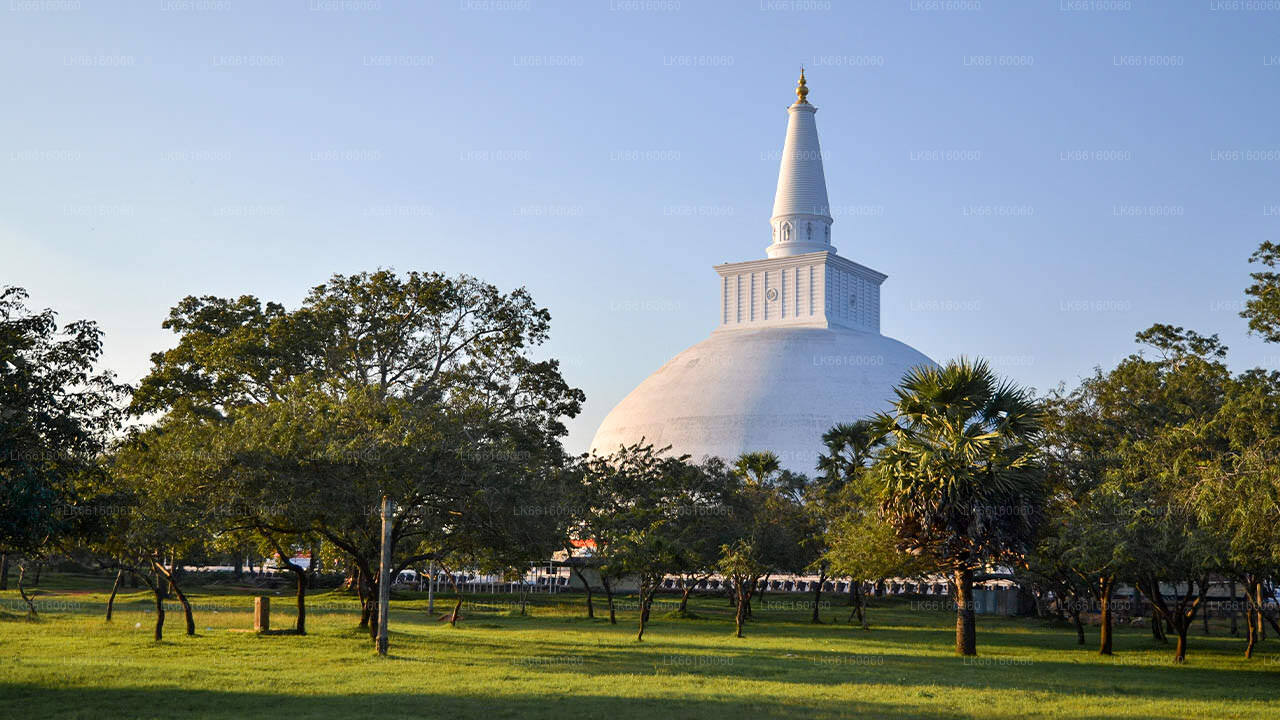
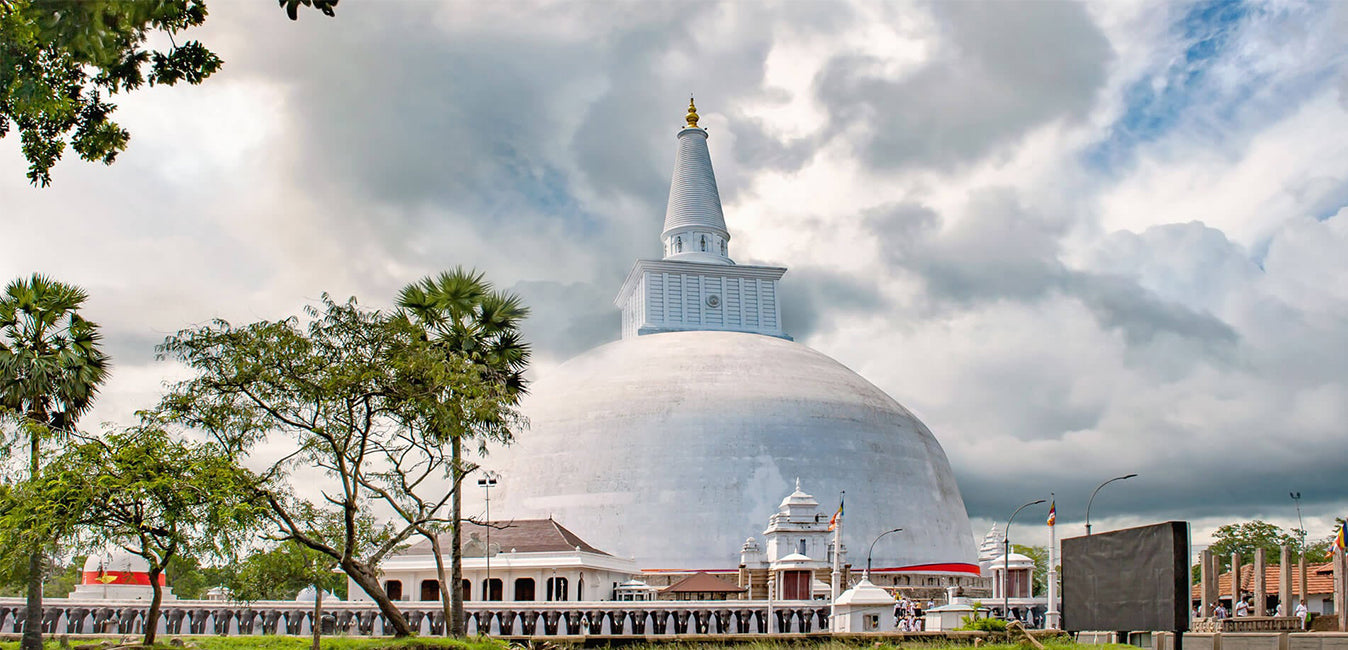
The Ruwanweli Maha Seya, also known as the Mahathupa (the Great Thupa) is a stupa (a hemispherical structure containing relics) in Anuradhapura, Sri Lanka. Two quarts or one Dona of the Buddha's relics are enshrined in the stupa, making it the largest collection of his relics anywhere. It was built by Sinhalese King Dutugemunu in c. 140 B.C., who became king of Sri Lanka after a war in which the Chola King Elāra (Ellalan) was defeated.
-
 Thuparamaya
Thuparamaya is the first Buddhist temple that was constructed, after the arrival of mahinda thero(mahindagamanaya) in Sri Lanka. Located in the sacred area of Mahamewna park, the Thuparamaya Stupa is the earliest Dagoba to be constructed in the island, dating back to the reign of King Devanampiya Tissa (247-207 BC). The temple has been formally recognised by the Government as an archaeological site in Sri Lanka.
-
 Lovamahapaya
Lovamahapaya is a building situated between Ruwanweliseya and Sri Mahabodiya in the ancient city of Anuradhapura, Sri Lanka. It is also known as the Brazen Palace or Lohaprasadaya because the roof was covered with bronze tiles. In ancient times, the building included the refectory and the uposathagara (Uposatha house).
-
 Abhayagiri Stupa
Abhayagiri Vihāra was a major monastery site of Mahayana, Theravada and Vajrayana Buddhism that was situated in Anuradhapura, Sri Lanka. It is one of the most extensive ruins in the world and one of the most sacred Buddhist pilgrimage cities in the nation.
-
 Jetavanaramaya
The Jetavanarama stupa or Jetavanaramaya is a stupa, or Buddhist reliquary monument, located in the ruins of Jetavana monastery in the UNESCO world heritage city of Anuradhapura, Sri Lanka. At 122 metres (400 ft), it was the world's tallest stupa, and the third tallest structure in the world when it was built by King Mahasena of Anuradhapura (273–301).
-
 Mirisawetiya Stupa
The Mirisaweti Stupa is a memorial building, a stupa, situated in the ancient city of Anuradhapura, Sri Lanka. King Dutugamunu (161 BC to 137 BC) built the Mirisaveti Stupa after defeating King Elara. After placing the Buddha relics in the sceptre, he had gone to Tissa Wewa for a bath leaving the sceptre.
-
 Lankarama
Lankarama is a stupa built by King Valagamba, in an ancient place at Galhebakada in the ancient kingdom of Anuradhapura, Sri Lanka. Nothing is known about the ancient form of the stupa, and later this was renovated. The ruins show that there are rows of stone pillars and it is no doubt that there has been a house built encircling the stupa (vatadage) to cover it.
-
 Isurumuniya
Isurumuniya is a Buddhist temple situated near to the Tissa Wewa (Tisa tank) in Anuradhapura, Sri Lanka. There are four carvings of special interest in this Vihara. They are the Isurumuniya Lovers, Elephant Pond and The Royal Family. The ancient Meghagiri Vihara or Meygiri Vihara is presently identified as the Isurumuni Vihara.