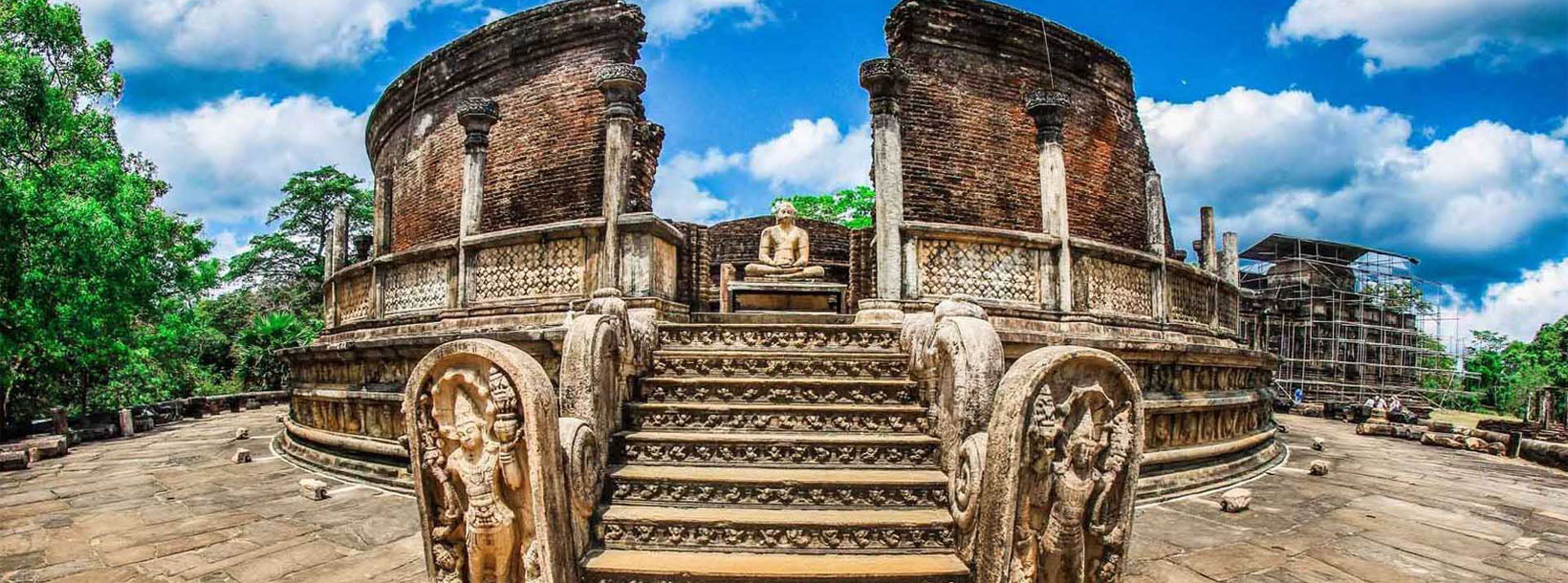
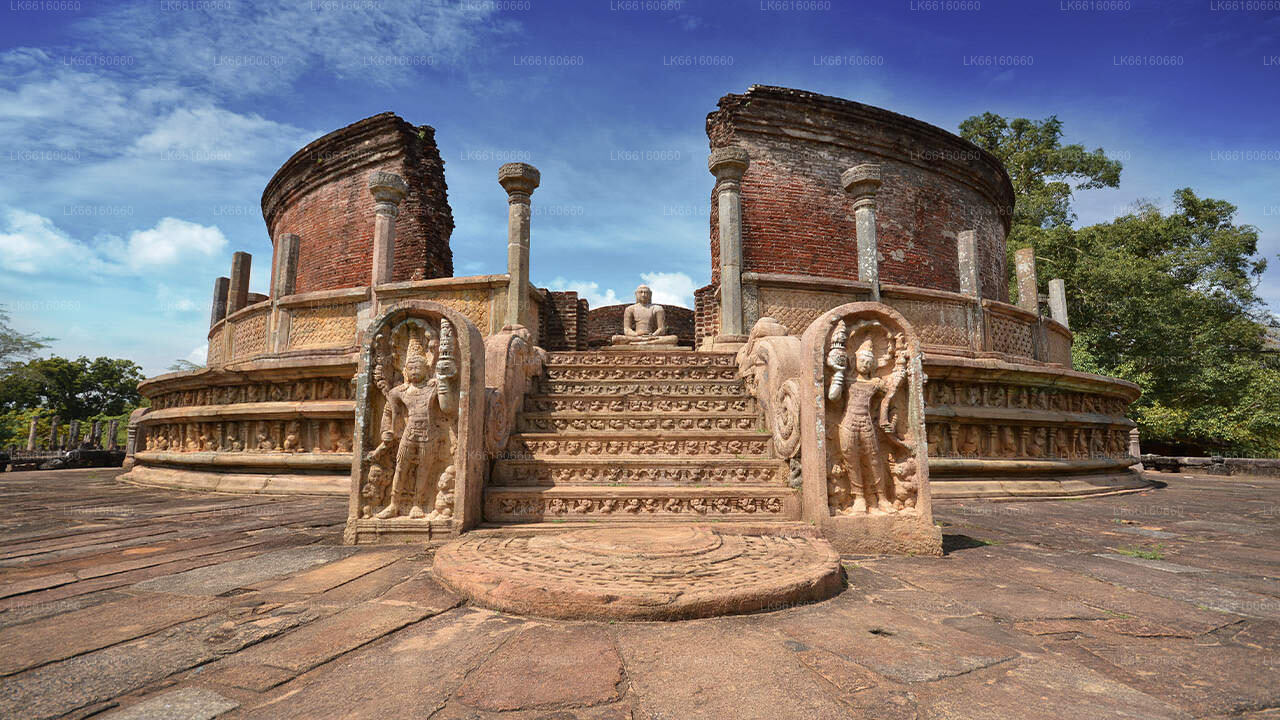
Polonnaruwa, a UNESCO World Heritage Site in Sri Lanka, was the country's medieval capital (11th-13th century). Renowned for its well-preserved ruins, including the iconic Gal Vihara statues, it showcases impressive architecture, reflecting the grandeur of the ancient Sinhalese civilization.
Drugie najstarsze ze wszystkich królestw Sri Lanki, Polonnaruwa, zostało początkowo założone jako posterunek wojskowy przez królestwo Syngalezów. Zostało przemianowane na Jananathamangalam przez dynastię Ćola po ich udanej inwazji na ówczesną stolicę kraju, Anuradhapurę, w X wieku. Starożytne miasto Polonnaruwa zostało ogłoszone miejscem światowego dziedzictwa.
Stare Miasto Polonnaruwa Stare Miasto Polonnaruwa to miejsce, gdzie znajdują się dobrze zachowane ruiny starożytnego miasta Polonnaruwa, miejsca światowego dziedzictwa. Ruiny rozciągają się na dużym obszarze o długości około 4 km z północy na południe. Wśród wielu ruin znajdują się Cytadela, Kwadrant, Gal Vihara (syngaleski: kamienna świątynia) i Lankatilaka, Gal Potha (syngaleski: kamienna księga), Menik oraz Rankoth Viharabuddyjskie sanktuaria, klasztor Alahena Pirivena, Lankatilaka (syngaleski: Ozdoba Lanki), stupa Kiri Vehera, świątynia obrazów Tivanka-patamaghara (buddyjskie sanktuarium) – wszystkie są atrakcjami wartymi odwiedzenia. Na zachód od starożytnego miasta znajduje się przypominające morze sztuczne jezioro Parakrama Samudra (syngaleski: morze Parakramabahu), zbudowane w XIII wieku i odrestaurowane w latach 50. XX wieku.
Muzeum Polonnaruwa Muzeum Polonnaruwa to idealny punkt początkowy do zwiedzania starożytnego miasta Polonnaruwa: imponująca prezentacja w muzeum dostarcza ogromnej wiedzy, która pomaga zrozumieć liczne ruiny – zachowane, odrestaurowane i zrekonstruowane – oraz odnowioną sieć irygacyjną składającą się ze sztucznych zbiorników wodnych i kanałów rozprowadzających wodę do rolniczego dystryktu Polonnaruwa.
Polonnaruwa is the 2nd largest city in north central province in Sri Lanka. The ancient city of Polonnaruwa has been declared a World Heritage site by UNESCO Polonnaruwa has a great history of conquest and struggle behind it and rightfully forms the third element in the Cultural Triangle. Located about 140 kms north east from Kandy,Polonnaruwa offers hours of endless pleasure for history and culture lovers, as there are numerous sights of significance.
Much of the physical ruins standing today are credited to King Parakrama Bahu I who spent many royal resources on town planning, including parks, edifices, irrigation systems and so on. The period of his rule is considered a golden age where the kingdom thrived and prospered under a visionary ruler. The Parakrama Samudra is a mammoth tank and named after its patron. The popular kings Royal Palace, the Audience Hall encircled by beautifully carved stone elephants and the Bathing Pool reflect the superior engineering capabilities of the time.
About North Central Province
North Central Province which is the largest province in the country covered 16% of total country's land area. North Central Province consist two districts called Polonnaruwa and Anuradhapure. Anuradhapura is the largest district in Sri Lanka. Its area is 7,128 km².
North Central Province has numerous potentials for Investors to start their Businesses, especially Agriculture, agro based industries and Livestock sectors. More than 65% of North Central Province's people depend on basic Agriculture and agro base industries. NCP also called "Wew Bendi Rajje" because there are more than 3,000 medium and large scale tanks situated in the province. Sri maha bodiya, Ruwanweli seya, Thuparama dageba, Abayagiri Monastry, PolonnaruwaRankot wehera, Lankathilake are scared