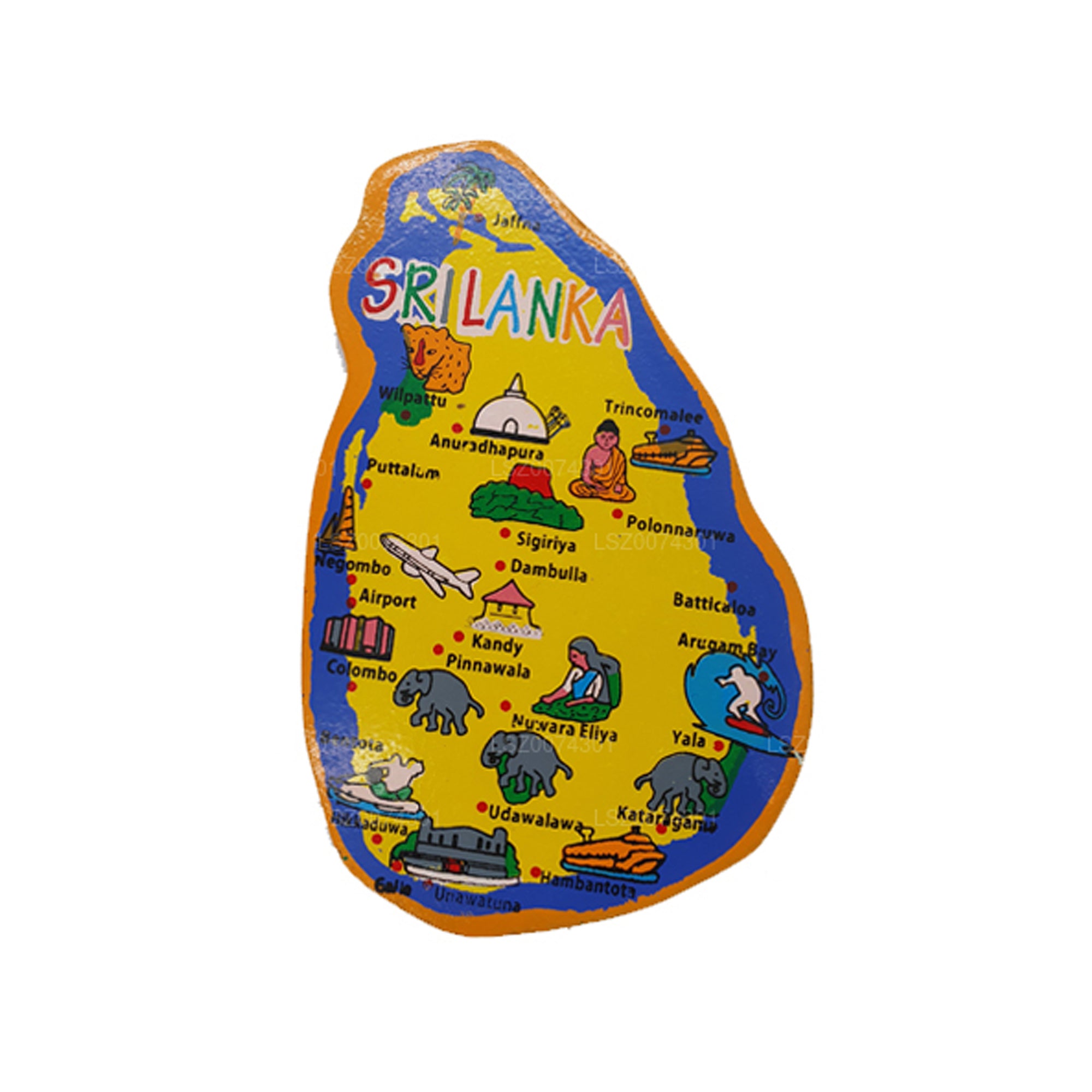
Sri Lanka's North Central Province is the country's largest province, covering around 10,714 km² of the dry zone interior. It encompasses two administrative districts — Anuradhapura and Polonnaruwa — and holds more UNESCO World Heritage Sites than any other province in the country. For travellers drawn to living history, ancient hydraulic engineering, and significant Buddhist pilgrimage sites, this province is unmatched on the island.
What makes North Central Province historically significant?
The province sits at the heart of ancient Sinhalese civilisation. From roughly the 4th century BC through to the early 11th century AD, Anuradhapura served as the capital of Sri Lanka — one of the longest-running urban centres in the entire South Asian region. Polonnaruwa then succeeded it as the island's capital, reaching its own peak of artistic and agricultural achievement during the 12th century. Together, these two cities preserve a sweep of more than 1,500 years of royal history, religious architecture, and sophisticated civil engineering.
Much of what made this region prosperous was water. The ancient rulers of the province built an extraordinary network of reservoirs, irrigation canals, and tank systems that transformed the dry zone into fertile paddy land. Several of those systems remain in active use today, quietly feeding rice paddies across the north-central plains.
What can you see in Anuradhapura?
Anuradhapura, the provincial capital, lies around 205 km north of Colombo. It is one of the oldest continuously inhabited cities in the world and holds a deeply sacred place in Theravada Buddhism. The city is surrounded by a broad spread of ancient monasteries, dagobas, and tank systems that together form a designated UNESCO World Heritage Site.
The Sri Maha Bodhi — a fig tree said to have been grown from a cutting of the original Bodhi tree under which the Buddha attained enlightenment — is among the most venerated religious objects in the Buddhist world and draws pilgrims throughout the year. Close by stands the Ruwanweliseya, a great white dagoba commissioned by King Dutugamunu in the 2nd century BC, its hemispherical dome still rising impressively above the plain.
Other major structures in the sacred city include:
- Thuparamaya — considered the first dagoba built in Sri Lanka after the arrival of Buddhism
- Abhayagiri Dagoba — once one of the tallest structures in the ancient world
- Jetavanaramaya — another colossal brick dagoba, among the largest ancient brick structures on earth
- Lovamahapaya (the Brazen Palace) — whose stone pillars still mark the outline of a multi-storey monastic complex
- Kuttam Pokuna — a pair of twin bathing ponds demonstrating the precision of ancient construction
- Isurumuniya — a rock temple with richly carved friezes, including the celebrated "Lovers" relief
- Samadhi Statue — a graceful 4th-century seated Buddha carved in crystalline limestone
The twin reservoirs of Nuwara Wewa and Tissa Wewa frame the city to the east and south, and their shorelines offer calm, early-morning walks away from the main pilgrimage crowds.
King Pandukabhaya formally laid out Anuradhapura in the 4th century BC with a structured plan of city gates, residential quarters, and trading areas. His son Mutasiva later established the Mahameghavana Garden, the very grove where the Indian emperor Ashoka's son Mahinda is said to have introduced Buddhism to Sri Lanka — making it one of the most consequential green spaces in Asian religious history.
What can you see in Polonnaruwa?
Polonnaruwa became the island's capital in 1070 AD when King Vijayabahu I drove out the Chola occupiers and reunited the kingdom. The city reached its zenith under his grandson, King Parakramabahu I, whose reign in the 12th century is regarded by historians as the Golden Age of Polonnaruwa. Trade flourished, and Parakramabahu's conviction that not a drop of rain should be wasted without serving human need drove the construction of irrigation infrastructure that surpassed anything built during the Anuradhapura era.
The ruins of the ancient city occupy a compact, remarkably well-preserved area on the western shore of Parakrama Samudraya — a vast reservoir constructed around the 12th century that still irrigates surrounding farmland today. A rectangular city wall encloses a cluster of palaces, audience halls, temples, and monastic enclosures.
Key sites within the ancient city include:
- Gal Viharaya — four monumental rock-cut Buddha sculptures, including a 14-metre standing figure and a 14-metre reclining figure, carved directly into a single granite face at the command of Parakramabahu I
- Lankatilaka Temple — a tall, roofless brick shrine with imposing walls and a headless standing Buddha
- Thuparamaya — a compact, intact vatadage (circular relic house) with decorative stone columns
- Nissanka Latha Mandapaya — a unique lotus-pillared pavilion used for ceremonial assemblies
- Palace of Parakramabahu — whose seven-storey foundations and audience hall remain among the best-preserved royal structures in the country
- Pothgul Vehera — a library complex near the lakeside, close to the Statue of Pulasthi (sometimes attributed to Parakramabahu himself)
- Medirigiriya Vatadage — a circular relic shrine located around 30 km north of the city, notable for its three concentric rings of stone columns
Polonnaruwa's decline came swiftly. After Parakramabahu I, few of his successors maintained the same administrative grip, and the city fell to the Kalinga king Magha's invasion in 1214, eventually ceding political authority to rulers of the south. The UNESCO-listed ancient city has since been carefully excavated and is today one of the most legible archaeological sites in South Asia.
When is the best time to visit North Central Province?
The province lies in Sri Lanka's dry zone, which means it receives less rainfall than the hill country or the southwest coast. The most comfortable period to visit is between May and September, when the northeast monsoon has passed and temperatures, while warm, are manageable in the mornings and evenings. December through February can also be pleasant, though slightly more humid.
The province's stupa and dagoba sites are active places of pilgrimage, meaning dawn and dusk visits coincide with local religious observance and offer a quieter, more atmospheric experience than midday. Bring light cotton clothing, comfortable walking shoes (visitors remove footwear at most sacred sites), and sun protection.
How do I get to North Central Province from Colombo?
Anuradhapura is around 205 km from Colombo by road, typically a three-and-a-half to four-and-a-half hour drive depending on traffic. A direct train service also runs from Colombo Fort station; the intercity express is the fastest option and the journey offers views of the changing landscape as you move from the wet zone into the dry plains. Polonnaruwa lies approximately 215 km from Colombo and is also accessible by train and road.
Many visitors to the province base themselves in or near Anuradhapura for two to three nights, then travel to Polonnaruwa before continuing to the Cultural Triangle sites further south, such as Sigiriya. The province can also be approached from the north as part of a longer circuit that includes Sri Lanka's Northern Province.
What wildlife can be found in or near North Central Province?
The province borders Wilpattu National Park to the west, Sri Lanka's largest national park by area and one of the best places in the country to observe leopards in a relatively undisturbed habitat. The park's distinctive villus — shallow natural basins that fill with water during the rains — attract elephants, spotted deer, and waterbirds in notable numbers.
Within the province itself, wild elephants are a genuine presence in the scrub forest and along the margins of ancient tank systems. Birdwatchers will find the large irrigation reservoirs rewarding, particularly during the northern migratory season from October to March when waders and waterfowl gather in significant concentrations.
What else should travellers know about the province?
The North Central Province is a place of active religious and agricultural life, not simply a heritage zone. Pilgrims visit Anuradhapura's sacred sites every day, and the city follows conventions around dress codes and behaviour at religious sites that visitors are expected to respect: covered shoulders and legs, and shoes removed before entering shrine areas. Photography inside certain inner sanctuaries may be restricted.
The province also retains its identity as a rice-growing heartland. Paddy fields spread across the flatlands between the ancient tanks, and the rhythm of cultivation — planting after the rains, harvesting in the dry months — continues much as it has for two millennia. Travelling through the province outside the main sites gives a real sense of how the ancient hydraulic landscape continues to function as a living system.