Tissa Wewa (තිස්ස වැව)


Tissa wewa (also known as Tissa Wewa, Tissamaharama Lake, Tissa Wapi) is yet another destination for tourists to gain relaxation and knowledge for both physical and mental. It is a symbol of Ancient Irrigation systems of Sri lanka. And also it is one of the men made reservoirs in Anuradhapura other than Basawakkulama (Abhayagiri wewa) and Nuwara wewa. Only Abhaya wewa and Panda wewa is regarded as older than this. It is built by King Devanam Piyathissa (150-210 B.C), the predecessor of establishing Buddhism in Sri Lankan Civilization in the 3rd century. The bunt is about 11000 feet in distance and 25 feet in depth.Tisa wewa covers an area about 550 acres. Mahawansa reveals that the great King Dutugemunu went to Tissa wewa to make the rituals and observed traditions bounded with water before getting accession to the throne after defeating brutal Dravidian King Elara. The lake is located in the south west of the Anuradhapura city.
This Large irrigation system was fallen into obsolescence. But it was repaired several times even by the British government. As prescribed in H.Parker's reports, he says that the bunt has been built thickly in its original state and It may not need a maintaining. As a matter of fact, The Tissa Wewa still serves the Anuradhapura area. By the way, the Ancient Bisokotuwa made of stones was embedded with concrete. Tissa wewa was nourished with the water gained from Kala wewa. The water was supplied through the Canal, Yodha Ela. Yodha Ela is also a great creation of our ancient architectures. The architects knew that the speed of water in canals may decrease if it is moved into a zigzag shaped canal.
Thereby they used this theory to supply water for low land areas. The canals were capable of covering whole the Dry zone areas in Anuradhapura. They considered of a research to elect a suitable place to built Tissa wewa by King Devanam piya tissa. It was done under several objectives. Congruent Geographical features to imbibe water from the earth, collect and secure water from natural water resources, easier to build the dam of the tank and adjustability to face earthquakes or inundation were thoroughly considered. Thus ancient rural life style of Sri Lankans was deeply attached with watery civilization. Kings paid their utmost attention to maintain and develop the tanks, lakes and water reservoirs. They never let the people waste a single drop of water.


-
 Sri Maha Bodhiya
Jaya Sri Maha Bodhi is a sacred bo tree in the Mahamewna Gardens, Anuradhapura, Sri Lanka. It is the southern branch from the historical Sri Maha Bodhi at Buddha Gaya in India under which Buddha attained Enlightenment. It was planted in 288 BC, and is the oldest living human-planted tree in the world with a known planting date.
-
 Ruwanweliseya
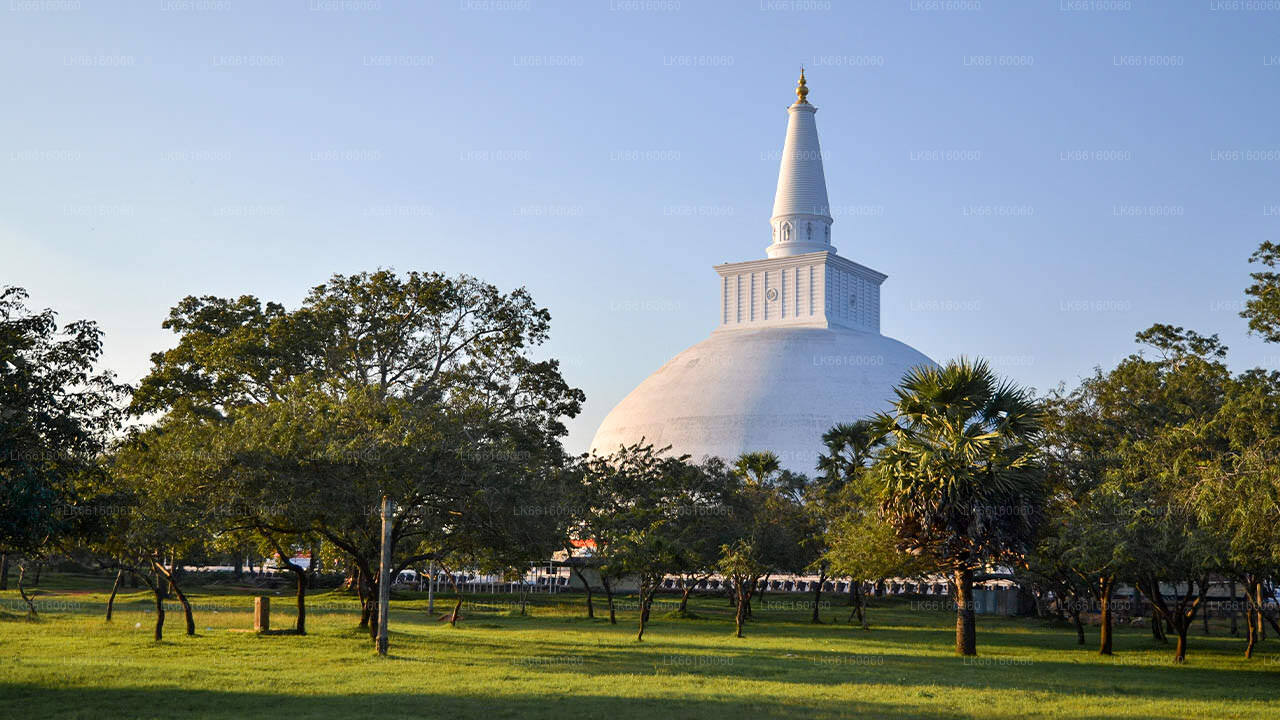
The Ruwanweli Maha Seya, also known as the Mahathupa (the Great Thupa) is a stupa (a hemispherical structure containing relics) in Anuradhapura, Sri Lanka. Two quarts or one Dona of the Buddha's relics are enshrined in the stupa, making it the largest collection of his relics anywhere. It was built by Sinhalese King Dutugemunu in c. 140 B.C., who became king of Sri Lanka after a war in which the Chola King Elāra (Ellalan) was defeated.
-
 Thuparamaya
Thuparamaya is the first Buddhist temple that was constructed, after the arrival of mahinda thero(mahindagamanaya) in Sri Lanka. Located in the sacred area of Mahamewna park, the Thuparamaya Stupa is the earliest Dagoba to be constructed in the island, dating back to the reign of King Devanampiya Tissa (247-207 BC). The temple has been formally recognised by the Government as an archaeological site in Sri Lanka.
-
 Lovamahapaya
Lovamahapaya is a building situated between Ruwanweliseya and Sri Mahabodiya in the ancient city of Anuradhapura, Sri Lanka. It is also known as the Brazen Palace or Lohaprasadaya because the roof was covered with bronze tiles. In ancient times, the building included the refectory and the uposathagara (Uposatha house).
-
 Abhayagiri Stupa
Abhayagiri Vihāra was a major monastery site of Mahayana, Theravada and Vajrayana Buddhism that was situated in Anuradhapura, Sri Lanka. It is one of the most extensive ruins in the world and one of the most sacred Buddhist pilgrimage cities in the nation.
-
 Jetavanaramaya
The Jetavanarama stupa or Jetavanaramaya is a stupa, or Buddhist reliquary monument, located in the ruins of Jetavana monastery in the UNESCO world heritage city of Anuradhapura, Sri Lanka. At 122 metres (400 ft), it was the world's tallest stupa, and the third tallest structure in the world when it was built by King Mahasena of Anuradhapura (273–301).
-
 Mirisawetiya Stupa
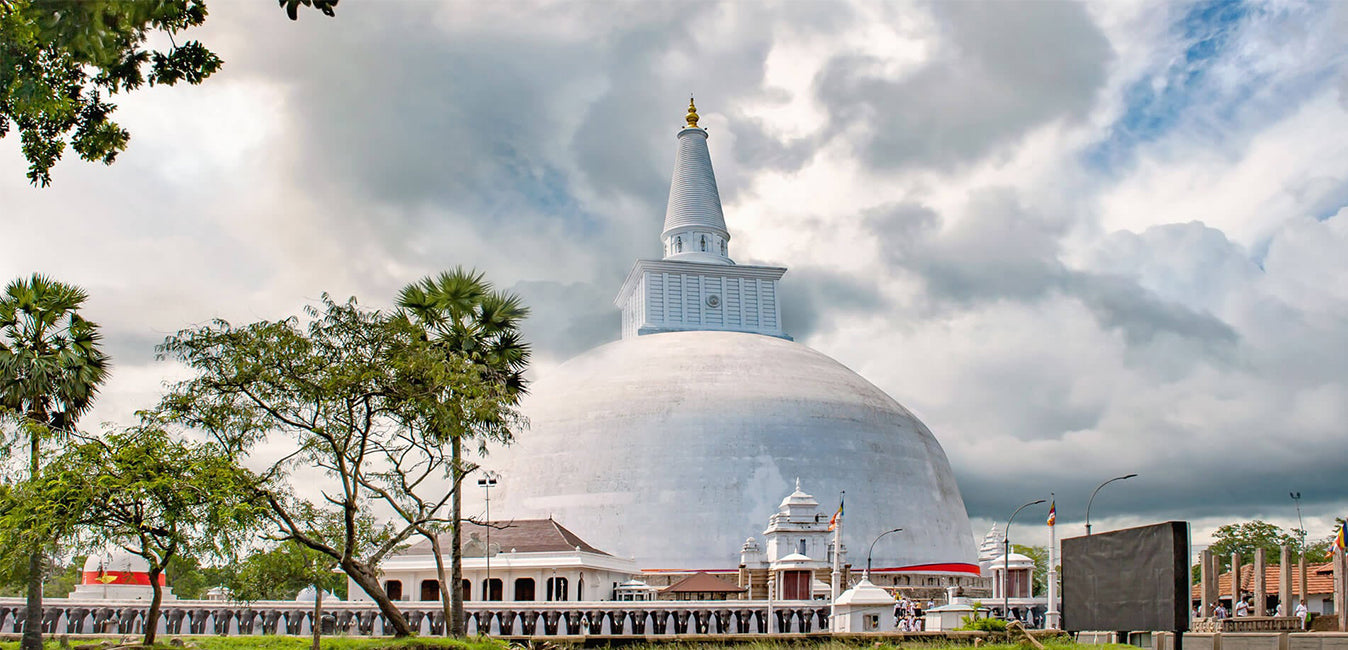
The Mirisaweti Stupa is a memorial building, a stupa, situated in the ancient city of Anuradhapura, Sri Lanka. King Dutugamunu (161 BC to 137 BC) built the Mirisaveti Stupa after defeating King Elara. After placing the Buddha relics in the sceptre, he had gone to Tissa Wewa for a bath leaving the sceptre.
-
 Lankarama
Lankarama is a stupa built by King Valagamba, in an ancient place at Galhebakada in the ancient kingdom of Anuradhapura, Sri Lanka. Nothing is known about the ancient form of the stupa, and later this was renovated. The ruins show that there are rows of stone pillars and it is no doubt that there has been a house built encircling the stupa (vatadage) to cover it.
-
 Isurumuniya
Isurumuniya is a Buddhist temple situated near to the Tissa Wewa (Tisa tank) in Anuradhapura, Sri Lanka. There are four carvings of special interest in this Vihara. They are the Isurumuniya Lovers, Elephant Pond and The Royal Family. The ancient Meghagiri Vihara or Meygiri Vihara is presently identified as the Isurumuni Vihara.