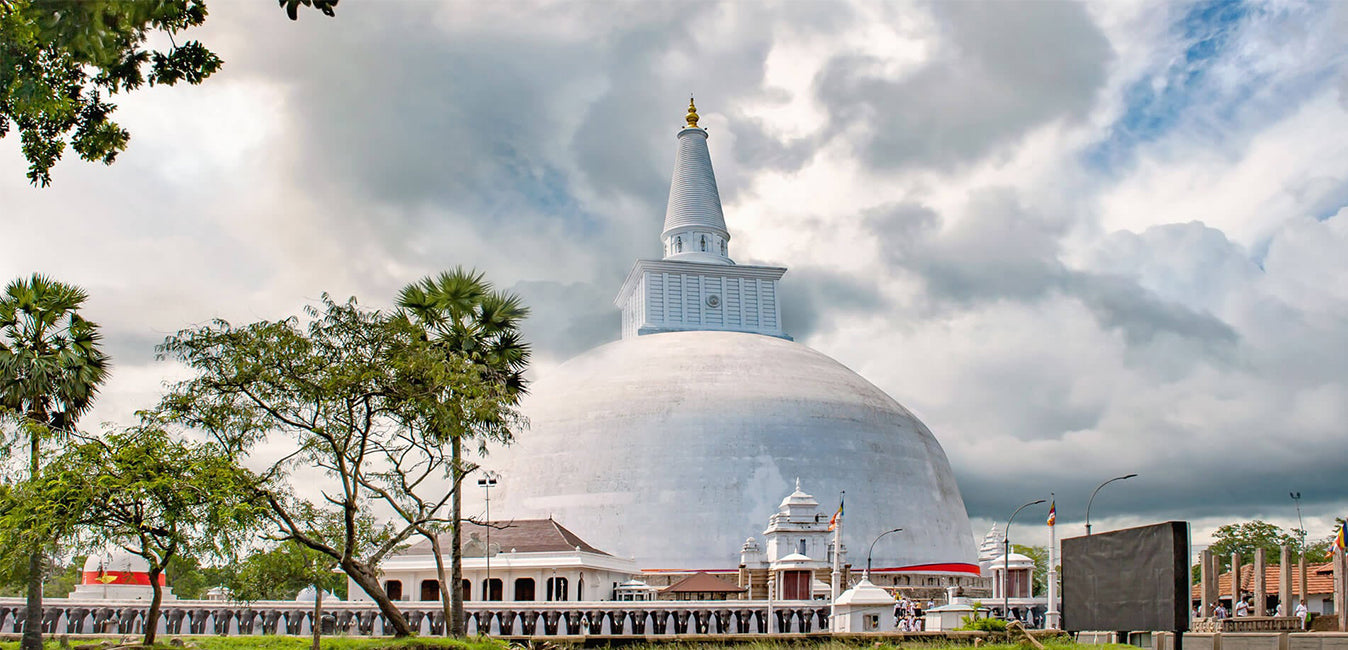
Abhayagiri Monastery


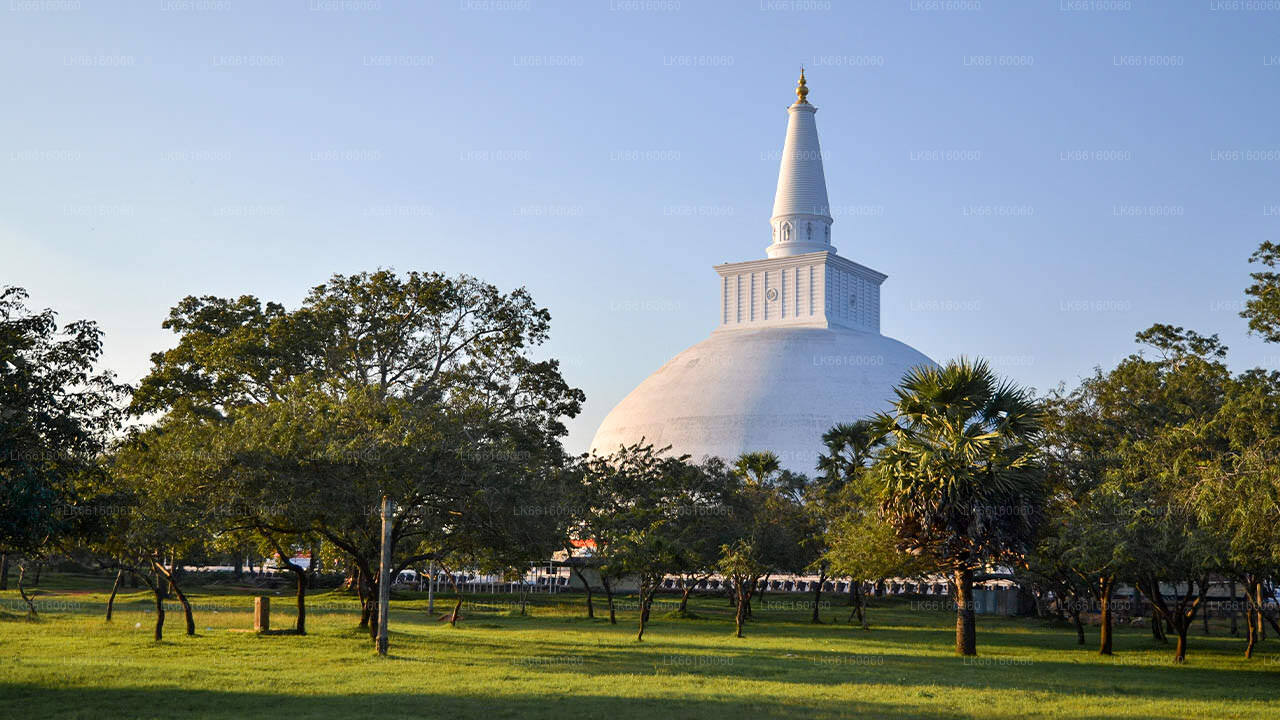
Abhayagiri Monastery in Sri Lanka, Anuradhapura established in the second century B.C., by King Valagamabau, during its glorious days, was not only complex of monastic buildings but also a great seat of learning. Unlike orthodox Mahavihara monastery, Abhayagiri Monastery accommodated the intellectual discussion on various schools of Buddhist thought in addition to Theravada Buddhism, considered as the pure words of Buddha. The center of attraction of the monastery was Abhayagiri stupa, the second tallest stupa at Anuradhapura, also built by King Valagambahu (89-77 BC).
In the 5th century, the Chinese monk Fa-Hsien visited Abhayagiri, the flourishing center of Buddhist studies. The monk lived 2 years at Abhayagiri Monastery copying Buddhist texts and took all copies to China. Fa-Hsien also made written records of his life and times at Abhayagiri Monastery. In his memoirs, he wrote about the Tooth Relic, monasteries, stupas, and statues of Sri Lanka.
The new museum at Abhayagiri Monastery, a source of valuable information to the tourists, was established in memory of Fa-Hsien to house the treasures discovered during the excavations at Abhayagiri Monastery. A large horde of artifacts was unearthed at the monastery during the recent excavations: ornaments and jewelry made of gold and studded with gems and crystals; coins belonging to the pre-Christian era; metal objects; molds and crucibles used in their manufacture; ceramics; pottery; glass; tiles; sculptures etc.
Abhayagiri Monastery, Highlights
Lankarama Dagoba
Lankarama Monastery is located to the south of the Abhayagiri Monastery and east of the Bulankulama man-made tank. Lankarama Dagoba, known as Mani Somarama meaning “the monastery of Soma” in Sinhalese, was built by King Valagambahu in celebration of the return of Somadevi, who was captured and taken to southern India by the marauding Dravidian Army. Having regained his kingdom from the Dravidian invaders, the king secured the release of his queen too. It is believed that Lankarama was the nunnery of the Abhayagiri Monastery.
Lankarama Dagoba is another vatadage (circular relic house) in Sri Lanka: in its days of glory, Lankarama had 88 stone columns, in three concentric circles, surrounding the dagoba that held up a circular roof. Today only a few of the carved stone pillars can be seen around the renovated dagoba. The renovated dagoba measuring 38 feet in diameter is set up on a platform 10feet in height and 132 feet in diameter. Four flights of steps from the cardinal directions take the devotees to the platform 10 feet above the ground level. The four vahalkadas (front entrances doorways) no longer exist. Among the ruins are few damaged Buddha statues and stone tubs for washing feet before entering the sacred terrace, the platform.
Eth-Pokuna
Eth-Pokuna (Sinhala: Elephant Pond), located south-west of the Abhayagiri stupa was built during the third century A.C. A flight of steps from each of the four sides leads down to the rectangular pond measuring 150 meters in length and 50 meters in width and 10 meters in depth. I
-
 Sri Maha Bodhiya
Jaya Sri Maha Bodhi è un albero sacro di bo nei Giardini Mahamewna, ad Anuradhapura, Sri Lanka. È il ramo meridionale dello storico Sri Maha Bodhi di Buddha Gaya in India, sotto il quale il Buddha raggiunse l'Illuminazione. Fu piantato nel 288 a.C. ed è il più antico albero vivente piantato dall'uomo al mondo di cui si conosca la data di piantagione.
-
 Ruwanweliseya
Il Ruwanweli Maha Seya, noto anche come Mahathupa (il Grande Thupa), è uno stupa (una struttura emisferica contenente reliquie) ad Anuradhapura, in Sri Lanka. Due quarti o un Dona delle reliquie del Buddha sono custoditi nello stupa, rendendolo la più grande collezione di sue reliquie al mondo. Fu costruito dal re singalese Dutugemunu nel 140 a.C. circa, che divenne re dello Sri Lanka dopo una guerra in cui il re Chola Elāra (Ellalan) fu sconfitto.
-
 Thuparamaya
Thuparamaya è il primo tempio buddista costruito dopo l'arrivo di Mahinda Thero (Mahindagamanaya) in Sri Lanka. Situato nell'area sacra del parco di Mahamewna, lo Stupa di Thuparamaya è il più antico Dagoba costruito sull'isola, risalente al regno di Re Devanampiya Tissa (247-207 a.C.). Il tempio è stato formalmente riconosciuto dal Governo come sito archeologico dello Sri Lanka.
-
 Lovamahapaya
Lovamahapaya è un edificio situato tra Ruwanweliseya e Sri Mahabodiya nell'antica città di Anuradhapura, in Sri Lanka. È anche noto come Palazzo di Bronzo o Lohaprasadaya perché il tetto era ricoperto di tegole di bronzo. Anticamente, l'edificio comprendeva il refettorio e l'uposathagara (casa degli Uposatha).
-
 Abhayagiri Dagoba
L'Abhayagiri Vihāra era un importante monastero del Buddhismo Mahayana, Theravada e Vajrayana situato ad Anuradhapura, nello Sri Lanka. È una delle rovine più estese al mondo e una delle mete di pellegrinaggio buddhiste più sacre del paese.
-
 Jetavanaramaya
Lo stupa Jetavanarama o Jetavanaramaya è uno stupa, o monumento reliquiario buddista, situato tra le rovine del monastero di Jetavana nella città di Anuradhapura, patrimonio mondiale dell'UNESCO, in Sri Lanka. Con i suoi 122 metri (400 piedi), era lo stupa più alto del mondo e la terza struttura più alta al mondo quando fu costruito dal re Mahasena di Anuradhapura (273–301).
-
 Stupa di Mirisawetiya
Lankarama è uno stupa costruito dal re Valagamba, in un antico luogo a Galhebakada, nell'antico regno di Anuradhapura, Sri Lanka. Non si sa nulla della forma antica dello stupa, che in seguito fu ristrutturato. Le rovine mostrano file di pilastri in pietra e non c'è dubbio che attorno allo stupa sia stata costruita una casa (vatadage) per coprirlo.
-
 Lankarama
Lankarama è uno stupa costruito dal re Valagamba, in un antico luogo a Galhebakada, nell'antico regno di Anuradhapura, Sri Lanka. Non si sa nulla della forma antica dello stupa, che in seguito fu ristrutturato. Le rovine mostrano file di pilastri in pietra e non c'è dubbio che attorno allo stupa sia stata costruita una casa (vatadage) per coprirlo.
-
 Isurumuniya
Isurumuniya è un tempio buddista situato vicino al Tissa Wewa (serbatoio Tisa) ad Anuradhapura, Sri Lanka. Ci sono quattro sculture di particolare interesse in questo Vihara: gli Amanti di Isurumuniya, lo Stagno degli Elefanti e la Famiglia Reale. L'antico Meghagiri Vihara o Meygiri Vihara è attualmente identificato come Isurumuni Vihara.