Unico nel suo genere


Questo è il luogo dove si dice che il saggio mitico Pulasthi abbia vissuto e dove si ritiene sia nato il leggendario re Ravana. Il tempio fu costruito dal re Devanampiya Tissa (307 a.C. - 267 a.C.), che governò l’antica capitale dello Sri Lanka, Anuradhapura. Dopo che 500 bambini di alta casta furono ordinati, Isurumuniya fu costruita come loro residenza. Il re Kasyapa I (473–491 d.C.) rinnovò successivamente questo vihara e lo chiamò “Boupulvan, Kasubgiri Radmaha Vehera”. Questo nome deriva dai nomi delle sue due figlie e dal suo stesso nome. Vi è un vihara collegato a una grotta, sopra la quale si trova una scogliera con una piccola stupa costruita sopra di essa. Si può osservare che la costruzione di questa stupa appartiene al periodo attuale. Più in basso, su entrambi i lati di una fessura nella roccia che sembra emergere da uno stagno, sono state scolpite figure di elefanti. Sulla roccia è anche scolpita la figura di un cavallo. La scultura degli Amanti di Isurumuniya sulla lastra è stata portata da un altro luogo e collocata qui. A pochi metri da questo vihara si trova Ranmasu Uyana.
Amanti di Isurumuniya
Gli Amanti di Isurumuniya raffigurano il principe Saliya, figlio del re Dutugemunu, e Asokamala, una giovane di casta inferiore di cui era innamorato.
Scultura della Famiglia Reale
La scultura della famiglia reale è incisa su una lastra di granito e presenta cinque figure umane.
Scultura dello Stagno degli Elefanti
In questa scultura ci sono quattro elefanti raffigurati mentre fanno il bagno. Le figure di elefante qui sono molto simili a quelle trovate a Mamallapuram in India.


-
 Sri Maha Bodhiya
Jaya Sri Maha Bodhi is a sacred bo tree in the Mahamewna Gardens, Anuradhapura, Sri Lanka. It is the southern branch from the historical Sri Maha Bodhi at Buddha Gaya in India under which Buddha attained Enlightenment. It was planted in 288 BC, and is the oldest living human-planted tree in the world with a known planting date.
-
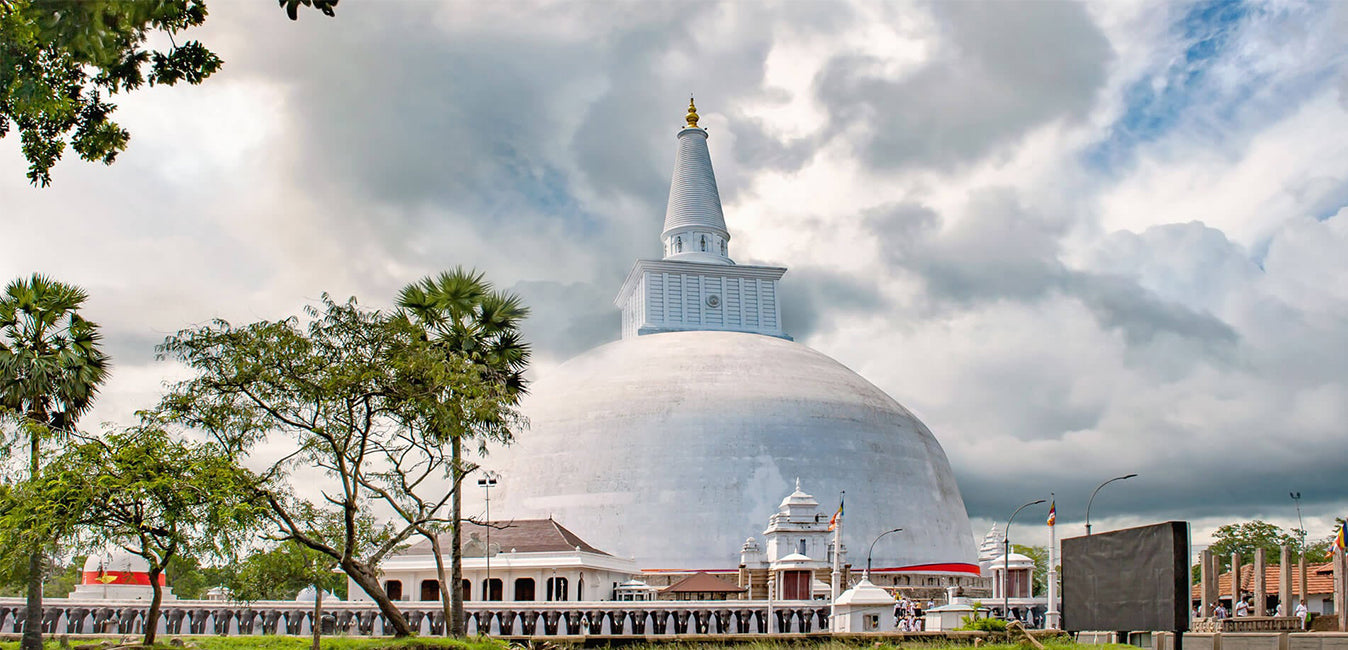
 Ruwanweliseya
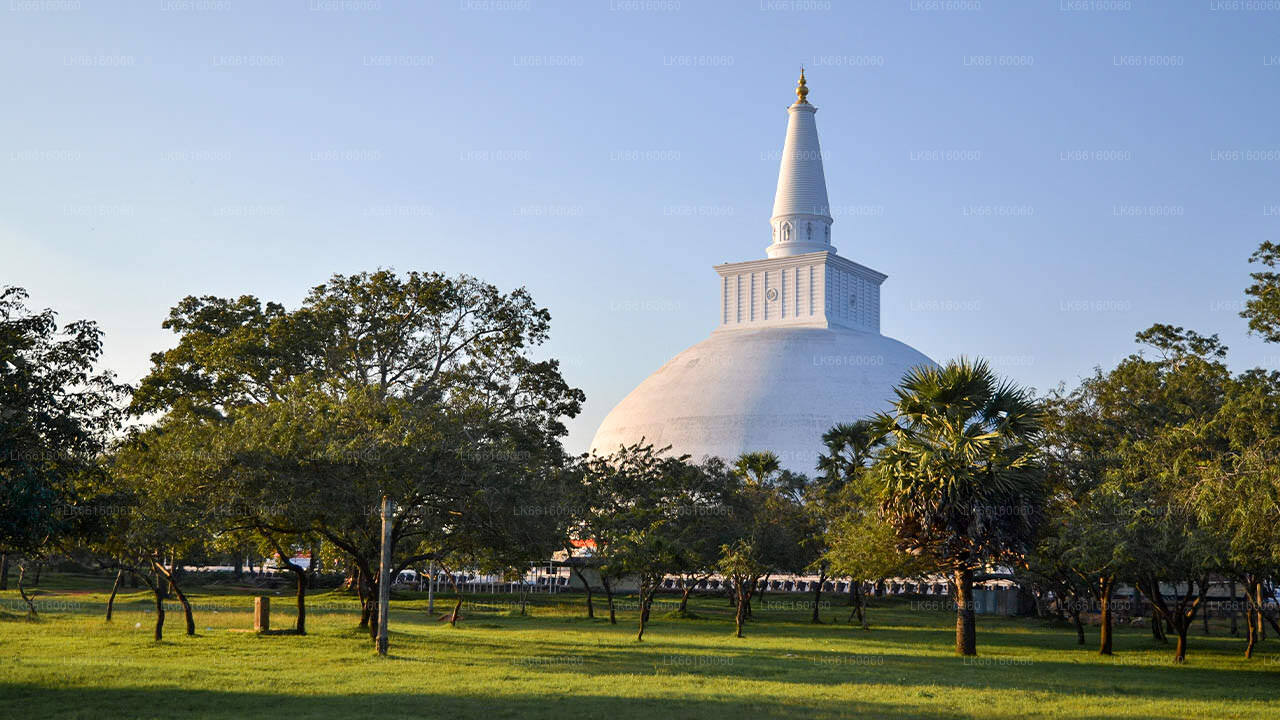
The Ruwanweli Maha Seya, also known as the Mahathupa (the Great Thupa) is a stupa (a hemispherical structure containing relics) in Anuradhapura, Sri Lanka. Two quarts or one Dona of the Buddha's relics are enshrined in the stupa, making it the largest collection of his relics anywhere. It was built by Sinhalese King Dutugemunu in c. 140 B.C., who became king of Sri Lanka after a war in which the Chola King Elāra (Ellalan) was defeated.
-
 Thuparamaya
Thuparamaya is the first Buddhist temple that was constructed, after the arrival of mahinda thero(mahindagamanaya) in Sri Lanka. Located in the sacred area of Mahamewna park, the Thuparamaya Stupa is the earliest Dagoba to be constructed in the island, dating back to the reign of King Devanampiya Tissa (247-207 BC). The temple has been formally recognised by the Government as an archaeological site in Sri Lanka.
-
 Lovamahapaya
Lovamahapaya is a building situated between Ruwanweliseya and Sri Mahabodiya in the ancient city of Anuradhapura, Sri Lanka. It is also known as the Brazen Palace or Lohaprasadaya because the roof was covered with bronze tiles. In ancient times, the building included the refectory and the uposathagara (Uposatha house).
-
 Abhayagiri Stupa
Abhayagiri Vihāra was a major monastery site of Mahayana, Theravada and Vajrayana Buddhism that was situated in Anuradhapura, Sri Lanka. It is one of the most extensive ruins in the world and one of the most sacred Buddhist pilgrimage cities in the nation.
-
 Jetavanaramaya
The Jetavanarama stupa or Jetavanaramaya is a stupa, or Buddhist reliquary monument, located in the ruins of Jetavana monastery in the UNESCO world heritage city of Anuradhapura, Sri Lanka. At 122 metres (400 ft), it was the world's tallest stupa, and the third tallest structure in the world when it was built by King Mahasena of Anuradhapura (273–301).
-
 Mirisawetiya Stupa
The Mirisaweti Stupa is a memorial building, a stupa, situated in the ancient city of Anuradhapura, Sri Lanka. King Dutugamunu (161 BC to 137 BC) built the Mirisaveti Stupa after defeating King Elara. After placing the Buddha relics in the sceptre, he had gone to Tissa Wewa for a bath leaving the sceptre.
-
 Lankarama
Lankarama is a stupa built by King Valagamba, in an ancient place at Galhebakada in the ancient kingdom of Anuradhapura, Sri Lanka. Nothing is known about the ancient form of the stupa, and later this was renovated. The ruins show that there are rows of stone pillars and it is no doubt that there has been a house built encircling the stupa (vatadage) to cover it.
-
 Isurumuniya
Isurumuniya is a Buddhist temple situated near to the Tissa Wewa (Tisa tank) in Anuradhapura, Sri Lanka. There are four carvings of special interest in this Vihara. They are the Isurumuniya Lovers, Elephant Pond and The Royal Family. The ancient Meghagiri Vihara or Meygiri Vihara is presently identified as the Isurumuni Vihara.