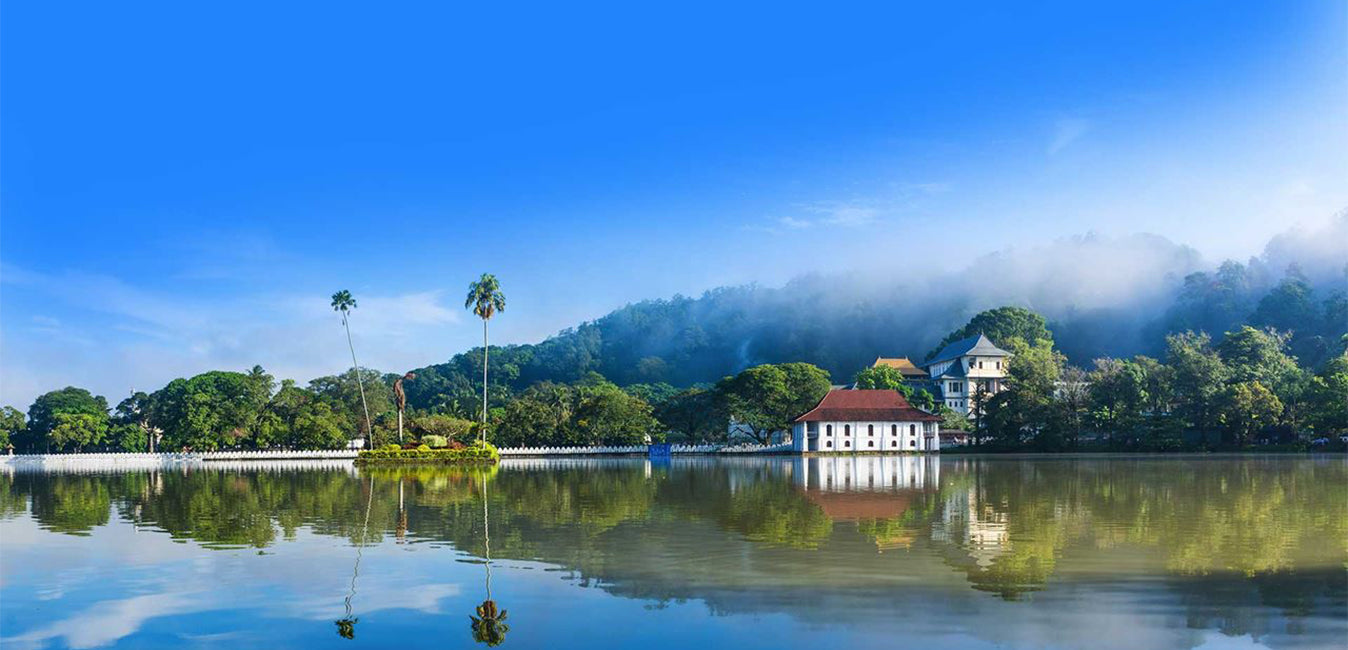
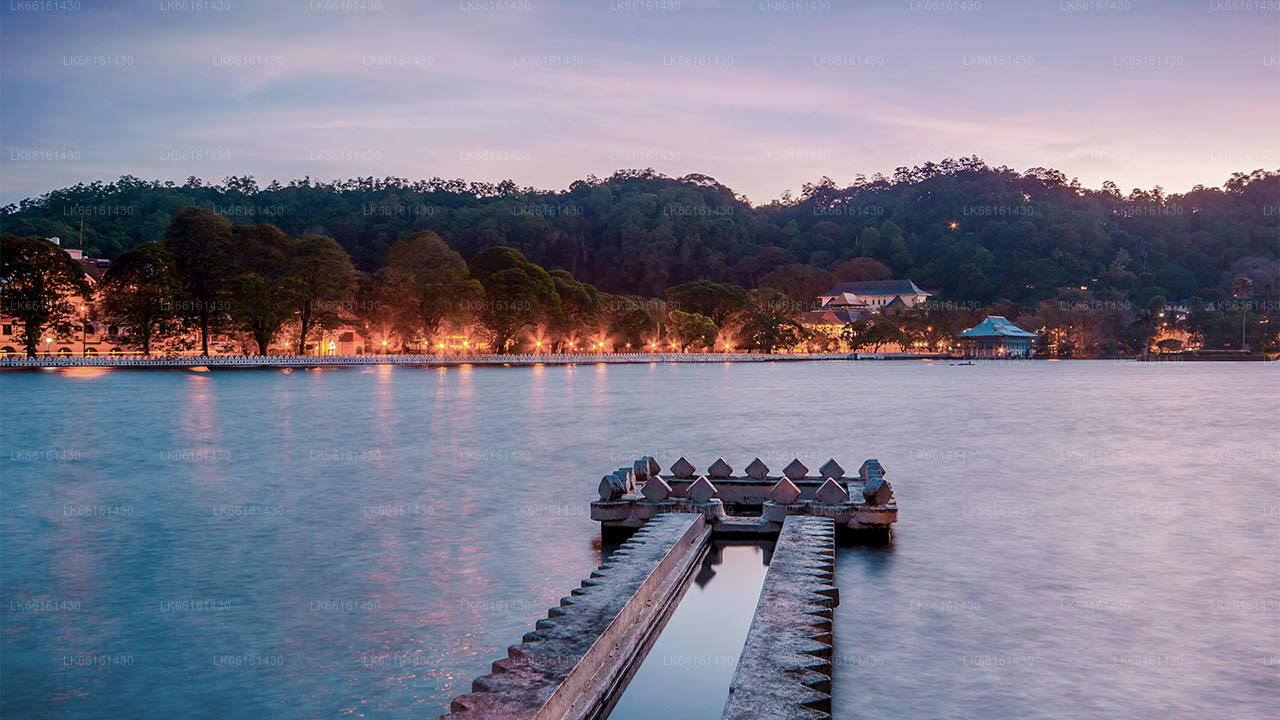
At the centre of Kandy, framed by forested hills and the gilded roofline of the Temple of the Tooth, lies a lake that is far more than a scenic backdrop. Kandy Lake — known in Sinhala as Kiri Muhuda, meaning "Sea of Milk" — is an artificial reservoir commissioned in 1807 by the last king of Kandy, Sri Wickrama Rajasinghe. It remains one of the most historically layered public spaces in Sri Lanka, combining royal engineering, folklore, religious geography, and everyday city life in a single waterfront circuit that most visitors can walk in under an hour.
What is the history of Kandy Lake?
Before the lake existed, the low-lying ground beside the Mahamaluwa (the royal esplanade in front of the Temple of the Tooth) was a stretch of paddy fields called Tigolwela. Within those fields sat a small pond already known as Kiri-muhuda — a name the new lake would inherit. King Sri Wickrama Rajasinghe commissioned the conversion of the entire paddy flat into a reservoir, appointing Deveda Moolacharya as the project's architect.
Construction began with a dam built from the Paththirippuwa (the octagonal pavilion attached to the Temple of the Tooth) across to the Poya Maluwa on the opposite bank. The dam doubled as a road, giving the king a direct crossing to Malwatte Vihare, one of the two principal chapters of Sri Lankan Buddhism. Colonial-era accounts by British official John D'Oyly place the main dam works between 1810 and 1812, suggesting construction unfolded in phases. Stone steps cut into the embankment on the Mahamaluwa side are still visible today, a quiet reminder of the lake's royal origins.
Over subsequent centuries the lake was reduced somewhat in extent, but it has been protected under Sri Lankan law for generations — fishing is prohibited, keeping the water clear and the bird life undisturbed.
What is the small island in the middle of Kandy Lake?
The most persistent legend attached to Kiri Muhuda concerns the low, wooded island sitting near the lake's centre. Local tradition holds that the island served as a private bathing retreat for the king's harem, connected to the royal palace complex by a subterranean tunnel. No tunnel has been formally excavated or verified, but the story has circulated for over two centuries and remains part of the oral heritage of Kandy.
Today the island houses a small powder magazine built during the British colonial period — a prosaic use for a place wrapped in romantic legend. It is not open to the public, but it is clearly visible from the lakeside promenade and from the joy boat service that operates on the lake.
What can you see and do around Kandy Lake?
The lake is circumnavigated by a shaded lakeside road — roughly 3.5 kilometres in length — that is equally popular with morning joggers, monks in saffron robes, and tourists arriving for the first time. The walk is flat, traffic is generally light on the inner circuit, and the views shift constantly as the water catches the light at different angles throughout the day.
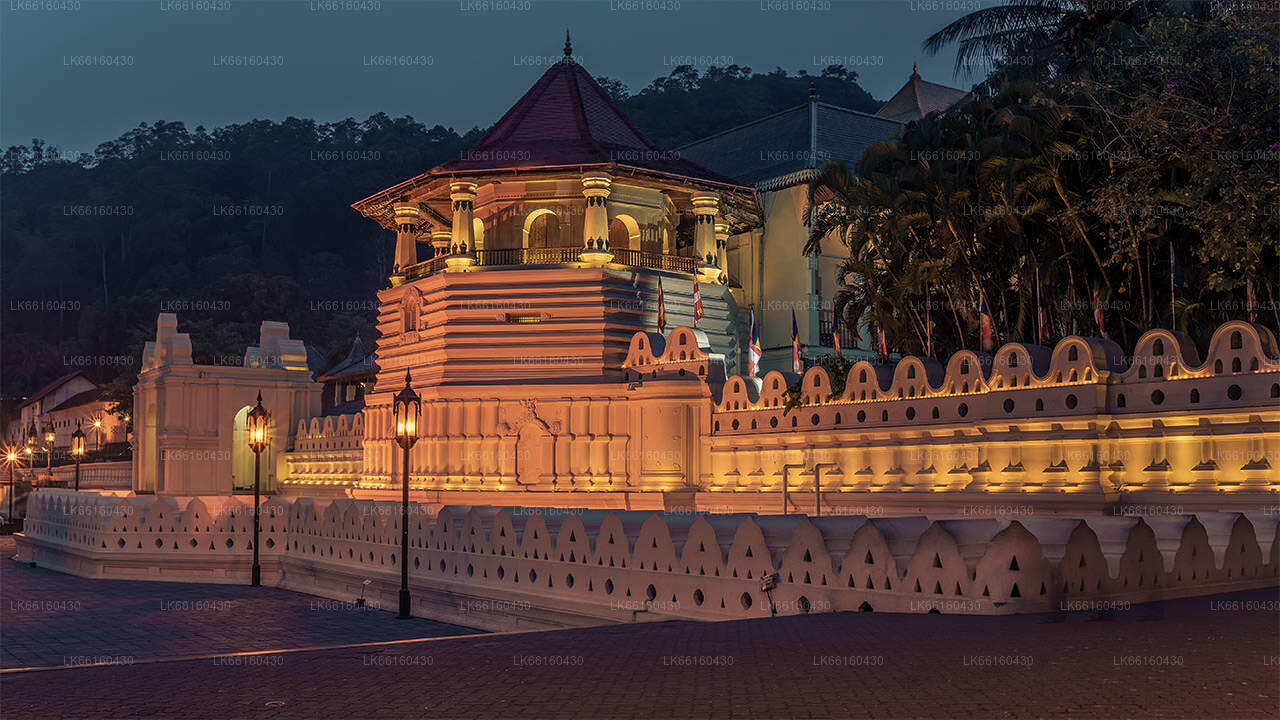
- Temple of the Tooth (Sri Dalada Maligawa) — The north shore of the lake is dominated by this UNESCO-listed temple, which houses the sacred relic of the Buddha's tooth. It is the single most important Buddhist pilgrimage site in Sri Lanka and the spiritual anchor of the entire Kandy cityscape.
- Paththirippuwa (Octagon) — The octagonal tower at the temple complex's south-western corner juts toward the lake and is one of the most photographed architectural details in Kandy. The stone steps descending toward the water here are among the original features from the lake's construction.
- Malwatte and Asgiriya Chapters — The two principal chapters of Sri Lankan Buddhism sit on opposite sides of the lake. Malwatte Vihare on the south bank was, in part, the reason the dam road was built in the first place.
- Kandy National Museum — Housed in the former royal palace annexe on the north shore, the museum holds royal regalia, historic artefacts, and exhibits that place the lake's construction in its broader political context.
- Boating on the lake — Pedal boats and small motorised joy boats offer a low-key way to see the island and the tree-lined banks from the water. Hire points are located near the town-side shore.
- Esala Perahera — Each July or August, the Esala Perahera Festival processes around the streets directly adjacent to the lake, culminating in a water-cutting ceremony at the lake itself. This is considered one of Asia's grandest religious processions.
When is the best time to visit Kandy Lake?
Kandy sits in the wet zone of Sri Lanka's hill country, so some rainfall is possible year-round. The driest and most settled period for visiting is typically between January and April, when mornings are clear and the lake surface is calm enough to mirror the surrounding hills. Early mornings — before 8 a.m. — are the most atmospheric, with mist sometimes clinging to the hillsides above Malwatte and monks completing their alms rounds along the promenade.
If your visit coincides with the Esala Perahera (usually late July to mid-August), the lakeside atmosphere intensifies dramatically in the evenings, with decorated elephants, drummers, and torch-bearers processing nearby. Accommodation around the lake fills weeks in advance during this period; book early.
The lake is accessible every day of the year, and there is no entry fee for the promenade walk itself. The surrounding temples and the museum have their own ticketing arrangements.
How do I get to Kandy Lake from Colombo?
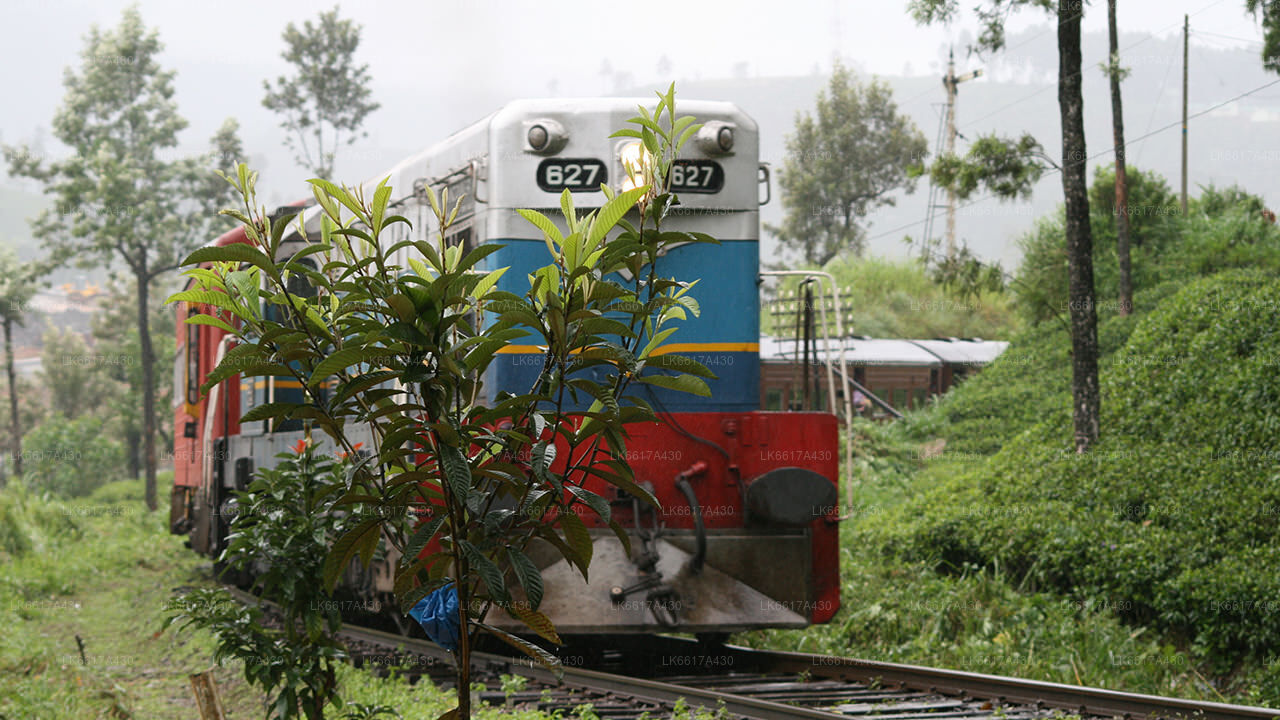
Kandy is around 115 kilometres northeast of Colombo, typically reached in three to four hours by road depending on traffic. The most scenic option is the train from Colombo Fort to Kandy, a journey of roughly two and a half to three hours that climbs through rubber and tea country. The Kandy railway station is a ten-minute walk from the lake.
Private transfers from Colombo by air-conditioned vehicle take a similar amount of time and allow you to stop at points along the way, such as the Botanical Gardens at Peradeniya. For a guided Kandy city tour, the lake is invariably the first or last stop, given its central position.
| Detail | Information |
|---|---|
| Built | 1807 (main works extended to c. 1812) |
| Commissioned by | King Sri Wickrama Rajasinghe |
| Architect | Deveda Moolacharya |
| Local name | Kiri Muhuda (Sea of Milk) |
| Promenade circuit | Approximately 3.5 km |
| Entry fee (promenade) | Free |
| Fishing | Prohibited (protected lake) |
| Nearest landmark | Temple of the Tooth (north shore) |
What folklore surrounds Kandy Lake?
Kiri Muhuda has accumulated a rich layer of legend over its two centuries of existence. The secret tunnel linking the central island to the royal palace is the best-known story, but local tradition also holds that the king specifically chose the name Kiri Muhuda — the name of the pre-existing pond in the paddy fields — to invest the new reservoir with auspicious meaning. Milk in Sinhalese Buddhist culture carries connotations of purity and prosperity, and naming a royal water body after a "sea of milk" was a deliberate act of symbolic architecture.
The lake's association with the Ehelepola Nilame — a high-ranking chief whose tragic conflict with King Sri Wickrama Rajasinghe forms one of the most dramatic episodes in late Kandyan history — adds another dimension to the site. The period of the lake's construction was one of intense political tension in the last independent kingdom of Sri Lanka, and the waterfront that visitors stroll today was laid out against that turbulent backdrop.
Where should I stay near Kandy Lake?
Several guesthouses and hotels sit within walking distance of the promenade, many with lake-facing rooms. The south and east banks, away from the busiest temple-side traffic, tend to be quieter. If you prefer a hillside view looking down over the lake, properties on the slopes above Rajapihilla Mawatha offer some of the most striking vantage points in the city. Lakpura can arrange accommodation and transfers to suit most budgets; options are listed below.