Lakpura
Lakpura®

Achcharu

Achcharu is Sri Lanka's answer to the pickle — a sharp, spice-laced condiment that has been part of the island's table for centuries. Where many Asian pickles lean sweet, Sinhala achcharu is defined by its clean tang: vinegar-forward, pungent with mustard and garlic, and just warm enough from green chilli to make a rice-and-curry plate feel complete. It is eaten at home, served at roadside kadés, and tucked into lunchboxes across the island, enjoyed equally by children and grandparents.

What is Achcharu and how is it different from other pickles?

The word achcharu comes from the Portuguese achar, a legacy of colonial trade routes that carried pickling traditions from South Asia to the Malay archipelago and beyond. Sri Lanka absorbed and adapted the method, replacing oil-heavy bases common in South Indian pickles with vinegar — ideally the mildly sweet, locally produced coconut vinegar — and building the spice profile around mustard seed, black pepper, and turmeric rather than fenugreek or asafoetida.

The result is lighter and brighter than most regional pickles, and it matures quickly: a jar left to rest for a day or two is ready to eat, though the flavour deepens over a week. Unlike chutneys, achcharu keeps its vegetable pieces largely intact, so texture is part of the experience.

Which vegetables work best for Sinhala Achcharu?

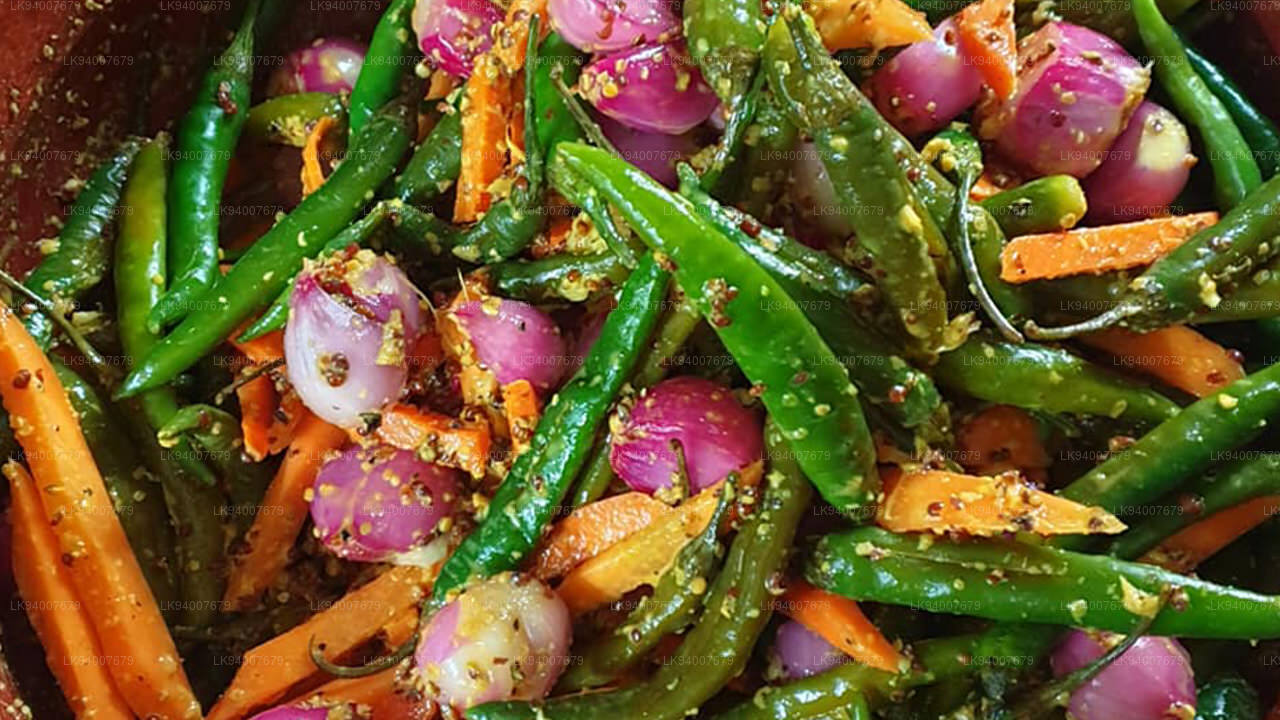
Almost any firm vegetable or unripe fruit can be pickled this way. The classic mix uses what is abundant and inexpensive at the pola (weekly market): pearl onions, small green chillies, carrot, turnip, and sometimes cauliflower. Green mango, raw papaya, and woodapple are popular seasonal additions in home kitchens.

Cut size matters. Vegetables should be small enough to absorb the brine quickly but large enough to retain a bite — julienne strips for carrot, thin triangles for turnip, and florets left whole for cauliflower. Uniformity in cut helps the pickle mature evenly.

For those who want to explore Sri Lanka's wider range of pickled condiments, lunu dehi — a salt-cured lime pickle — offers a different approach to preservation that sits alongside achcharu on many tables.

What spices go into the Achcharu brine?

The brine is simple by design. Ground black mustard seed gives achcharu its characteristic sharpness and a faint bitterness that balances the vinegar. Ceylon black pepper, ground coarsely, adds warmth without the heat of chilli. Turmeric brings colour and a mild earthiness, and crushed garlic and ginger round out the flavour with depth. Salt is added to taste and also acts as a preservative.

The ratio of mustard to vinegar is where recipes diverge most sharply between families. Some prefer a more pungent, mustard-heavy brine; others use just enough to colour the vegetables yellow without dominating. There is no single correct version — achcharu is one of those recipes where a handwritten card passed down through a family often produces the version you trust most.

How to make Sinhala Achcharu: a step-by-step recipe

Ingredients

  • 15–20 small onions (pearl or red onions)
  • 10–15 small green chillies, each split lengthwise
  • 2 large carrots, julienne cut
  • 1 small turnip, cut into thin triangular pieces
  • 15–20 small cauliflower florets (optional)
  • 2 cups vinegar, preferably coconut vinegar
  • 1-inch piece of ginger, crushed
  • 6 cloves garlic, crushed
  • 2 tablespoons ground black mustard seed
  • 1 tablespoon ground black pepper
  • A pinch of turmeric
  • Salt to taste

Method

  1. Heat one cup of vinegar in a saucepan over medium heat. Add the onions and simmer for a few minutes until they turn slightly translucent. Drain and transfer to a large mixing bowl.
  2. Using the same hot vinegar, briefly blanch the green chillies, carrot strips, and cauliflower florets in turn. Each vegetable needs only a minute or two — you want them to soften fractionally, not cook through. Add each to the bowl as you go.
  3. Add the raw turnip pieces directly to the bowl without blanching; their firmer texture benefits from staying fully raw at this stage.
  4. Pour the remaining cup of vinegar into the saucepan with the used hot vinegar. Add the ginger, garlic, ground mustard, ground pepper, turmeric, and salt. Bring to a boil and let it simmer for three to four minutes.
  5. Pour the hot brine over the vegetables and mix well to coat everything evenly.
  6. Transfer to a clean glass jar, seal, and leave at room temperature for one to two days before eating. The flavour will continue to develop over the following week.

How should Achcharu be served?

Achcharu is a condiment, not a side dish in its own right. A small spoonful alongside a plate of rice and several curries provides the acidity that cuts through coconut-milk gravies and rich dhal. It is particularly well matched with fish curries and lentil dishes, where its sharpness does the work that a squeeze of lime might do in other cuisines.

In Sri Lankan households it is also eaten as a snack — a few pieces of pickled carrot or chilli alongside a cup of Ceylon tea in the afternoon. Street vendors sometimes sell freshly made achcharu in small portions, seasoned more aggressively with chilli for an on-the-go snack.

How long does homemade Achcharu keep?

Stored in a sealed glass jar in a cool, dry place, achcharu keeps well for two to three weeks. Refrigeration extends this further, though the texture of the vegetables softens gradually over time. The high acidity of the brine is what preserves the pickle, so it is important to ensure the brine fully covers the vegetables at all times — top up with a small amount of vinegar if needed. Always use a clean, dry spoon when serving from the jar.

Where can I buy ready-made Sinhala Achcharu?

Commercially produced achcharu is widely available in Sri Lankan supermarkets and specialty food shops. Quality and spice levels vary considerably between brands. For travellers who want to take an authentic jar home, Lakpura sources small-batch achcharu prepared to traditional recipes, including a kohila (swamp cabbage) variety that is harder to find outside the island.

Book this experience with Lakpura

Curated by our local team. Direct booking, instant confirmation.

Ask Lakpura® Agent