Aluviharaya

Aluviharaya Aluviharaya Aluviharaya

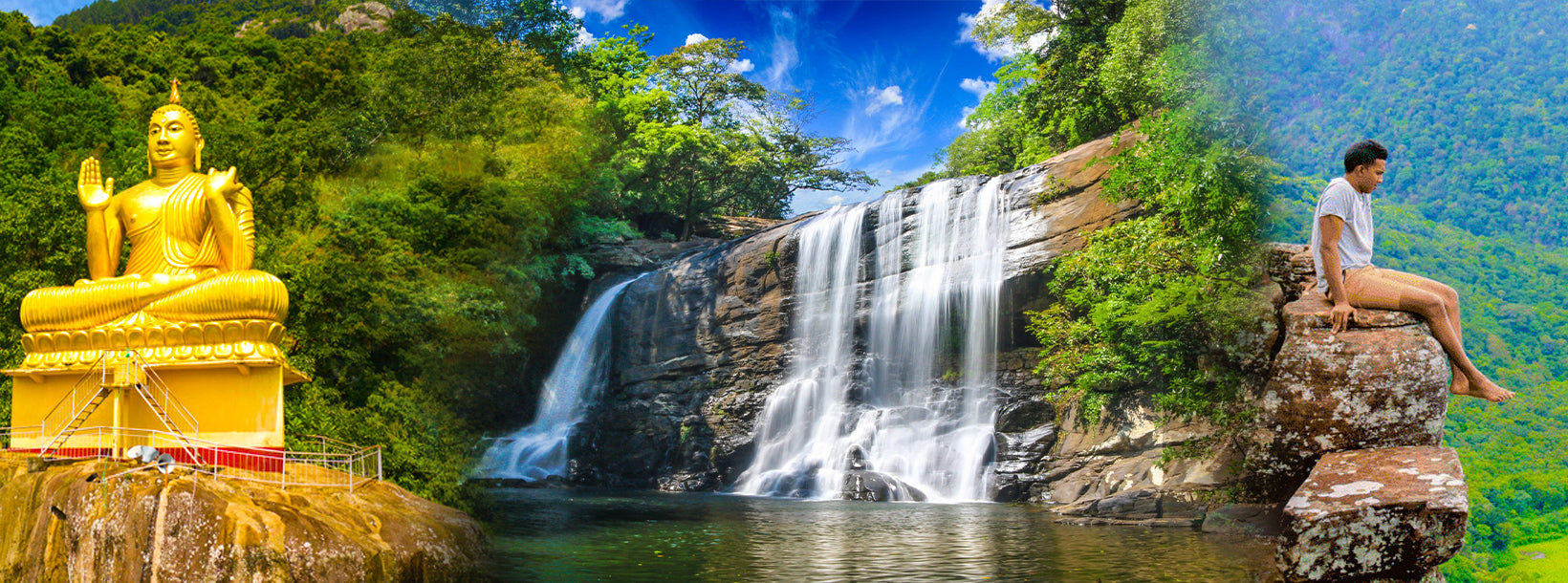
Aluviharaya, auch bekannt als Alu Vihara, ist ein historischer buddhistischer Tempel in Matale , Sri Lanka . Dieser für seine religiöse und kulturelle Bedeutung bekannte heilige Ort soll der Ort sein, an dem die buddhistischen Schriften (Tripitaka) im 1. Jahrhundert v. Chr. während der Herrschaft von König Walagamba erstmals auf Palmblättern niedergeschrieben wurden.

Vor der Kulisse malerischer Felsformationen beherbergt Aluviharaya alte Höhlentempel mit kunstvollen Wandmalereien, Buddha-Statuen und Inschriften buddhistischer Lehren. Der Tempelkomplex beherbergt außerdem eine Bibliothek mit historischen Manuskripten und Artefakten zum buddhistischen Erbe Sri Lankas .

Besucher von Aluviharaya können die heiligen Höhlen erkunden, jahrhundertealte Malereien bewundern und die ruhige, spirituelle Atmosphäre erleben. Der Tempel ist nach wie vor ein wichtiger Wallfahrtsort für Buddhisten und ein faszinierendes historisches Ziel für Reisende, die sich für die reichen religiösen Traditionen Sri Lankas interessieren.

Insgesamt ist Aluviharaya ein Muss für alle, die ein tieferes Verständnis der buddhistischen Geschichte Sri Lankas suchen. Seine Mischung aus spiritueller Bedeutung, historischem Wert und natürlicher Schönheit macht es zu einem bemerkenswerten kulturellen Wahrzeichen.

Aluviharaya Aluviharaya Aluviharaya

About Central Province

The Central Province of Sri Lanka consists primarily of mountainous terrain. The province has an area of 5,674 km², and a population of 2,421,148. Some major towns include Kandy, Gampola (24,730), Nuwara Eliya and Bandarawela. The population is a mixture of Sinhalese, Tamil and the Moors.

Both the hill capital Kandy and the city of Nuwara Eliya are located within the Central Province as well as Sri Pada. The province produces much of the famous Ceylon tea, planted by the British in the 1860s after a devastating disease killed all the coffee plantations in the province. Central Province attracts many tourists, with hill station towns such as Kandy, Gampola, Hatton and Nuwara Eliya. Temple tooth or Dalada maligawa is the main sacred place in Centrel province.

The climate is cool, and many areas about 1500 meters often have chilly nights. The western slopes are very wet, some places having almost 7000 mm of rain per year. The eastern slopes are parts of the mid-dry zone as it is receiving rain only from North-Eastern monsoon. The Temperatures range from 24°C at Kandy to just 16°C in Nuwara Eliya, which is located 1,889 m above sea level. The highest mountains in Sri Lanka are located in the Central Province. The terrain is mostly mountainous, with deep valleys cutting into it. The two main mountain regions are the central massif and the Knuckles range to the east of Kandy.