Anabera kolama / Panikkala


The official announcement drum beaters Kolama (comic performance)
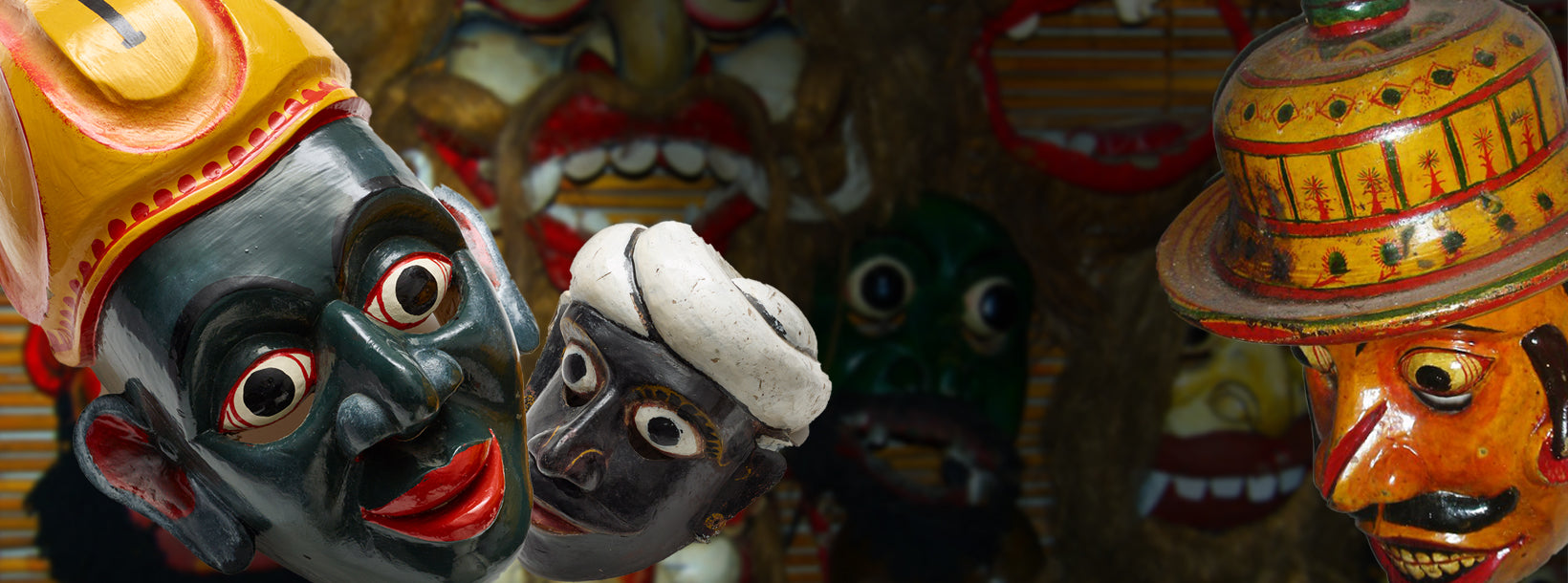
This character is known as the panikkalaya or panikkirala (barber or official baber). Although it is the chief duty of this person to beat the drum and spread various official announcements and orders, he is depicted as an old person. The drum beaters mask is created to show both the character and duties of the drummer.
For this purpose the information contained in the following poem has been utilized.
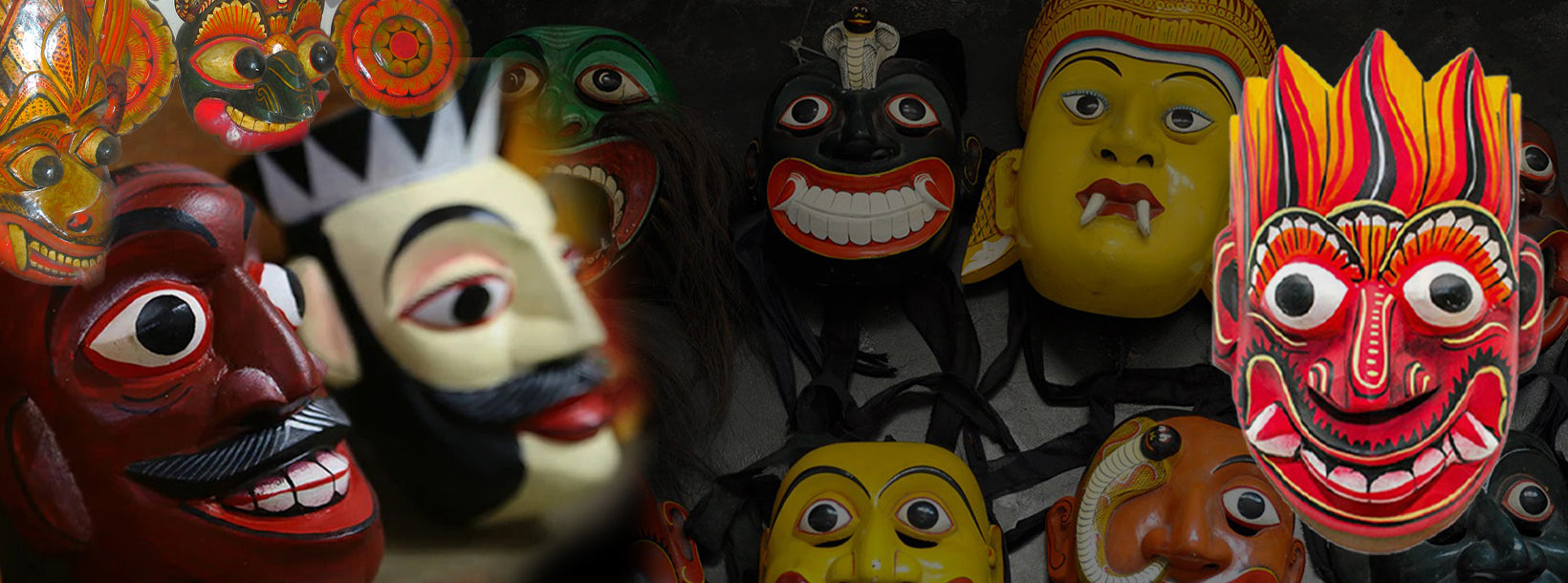
The mask maker has been very successful in cleverly depicting the aged decaying and aged appearance of the official drummer announcer. The mask should display and open mouth, spaces between teeth, drunkards’ eyes, a long beard and pointed teeth belonging to the official drummer announcer kolama(comedy). In the early period, in the official drummer announcement’s mask there was turban belonging to the face which was fixed round the head and face and was created out of wood, but today the turban is fitted only to the front of the face. This type is to be found in plenty today. There were two masks used for his two sons called Chukkiniyala and Dunguruwa, and in the Ambalangoda region, several sons with mask were introduced to the audience.