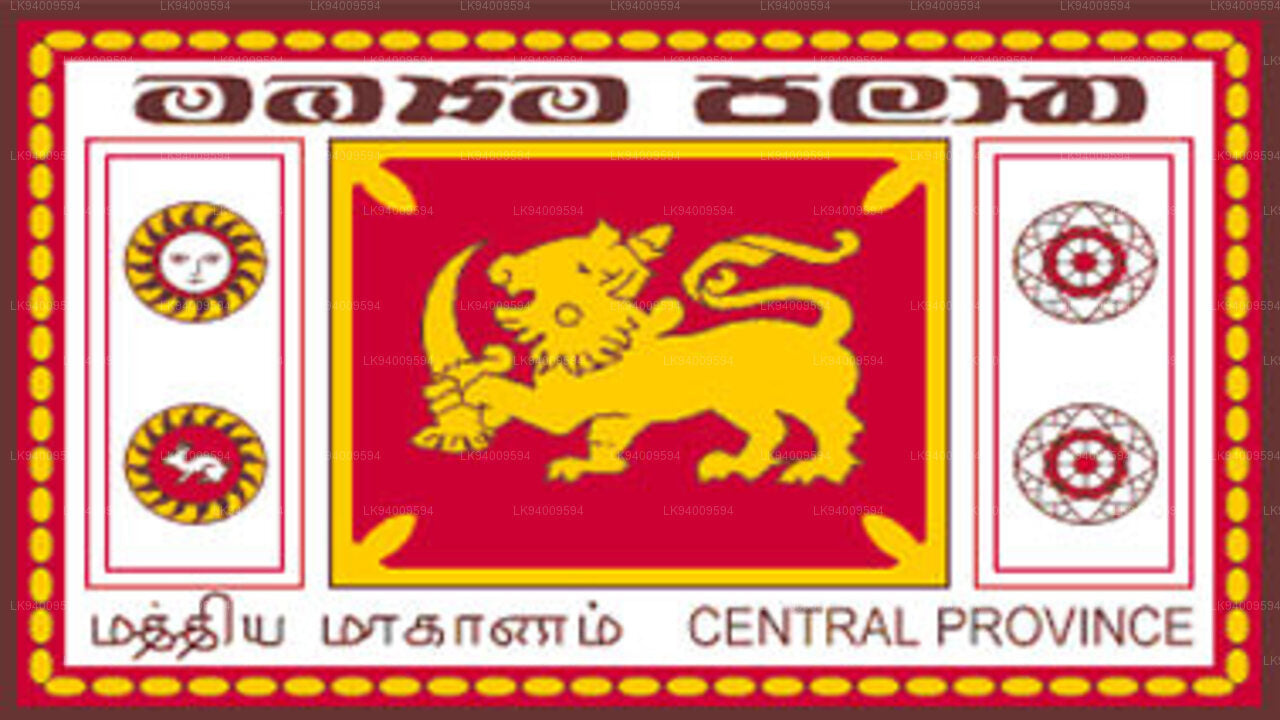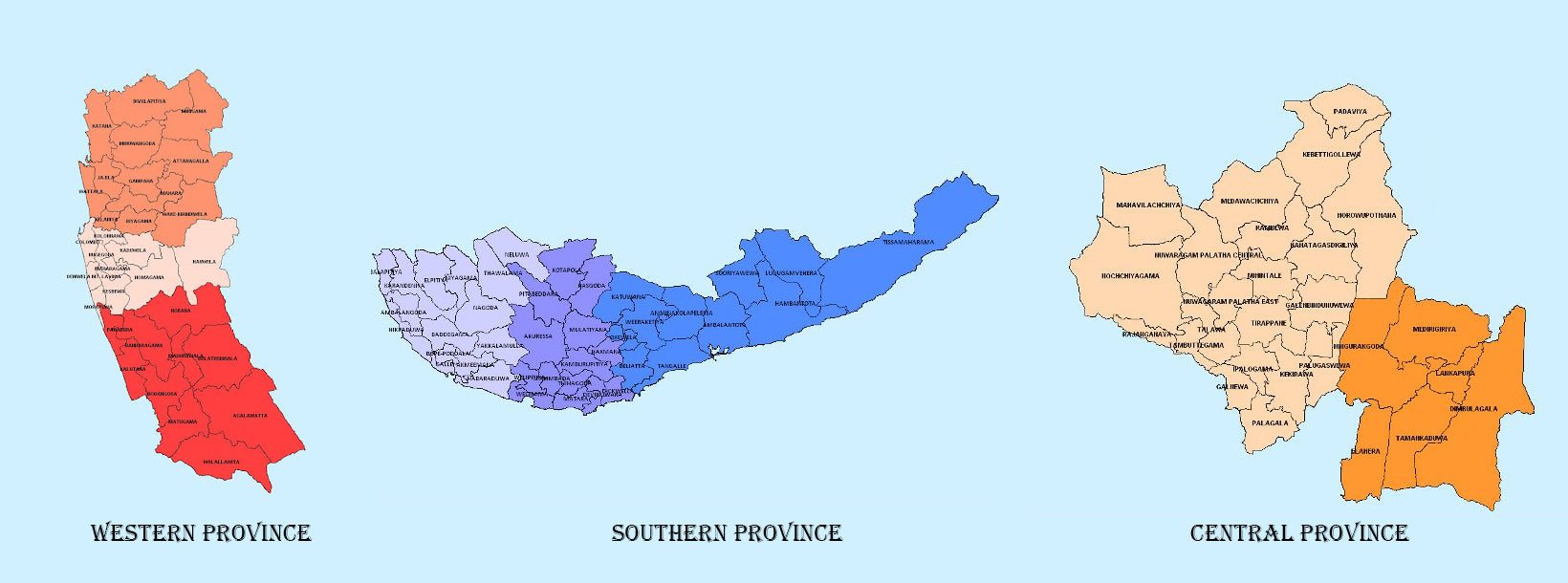
Sri Lanka's Central Province rises from the island's heartland in a succession of mist-wrapped ridges, ancient cities, and emerald tea gardens. Covering 5,575 km² — roughly 8.6% of Sri Lanka's total land area — it encompasses three districts: Kandy, Matale, and Nuwara Eliya. Elevations range from around 180 metres in the foothills to well above 1,800 metres on the high plateau, giving the province a climate, ecology, and culture distinct from anywhere else on the island.
What makes Central Province different from the rest of Sri Lanka?
The Central Province is Sri Lanka's vertical dimension. Where the coast is tropical and low-lying, the interior climbs through dense cloud forest, paddy terraces, and spice gardens before opening onto the cool tea highlands that supply much of the world's finest Ceylon tea. The provincial borders are defined almost entirely by geography: the Mahaweli River to the east, the Adam's Peak massif and Uma Oya to the south, and the Dolosbage and Galagedera mountain ranges to the west. This natural enclosure has preserved both the landscape and a remarkably continuous cultural tradition, centred on the sacred city of Kandy.
What are the main districts in Central Province?
- Kandy District — home to Sri Lanka's second-largest city and the holiest Buddhist shrine in the country, set among forested ridges at roughly 500 metres above sea level.
- Matale District — a transition zone between the lowland dry zone and the highlands, known for spice plantations, Aluvihara Rock Temple, and the gateway to the Sigiriya rock fortress.
- Nuwara Eliya District — the highest-altitude district, dominated by tea estates, misty mountains, and Horton Plains National Park, with Piduruthalagala (2,524 m) as Sri Lanka's tallest peak.
What can you see and do in Kandy?
Kandy served as the last capital of Sri Lanka's ancient Kandyan kingdom and was designated a UNESCO World Heritage Site in 1988. At its centre stands the Temple of the Sacred Tooth Relic — Dalada Maligawa — built on a granite base in the 18th century and housing a relic of the Buddha that has been venerated for over a millennium. The temple complex sits on the northern shore of the artificial Kandy Lake, its white-stone parapet enclosing a view that has defined the city's identity for two centuries.
Beyond the Dalada Maligawa, the city rewards slow exploration. Udawattakele Sanctuary rises directly behind the royal precincts, offering shaded forest walks within minutes of the city centre. The Royal Palace complex, several Buddhist monasteries, and the Kandy Market fill the surrounding streets. Every July or August, the city hosts the Esala Perahera Festival — one of Asia's grandest processions, with elaborately caparisoned elephants, drummers, and torch-bearers circling the lake over ten nights.
For orientation, the Kandy Tourist Information Center is a practical first stop, and a structured Kandy city tour covers the key sites efficiently.
What is Nuwara Eliya known for?
Nuwara Eliya — whose name translates loosely as "city of light" — sits at 1,868 metres and has a mean annual temperature of around 16°C, with night temperatures in December through February sometimes falling near freezing. That cool, damp air is exactly what Ceylon tea demands, and the surrounding slopes host some of the most celebrated estates on the island. Visitors can tour working factories, walk through manicured bushes, and taste freshly processed teas at estates such as Bluefield Tea Gardens.
The town itself retains a faded colonial character — British planters built a racecourse, a golf course, and grand hotels that still operate today. The Grand Hotel, a converted colonial residence, is among the most atmospheric places to stay in the highlands. Lake Gregory on the town's edge offers boat rides and walking paths, while the surrounding hills provide access to the Peak Wilderness Sanctuary and, on a clear day, views across the central massif.
What wildlife and nature can you find in Central Province?
The Central Province contains some of Sri Lanka's most significant protected natural areas. Horton Plains National Park, a UNESCO World Heritage Site component, protects a high-altitude plateau of montane grassland and cloud forest, home to endemic species of birds, reptiles, and mammals found nowhere else on earth. The famous World's End escarpment drops nearly 900 metres in a near-vertical cliff — one of the most dramatic viewpoints on the island, best reached before mid-morning when clouds typically roll in.
The Knuckles Mountain Range, northeast of Kandy, is a separate UNESCO-listed landscape of forested ridges, stream valleys, and traditional villages offering multi-day trekking routes. The Mahaweli River — Sri Lanka's longest — originates in the central highlands and defines much of the eastern boundary of the province, supporting riverine ecosystems along its length.
How do I get to Central Province from Colombo?
Kandy lies approximately 115 km from Colombo and is reachable in roughly two to three hours by road, depending on traffic. The scenic train route from Colombo Fort to Kandy takes around two and a half hours and is a comfortable alternative. From Kandy, the mountain railway continues to Nanu Oya (the station for Nuwara Eliya) via Hatton — a journey widely regarded as one of the most scenic rail routes in Asia, passing through tunnels, tea estates, and waterfalls. Nuwara Eliya itself is about 180 km from Colombo and typically takes four to five hours by road. Private transfers with a knowledgeable driver-guide remain the most flexible option for covering multiple stops across the province.
When is the best time to visit Central Province?
The central highlands have two distinct seasons influenced by the northeast and southwest monsoons, and the timing affects different parts of the province differently. As a general guide:
| Period | Conditions | Best For |
|---|---|---|
| January – March | Dry and clear in most areas; cold nights in Nuwara Eliya | Horton Plains, Kandy, scenic train journeys |
| April – May | Sinhala and Tamil New Year; pre-monsoon warmth | Cultural festivals, tea-plucking season views |
| July – August | Drier in Kandy; the Esala Perahera takes place | Esala Perahera Festival, Kandy city |
| December – February | Cool and sometimes cold; Nuwara Eliya can see frost | Hill-country atmosphere, colonial heritage hotels |
There is no single "wrong" time to visit the Central Province, though the southwest monsoon (May to July) brings heavier rainfall to the western slopes, and the northeast monsoon (October to January) can affect the Knuckles Range and Matale District. Regardless of season, pack a light layer for evenings in Nuwara Eliya.
What are the best day trips from Kandy?
- Knuckles Range — hiking and village walks through one of Sri Lanka's most biodiverse landscapes, accessible in under two hours from the city.
- Matale spice gardens — short guided tours of working plantations growing cinnamon, cardamom, pepper, and cloves, many of which have operated for generations.
- Pinnawala Elephant Orphanage — a government-run facility caring for orphaned and injured elephants, located roughly 45 km from Kandy on the road toward Colombo.
- Dambulla Cave Temple — a complex of five cave shrines containing over 150 Buddha images, located about 70 km north of Kandy in Matale District.
- Ella — the popular hill-country village, reachable by the famous mountain railway, passing Nine Arch Bridge and offering walks to Ella Rock. See the full Ella guide for details.
What is the tea culture of Central Province?
Sri Lanka's tea industry was born in the Central Province after coffee blight devastated the island's plantations in the 1870s. James Taylor planted the first commercial tea at Loolecondera Estate in Kandy District in 1867, and within decades the high country was blanketed in the low, pruned bushes that remain one of the province's defining images. Today, Nuwara Eliya-grown teas — often described as light, floral, and delicate — command premium prices at auction and are exported worldwide. Learning about Ceylon tea directly at a working estate is one of the most rewarding things a visitor to the Central Province can do.