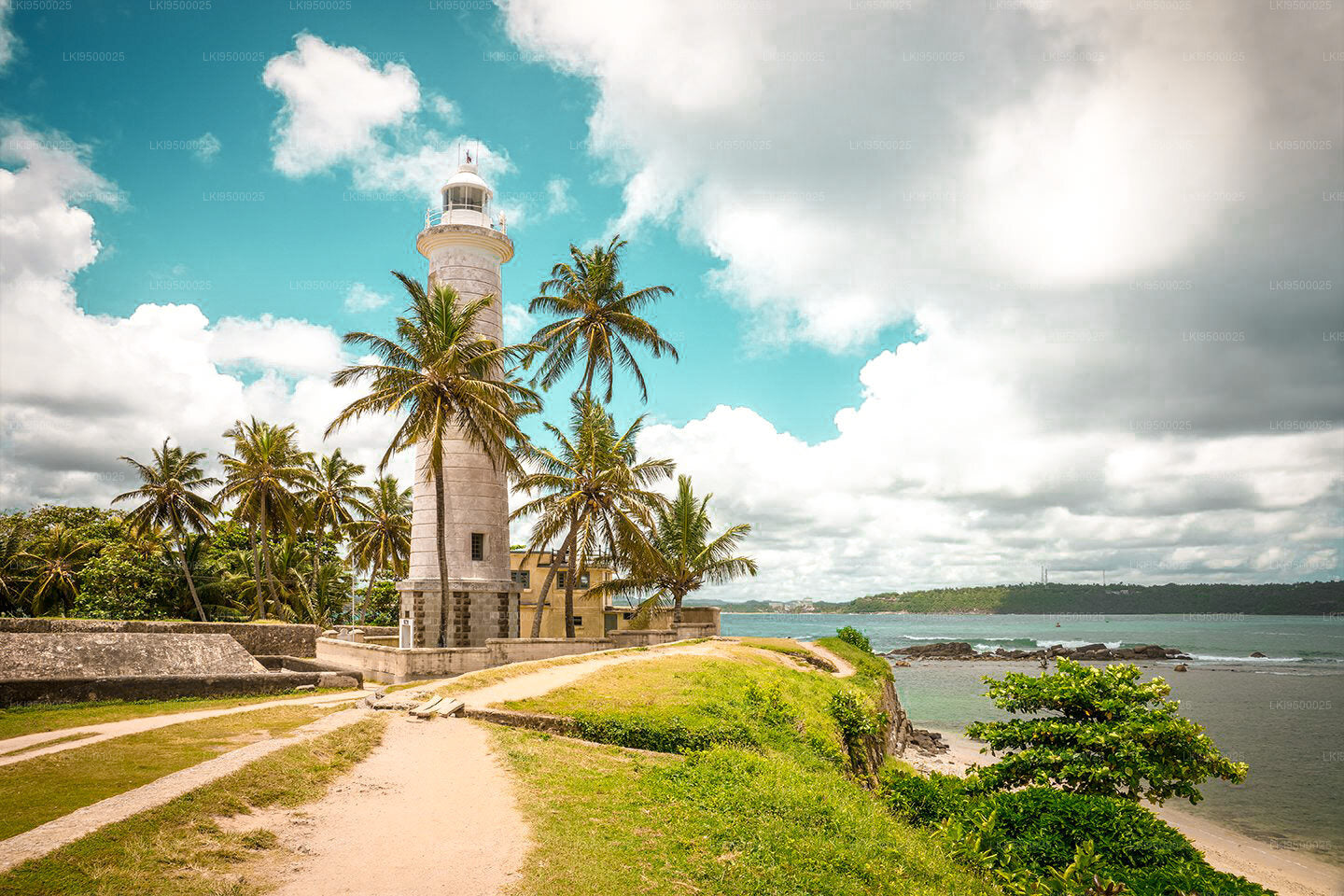
Praia de Galle
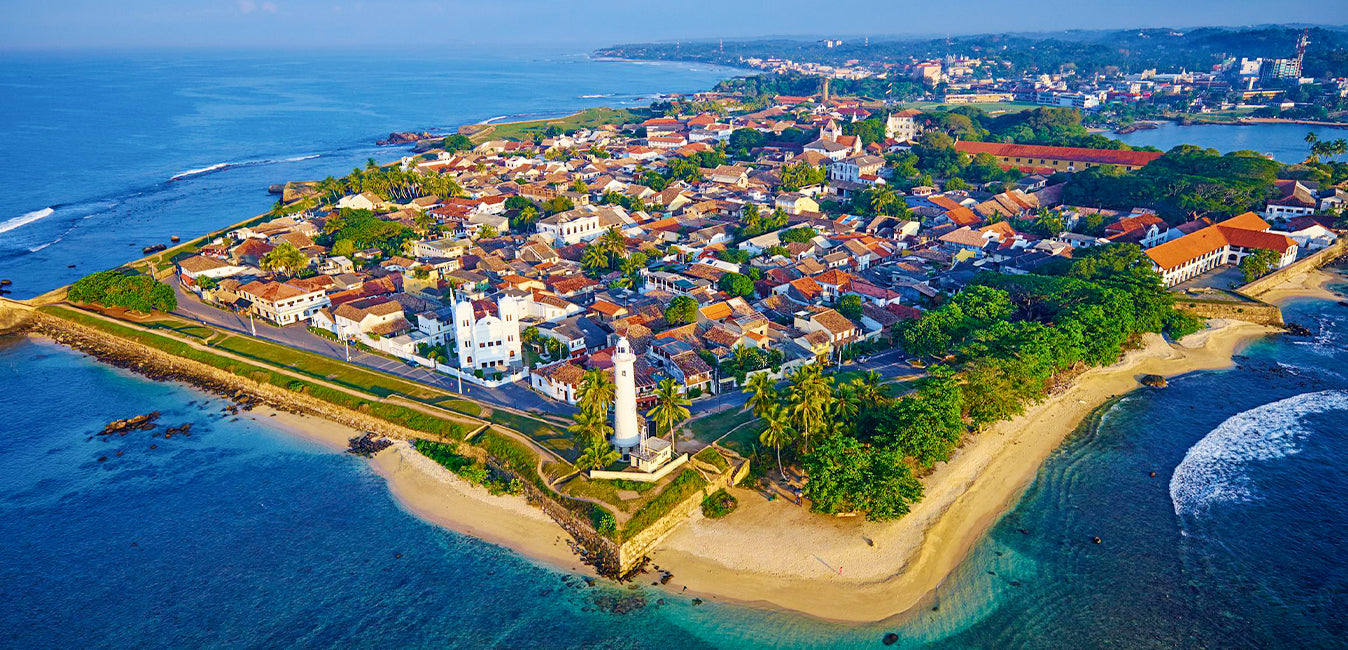
A Praia de Galle, localizada na costa sudoeste de Sri Lanka, é um destino encantador e histórico, conhecido por sua beleza cênica e patrimônio colonial. Situada perto da histórica fortaleza de Galle, esta praia oferece uma mistura de atrações culturais, experiências relaxantes à beira-mar e uma vida local vibrante.
Cenários costeiros pitorescos
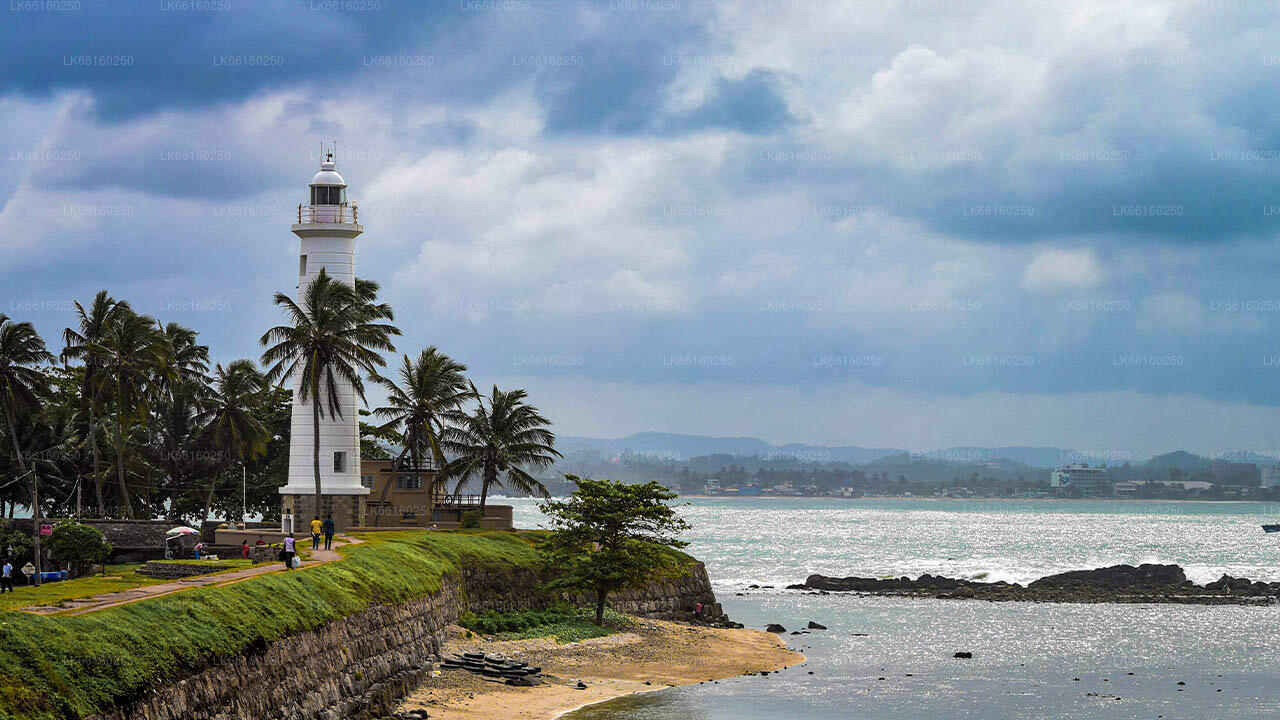
A Praia de Galle possui uma impressionante extensão de areia dourada e águas cristalinas, ideal para tomar sol, nadar e caminhar pela praia. A beleza cênica da praia, combinada com o fundo histórico da Fortaleza de Galle, cria um cenário pitoresco para relaxamento e lazer.
Fortaleza de Galle
A apenas uma curta distância da praia, está a fortaleza de Galle, um Patrimônio Mundial da Humanidade da UNESCO, com uma rica história que remonta ao século XVI. Originalmente construída pelos portugueses e posteriormente ampliada pelos holandeses, a fortaleza é um lugar fascinante para explorar, com sua arquitetura colonial bem preservada, ruas estreitas e charmosos cafés e boutiques.
Atividades marinhas
A Praia de Galle oferece oportunidades para vários esportes aquáticos, incluindo snorkeling, surfe e mergulho. Os recifes de corais próximos oferecem excelentes experiências de snorkeling com vida marinha colorida, enquanto as ondas suaves tornam o local ideal para surfistas iniciantes.
Mercados locais e culinária
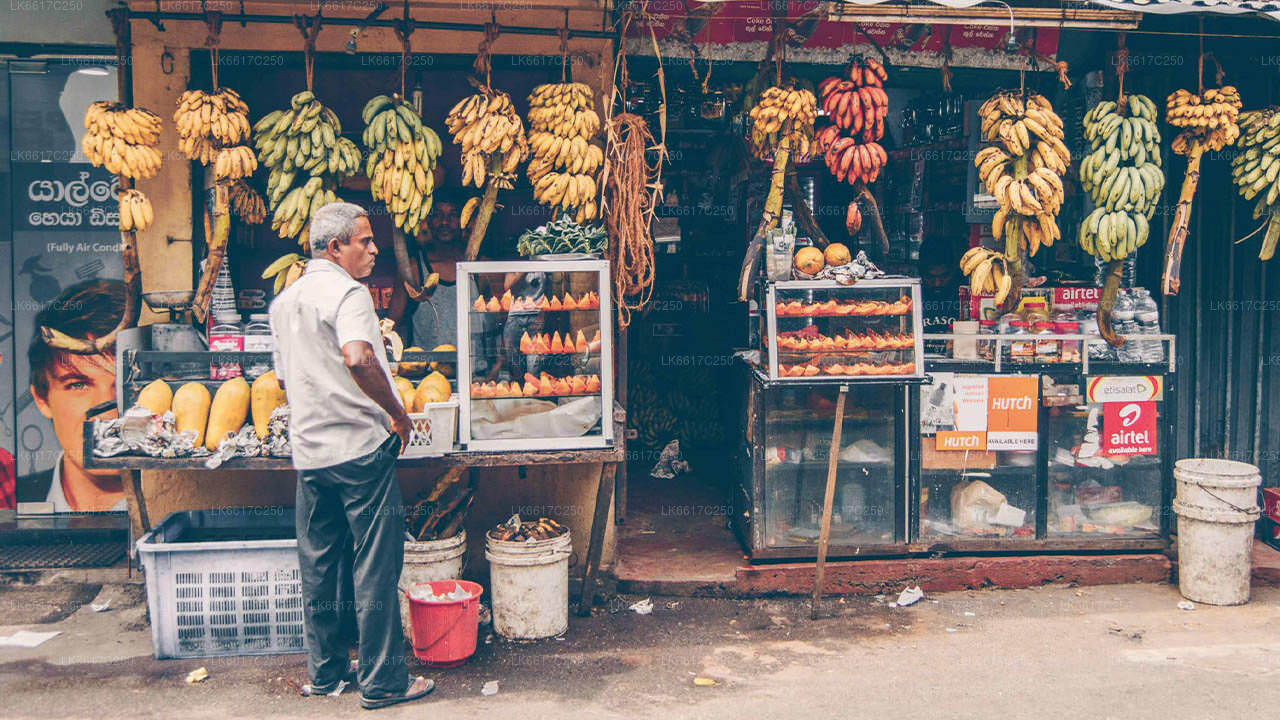
A área ao redor da Praia de Galle é vibrante com mercados locais e restaurantes. Você pode visitar o Hospital Holandês de Galle, um edifício histórico que agora abriga vários restaurantes e lojas, onde você pode saborear uma variedade de culinárias do Sri Lanka e internacionais. Os mercados locais oferecem frutos do mar frescos, frutas tropicais e doces tradicionais.
Experiências culturais
Galle é conhecida por seu rico patrimônio cultural, e os visitantes podem explorar artesanato tradicional, galerias de arte e eventos culturais na cidade. O Museu Nacional de Galle oferece uma visão sobre a história e cultura da região, exibindo artefatos e exposições do período colonial.
Observação de baleias
Galle também é um ponto de partida para os passeios de observação de baleias, especialmente durante a temporada de novembro a abril. Esses passeios oferecem a oportunidade de ver baleias azuis, baleias cachalote e outros gigantes marinhos em seu habitat natural.
Melhor época para visitar:
A melhor época para visitar a Praia de Galle é de novembro a abril, quando o clima é seco e o mar está calmo. Este período é ideal para desfrutar da praia, das atividades aquáticas e explorar as atrações culturais e históricas em Galle e nas proximidades.