Lotus Pond (Ancient Nelum Pokuna)

Lotus Pond (Ancient Nelum Pokuna) Lotus Pond (Ancient Nelum Pokuna) Lotus Pond (Ancient Nelum Pokuna)

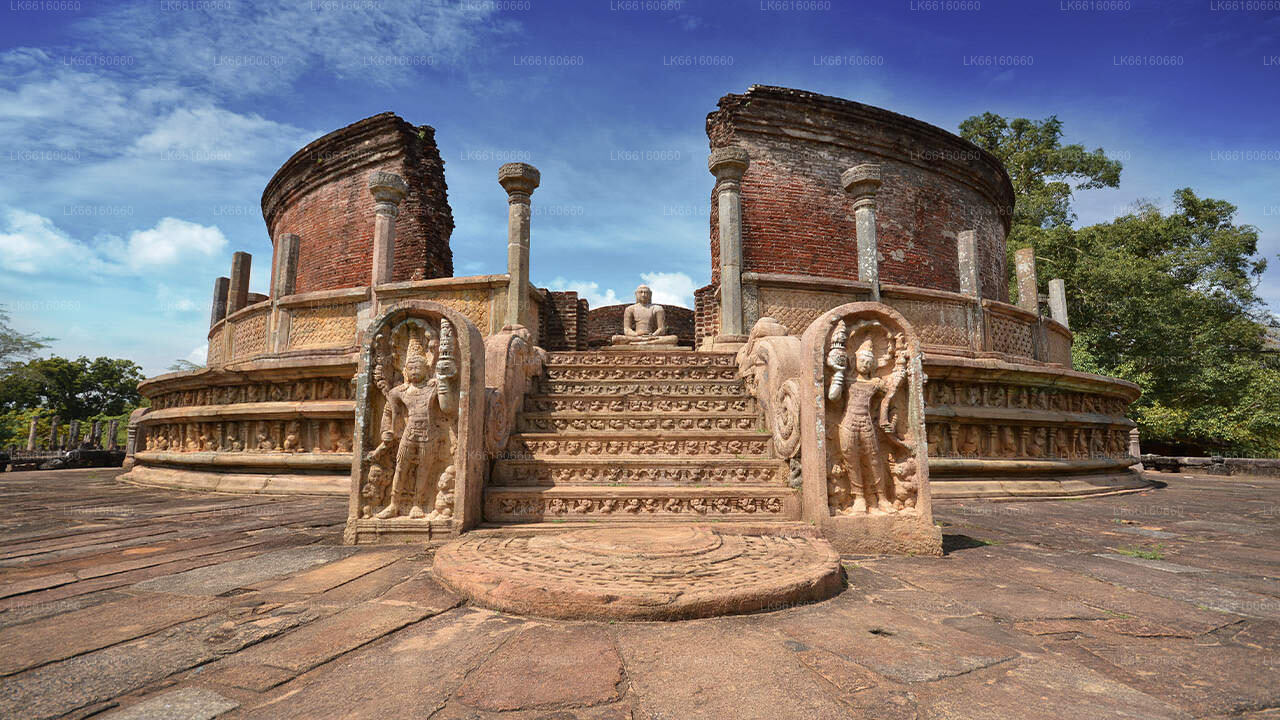
The Lotus Pond, known in Sinhala as Nelum Pokuna, is an ancient stone bath located within the archaeological precincts of Polonnaruwa in Sri Lanka. Thought to date from the reign of King Parakramabahu I (12th century), it is an iconic example of the skilled stonework and aesthetic sensibility of the Polonnaruwa era.

This pond is carved from granite in the shape of a fully bloomed lotus flower. Its design consists of five concentric tiers, each forming eight petals that slope inward in concave form toward a central stamen. The dimensions are remarkable, with the outer diameter measuring about 24 feet and 9 inches, contracting toward a central circle of roughly 5 feet and 4 inches across.

The Lotus Pond is believed to have served as a bathing tank for monks associated with the nearby Jetavana Vihara. Its architectural refinement and symmetry reflect both functional utility and spiritual symbolism. Visitors can walk around its perimeter, gaze into the layered lotus design, and appreciate how light plays across the smooth stone and petal contours.

The site is accessible year-round via the paths within the Polonnaruwa Archaeological Park. It is best visited in the dry season, when the light accentuates the stone curves and pedestrian access is more comfortable. Morning or late afternoon visits offer the most serene atmosphere and soft lighting to admire the structure.

About Polonnaruwa District

Polonnaruwa is the 2nd largest city in north central province in Sri Lanka. The ancient city of Polonnaruwa has been declared a World Heritage site by UNESCO Polonnaruwa has a great history of conquest and struggle behind it and rightfully forms the third element in the Cultural Triangle. Located about 140 kms north east from Kandy,Polonnaruwa offers hours of endless pleasure for history and culture lovers, as there are numerous sights of significance.

Much of the physical ruins standing today are credited to King Parakrama Bahu I who spent many royal resources on town planning, including parks, edifices, irrigation systems and so on. The period of his rule is considered a golden age where the kingdom thrived and prospered under a visionary ruler. The Parakrama Samudra is a mammoth tank and named after its patron. The popular kings Royal Palace, the Audience Hall encircled by beautifully carved stone elephants and the Bathing Pool reflect the superior engineering capabilities of the time.

About North Central Province

North Central Province which is the largest province in the country covered 16% of total country's land area. North Central Province consist two districts called Polonnaruwa and Anuradhapure. Anuradhapura is the largest district in Sri Lanka. Its area is 7,128 km².

North Central Province has numerous potentials for Investors to start their Businesses, especially Agriculture, agro based industries and Livestock sectors. More than 65% of North Central Province's people depend on basic Agriculture and agro base industries. NCP also called "Wew Bendi Rajje" because there are more than 3,000 medium and large scale tanks situated in the province. Sri maha bodiya, Ruwanweli seya, Thuparama dageba, Abayagiri Monastry, Polonnaruwa Rankot wehera, Lankathilake are scared