Lakpura
Lakpura®

Colombo Lighthouse

Standing 29 metres tall at Galbokka Point on the southern edge of the Port of Colombo, the Colombo Lighthouse is one of the city's most quietly significant landmarks. Operated by the Sri Lanka Ports Authority, it marks the waterfront along Marine Drive in Colombo Fort — a stretch of coastline that has shaped the country's maritime history for well over a century.

What is the history of the Colombo Lighthouse?

The current lighthouse was completed and opened in 1952 by Rt Hon D. S. Senanayake, the first Prime Minister of independent Ceylon. Its construction was a direct response to a practical problem: the older Colombo Lighthouse had been rendered effectively useless when nearby buildings, erected as part of a major Colombo Harbour Expansion project, began obscuring its light from approaching vessels.

The new structure rises from a concrete base approximately 12 metres high and reaches a total height of 29 metres (around 95 ft). Four sculpted lion statues stand at its base — a detail that gives the tower an unmistakably ceremonial character alongside its navigational purpose. For a time, the panoramic view of the Indian Ocean it commanded made it a popular city landmark visited by residents and travellers alike.

Public access was later restricted as the Sri Lankan Civil War intensified, owing to the lighthouse's position in a high-security zone — directly across from the Naval Headquarters and within close proximity to one of Asia's busiest container ports.

What is the saluting battery at the Colombo Lighthouse?

At the base of the lighthouse sits a naval gun battery used by the Sri Lanka Navy to fire traditional ceremonial gun salutes. The most prominent of these is the 25-gun salute delivered each year on National Day, 4 February, to mark Sri Lanka's Independence.

The tradition has deep roots. On the first Independence Day, 4 February 1948, sailors of the Ceylon Royal Naval Volunteer Reserve fired a 15-gun salute at Galle Face Green. Three years later, on 4 February 1951, HMCyS Vijaya — the first warship of the newly formed Royal Ceylon Navy — delivered a 25-gun salute using its single QF 4-inch naval gun. That 25-round standard has been maintained ever since.

The battery's equipment evolved over the decades. In 1952, two additional QF 4-inch naval guns were brought from the United Kingdom, originally installed at Galle Buck Bay in preparation for a planned royal visit by Princess Elizabeth that was ultimately cancelled following the death of King George VI. The Royal Ceylon Navy instead fired a 56-gun salute on the day of the King's funeral. When HMCyS Vijaya was decommissioned, its gun was added to the lighthouse battery, and from 2000 the salute was fired from that position.

Also in 2000, three 52 mm guns gifted by the Indian Navy were installed and used for the gun salutes until around 2020. The ceremony's location has since shifted: after the development of the Colombo Port City effectively landlocked the lighthouse site, the Independence Day salute has been fired from naval vessels — most recently from SLNS Samudura.

Where exactly is the Colombo Lighthouse located?

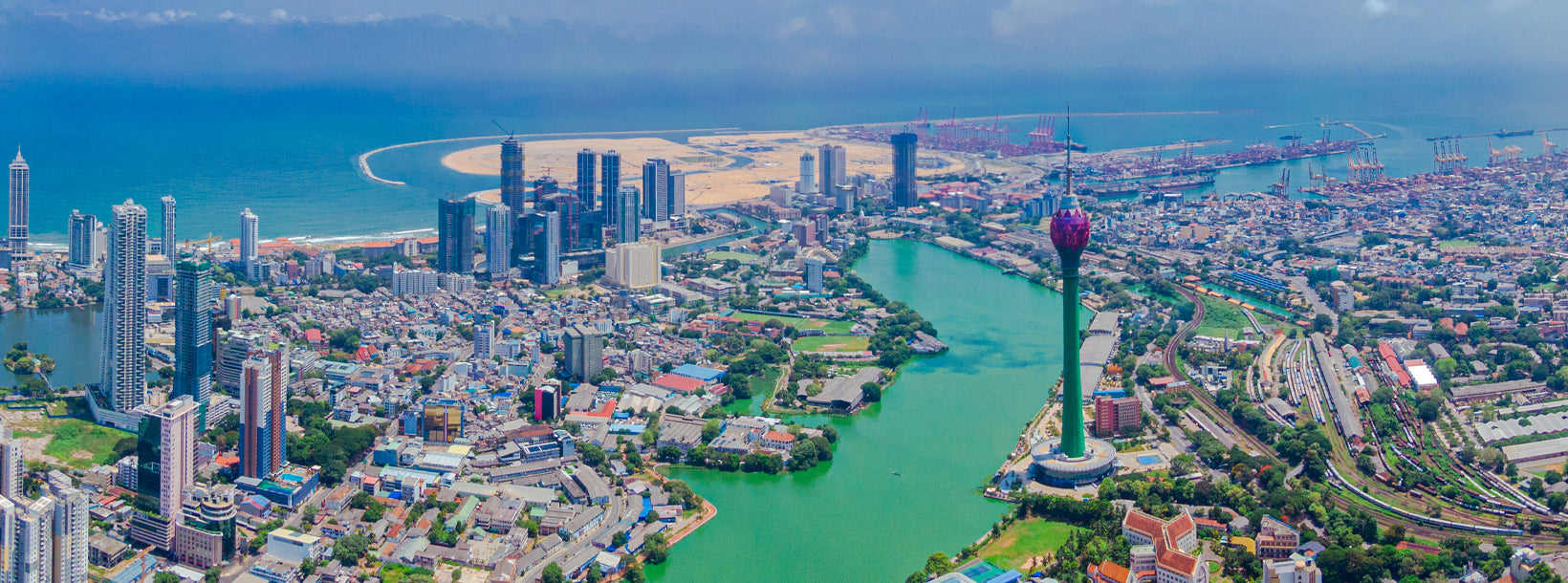
The lighthouse stands at Galbokka Point within Colombo Fort, the city's historic commercial and administrative core. It sits along Marine Drive, facing the Indian Ocean to the west. The site is flanked by the Port of Colombo to the north and the Naval Headquarters across the road. The newly reclaimed Colombo Port City lies immediately to the south and west, altering the waterfront geography that defined the lighthouse's original coastal setting.

For orientation, the lighthouse is roughly 2 kilometres from Galle Face Green and a short distance from several of Colombo's principal government buildings. Anyone exploring the Fort area on a Colombo city tour will pass near the site, though access to the lighthouse itself remains restricted to the general public.

Can visitors access the Colombo Lighthouse?

The lighthouse is located within a high-security precinct and is not open for independent visitor access. The surrounding area — including Marine Drive and the nearby Colombo Fort streets — can be explored on foot, and the tower is clearly visible from the waterfront. The best views of the lighthouse exterior are from along Marine Drive or from the reclaimed land of the Port City development.

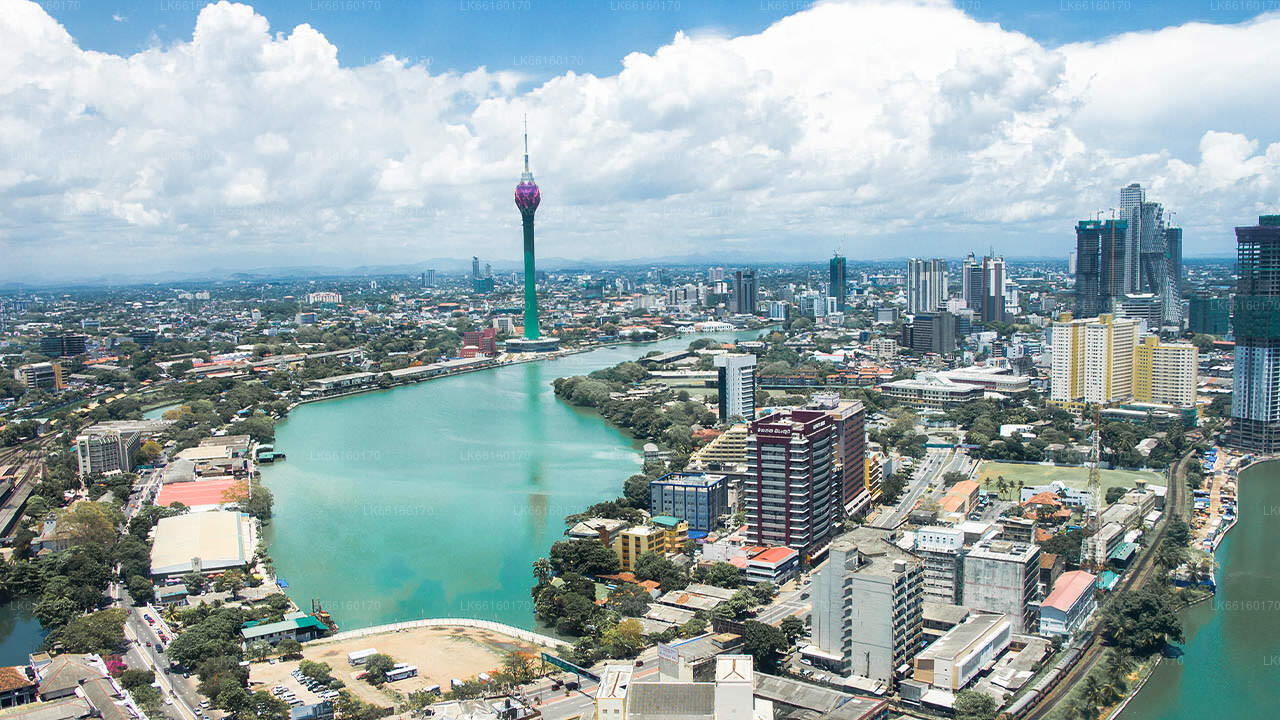
Travellers interested in Colombo's maritime character will find the nearby Colombo Harbour and the evolving Port City skyline equally compelling. The Colombo Lotus Tower, Sri Lanka's tallest structure, is a short distance away and offers observation decks open to the public.

What makes the Colombo Lighthouse architecturally significant?

While the lighthouse is functional rather than ornate, its 1952 design reflects the nation-building ambitions of early post-independence Ceylon. The choice to have the country's first Prime Minister officiate the opening, combined with the four lion statues at the base — a symbol with deep historical resonance in Sri Lankan iconography — signals that this was never conceived as purely a maritime safety structure. It was intended, from the outset, as a statement of national identity and sovereign control over the country's primary port.

The tower's proportions are relatively slender for its height, with the elevated concrete base giving it a distinctive two-stage appearance. Despite the changing skyline around it, the lighthouse retains a quiet authority on the waterfront.

How has the Colombo Port City changed the lighthouse's setting?

The construction of the Colombo Port City — an ambitious land reclamation project off Marine Drive — has physically altered the lighthouse's relationship to the sea. Where the tower once stood directly above the waterline at Galbokka Point, it is now effectively inland, surrounded by reclaimed ground that forms the foundation of a new urban district. This change prompted the Sri Lanka Navy to relocate the Independence Day gun salute from the lighthouse battery to naval vessels stationed offshore, maintaining the ceremonial tradition while adapting to the new geography.

Ask Lakpura® Agent