Lakpura
Lakpura®

Old Parliament Building

Standing at the northern end of Galle Face Green, the Old Parliament Building is one of Colombo's most architecturally coherent landmarks from the British colonial period. Several hundred metres long and only three storeys tall, it contrasts sharply with the glass towers that now define the Fort skyline — and that contrast is precisely what makes it worth pausing to appreciate.

What is the history of the Old Parliament Building?

The building's origins trace back to a recommendation made in 1920, when a government committee proposed constructing a new seat for the Legislative Council of Ceylon on reclaimed land at the northern edge of Galle Face. The idea was championed by Governor Sir Henry McCallum, and the proposal — which called for the Secretariat, Council Chamber, and associated government offices to be housed under one roof — was accepted by the colonial administration that same year.

A. Woodson, then Chief Architect of the Public Works Department, was appointed to design the structure. His initial cost estimate of Rs 400,000 was later revised to Rs 450,000 by the Public Works Advisory Board to account for additional works. Construction proceeded steadily, and on 29 January 1930, Governor Sir Herbert Stanley formally declared the building open as the Legislative Council of Ceylon. In his address, Stanley expressed the hope that deliberations within the building would bring together the island's communities "not by the suppression of varying traditions but by their co-ordination on a basis of mutual respect" — words that carry a certain weight in hindsight.

What architectural style is the Old Parliament Building?

The building is a confident example of Neo-Baroque revivalist architecture, a style popular in British colonial civic construction of the late nineteenth and early twentieth centuries. Sri Lankan architectural historian Ismeth Raheem described it as a "masterpiece in stone" — a characterisation that is easy to understand once you stand before the façade.

The main entrance is approached by a broad flight of steps that leads to a portico of six Ionic columns supporting a classical triangular pediment. Four additional columns flank the pediment on each side. Running the full length of the building are two colonnades, each composed of eleven gently fluted Ionic columns — the scroll capitals giving the structure an ordered elegance without excess ornamentation. The sheer horizontal scale of the colonnade, set against the open sea on one side and the city on the other, is what gives the building its particular visual presence.

How did Woodson approach the building's interior design?

Woodson applied careful environmental thinking to the interior — practical considerations that were ahead of their time for a public building of that era. He oriented the building to maximise the benefit of sea breezes, and positioned the Council Chamber on the east side specifically to shelter it from afternoon sun and the noise of the ocean. Cork carpet and linoleum were used on floors to absorb sound, lighting was designed to be indirect, and the Chamber's acoustic properties were engineered to carry debate clearly without echo. Ventilation was provided by fans in the basement that pushed conditioned air into the chamber, with adjustable grilles fitted beneath members' seats to allow individual control of airflow — a refinement rarely found in public buildings of the 1920s.

What was the building used for after independence?

Following Ceylon's independence in 1948, the building continued to function as the seat of Parliament for the newly sovereign nation. It served in this capacity until 1982, when the legislature relocated to the purpose-built Parliament Complex at Sri Jayawardenepura Kotte. The old building was subsequently repurposed and today houses the Presidential Secretariat, making it an active centre of executive government rather than a static heritage monument. Because it remains an operational government building, public access to the interior is restricted.

Where is the Old Parliament Building and how do I get there?

The building sits at the northern end of Galle Face Green in Colombo Fort, overlooking Beira Lake to one side and the Indian Ocean to the other. The address is Sir Baron Jayatilleke Mawatha, Colombo 01. From most hotels in Colombo 03 (Kollupitiya) or Colombo 07 (Cinnamon Gardens), the drive to Galle Face takes under fifteen minutes by taxi. The building is most easily viewed from the Galle Face Green promenade or from the road running along the seafront. A Colombo city tour typically includes a stop at or near the Old Parliament Building as part of a broader circuit of colonial-era landmarks in the Fort district.

What other colonial landmarks are near the Old Parliament Building?

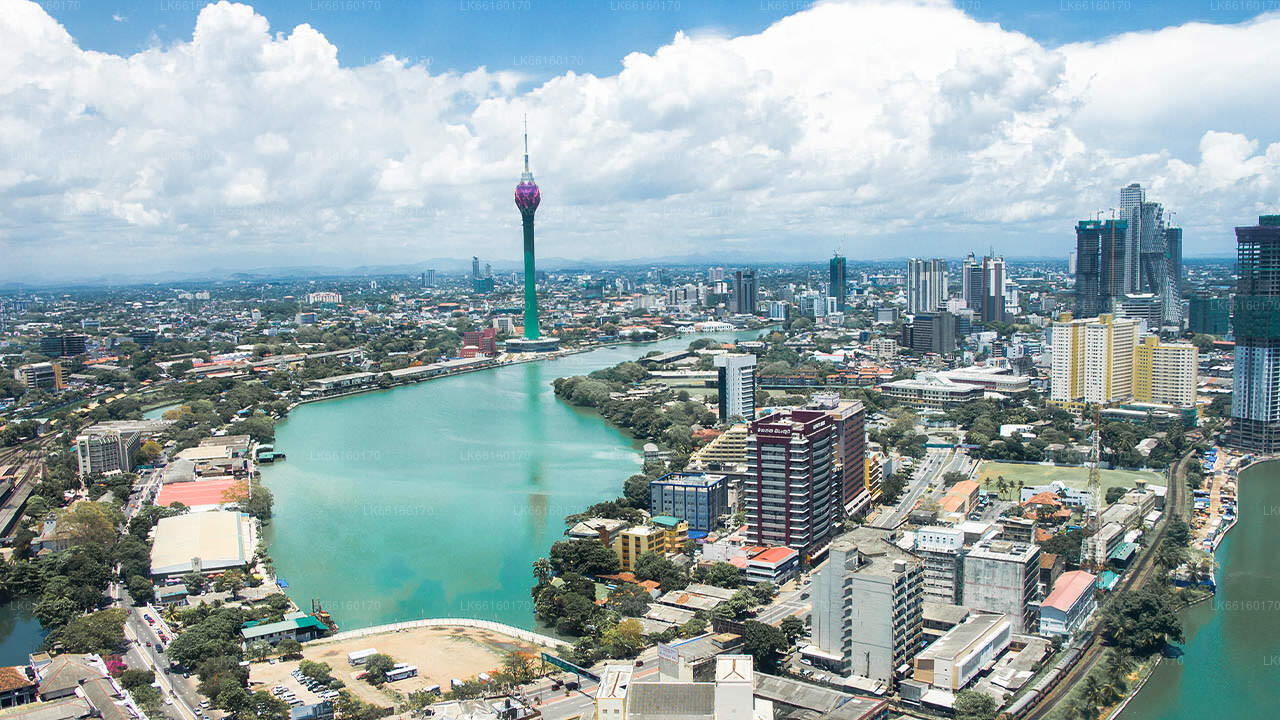
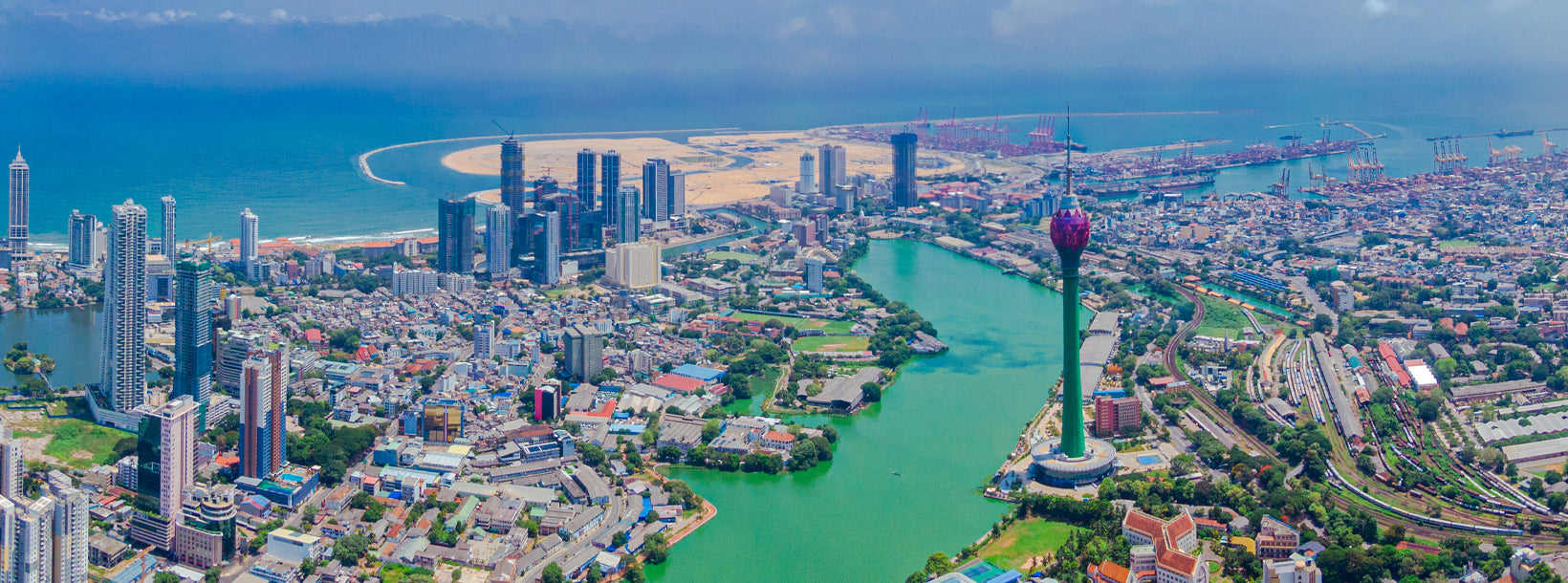
The Fort district immediately to the north concentrates several buildings from the same administrative era — the Cargills department store, the Grand Oriental Hotel, and the Old Colombo Lighthouse are all within walking distance. Across the road, the Colombo Lotus Tower offers a pointed visual contrast between the city's colonial past and its post-independence ambitions. The National Museum in Cinnamon Gardens, roughly two kilometres to the east, provides essential context for understanding the legislative and social history of Ceylon during the period when the Old Parliament Building was constructed.

Is the Old Parliament Building worth visiting on a trip to Colombo?

For travellers with an interest in colonial architecture or Sri Lanka's political history, the building is worth a deliberate detour rather than a passing glance. The exterior alone — particularly the colonnade seen from the green — justifies the stop. The surrounding Galle Face area is pleasant for an early-morning or late-afternoon walk, and the building photographs well in soft light when the columns cast long shadows across the steps. Those interested in how Ceylon's legislative institutions evolved before and after independence will find the building a useful anchor point for understanding Colombo's administrative geography.

Book this experience with Lakpura

Curated by our local team. Direct booking, instant confirmation.

Ask Lakpura® Agent