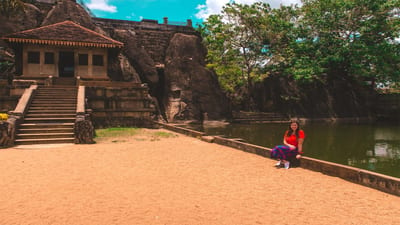
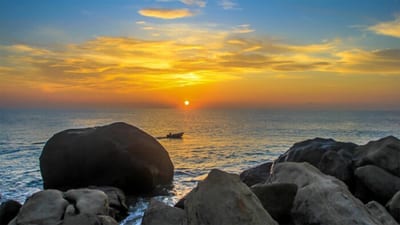
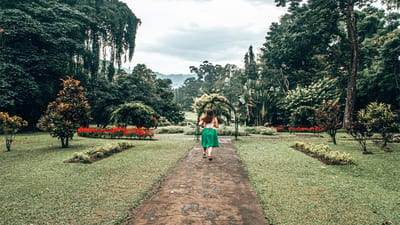
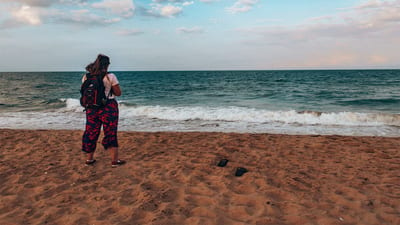
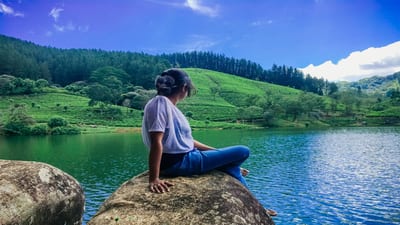
Badulla District occupies 2,861 km² of Sri Lanka's Uva Province, rising from warm lowland paddy fields in the east to cool tea-covered highlands in the west. With a population of around 837,000, it is one of the island's most geographically varied districts — a place where a single day's drive can take you from mist-shrouded ridges at over 2,000 m to river plains dotted with buffalo and rice terraces. For travellers who already know Colombo or Kandy, Badulla offers a slower, more textured version of Sri Lanka.
Where exactly is Badulla District?
Badulla is bordered by Monaragala to the south and east, Ratnapura to the south-west, Ampara, Polonnaruwa and Kandy to the north, and Nuwara Eliya to the west. This central-highland location makes it a natural midpoint on any circuit that links the Cultural Triangle with the south coast. The district capital, Badulla town, sits at roughly 680 m above sea level in a sheltered valley along the Badulu Oya river.
Geographically, the district splits into two distinct zones. The upper division — encompassing areas such as Bandarawela, Haputale, and the slopes around Ella — sits above 1,000 m and carries the cool, misty character typical of Sri Lanka's hill country. The lower division, including Passara and parts of Mahiyanganaya, drops toward the Dry Zone and is defined by paddy cultivation, warmer temperatures, and a drier seasonal rhythm.
What is Badulla District known for?
The district's economy rests on three pillars: tea, vegetables, and paddy. The upper highlands produce quality orthodox Ceylon tea, with estates clustered around Bandarawela and Haputale supplying both local factories and export markets. The cool climate also sustains year-round vegetable farming — leeks, carrots, potatoes, and brassicas grown in smallholdings that terrace the steeper slopes.
Beyond agriculture, Badulla has quietly become one of the island's most rewarding destinations for nature and slow travel. Ella — technically within the district — draws visitors with its gorge views, hiking trails, and café culture. Waterfalls such as Dunhinda Falls (near Badulla town) and Diyaluma Falls (near Koslanda) are among the tallest in Sri Lanka. The district also borders Horton Plains National Park, whose plateau and World's End escarpment are accessible from the Ohiya area to the west.
How do I get to Badulla from Colombo?
The classic approach is by train on Sri Lanka's hill-country line, widely regarded as one of the most scenic railway journeys in Asia. Trains such as the Podi Menike and Denuwara Menike depart Colombo Fort, pass through Kandy and the tea country, and terminate at Badulla station after a journey of roughly nine to ten hours. Observation-carriage seats and reserved second-class berths fill up well in advance, especially on weekends and during school holidays — book early.
By road, Badulla is around 230 km from Colombo via the A5 highway through Kandy and Nuwara Eliya; driving time is typically five to seven hours depending on traffic and road conditions in the highlands. A private transfer is the most comfortable option for those carrying luggage or travelling with children.
What can I see and do in Badulla District?
The district rewards travellers who are happy to combine natural scenery with low-key cultural exploration. Key experiences include:
- Ella Rock and Little Adam's Peak — two manageable hikes with rewarding ridge-top views, both starting from Ella town.
- Dunhinda Falls — a roughly 64 m waterfall set in forest about 5 km north of Badulla town, reached by a short walk through riparian woodland.
- Diyaluma Falls — one of Sri Lanka's tallest cascades, on the southern edge of the district near Koslanda; natural rock pools form at the summit during dry spells.
- Nine Arch Bridge — the colonial-era viaduct near Ella is one of the most photographed structures in Sri Lanka, particularly dramatic when a train passes through the arches.
- Tea estate walks — estates around Bandarawela and Haputale welcome visitors for informal tours; further afield, the Bluefield Tea Gardens at Ramboda, in Nuwara Eliya District, offer a structured introduction to the full production process.
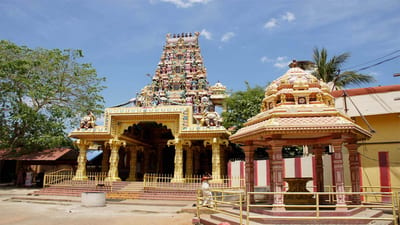
- Mahiyanganaya — the lower district's main town, associated with one of the Buddha's legendary visits to Sri Lanka and home to the Mahiyangana Raja Maha Viharaya stupa.
- Bogoda Wooden Bridge — believed to be the oldest surviving wooden bridge in Sri Lanka, near Hali-Ela.
When is the best time to visit Badulla District?
The upper highlands experience two inter-monsoon periods — roughly March to April and again October to November — when rainfall is moderate and temperatures are pleasant. The period from January to March is generally the driest and coolest, making it ideal for hiking. The district sits in a rain-shadow for the southwest monsoon (May to September), so the upper areas stay relatively dry during that period, unlike the western slopes of the central highlands.
The lower division around Mahiyanganaya can be very warm between April and September; if you plan to combine both zones in one itinerary, the first quarter of the year tends to offer the most comfortable conditions across the board.
What wildlife can I find in Badulla District?
Badulla borders several important wildlife corridors. The Flood Plains National Park and Maduru Oya National Park lie to the north and north-east respectively, and elephant herds move through the forests of the lower district. Birdwatching is productive in the upper forests — the Sri Lanka whistling thrush, dull-blue flycatcher, and yellow-eared bulbul are among the endemic species found at higher elevations.
The cloud-forest belt along the district's western boundary with Nuwara Eliya shelters leopards, sambar deer, and a rich community of reptiles and amphibians, many of which are found nowhere else on earth. Travellers interested in combining a wildlife component with hill-country scenery often pair a Badulla visit with a trip to Horton Plains.
Where should I stay in Badulla District?
Accommodation ranges from modest guesthouses in Badulla town to characterful bungalows and boutique hotels in Bandarawela, Haputale, and Ella. Converted plantation bungalows are a popular choice for families or small groups seeking privacy and a colonial atmosphere. Ella has the widest range of cafés and restaurants, while Bandarawela offers a quieter, more local character. Badulla town itself is a practical base for day trips to the waterfall circuits and lower-district temples.
Is Badulla District easy to travel around?
The hill-country train line connects Badulla station to Ella, Haputale, Bandarawela, Nanu Oya (for Nuwara Eliya), and onward to Kandy and Colombo — making rail an extremely convenient way to move between the district's main towns. For sites away from the rail line, hiring a tuk-tuk or private vehicle is the standard approach. Roads in the upper district are generally well-maintained but winding; allow extra time for mountain driving, especially after rain.
Nearby places
11 places within about 25 km, nearest first.
- Badullaunder 1 km
- Badulla Accommodationsunder 1 km
- Welekade Dutch Fortunder 1 km
- Badulla Railway Stationunder 1 km
- Muthiyanganayaunder 1 km
- Dunhinda Fallsunder 1 km
- Muthiyangana Raja Maha Viharaunder 1 km
- Badulla Katharagama Devalayaunder 1 km
- Badulla Pillar Inscriptionunder 1 km
- Hali Ela4 km
- Jamuna Tank14 km
Related reading
2 pages on closely related subjects.