Alahana Pirivena


If you have been to Polonnaruwa, you would know what a rush it is. So many ruins cramped together. When you purchase the entrance ticket to see the ruins, typically the temptation is to see all that is to be seen and this in fact is the folly of it all. On many of our previous visits we were guilty of the same crime – for it is indeed a crime not to see, visualize and drink deeply of the splendor of our ancients. In the hot sun we would pant from one ruined building to another only taking time to quench our thirst, and at the end of the day tramp back to our hotel to relax.
However, changing our modus operandi this time when we visited Polonnaruwa we were determined to visit, study and relax over just one of the many groups of ruins. So after a holiday lunch (which means you have license to over eat), and an afternoon siesta (luxury) and a fine cup of tea (wake up call), we made our way to the Alahana Pirivena Monastery site around 5.00 pm.
Alahana Pirivena is the great monastic complex founded by Parakramabahu 1 (1153-1186), said to be built on a cremation ground, hence the name Alahana Pirivena.The monastery laid out in terraces in idyllic surroundings with small and large rocky outcrops like the Gopala pabbata, meandering stream, ponds and parks is said to have extended over an area of more than eighty hectares.
Archaeologists have found that the monastery consisted of many separate units demarcated by smaller boundary walls with small entrance doorways. Each unit had its own living cells, and several of them seem to have shared a common bath house, refectory and other such facilities for monks.
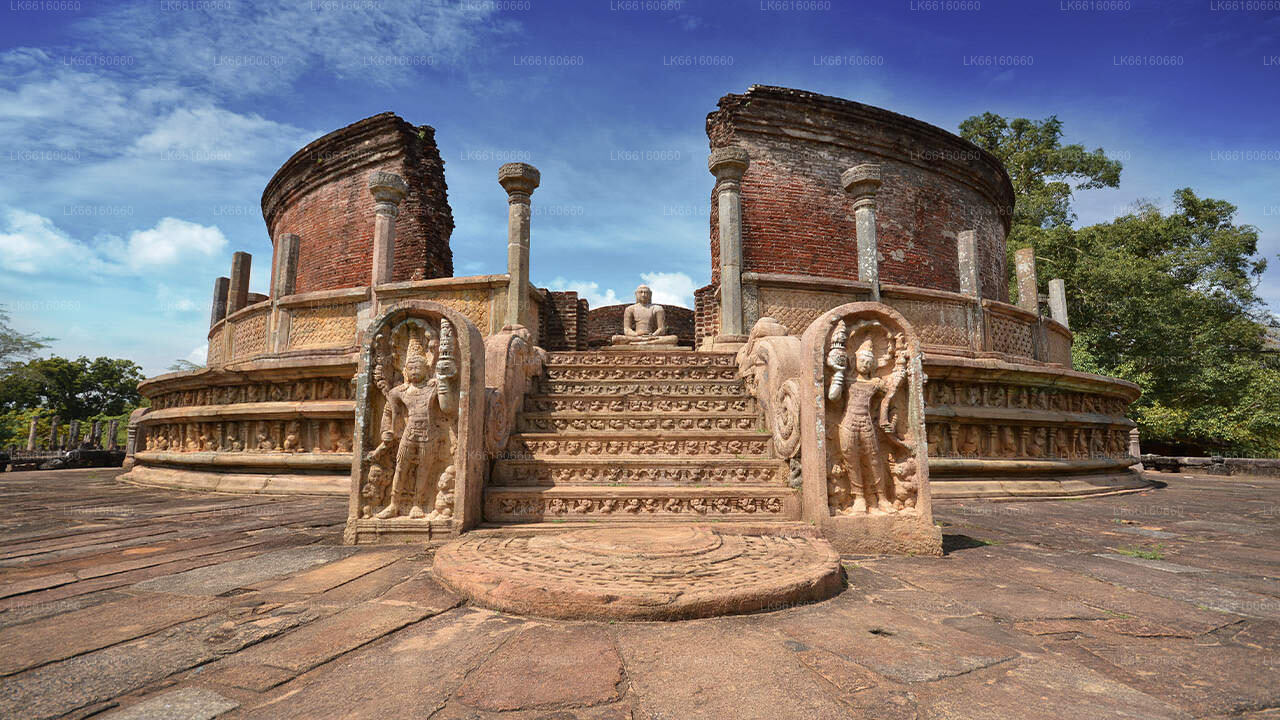
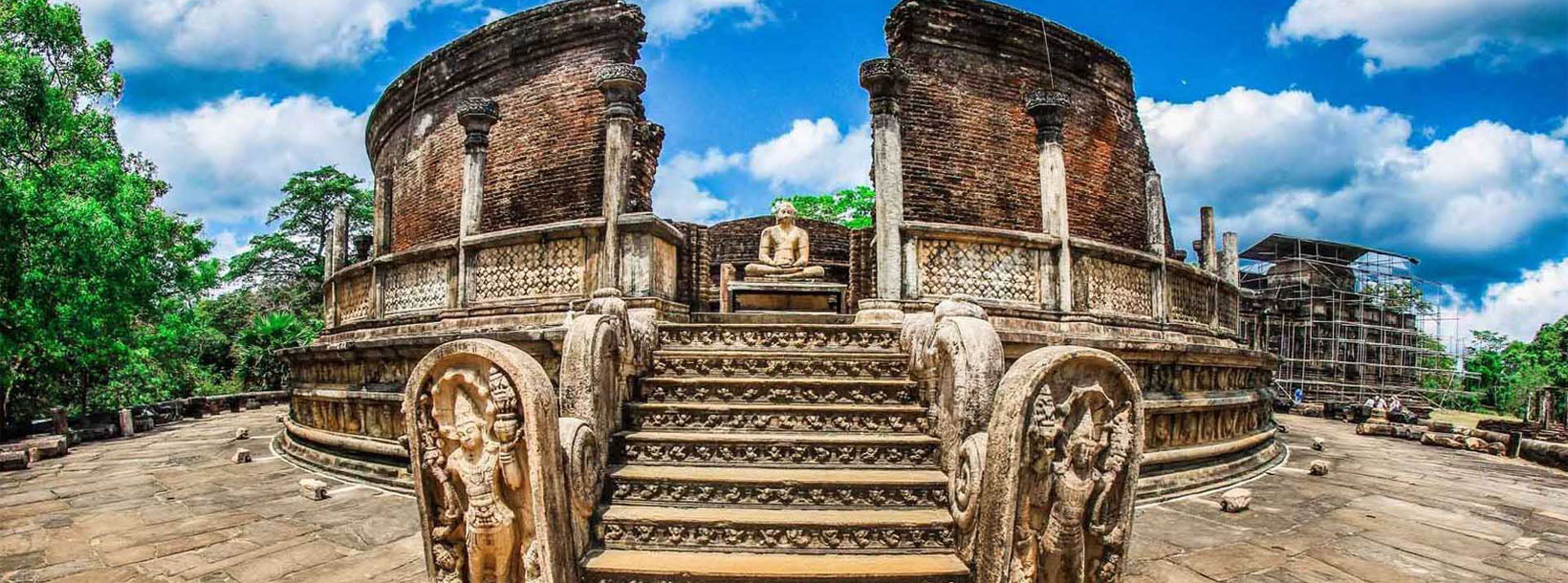
On the highest terrace of the Alahana Pirivena grounds stand the remains of a monumental brick building known as the Baddhasima pasada which was the chapter house of the monks residing in the monastery.It is said that during King Parakramabahu’s time the monks met here fortnightly on full moon and new moon days with the chief monk on the raised dais in the centre, and recited the vinaya or rules of discipline for monks.The short stone pillars outside the building which marked the sima or the boundaries of the chapter house are of pleasing design and an important feature.
On the eastern side of this chapter house on a lower terrace is a cave known as the Kuda Gal Vihara wherein are three small stone seated Buddha images. Lankatilake pilimage, the beauty spot of Lanka as the name suggests, is by far the most striking. This is very true if you are lucky to watch the sun setting behind this massive brick building – the largest of the gedige architecture. Within the cave is the remains of a gigantic 41 foot standing Buddha image.