Mannar City
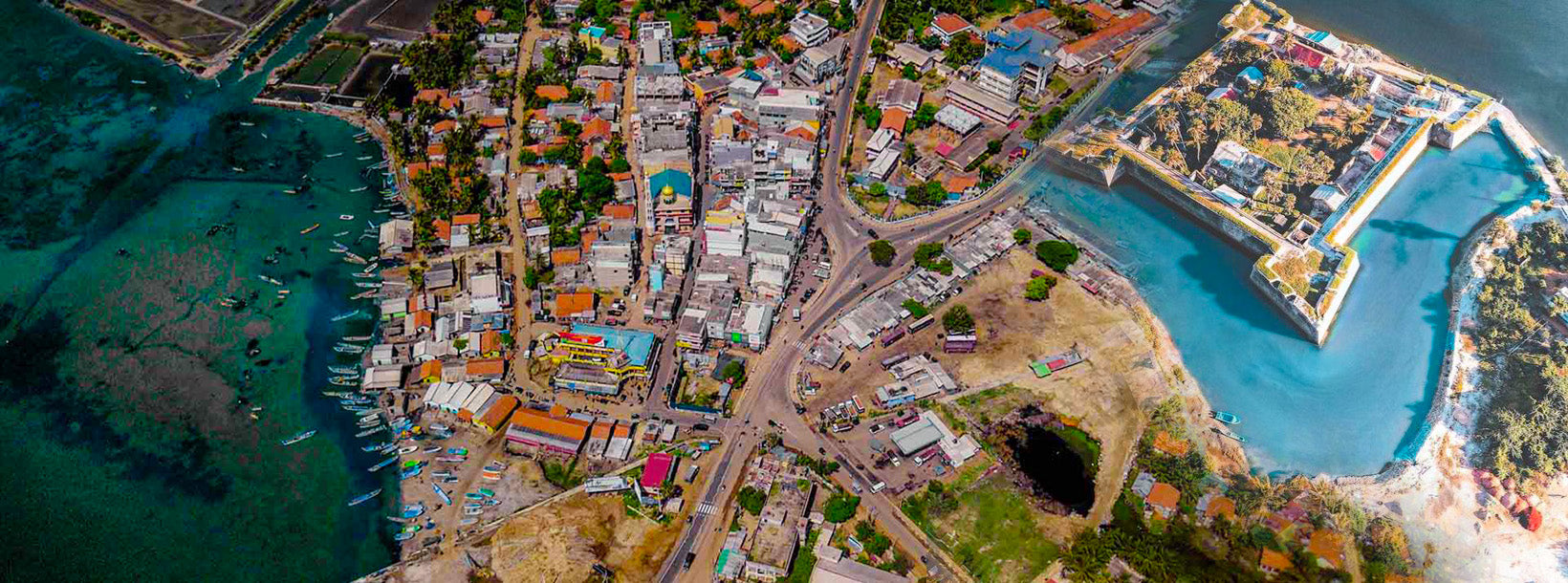
Mannar is de belangrijkste stad van het district Mannar in de Noordelijke Provincie van Sri Lanka. De stad wordt bestuurd door een gemeenteraad. Mannar ligt op het eiland Mannar, met uitzicht op de Golf van Mannar, en herbergt de historische Ketheeswaram-tempel.
Mannar City
Location: Mannar is located 325km north of Colombo
MannarThe regular route to Mannar from Colombo is via Anuradhapura and Madawachchiya.
Mannar District
Mannar district which belongs to the Northern Province of Sri Lanka consists of an area that is part of the mainland and Mannar island – the largest islet in the country. The road to Mannar is through the dry zone of Sri Lanka. The landscape in Mannar district varies from wooded jungles to paddy fields and swaying palm trees.
Mannar Island
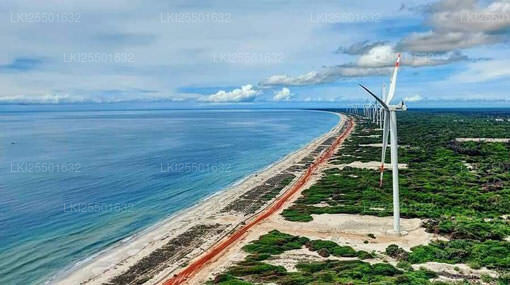
Mannar Island is a dry and barren peninsula located in the district of Mannar. Though called an islet, it is in fact a peninsula formed in the shape of a tongue. Talaimannar, the westernmost tip of the island, is almost connected to the Dhanuskodi, the easternmost tip of the peninsula of Southern India by a reef of corals submerged in the Palk Straits.
Apart from the thin strip of land that joins the peninsula to the mainland, Mannar Island is also connected by the causeway over the shallow waters forming a 3 km stretch of the A14 Madawachchiya –Talaimannar main road. The small fishing port of Mannar is located on the south-eastern shore of the islet.
Mannar Island has been referred historically by names such as “Manthei”, “Mathota”, Mahathiththa”, “Mahaputu” and “Mawatuthota”.
St. Mary’s Church at Madhu
St. Mary’s Church at Madhu (Shrine of Our Lady of Madhu) is located 50km south-east of Mannar. It is a 12 km drive (A 378 Madhu Road) inland off the A14 Madawachchiya –Talaimannar main road from the Madhu Road junction.
The Portuguese style church built in the nineteenth-century is home to the statue of Our Lady of Madhu, which is believed to bring blessings upon all who visit the church. The statue was brought to Madhu in 1670 by Catholics fleeing persecution by the Dutch. The remote village of Madhu has been also sacred to Buddhists for more than 1860 years, that is since the period of King Gaja Bahu I (114-136 CE) , who introduced the Hindu Pattini cult to ancient Lanka.
It is very significant to note that the Pattini cult wasn’t accommodated in Anuradhapura, then the capital and a glorious Asian scholastic centre of Theravada Buddhism. The Pattini Devale shrine was built in Mannar 90 km north-west of Anuradhapura. During the period of the Portuguese rule in Sri Lanka, the Hindus called it the Amman Kovil. The nearby tank is still called Kovil Kulam (tank of the devale) which derives from the Tamil name of the site.
The pilgrims who often visit, arrive mainly in view of their belief in the healing powers attributed to the deity Pattini Amma. Pattini Amma’s blessing is also sought by childless women. Mr. E.B. Denham the author of the Census Report of 1911 says: “It is essentially a forest pilgrimage…the earth of Madhu is considered to possess special medical properties, hence the sanctity, resulting in the reputation that `Madhu Medicine’ effects cures in cases. It is interesting to note in the year 1911 there were no permane
District Mannar
Mannar is de hoofdstad van het district Mannar in Sri Lanka. Het district Mannar ligt in het noordwesten van Sri Lanka en is een van de vijf administratieve districten van de Noordelijke Provincie. Het district heeft een oppervlakte van 2.002 km², wat ongeveer 3% van het totale landoppervlak van Sri Lanka beslaat.
Geografisch gezien ligt het grootste deel van Mannar op het vasteland binnen de droge en semi-aride klimaatzone. Het klimaat wordt gekenmerkt door hoge temperaturen en weinig neerslag. De maandelijkse temperaturen variëren tussen 26,5 °C en 30,0 °C, met de hoogste temperaturen doorgaans tussen mei en augustus. Mannar ontvangt bijna 60% van zijn jaarlijkse neerslag tijdens de noordoostmoesson, die van oktober tot december duurt.
Het gebied is relatief vlak en ligt op lage hoogte. Landinwaarts is het terrein licht golvend, wat de opslag van regenwater in reservoirs bevordert. Deze reservoirs leveren het grootste deel van het irrigatiewater voor het landbouwgebied van het district. De belangrijkste economische activiteiten in Mannar zijn landbouw (vooral rijstteelt), visserij en veeteelt. Werkgelegenheid is sterk seizoensgebonden en er zijn geen instellingen voor tertiair onderwijs in het district.
Noordelijke Provincie
De Noordelijke Provincie is een van de negen provincies van Sri Lanka. De provincies bestaan sinds de 19e eeuw, maar kregen pas in 1987 een wettelijke status, toen de 13e wijziging van de Grondwet van 1978 van Sri Lanka provinciale raden instelde. Tussen 1988 en 2006 werd de provincie tijdelijk samengevoegd met de Oostelijke Provincie tot de Noordoostelijke Provincie. De hoofdstad van de provincie is Jaffna.
De Noordelijke Provincie ligt in het noorden van Sri Lanka en bevindt zich op slechts 22 mijl (35 km) van India. De provincie wordt in het westen begrensd door de Golf van Mannar en de Palkbaai, in het noorden door de Palkstraat, in het oosten door de Golf van Bengalen en in het zuiden door de Oostelijke, Noord-Centrale en Noordwestelijke Provincie.
De provincie heeft verschillende lagunes, waarvan de grootste de Jaffna-lagune, Nanthi Kadal, de Chundikkulam-lagune, de Vadamarachchi-lagune, de Uppu Aru-lagune, de Kokkilai-lagune, de Nai Aru-lagune en de Chalai-lagune zijn. De meeste eilanden rond Sri Lanka bevinden zich ten westen van de Noordelijke Provincie. De grootste eilanden zijn Kayts, Neduntivu, Karaitivu, Pungudutivu en Mandativu.
In 2007 telde de Noordelijke Provincie 1.311.776 inwoners. De meerderheid van de bevolking bestaat uit Sri Lankaanse Tamils, met een minderheid van Sri Lankaanse Moren en Singalezen. Sri Lankaans Tamil is de belangrijkste taal en wordt door het overgrote deel van de bevolking gesproken. Ongeveer 1% van de bevolking spreekt Singalees. Engels wordt in de steden algemeen gesproken en begrepen.