Martin Wickramasinghe Folk Museum Complex


The Martin Wickramasinghe Folk Museum is located the Koggala Free Trade Zone, not far from the coastal city of Galle. Once the home of he famous Sri Lankan Writer and Poet Martin Wickramasinghe, it is now a place filled with his memories and remnants.
About Martin Wickramasinghe
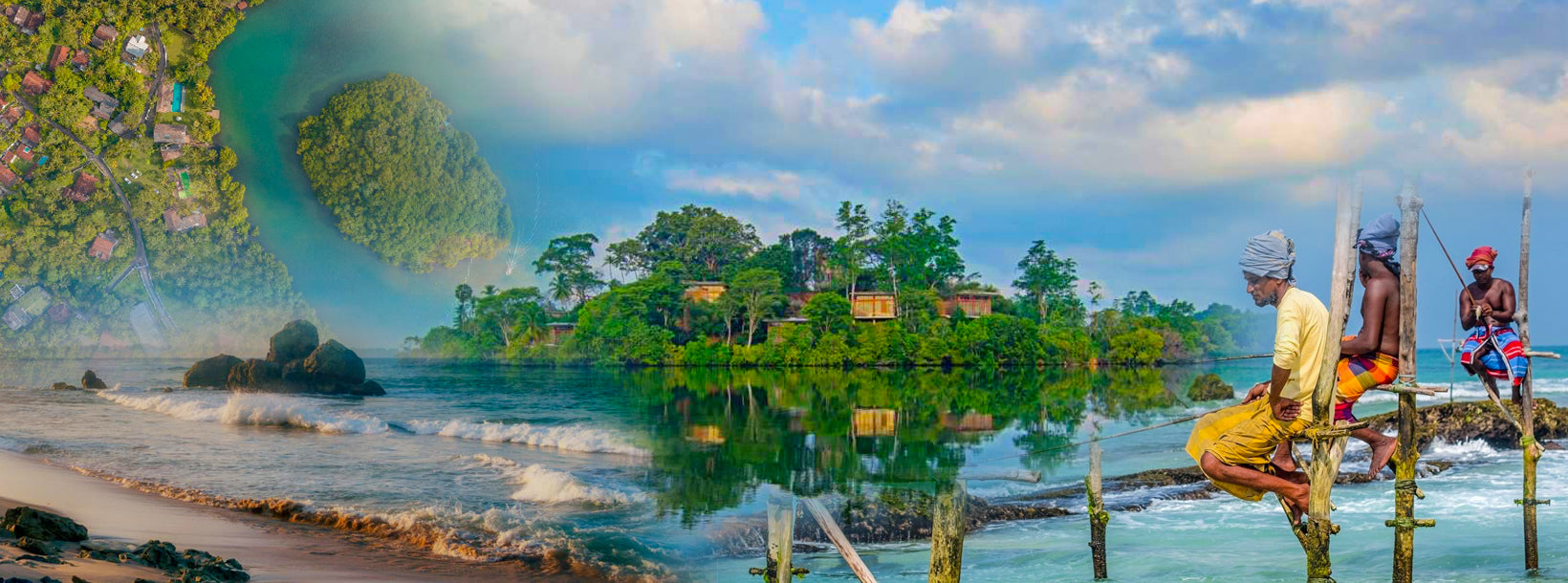
The writer Lama Hewage Don Martin Wickramasinghe, popularly known as Martin Wickramasinghe, was born on the 29th of May 1890 in the village of Malagama (in the area of Koggala) near Galle.. The area lay between a reef on the coastal end and a swampy lagoon where the tributaries of Koggala River drained into. The lagoon had many mangrove forests along the shores, and was studded with delightful islands to explore. It was a place filled with nature and adventure, a place that was perfect for a growing boy and his sisters. His childhood environment definitely played a huge role on his future writing.
When Martin was 5 years old, he was taught to read and write Sinhala by the village monk. He was very quick at picking it up, and therefore the monk also taught him the alphabet of the ancient manuscript language Devanagari. This allowed him to read the Buddhist manuscript of Hitopadesa. While it is unknown whether Martin truly understood it at that young age, he did also manage to memorize and quote several long sections out of the manuscript.
Taking note of his genius language abilities, the monk had him sent to a nearby vernacular school. He gained expertise in the Sinhala language during the two years that he studied there. Later in 1897, he was sent to learn English at school named Buono Vista in Gallle. Two years later Martin became fluent in not only English, but also Latin.
But the growth was not to last. Shortly after little Martin’s father passed away. The family faced financial difficulties. Martin had to give up on studying at Buono Vista, and reenroll at local vernacular school in Ahangama. But there were so many problems at home and nobody to encourage and listen to Martin. He had lost his biggest support with the death of his father. The sudden change, almost drop, in environment was not very good for little Martin either. Soon he lost interest in school and studies, and stopped going.
Several years passed. During this period, Martin became a child who wandered around the swamps and wilderness around his village, together with a gang of other village boys. He enjoyed exploring the unknown depths of the swamps and lived the fun life of an adventurer. This period became key to his mindset and formed a base for many of his future stories.
In 1914, at the age of 24, Martin formally began his career as a writer. His maiden work was the was the novel ‘Leela’. He went on to write several other novels, prose and essays until the 1940s, when he became a literary critic in conjunction with being a cre