Città di Jaffna
Jaffna è la città principale della penisola di Jaffna, nel distretto più settentrionale dello Sri Lanka. I comodi autobus interurbani da Colombo impiegano 10-12 ore per raggiungere la città di Jaffna.
Nilavarai Bottomless Well
The Nilavarai Well is popular attraction in Jaffna lying in Puttur in the Navakkiri GS area of Valikaamam East division. Some times referred to as a bottomless well or Deep Well, this well is caused by collapse of the top layer, exposing a limestone cavern connected to a underground water source. It is said that this well never dries up even during severe drought and the water is used by the farmers in the surrounding area. The dimensions of the well is 25 feet in length and 40 feet in width. As in many large public wells in the area, a flight of steps lead to the water level which is 14 feet below the surface level.
It is said that the 1st 40 feet of water in the well is fresh and turns saline further down. It is believed that this water source is connected to the Keeramali Freshwater Pool and said that a lime fruit thrown to to the well will appear in the Keeramali sea which lies 10km way from this well.
It is also said that the water level of the well falls and rises in synchronization with the low and high tide of the sea. Unfortunately no study of this well has been carried out partly due the 30 year bloody war with with Tamil Tiger Terrorists in this part of the country which ended in 2009. Fortunately a study of this curious well has been done in mind 1800’s and was published in the 1865-66 edition of the Journal of the Ceylon Branch of the Royal Asiatic Society of Great Britain & Ireland.
To ascertain at which depth the fresh water turns in to salt water, samples of water was taken at the depths of 45 feet, 95 feet and 145 feet using a special instrument with a valve and sealed in sealed. These bottles were sent to England for chemical analysis of the content. During the test it was found that the well was definitely not bottomless but reached the bottom at a death of 145-150 feet. It was observed that the samples of water brought from the bottom smelt of strongly of sulphureted hydrogen. It was also observed that the brackishness started between 40-50 feet in depth thus it was certain that the salt water enters the well at this height.
In the next experiment three researchers measured the water levels of the Jaffna Lagoon, Valvettithurai seas and the Nilavarai well every half an hour from 6 am to 6 pm. These measurements indicated that Valvettithurai and Nilavarai sea levels started to fall at 6.30 am and started to rise around 2-2.30 pm. But the water levels at the Nilavarai well fell in parallel with the seas at 6.30 but started to rise at 9.30 am and again fell after 2 pm. This meant that water levels in the well alternated 3 times a day while the tides alternated twice a day. Therefore the connection of the change of the water level in the well to the tides in the sea was disproved left the reason for the thrice daily water level changes in the well unanswered.
Recently (150 years later) an automated diving robot with divers of the Sri Lankan Navy conducted an expedition to the bottom of the well. They discovered that the bottom of the well lies 52.5 meters (172 feet). It was also discovered that fresh water existed in the first 18.3 meters (60 feet) and turned in to salty as it goes down. They also disc
Informazioni sul distretto di Jaffna
Jaffna è la capitale della Provincia Settentrionale dello Sri Lanka. L'85% della popolazione dei distretti di Jaffna e Kilinochchi è indù. Gli indù seguono la tradizione shivaita. La restante parte è in gran parte cattolica romana o protestante, alcuni dei quali discendenti di coloni, noti come Burgher. I Tamil sono divisi in caste, con la maggioranza dei Vellalar, casta agricola. I prodotti ittici, la cipolla rossa e il tabacco sono i principali prodotti di Jaffna.
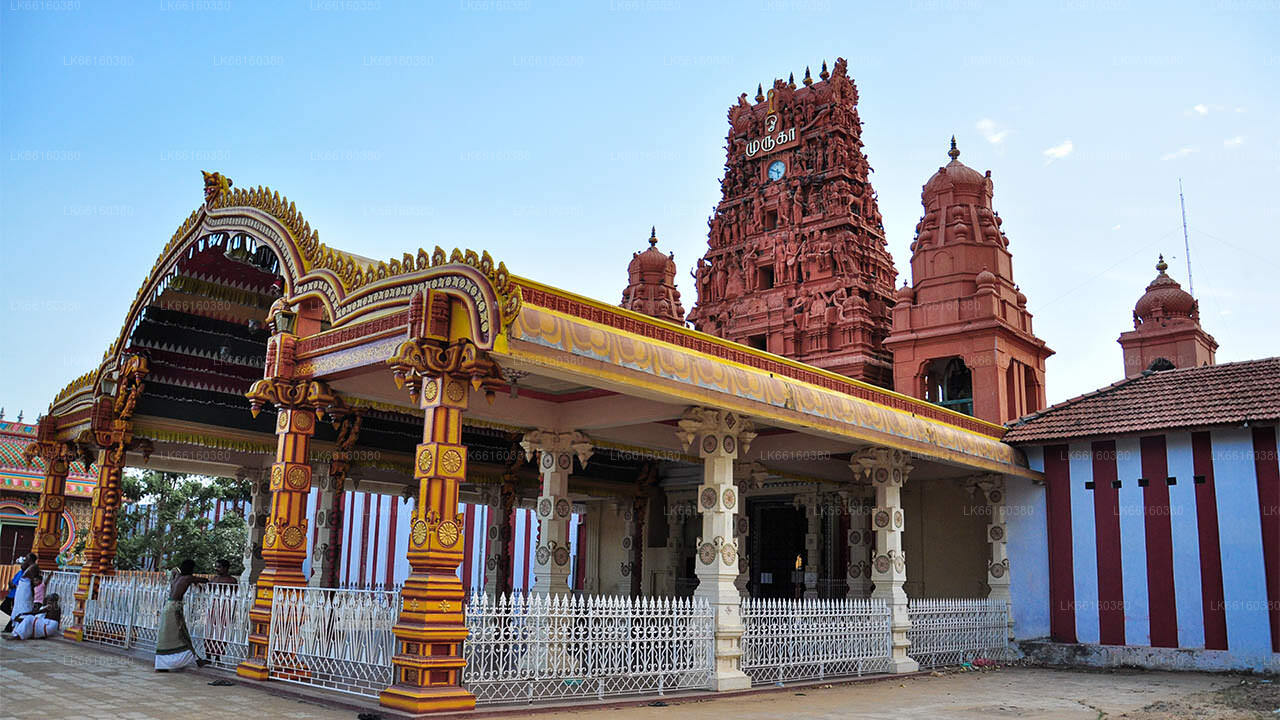
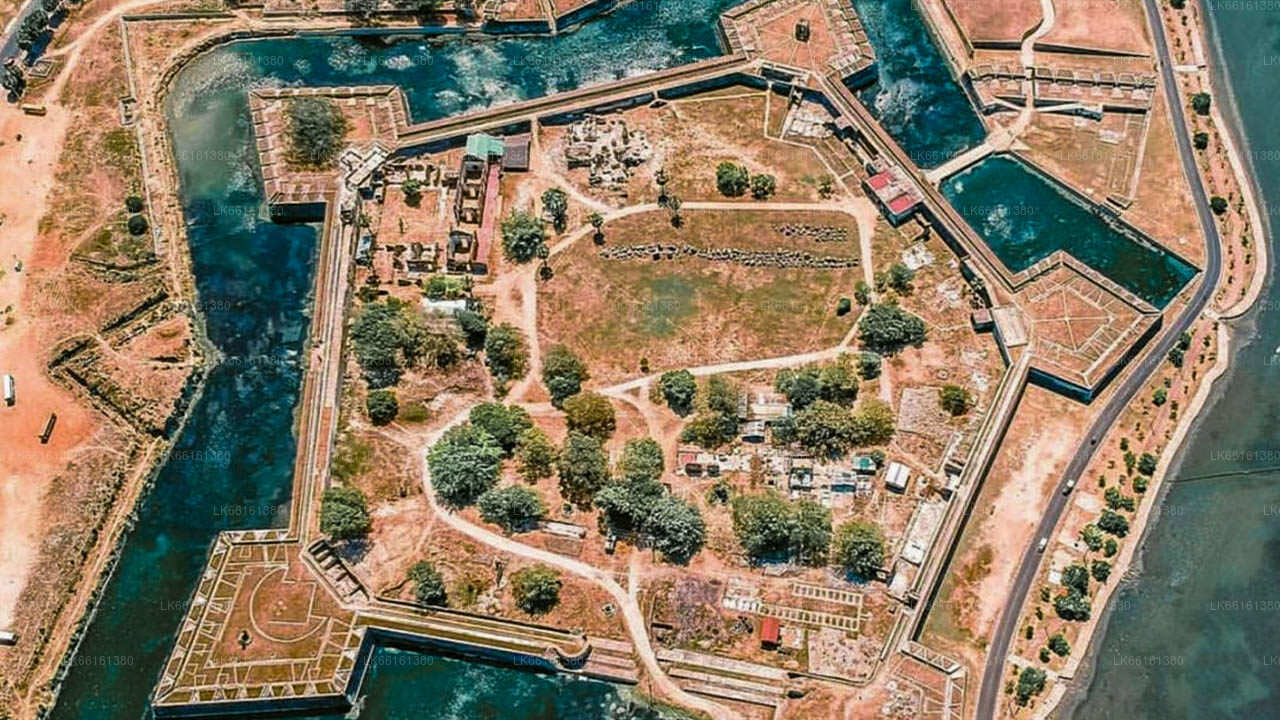
Jaffna ospita splendidi templi indù. Un antico forte olandese è ancora ben conservato e al suo interno si trova un'antica chiesa. Un altro esempio di architettura olandese è la King's House. Nessuna visita a Jaffna è completa senza aver assaggiato lo squisito mango di Jaffna, rinomato per la sua dolcezza. A circa 3 km di distanza si trova il maestoso tempio di Nallur Kandaswamy, sede della più grande festa religiosa di Jaffna. Il porto di Kayts è un antico punto di attracco per navi nella regione di Jaffna.
Informazioni sulla provincia settentrionale
La Provincia Settentrionale è una delle 9 province dello Sri Lanka. Le province esistono dal XIX secolo, ma non hanno avuto alcuno status giuridico fino al 1987, quando il 13° emendamento alla Costituzione dello Sri Lanka del 1978 ha istituito i consigli provinciali. Tra il 1988 e il 2006 la provincia è stata temporaneamente fusa con la Provincia Orientale per formare la Provincia del Nord-Est. Il capoluogo della provincia è Jaffna.
La Provincia Settentrionale si trova nel nord dello Sri Lanka e dista solo 35 km dall'India. La provincia è circondata dal Golfo di Mannar e dalla Baia di Palk a ovest, dallo Stretto di Palk a nord, dal Golfo del Bengala a est e dalle Province Orientale, Centro-Settentrionale e Nord-Occidentale a sud. La provincia ha diverse lagune, le più grandi delle quali sono la Laguna di Jaffna, la Laguna di Nanthi Kadal, la Laguna di Chundikkulam, la Laguna di Vadamarachchi, la Laguna di Uppu Aru, la Laguna di Kokkilai, la Laguna di Nai Aru e la Laguna di Chalai. La maggior parte delle isole intorno allo Sri Lanka si trova a ovest della Provincia Settentrionale. Le isole più grandi sono: Kayts, Neduntivu, Karaitivu, Pungudutivu e Mandativu.
Nel 2007, la popolazione della Provincia Settentrionale era di 1.311.776 abitanti. La maggior parte della popolazione è composta da Tamil dello Sri Lanka, con una minoranza di Mori e Singalesi dello Sri Lanka. Il Tamil dello Sri Lanka è la lingua principale parlata nella provincia dalla stragrande maggioranza della popolazione. L'altra lingua parlata è il Singalese, parlato dall'1% della popolazione. L'inglese è ampiamente parlato e compreso nelle città.
Nel 2007, la popolazione della Provincia Settentrionale era di 1.311.776 abitanti. La maggior parte della popolazione è composta da Tamil dello Sri Lanka, con una minoranza di Mori e Singalesi dello Sri Lanka. Il Tamil dello Sri Lanka è la lingua principale parlata nella provincia dalla stragrande maggioranza della popolazione. L'altra lingua parlata è il singalese, parlato dall'1% della popolazione. L'inglese è ampiamente parlato e compreso nelle città.