Perched near the sacred springs of Keerimalai on the Jaffna Peninsula, Maviddapuram Kandaswamy Kovil is one of the most historically significant Hindu temples in northern Sri Lanka. Dedicated to Lord Muruga — the Tamil deity of war, wisdom, and divine grace — the temple draws pilgrims from across Sri Lanka and South India who come to seek blessings, fulfil vows, and participate in its celebrated annual festival.
What is the legend behind Maviddapuram Kandaswamy Kovil?
The temple's name carries its founding myth within it. According to religious tradition, a South Indian princess named Maruthapuraveegavalli was afflicted with a horse-like face and a skin affliction, both consequences of a saint's curse. Seeking relief, she travelled to Keerimalai and bathed in the sacred freshwater spring that sits at the shoreline. After worshipping Lord Muruga at this temple, her face was restored to human form.
This story of miraculous healing gave the site its name — "Maviddapuram" is understood to derive from the Tamil words for horse face — and it continues to underpin the devotional significance of both the temple and the nearby Keerimalai spring, which devout Hindus regard as possessing curative properties.
What is the history of the temple?
The temple's recorded history stretches back at least to the late eighteenth century. In 1795, sacred idols were brought from the renowned Chidambaram Nataraja Temple in South India and installed here, with the Maha Kumbhabhishekam — the formal consecration ceremony — conducted at that time. This ceremony, which ritually empowers the temple's presiding deity, is repeated periodically as part of the temple's living tradition.
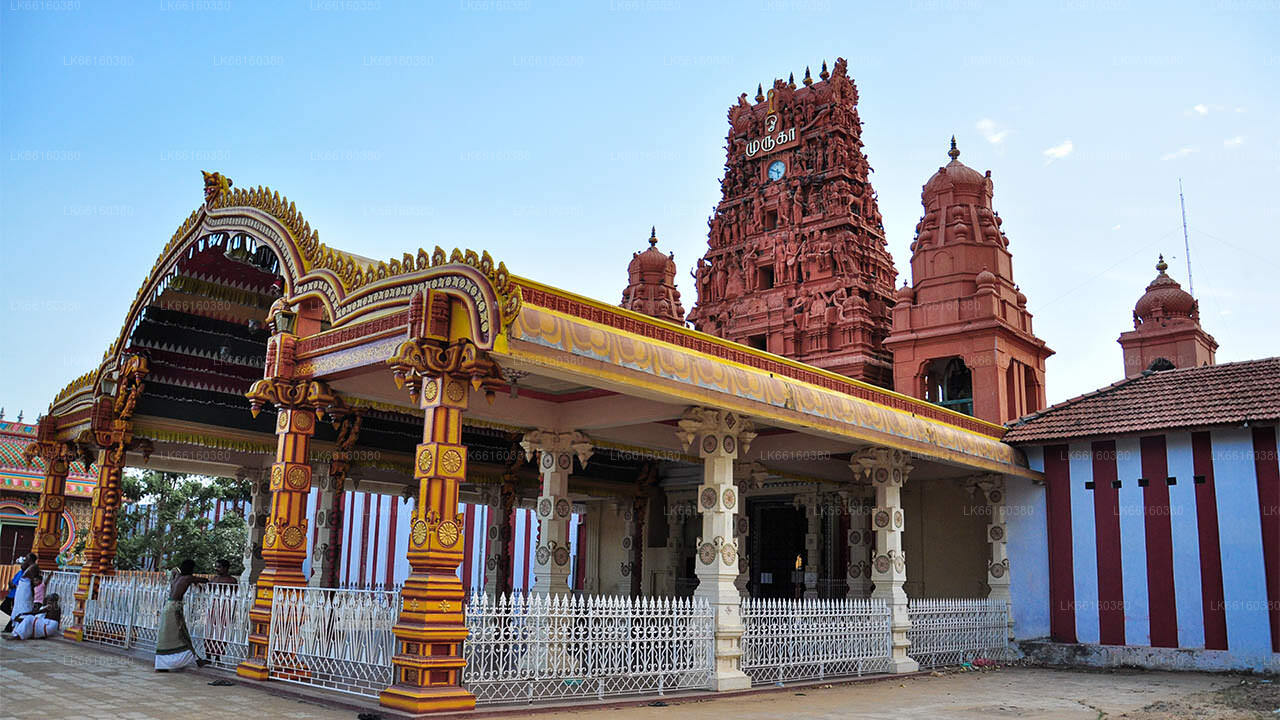
The architecture reflects the Dravidian style characteristic of Tamil Hindu temples. The ancient Raja Gopuram, the towering ceremonial gateway, rises at the western entrance and remains one of the most visually prominent features of the complex. The temple is laid out across three courtyards, each progressively more sacred as one moves toward the inner sanctum.
What are the notable features of the temple?
Several elements distinguish Maviddapuram Kandaswamy Kovil from other temples in the region:
- The Raja Gopuram: The ancient main tower at the western entrance is constructed in the Dravidian tradition, adorned with sculpted figures from Hindu mythology.
- Three Courtyards: The temple complex is divided into three distinct enclosures. The outer courtyard accommodates large gatherings during festivals, while the inner sanctums house the principal deities.
- The Kanchi Mango Tree: A venerated mango tree within the temple grounds holds particular religious significance for devotees, and is considered sacred in its own right.
- Proximity to Keerimalai Springs: The natural freshwater springs beside the sea, just minutes from the temple, are an integral part of the pilgrimage experience. Devotees traditionally bathe in the spring before entering the temple.
When is the best time to visit Maviddapuram Kandaswamy Kovil?
The temple is open to visitors throughout the year, and the surrounding Jaffna Peninsula is generally dry and accessible from roughly May through September and again from January through March. The most auspicious time to visit is during the annual festival season, which lasts for 25 days and culminates on Aadi Amavasai — the new moon day of the Tamil month of Aadi, which typically falls in July or August.
During this period, the temple becomes a major pilgrimage centre. The highlight is the Ther festival, when five presiding deities are placed on five elaborately decorated temple cars (thers) and paraded in procession around the temple courtyard. This ritual draws thousands of devotees and offers an immersive experience of Tamil Hindu festival culture in the north of Sri Lanka.
How do I get to Maviddapuram Kandaswamy Kovil from Jaffna?
The temple is located near Keerimalai, on the northern coast of the Jaffna Peninsula, approximately 15 to 20 kilometres from Jaffna city. The road connects through Kantharmadam and Point Pedro Road. Private vehicles and three-wheelers from Jaffna city offer the most convenient access. Public bus services operate along the peninsula, though connections to the immediate Keerimalai area may require a short onward transfer.
The Jaffna Peninsula is now well connected to the rest of Sri Lanka following the rehabilitation of the A9 highway. Travelling from Colombo by road takes around six to seven hours. Alternatively, domestic flights operate between Colombo's Ratmalana Airport and Palaly Airport near Jaffna, significantly reducing journey time.
What else is there to see near the temple?
The Keerimalai area itself merits time beyond the temple visit. The natural springs, which emerge beside the Indian Ocean, are a remarkable geological and cultural site. A short distance away, Pigeon Island in the Trincomalee district, while further along the eastern coast, offers a contrasting coastal experience for those extending their northern Sri Lanka journey.
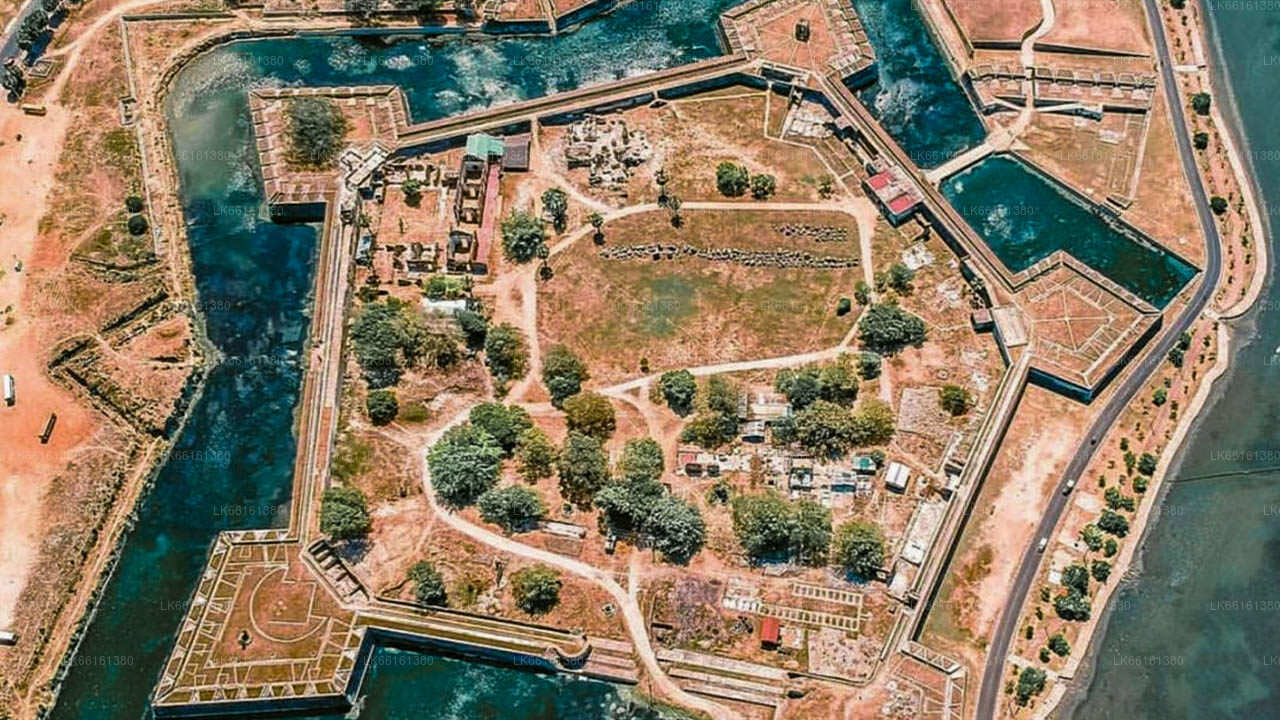
Within the Jaffna Peninsula, visitors typically combine Maviddapuram with the Jaffna Fort, Nainativu Island's Nagapooshani Amman temple, and the Casuarina Beach at Karainagar. The peninsula's food culture — built around fresh seafood, palmyra palm products, and distinctive Tamil cuisine — is itself a reason to spend more than a single day in the region.
Is the temple open to non-Hindu visitors?
Maviddapuram Kandaswamy Kovil generally welcomes respectful visitors of all backgrounds. As with all active Hindu temples in Sri Lanka, visitors are expected to remove footwear before entering the temple precincts, dress modestly with shoulders and knees covered, and observe quiet decorum within the inner sanctuaries. Photography policies vary and it is courteous to ask before photographing worshippers or sacred images. During major festival days, access to certain inner areas may be restricted to devotees.