Sandakada Pahana


Sandakada Pahana, également connu sous le nom de Pierre de la Lune, est un élément culturel et architectural important de l'histoire ancienne de Sri Lanka, que l'on trouve dans de nombreux sites bouddhistes vénérés de l'île, y compris Anuradhapura, Polonnaruwa, et les temples rupestres de Sigiriya. Cette pierre finement sculptée sert de marqueur d'entrée aux espaces sacrés, symbolisant la transition du monde profane au divin. Sa beauté et sa signification symbolique en font l'un des éléments architecturaux les plus emblématiques de Sri Lanka, reflétant les profondes traditions spirituelles et artistiques qui ont façonné l'île pendant des siècles.
Conçu avec une forme semi-circulaire, le Sandakada Pahana est typiquement orné de sculptures de pétales de lotus, d'éléphants, de chevaux et d'autres motifs symboliques, chacun représentant des éléments du bouddhisme, de la nature, et de la culture sri-lankaise. Ces éléments, souvent vus dans des régions telles que Kandy et Galle, reflètent la riche biodiversité de l'île, avec des éléphants et d'autres animaux sauvages courants dans le folklore ancien de Sri Lanka. Les sculptures transmettent des idées spirituelles telles que la pureté, l'illumination et la protection, offrant aux visiteurs une connexion à la fois culturelle et artistique avec le patrimoine bouddhiste de l'île.
Les visiteurs des sites avec Sandakada Pahana peuvent apprécier sa complexité artistique et sa connexion avec l'histoire religieuse de Sri Lanka. Trouvé à l'entrée des stupas, des temples et des monastères, la Pierre de la Lune sert de rappel visuel de l'engagement de Sri Lanka envers l'architecture sacrée et les traditions bouddhistes. Les voyageurs visitant des villes anciennes comme Anuradhapura ou explorant des temples rupestres comme Dambulla et Sigiriya s'arrêtent souvent pour admirer ces pierres, qui guident leur voyage spirituel à travers les paysages culturels de Sri Lanka. Le Sandakada Pahana invite à réfléchir sur la connexion entre nature, art et foi.
Le Sandakada Pahana peut être vu toute l'année sur de nombreux sites historiques et religieux à travers Sri Lanka. La saison sèche, de décembre à avril, offre des conditions idéales pour explorer ces anciens monuments, avec un ciel dégagé et un temps calme pour les visites touristiques. Accessible depuis des villes principales comme Anuradhapura, Kandy et Sigiriya, ces pierres sacrées continuent d'inspirer les visiteurs qui cherchent à comprendre le riche patrimoine culturel et spirituel de Sri Lanka. Que ce soit pour leur valeur artistique, leur importance historique ou leur symbolisme religieux, le Sandakada Pahana reste un puissant témoignage du patrimoine intemporel de Sri Lanka.


-
 Sri Maha Bodhiya
Jaya Sri Maha Bodhi is a sacred bo tree in the Mahamewna Gardens, Anuradhapura, Sri Lanka. It is the southern branch from the historical Sri Maha Bodhi at Buddha Gaya in India under which Buddha attained Enlightenment. It was planted in 288 BC, and is the oldest living human-planted tree in the world with a known planting date.
-
 Ruwanweliseya
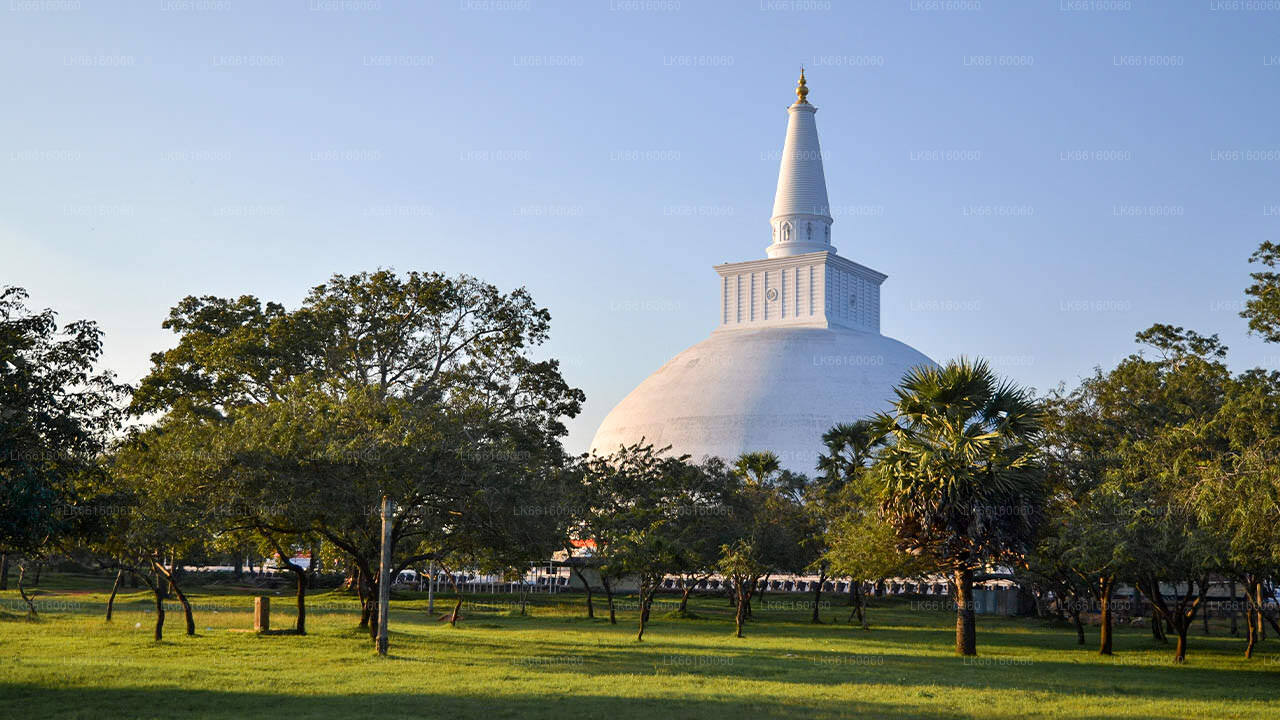
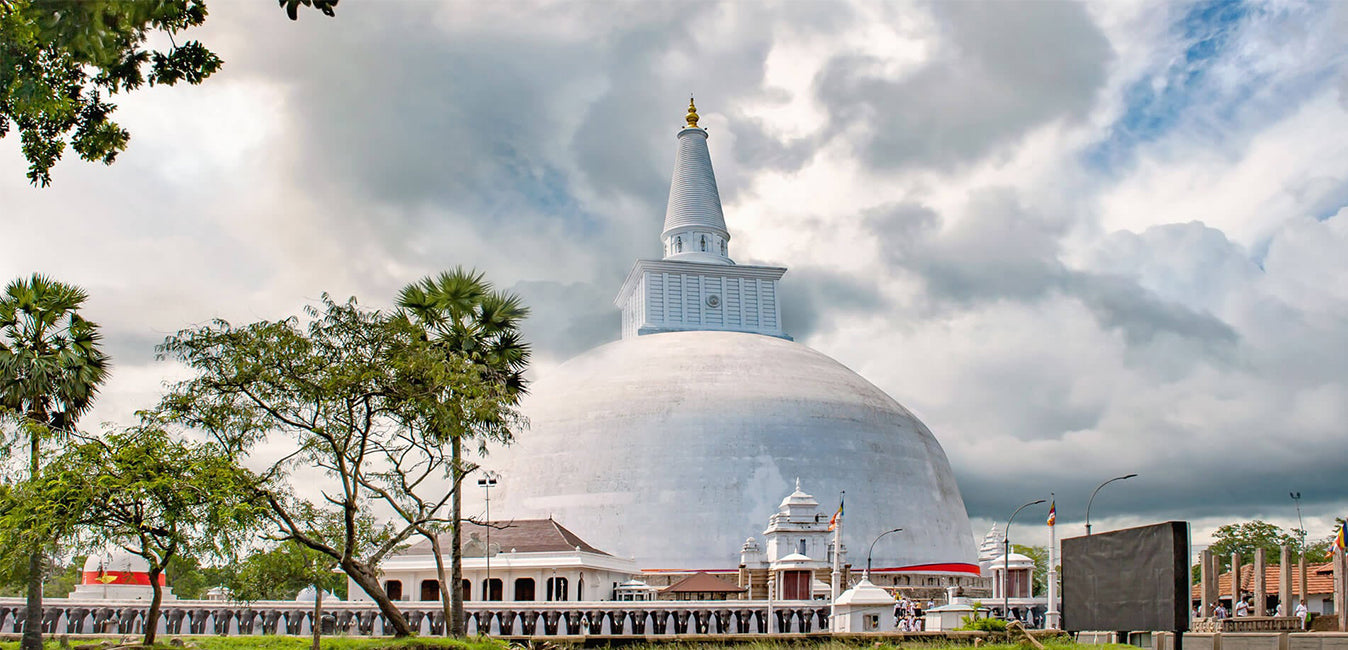
The Ruwanweli Maha Seya, also known as the Mahathupa (the Great Thupa) is a stupa (a hemispherical structure containing relics) in Anuradhapura, Sri Lanka. Two quarts or one Dona of the Buddha's relics are enshrined in the stupa, making it the largest collection of his relics anywhere. It was built by Sinhalese King Dutugemunu in c. 140 B.C., who became king of Sri Lanka after a war in which the Chola King Elāra (Ellalan) was defeated.
-
 Thuparamaya
Thuparamaya is the first Buddhist temple that was constructed, after the arrival of mahinda thero(mahindagamanaya) in Sri Lanka. Located in the sacred area of Mahamewna park, the Thuparamaya Stupa is the earliest Dagoba to be constructed in the island, dating back to the reign of King Devanampiya Tissa (247-207 BC). The temple has been formally recognised by the Government as an archaeological site in Sri Lanka.
-
 Lovamahapaya
Lovamahapaya is a building situated between Ruwanweliseya and Sri Mahabodiya in the ancient city of Anuradhapura, Sri Lanka. It is also known as the Brazen Palace or Lohaprasadaya because the roof was covered with bronze tiles. In ancient times, the building included the refectory and the uposathagara (Uposatha house).
-
 Abhayagiri Stupa
Abhayagiri Vihāra was a major monastery site of Mahayana, Theravada and Vajrayana Buddhism that was situated in Anuradhapura, Sri Lanka. It is one of the most extensive ruins in the world and one of the most sacred Buddhist pilgrimage cities in the nation.
-
 Jetavanaramaya
The Jetavanarama stupa or Jetavanaramaya is a stupa, or Buddhist reliquary monument, located in the ruins of Jetavana monastery in the UNESCO world heritage city of Anuradhapura, Sri Lanka. At 122 metres (400 ft), it was the world's tallest stupa, and the third tallest structure in the world when it was built by King Mahasena of Anuradhapura (273–301).
-
 Mirisawetiya Stupa
The Mirisaweti Stupa is a memorial building, a stupa, situated in the ancient city of Anuradhapura, Sri Lanka. King Dutugamunu (161 BC to 137 BC) built the Mirisaveti Stupa after defeating King Elara. After placing the Buddha relics in the sceptre, he had gone to Tissa Wewa for a bath leaving the sceptre.
-
 Lankarama
Lankarama is a stupa built by King Valagamba, in an ancient place at Galhebakada in the ancient kingdom of Anuradhapura, Sri Lanka. Nothing is known about the ancient form of the stupa, and later this was renovated. The ruins show that there are rows of stone pillars and it is no doubt that there has been a house built encircling the stupa (vatadage) to cover it.
-
 Isurumuniya
Isurumuniya is a Buddhist temple situated near to the Tissa Wewa (Tisa tank) in Anuradhapura, Sri Lanka. There are four carvings of special interest in this Vihara. They are the Isurumuniya Lovers, Elephant Pond and The Royal Family. The ancient Meghagiri Vihara or Meygiri Vihara is presently identified as the Isurumuni Vihara.