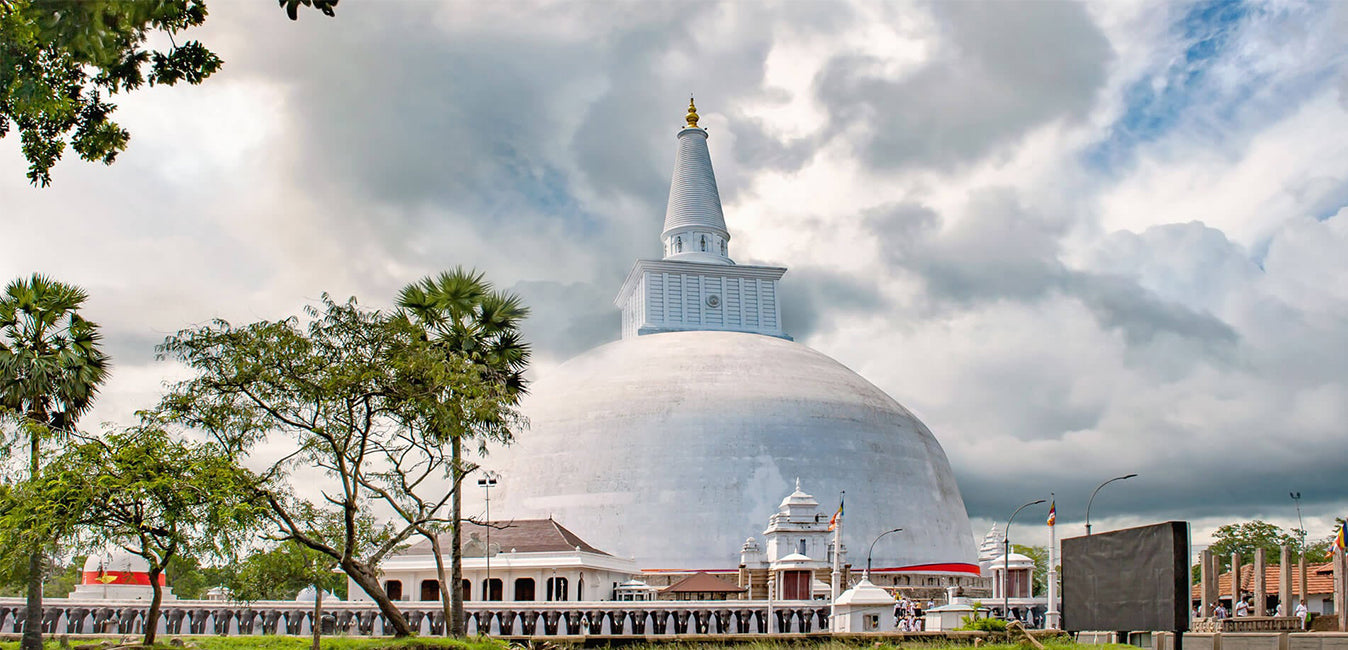
Stupa d'Abhayagir


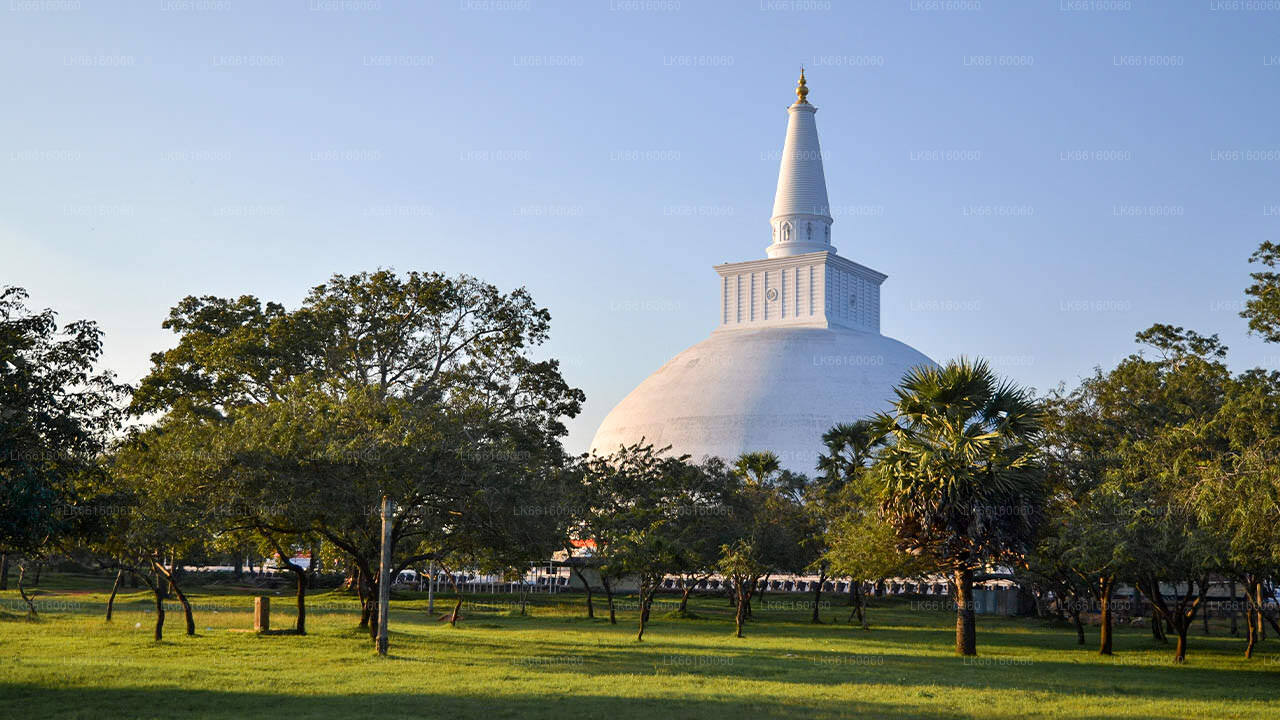
Abhayagiri Stupa est l'une des stupas bouddhistes les plus importantes et les plus anciennes du Sri Lanka, située dans la ville sacrée de Anuradhapura. Construite sous le règne du Roi Vattagamani Abhaya au Ier siècle avant J.-C., elle est l'une des plus grandes du Sri Lanka et revêt une immense importance historique, religieuse et architecturale. Elle a été construite pour abriter les reliques de Bouddha et est un site clé pour le pèlerinage et l'adoration.
La stupa présente un design traditionnel en forme de dôme, avec une chambre centrale pour les reliques, et est entourée d'un complexe de bâtiments monastiques et de sanctuaires. Abhayagiri Stupa est connue pour son style architectural bien conservé, incluant les ruines des anciennes salles de conférence, des bassins de bain et des quartiers résidentiels pour les moines. La stupa a également joué un rôle central dans le développement du bouddhisme au Sri Lanka et a servi de centre d'apprentissage et de pratiques religieuses.
Les visiteurs de Abhayagiri Stupa peuvent explorer le site archéologique environnant, qui comprend des sculptures en pierre remarquables, des inscriptions et des vestiges de structures anciennes. L'atmosphère sereine du site en fait un endroit idéal pour la méditation et la réflexion, offrant une profonde connexion à l'histoire bouddhiste du Sri Lanka.
Le meilleur moment pour visiter Abhayagiri Stupa est pendant la saison sèche, de décembre à avril, lorsque les conditions météorologiques sont idéales pour explorer les anciennes ruines d'Anuradhapura. La stupa est facilement accessible depuis la ville et offre une expérience significative et enrichissante pour ceux qui s'intéressent au patrimoine culturel et spirituel du Sri Lanka.


-
 Sri Maha Bodhiya
Jaya Sri Maha Bodhi is a sacred bo tree in the Mahamewna Gardens, Anuradhapura, Sri Lanka. It is the southern branch from the historical Sri Maha Bodhi at Buddha Gaya in India under which Buddha attained Enlightenment. It was planted in 288 BC, and is the oldest living human-planted tree in the world with a known planting date.
-
 Ruwanweliseya
The Ruwanweli Maha Seya, also known as the Mahathupa (the Great Thupa) is a stupa (a hemispherical structure containing relics) in Anuradhapura, Sri Lanka. Two quarts or one Dona of the Buddha's relics are enshrined in the stupa, making it the largest collection of his relics anywhere. It was built by Sinhalese King Dutugemunu in c. 140 B.C., who became king of Sri Lanka after a war in which the Chola King Elāra (Ellalan) was defeated.
-
 Thuparamaya
Thuparamaya is the first Buddhist temple that was constructed, after the arrival of mahinda thero(mahindagamanaya) in Sri Lanka. Located in the sacred area of Mahamewna park, the Thuparamaya Stupa is the earliest Dagoba to be constructed in the island, dating back to the reign of King Devanampiya Tissa (247-207 BC). The temple has been formally recognised by the Government as an archaeological site in Sri Lanka.
-
 Lovamahapaya
Lovamahapaya is a building situated between Ruwanweliseya and Sri Mahabodiya in the ancient city of Anuradhapura, Sri Lanka. It is also known as the Brazen Palace or Lohaprasadaya because the roof was covered with bronze tiles. In ancient times, the building included the refectory and the uposathagara (Uposatha house).
-
 Abhayagiri Stupa
Abhayagiri Vihāra was a major monastery site of Mahayana, Theravada and Vajrayana Buddhism that was situated in Anuradhapura, Sri Lanka. It is one of the most extensive ruins in the world and one of the most sacred Buddhist pilgrimage cities in the nation.
-
 Jetavanaramaya
The Jetavanarama stupa or Jetavanaramaya is a stupa, or Buddhist reliquary monument, located in the ruins of Jetavana monastery in the UNESCO world heritage city of Anuradhapura, Sri Lanka. At 122 metres (400 ft), it was the world's tallest stupa, and the third tallest structure in the world when it was built by King Mahasena of Anuradhapura (273–301).
-
 Mirisawetiya Stupa
The Mirisaweti Stupa is a memorial building, a stupa, situated in the ancient city of Anuradhapura, Sri Lanka. King Dutugamunu (161 BC to 137 BC) built the Mirisaveti Stupa after defeating King Elara. After placing the Buddha relics in the sceptre, he had gone to Tissa Wewa for a bath leaving the sceptre.
-
 Lankarama
Lankarama is a stupa built by King Valagamba, in an ancient place at Galhebakada in the ancient kingdom of Anuradhapura, Sri Lanka. Nothing is known about the ancient form of the stupa, and later this was renovated. The ruins show that there are rows of stone pillars and it is no doubt that there has been a house built encircling the stupa (vatadage) to cover it.
-
 Isurumuniya
Isurumuniya is a Buddhist temple situated near to the Tissa Wewa (Tisa tank) in Anuradhapura, Sri Lanka. There are four carvings of special interest in this Vihara. They are the Isurumuniya Lovers, Elephant Pond and The Royal Family. The ancient Meghagiri Vihara or Meygiri Vihara is presently identified as the Isurumuni Vihara.