Provinces
La République socialiste démocratique de Sri Lanka (connue sous le nom de Ceylan jusqu'en 1972) est située dans l'océan Indien, entre la mer des Laquedives à l'ouest et le golfe du Bengale à l'est, séparée du Tamil Nadu, un État indien situé sur la côte sud du sous-continent indien, par le détroit de Palk et le golfe de Mannar.
Provinces
La République socialiste démocratique de Sri Lanka (connue sous le nom de Ceylan jusqu'en 1972) est située dans l'océan Indien, entre la mer des Laquedives à l'ouest et le golfe du Bengale à l'est, séparée du Tamil Nadu, un État indien situé sur la côte sud du sous-continent indien, par le détroit de Palk et le golfe de Mannar.
Provinces
La République socialiste démocratique de Sri Lanka (connue sous le nom de Ceylan jusqu'en 1972) est située dans l'océan Indien, entre la mer des Laquedives à l'ouest et le golfe du Bengale à l'est, séparée du Tamil Nadu, un État indien situé sur la côte sud du sous-continent indien, par le détroit de Palk et le golfe de Mannar.
Western Province
The most densely populated province of Sri Lanka, the Western Province which is 3,593 km2 in extent is home to the country’s legislative capital Sri Jayewardenepura. It is also home to the country’s commercial hub, Colombo.
Almost all the premier educational institutions in the island are located in the western province. Universities in the province include the University of Colombo, the University of Sri Jayewardenepura, the University of Kelaniya, the Open University of Sri Lanka, the Sir John Kotelawala Defence University, the University of Moratuwa and the Sri Lanka Institute of Information Technology. The Western Province also has the largest amount of schools in the country.
The western province consists of three districts: Colombo, Gampaha, and Kalutara.
Colombo District is 642 km2 in area and its main city is Colombo. The other popular and important cities in the district are Dehiwala, Nugegoda, Maharagama, Homagama, Avissawella and Moratuwa. The Kotte Urban Development Council that was created in the 1930s with a modern building at Rajagiriya has been succeeded by the Kotte Urban Council, a large extent of which was removed and tagged onto the Colombo Municipal Council, ward of Borella, while the Battaramulla Urban Council was dissolved and a small extent of Battaramulla was tagged onto the Kotte Urban Council. The Kotte Urban Council turned to be the Sri Jayawardanapura Kotte Municipal Council in 1997.Mount Lavinia is a newly created city lying immediately south of Colombo. It is the result of certain key urban suburbs and communities being combined for administrative purposes. The centres include Dehiwala and the beach resort of Mount Lavinia. It is also home to Sri Lanka’s National Zoological Gardens which remains one of the Asia’s largest. Dehiwala and Mount Lavinia lie directly south of Wellawatte along the Galle Road artery which runs alongside the coast to the south of the country. It is one of the most liberal regions in Sri Lanka and plays host to the island’s annual Rainbow Kite Festival.
Gampaha District is 1,386.6 km’ in extent and its main city is Gampaha. Other popular and important cities are Nittambuwa, Wattala, Ja-ela, Negombo and Veyangoda.
Gampaha is an urban city situated north of Colombo and separated from Colombo by the River Kelani. The name “Gampaha” in Sinhala means “Five Villages”. This city is located in the centre of the Gampaha District and is about 4 kms from Miriswatta on Colombo-Kandy Road. It is surrounded by Yakkala, Miriswatta, Weliweriya Udugampola and Ja-Ela towns.
In the recent years, Gampaha has undergone rapid development, many new shopping complexes, roads, bridges and flyovers have been constructed. Private institutions have been behind most development programmes in that area.
Another district of the western province is Kalutara which is 1,606 km’ in extent and its main city is Kalutara. The other important and popular cities in this district are Panadura, Beruwala, Aluthgama, Horana and Matugama.
Kalutara is a resort town located approximately 40 kms south of Colombo. O
-
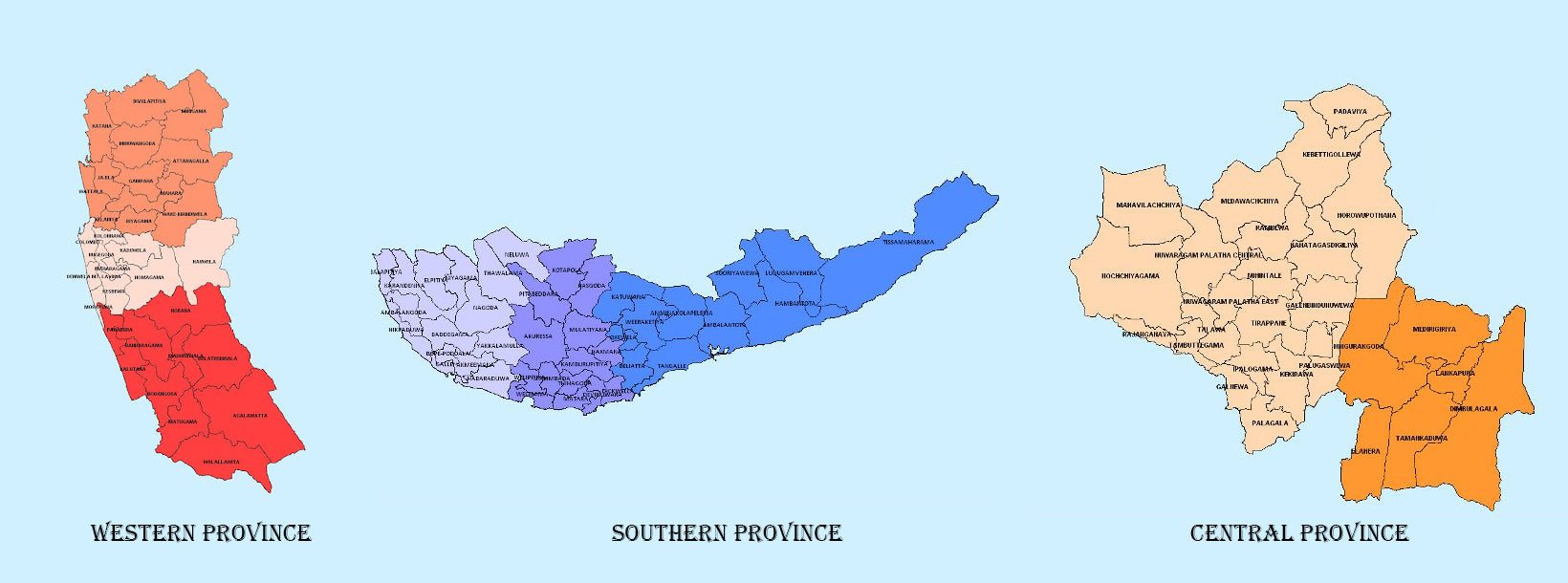
Province de l'OuestLa province de l'Ouest, la plus densément peuplée du Sri Lanka avec ses 3 593 km², abrite la capitale législative du pays, Sri Jayewardenepura, ainsi que Colombo, son centre économique.
-
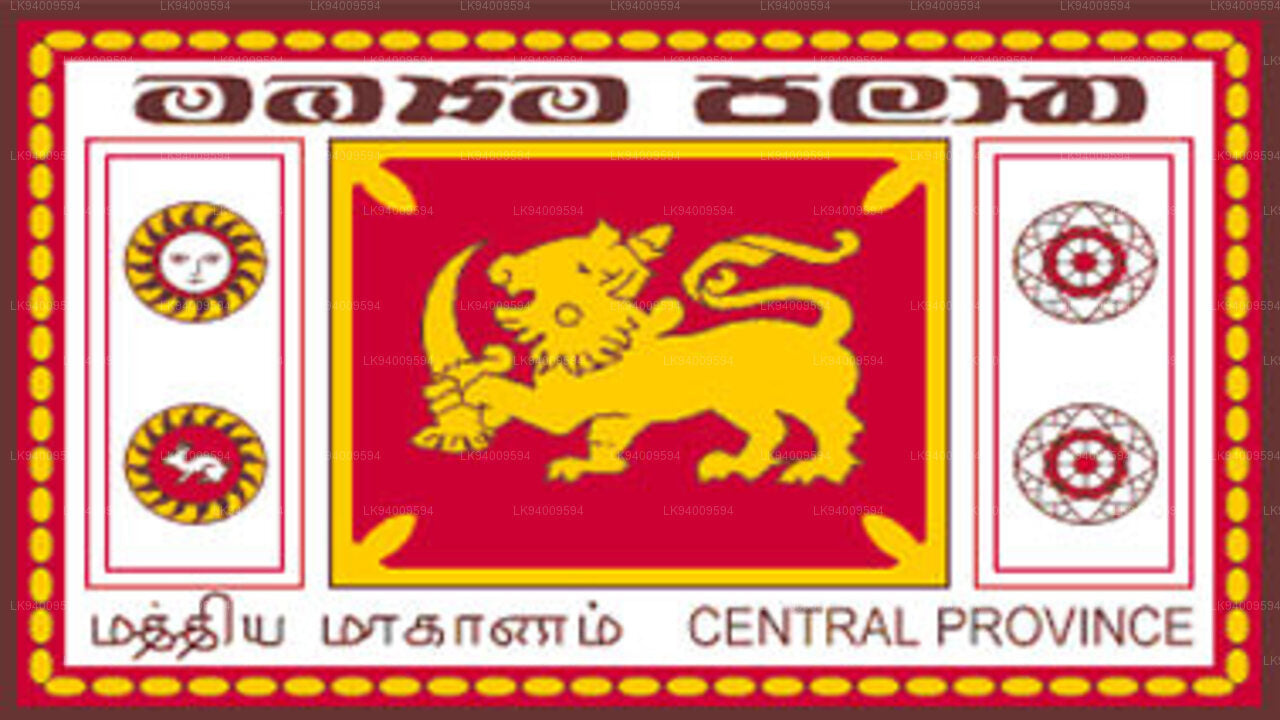
Province du CentreLa province centrale est située dans les collines centrales du Sri Lanka et comprend trois districts administratifs : Kandy, Matale et Nuwara Eliya. Sa superficie est de 5 575 km², soit 8,6 % de la superficie totale du Sri Lanka.
-
Province du SudLa province du Sud du Sri Lanka est une petite région géographique composée de trois districts : Galle, Matara et Hambantota. L’agriculture et la pêche constituent les principales sources de revenus pour la grande majorité des habitants de cette région.
-
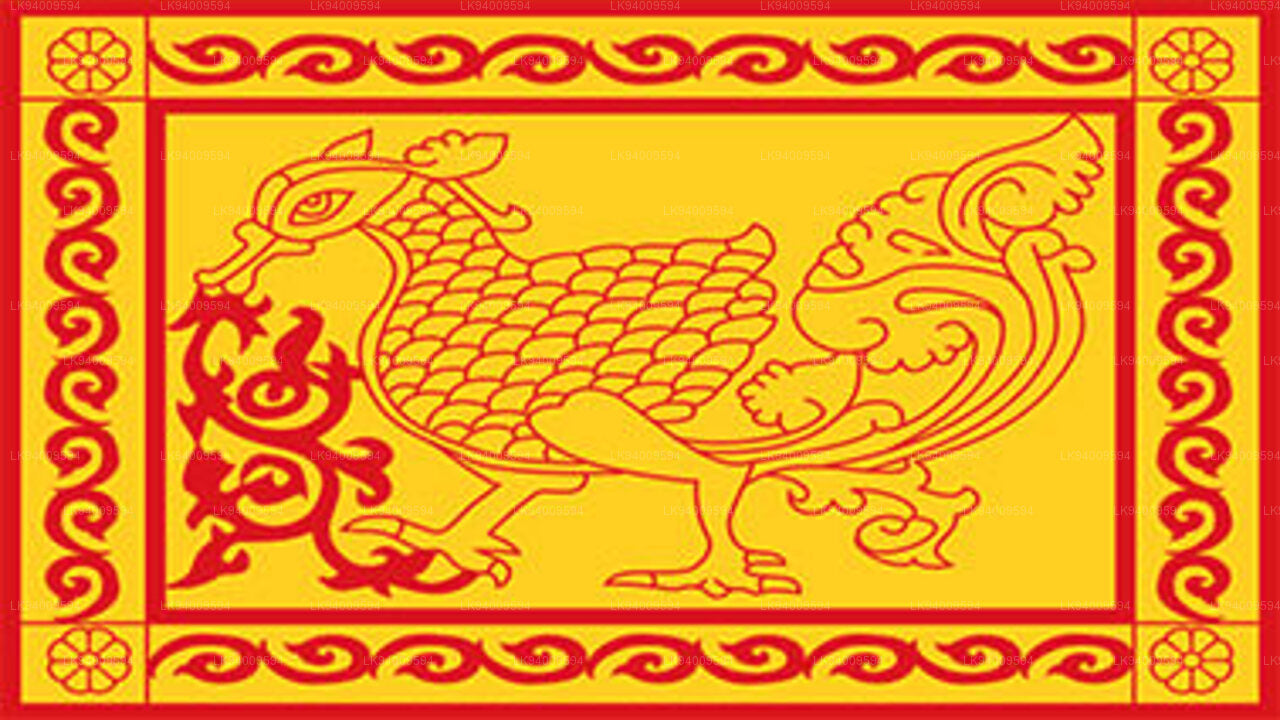
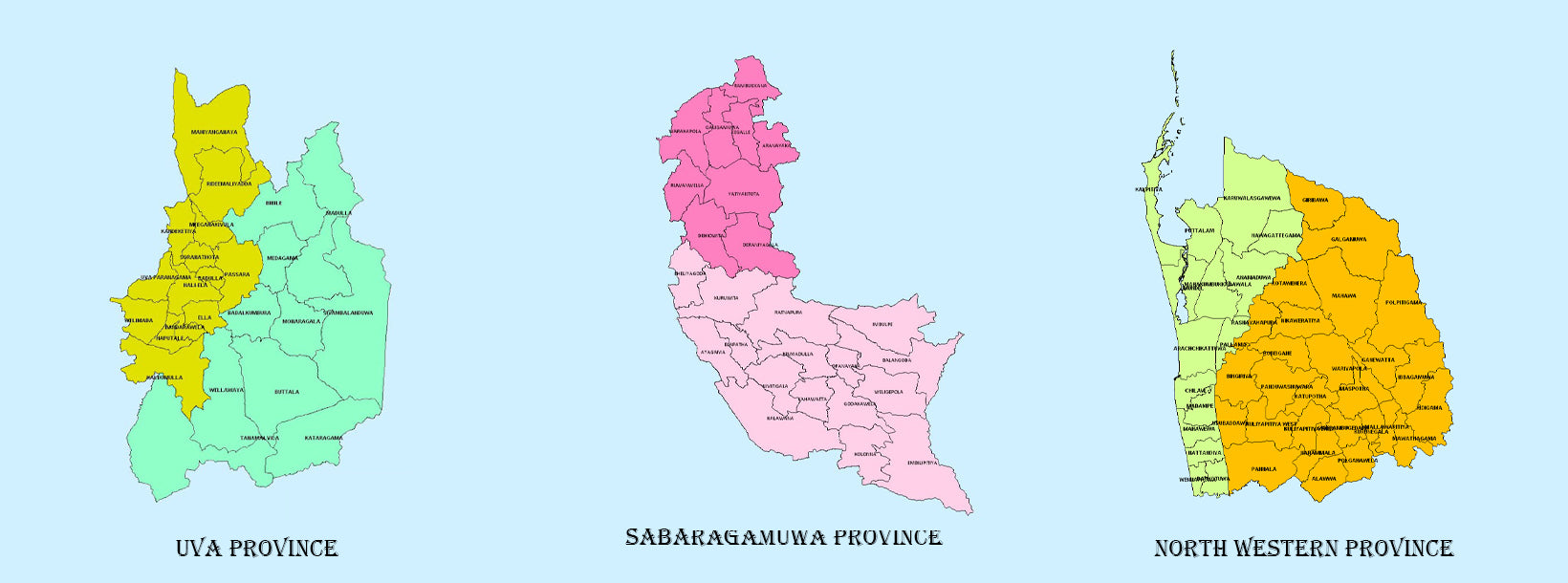
Province d'UvaLa province d'Uva comprend deux districts : Badulla et Moneragala, et sa capitale est Badulla. Uva est bordée par les provinces de l'Est, du Sud et du Centre.
-
Province de SabaragamuwaSabaragamuwa est une autre province du Sri Lanka, située dans la région centre-sud de l'île et composée de deux districts administratifs : Ratnapura et Kegalle.
-
Province du Nord-OuestLa province du Nord-Ouest comprend deux districts administratifs : Kurunegala et Puttalam. Sa capitale, Kurunegala, compte 28 571 habitants. La province est réputée pour ses cocoteraies.
-
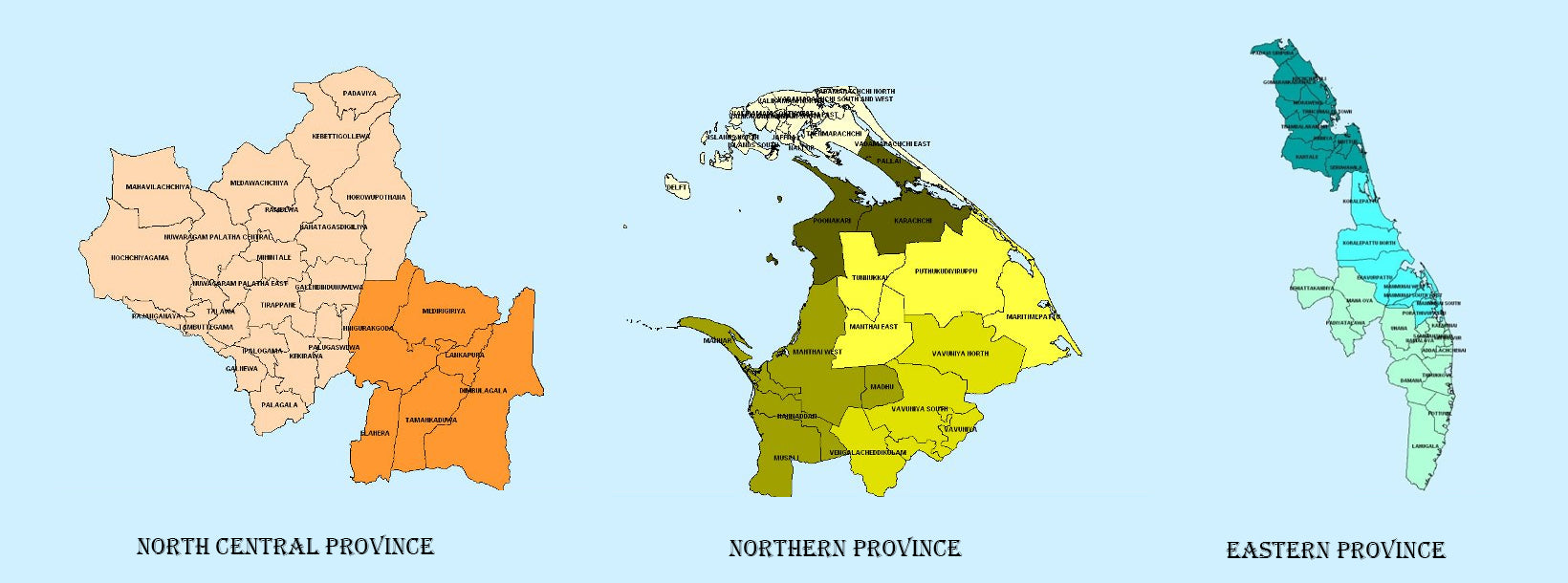
Province du Centre-NordLa province du Centre-Nord, la plus grande du Sri Lanka, située dans la zone aride et d'une superficie de 10 714 km², comprend deux districts administratifs : Anuradhapura et Polonnaruwa.
-
Province du NordLa province du Nord est située au nord du Sri Lanka, à seulement 35 km de l'Inde. Elle couvre une superficie de 8 884 km². Elle est bordée par le golfe de Mannar et la baie de Palk à l'ouest, le détroit de Palk au nord-ouest, le golfe du Bengale au nord et à l'est, et les provinces de l'Est, du Centre-Nord et du Nord-Ouest au sud.
-
Province de l'EstUne autre province du Sri Lanka surtout connue pour ses plages dorées et son port naturel, la province orientale, d'une superficie de 9 996 km², se compose de trois districts administratifs : Trincomalee, Batticaloa et Ampara.