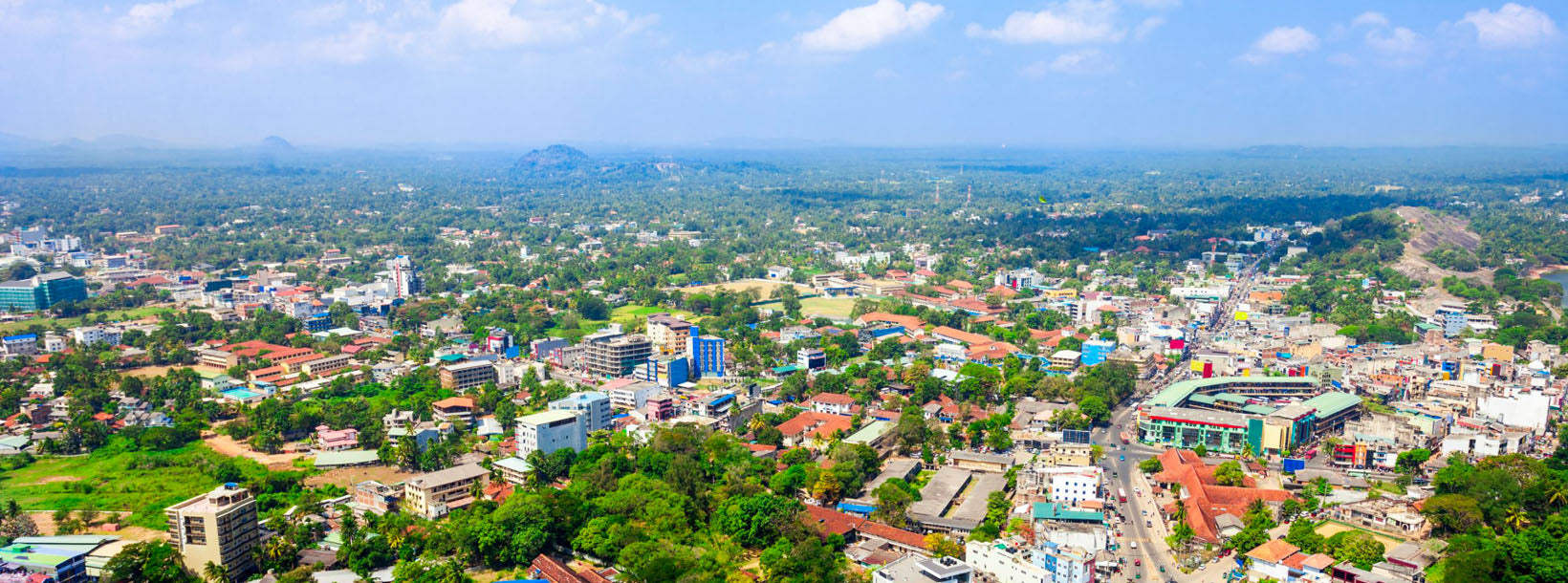
Dambadeniya

Dambadeniya Dambadeniya Dambadeniya

Dambadeniya (DMBD) on varemetes iidne linn, mis asub Loodeprovintsis (Wayamba), Sri Lankas Kurunegala–Negombo peamise maantee ääres. See oli Sri Lanka pealinn 13. sajandi keskel. Suur osa Dambadeniyast on endiselt maetud tohutu kindlustatud kalju alla. Dambadeniya asub umbes 31 km kaugusel Kurunegalast, Loodeprovintsi tänapäevasest pealinnast. Dambadeniya asub umbes 4 km kaugusel Giriullast.

Dambadeniya, umbes 30 km edelas Kurunegalast, muutus tähtsaks 13. sajandi keskel.[1] Kuningas Vijayabahu III (1232–36) valis selle Sri Lanka kuningriigi pealinnaks. Riigi suveräänsus oli ohus sissetungide tõttu, mis tõrjusid Polonnaruwa pealinna kohalt välja. Vijayabahu, Dambadeniya dünastia kuningas, võitles sissetungijatega ja rajas Dambadeniya. Dambadeniya kalju tipule ehitas ta kindlustused, tugevad müürid ja väravad. Linna kaitsti vallikraaviga, sooga ja muldkindlustustega kuningliku palee ümber. Kuningas Parakramabahu II (1236–70) valitsemisajal saavutas Dambadeniya oma hiilgeaja. Kuningas Parakramabahu II veatud poeetilised meistriteosed "Kavisilumina" ja "Visuddi Marga Sannasa" andsid singali kirjandusele uue suuna. Dambadeniya ajastu oli põhjuseks, miks singali kirjandus ei piirdunud ainult maalide ega kirjutistega.

Kurunegala ringkonna kohta

Kurunegala on ringkond Loodeprovintsis Sri Lankas. Selle pindala on 4812,7 km² (48 1270 hektarit) ning see koosneb 30 jagamise sekretariaadist, 1610 Grama Niladari jaotusest ja kokku 4476 külast. See koosneb 14 valimisjaoskonnast, 2 linnavolikogust, 19 linnaasutusest, 15 parlamendiministrist, 47 provintsinõukogu liikmest, 15 ministrist ja 337 kohaliku omavalitsuse volinikust.

Arvestades Kurunegala ringkonna geograafilist asendit, piirneb see viie ringkonnaga. Põhjas Anuradhapura ringkonnaga, idas Mathale ringkonnaga, lõunas Gampahaga ja Kegalle ringkonnaga ning läänes Puttalami ringkonnaga. Ringkonna pikkuskraadi asukoht on põhjalaius 228–333 ja idapikkus 104–178.

Dambadeniya Dambadeniya Dambadeniya

About Kurunegala District

Kurunegala is the capital of the Wayamba Province in Sri Lanka and the Kurunegala District.Kurunegala was a royal capital for only 50 years, from the end of the 13th century to the start of the next, though even before this it was strategically placed in the middle of other majestic strongholds such as Yapahuwa to the north, Dambadeniya to the south and Panduwasnuwara in the east. Ethagala a rock reaching 316 meters, towers over the town, which is located at an altitude of 116 meters above sea level. The shape of Ethagala resembles an Elephant. A transport hub, it has a railway station, and several main roads linking important parts of the country.Kurunegala is situated about 94 km from Colombo, and 42 km from Kandy.

Most of Kurunegala's residents belong to the Sinhalese majority. Other ethnic minorities include the Sri Lankan Moors, Sri Lankan Tamils, Burghers and Malays. Residents from ethnic minorities live in all parts of the city, however, sizeable communities of Moors and Tamils also live in the areas of Teliyagonna and Wilgoda.

About North Western Province

North Western Province is a province of Sri Lanka. The districts of Kurunegala and Puttalam formulate North Western or Wayamba. Its capital is Kurunegala, which has a population of 28,571. The province is known mainly for its numerous coconut plantations. Other main towns in this province are Chilaw (24,712) and Puttalam (45,661), which are both small fishing towns. The majority of the population of Wayamba province is of Sinhalese ethnicity. There is also a substantial Sri Lankan Moor minority around Puttalam and Sri Lankan Tamils in Udappu and Munneswaram. Fishing, prawn farming and rubber tree plantations are other prominent industries of the region. The province has an area of 7,888 km² and a population of 2,184,136 (2005 calculation).

Wayamba is the third largest paddy producing area in Sri Lanka .Wayamba has a highly developed agricultural economy, growing a variety of fruits and vegetables, flowering plants, spices, oil-seeds in addition to the traditional plantation crops such as Coconut, Rubber and Rice. Rich soils and varied climate give Wayamba a potential for growing of virtually any crop.

In Wayamba or North western province, home for ancient Buddhist rock temples, magnificent citadels Panduwasnuwara, Dambadeniya, Yapahuwa and Kurunegala. Impressive remains of those citadels, palaces, Buddhist temples and monasteries provide exciting sight seeing to the visitors.