Templo Maruthanamadam Anjaneyar


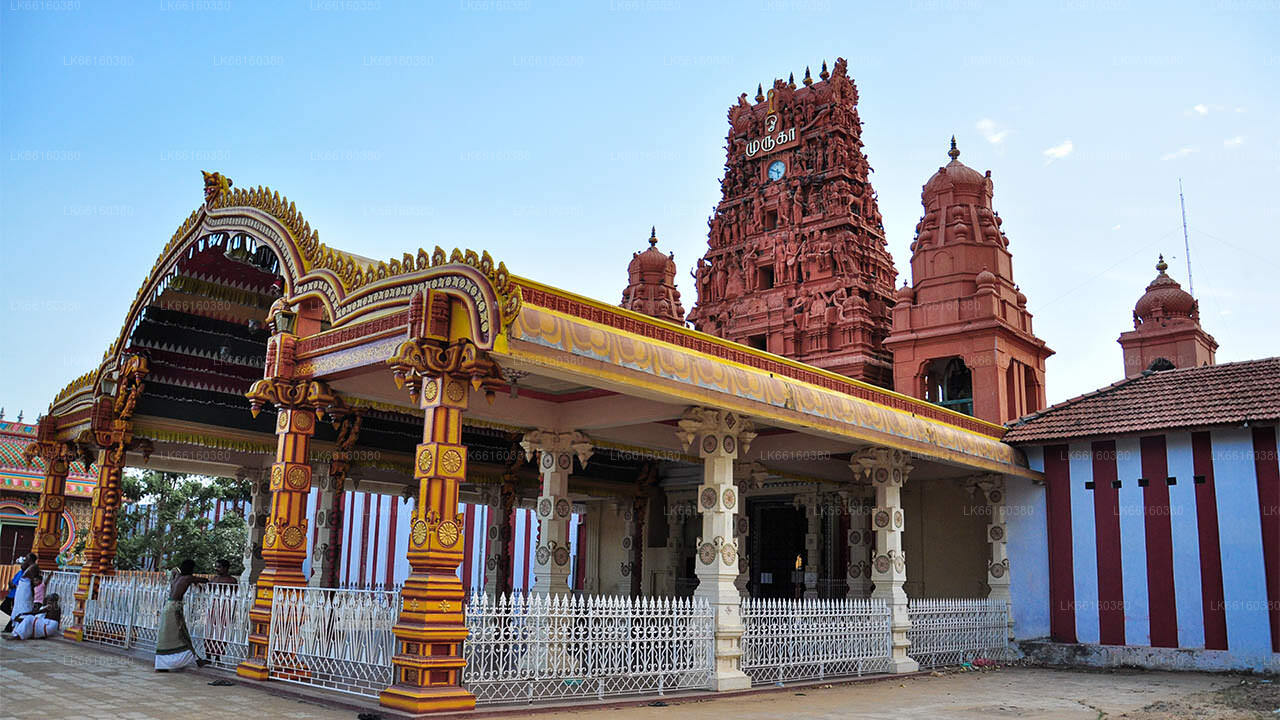
El Templo Maruthanar Madam Anjanajar es un venerado santuario hindú ubicado en el distrito de Mannar en el norte de Sri Lanka, profundamente conectado con la tradición Ramayana y la adoración del Señor Anjaneya (Hanuman). Situado en un paisaje rural sereno, el templo tiene un significado espiritual, cultural e histórico para los devotos de toda la isla, especialmente dentro de la comunidad hindú hindú tamil. Su entorno pacífico y sus asociaciones sagradas lo convierten no solo en un lugar de culto, sino también en un sitio de reflexión y devoción.
Según la tradición, se cree que Maruthanar Madam es uno de los lugares donde el Señor Hanuman descansó durante su viaje a Lanka en busca de la diosa Sita. El nombre refleja esta creencia, con "Maruthanar" refiriéndose a Hanuman, el hijo del dios del viento. Esta asociación coloca al templo firmemente dentro del más amplio camino Ramayana de Sri Lanka, que conecta varios sitios sagrados en toda la isla con episodios de la antigua epopeya. Para los devotos, visitar el templo es tanto un acto religioso como una forma de conectarse con un patrimonio cultural compartido que abarca siglos.
El dios principal, el Señor Anjaneya, es venerado como un símbolo de fuerza, devoción, lealtad y valentía. Muchos devotos visitan el templo para buscar bendiciones para la protección, el éxito, la buena salud y el alivio de obstáculos. Se realizan oraciones especiales y ofrendas comúnmente los sábados, que se consideran días auspiciosos para la adoración de Hanuman, así como durante los períodos festivos vinculados a la tradición Ramayana. La atmósfera durante estos tiempos está marcada por cánticos, observancias rituales y un fuerte sentido de fe comunitaria.
En el contexto de Sri Lanka, el Templo Maruthanar Madam Anjanajar también representa la resistencia de las tradiciones religiosas en la provincia del norte, especialmente en una región que ha experimentado desafíos históricos significativos. El templo continúa sirviendo como un ancla espiritual para las comunidades locales, mientras da la bienvenida a peregrinos de otras partes del país. Su simplicidad, rituales centrados en la devoción y fuertes asociaciones mitológicas lo distinguen de los templos urbanos más grandes, ofreciendo a los visitantes una experiencia basada en la humildad y el respeto.
Hoy en día, el templo se erige como un hito significativo en el paisaje religioso de Sri Lanka, reflejando las tradiciones espirituales plurales de la isla. El Templo Maruthanar Madam Anjanajar no es simplemente un lugar vinculado a la leyenda, sino un espacio vivo de adoración donde la fe, la historia y la cultura se unen en tranquila armonía.