Lakpura
Lakpura®

Ceylon Scaly Thrush

The Ceylon Scaly Thrush (Zoothera imbricata) is one of Sri Lanka's most elusive endemic birds — a large, long-billed thrush that spends its days moving quietly through the shadowed understory of the island's wet forests. Patient, early-rising birders prepared to sit still on a forest track at dawn stand the best chance of a sighting. For everyone else, the bird's mournful whistle is more often heard than the bird itself is seen.

How do I identify a Ceylon Scaly Thrush?

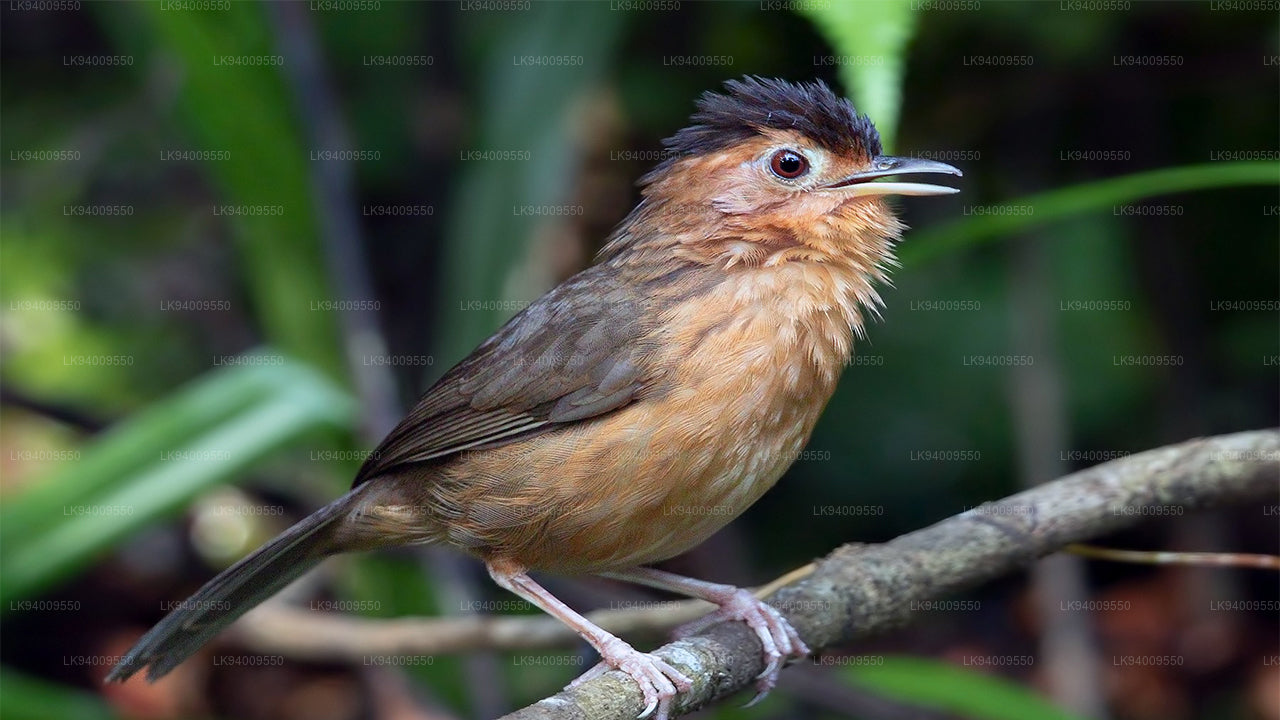
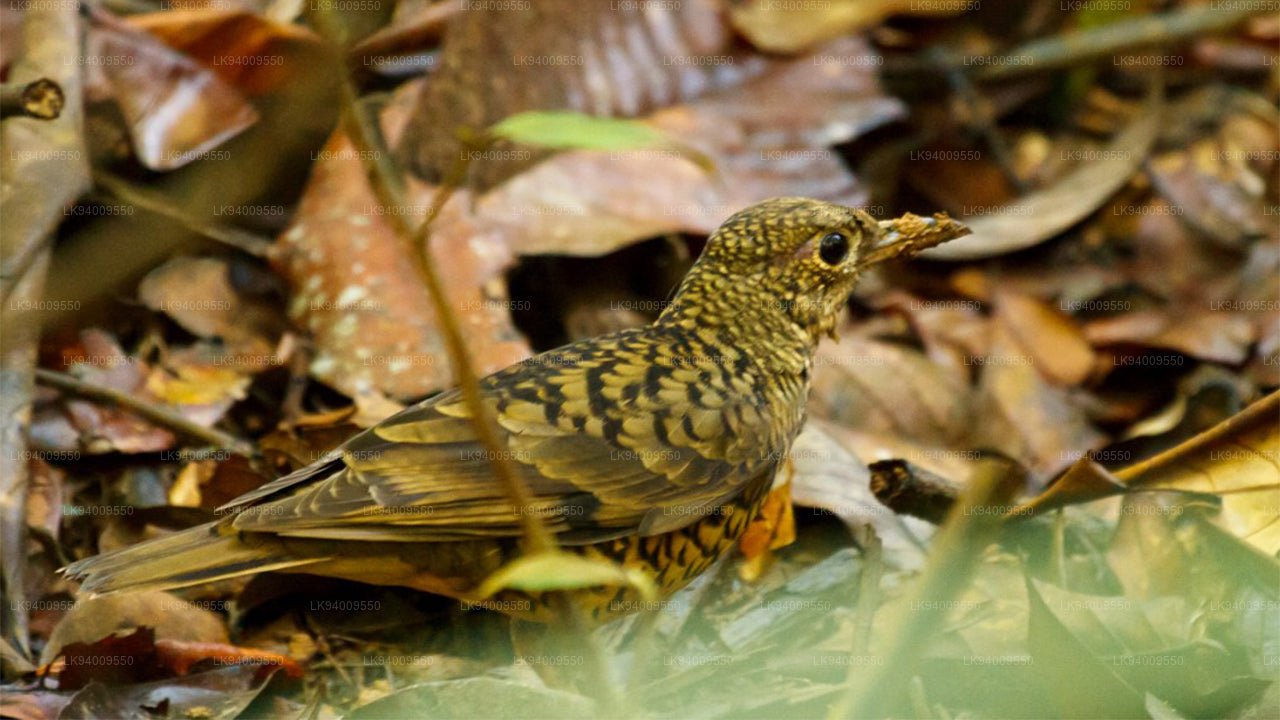
The species is unmistakable once you have a good view. The upperparts are rich brown overlaid with dense black scaling that extends across the crown, mantle, and wings, giving the bird its name. The underparts are a warm, deep buff — also heavily marked with dark crescents across the breast and flanks. The bill is notably long and slightly decurved, well suited to probing leaf litter for invertebrates.

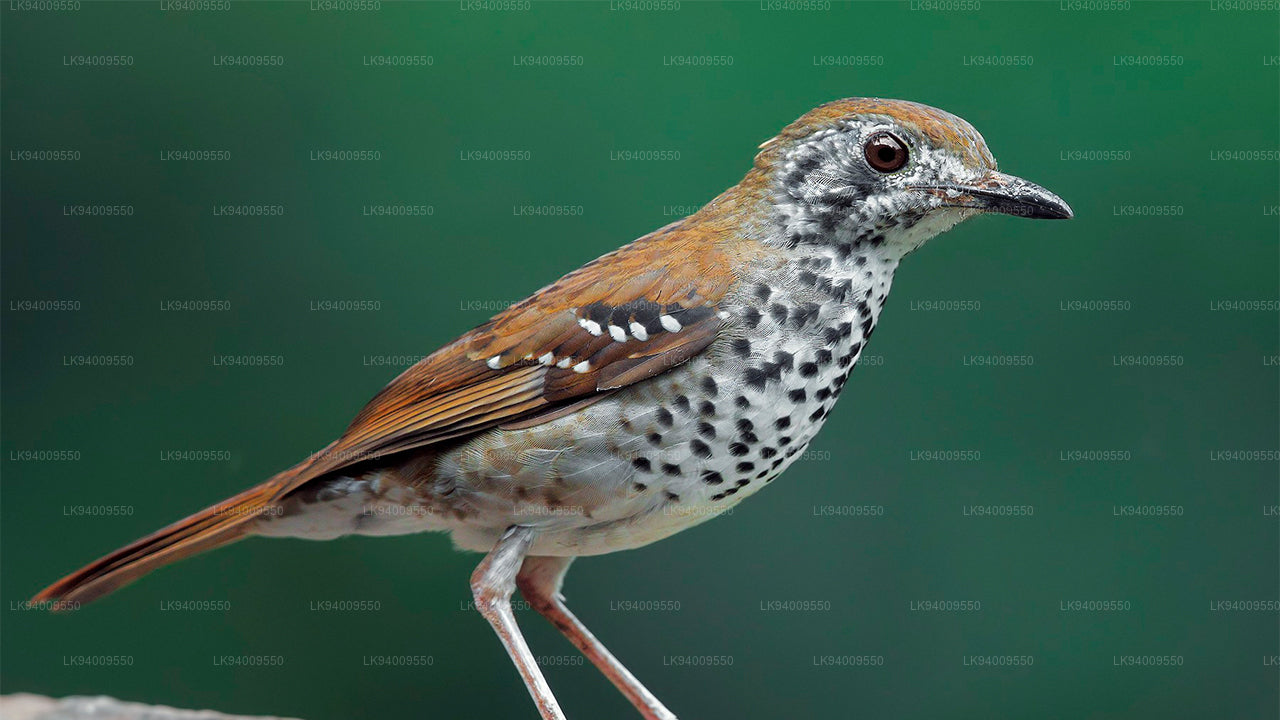
Confusion with female Pied Thrush (Geokichla wardii) or Spot-winged Thrush (Geokichla spiloptera) is possible in dim forest light. The key distinction is the Ceylon Scaly Thrush's extensive black scaling on the upperparts combined with the rich buff — not white — colouration of the belly. Both legs and bill appear paler than in the Spot-winged Thrush.

What does the Ceylon Scaly Thrush sound like?

The song is one of the more distinctive sounds of Sri Lanka's wet-zone forests at dawn and dusk: a series of downslurred, flute-like whistles rendered as "cheeew-chew-lew", with clear emphasis on the first, longer note before two shorter, quicker notes follow in rapid succession. The overall effect is mournful and unhurried — easy to mistake for a distant pigeon or an owl if you are unfamiliar with it.

Away from song periods, the bird communicates with a barely audible, high-pitched "tsit" — a contact note so faint that it is easily missed even when the bird is just metres away. First-time observers often report hearing the rustle of leaf litter before they hear any call at all.

Where does the Ceylon Scaly Thrush live in Sri Lanka?

The Ceylon Scaly Thrush is strictly confined to the wet zone and is found from lowland rainforests up through the mid-elevation foothills and into montane forests. The foothills — typically between around 300 m and 1,200 m elevation — are the most productive zone for encounters, as the bird is more regularly seen foraging along shaded forest tracks and path edges at these altitudes than in the dense, closed-canopy lowland interior.

The Sinharaja Forest Reserve, a UNESCO World Heritage Site in the Sabaragamuwa and Southern provinces, is widely regarded as one of the best locations. The reserve's extensive network of foot trails through primary rainforest provides exactly the mossy, leaf-litter habitat the species requires. Horton Plains National Park in the central highlands is another reliable site, particularly along the forest edges bordering the montane grasslands.

Other productive areas include the forested slopes around Kitulgala and the Makandawa Rainforest, where the wet-zone canopy remains largely intact.

When is the best time to look for Ceylon Scaly Thrush?

The bird is active year-round, but singing activity peaks during the breeding season, which is typically from around January through May. Early morning — the first hour after first light — is the best window. The species retreats to dense cover quickly as the day warms and activity in the forest increases.

The dry season months (roughly December to March) often provide the clearest sightings at Sinharaja, as visitor numbers on trails are lower and the forest floor can be easier to scan. Heavy rain, common throughout the wet zone from May onwards, generally suppresses foraging activity and makes the bird harder to locate.

What behaviour should I expect to observe?

The Ceylon Scaly Thrush is almost entirely terrestrial in its habits. It forages by walking slowly through leaf litter, occasionally tossing leaves aside with its bill to expose insects, earthworms, and small invertebrates beneath. It rarely ventures into open areas, preferring the narrow band of ground between dense undergrowth and a shaded forest track.

When disturbed, the bird freezes rather than fleeing immediately — its cryptic scaling provides effective camouflage against the dappled brown background of a forest floor. This freeze response means visitors who walk too quickly along trails will regularly pass within a few metres of a stationary bird without noticing it.

  • Walk slowly and pause frequently on forest trails.
  • Focus attention on the ground within 3–5 metres of the track edge.
  • Listen for the faint rustle of leaf litter being disturbed.
  • Avoid loud conversation — the bird will freeze or slip into cover.
  • Binoculars with close-focus capability (under 2 m) are an advantage in dense undergrowth.

Is the Ceylon Scaly Thrush endemic to Sri Lanka?

Yes. Zoothera imbricata is a Sri Lanka endemic, meaning it breeds exclusively on the island and does not occur in the wild anywhere else. It was for many years treated as a subspecies of the widespread Scaly Thrush (Zoothera dauma) complex, but is now recognised as a full species on the basis of its distinctive plumage, limited range, and vocal differences. Sri Lanka holds around 35 endemic bird species — one of the highest endemic ratios for an island of its size anywhere in South Asia.

How do I plan a birding trip to see this species?

Most visiting birders combine sites across Sri Lanka's wet zone into a circuit of several days. A practical itinerary might include two or three nights near Sinharaja (where guides local to the reserve are essential and can be arranged through reputable operators), a night near Kitulgala, and time at Horton Plains. A local guide with forest knowledge dramatically improves success rates — the bird's silence and cryptic habits make self-guided searching genuinely difficult.

Road access to most wet-zone sites from Colombo is reasonable, and 4WD is only occasionally needed. The Ella region in Uva province also offers accessible montane forest habitat worth exploring if you are travelling the hill-country circuit.

What other wildlife might I encounter in the same habitat?

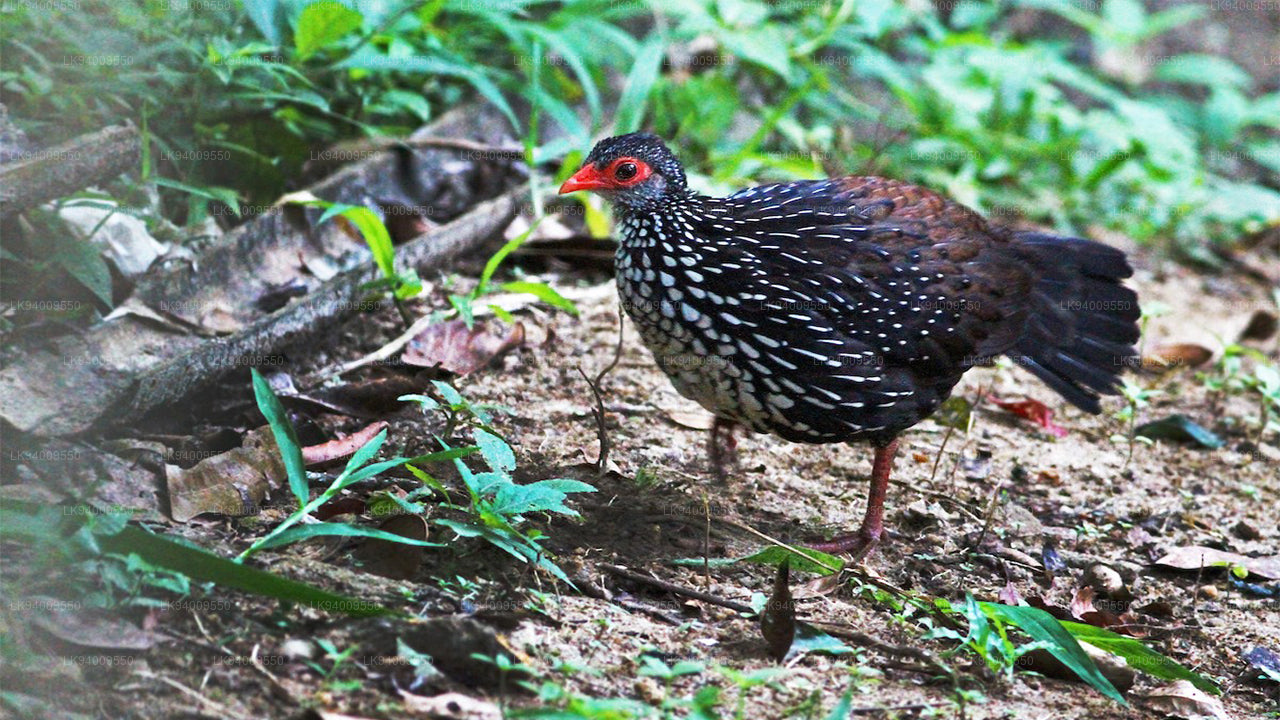
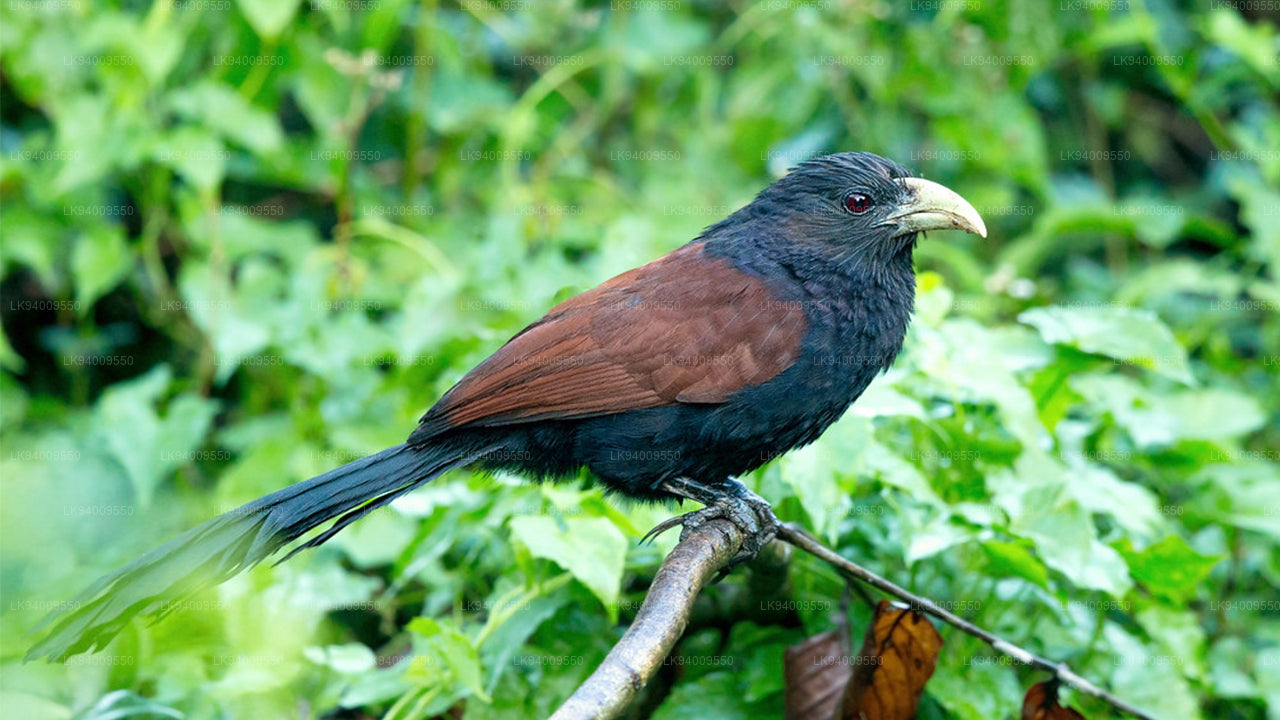
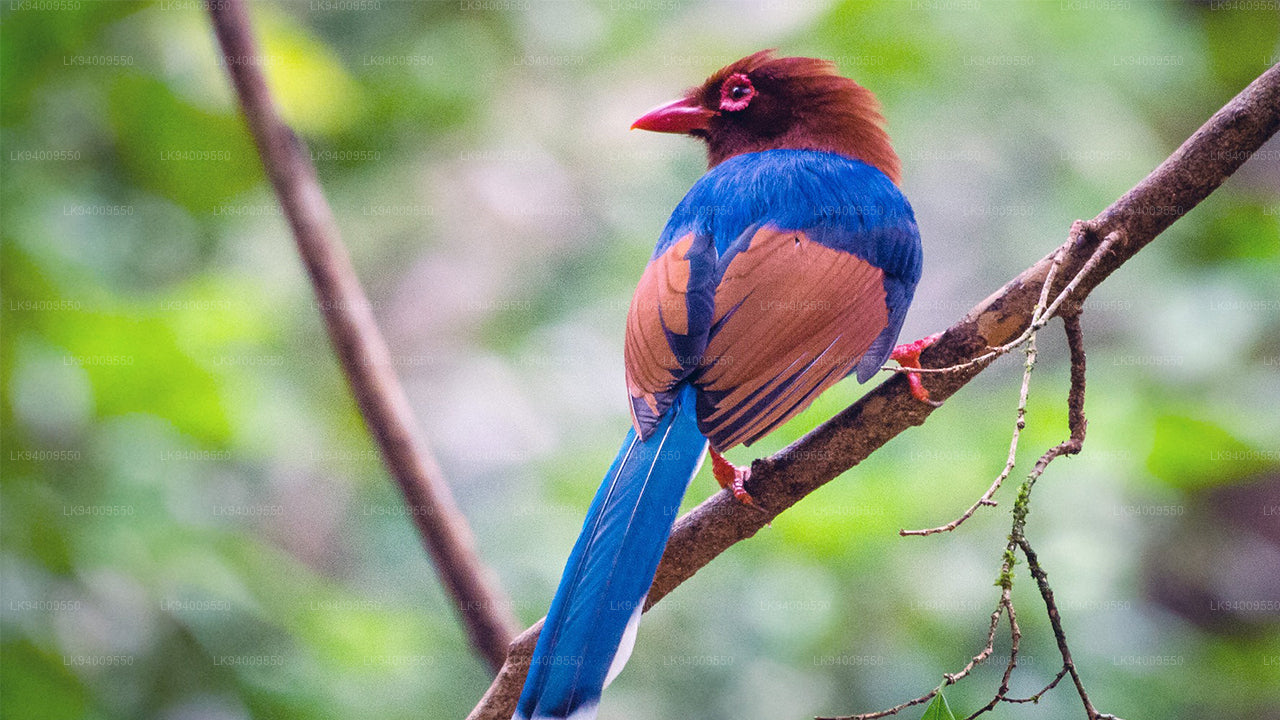
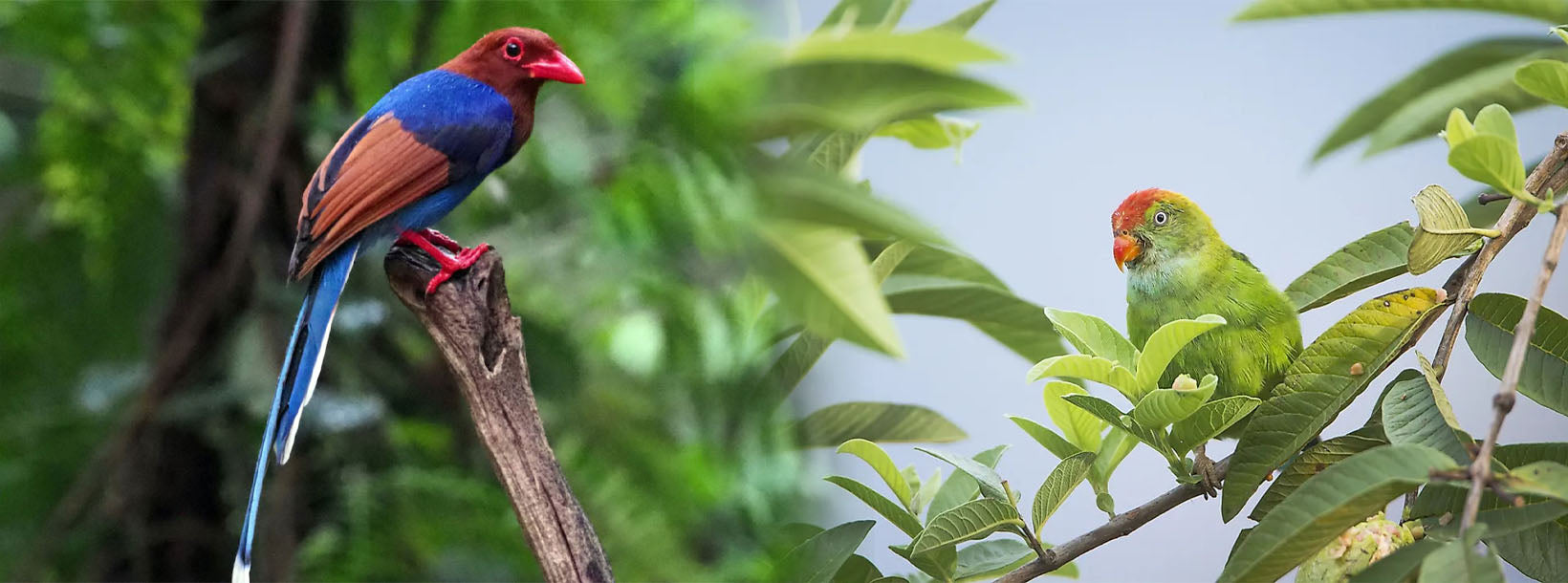
The dense wet-zone forests that the Ceylon Scaly Thrush calls home are among the most biodiverse ecosystems on the island. Co-occurring endemic birds frequently encountered in the same understorey and mid-storey include the Sri Lanka Blue Magpie, Green-billed Coucal, Spot-winged Thrush, and Sri Lanka Spurfowl. Sinharaja in particular is famous for its mixed-species feeding flocks — joining one of these flocks as it passes through the forest is one of the most rewarding wildlife experiences in South Asia.

Mammals such as Purple-faced Langur, endemic to Sri Lanka's wet zone, and the elusive Fishing Cat are also present in these forests, though the latter is rarely seen.

Ask Lakpura® Agent