Lakpura
Lakpura®

Koneswaram Temple

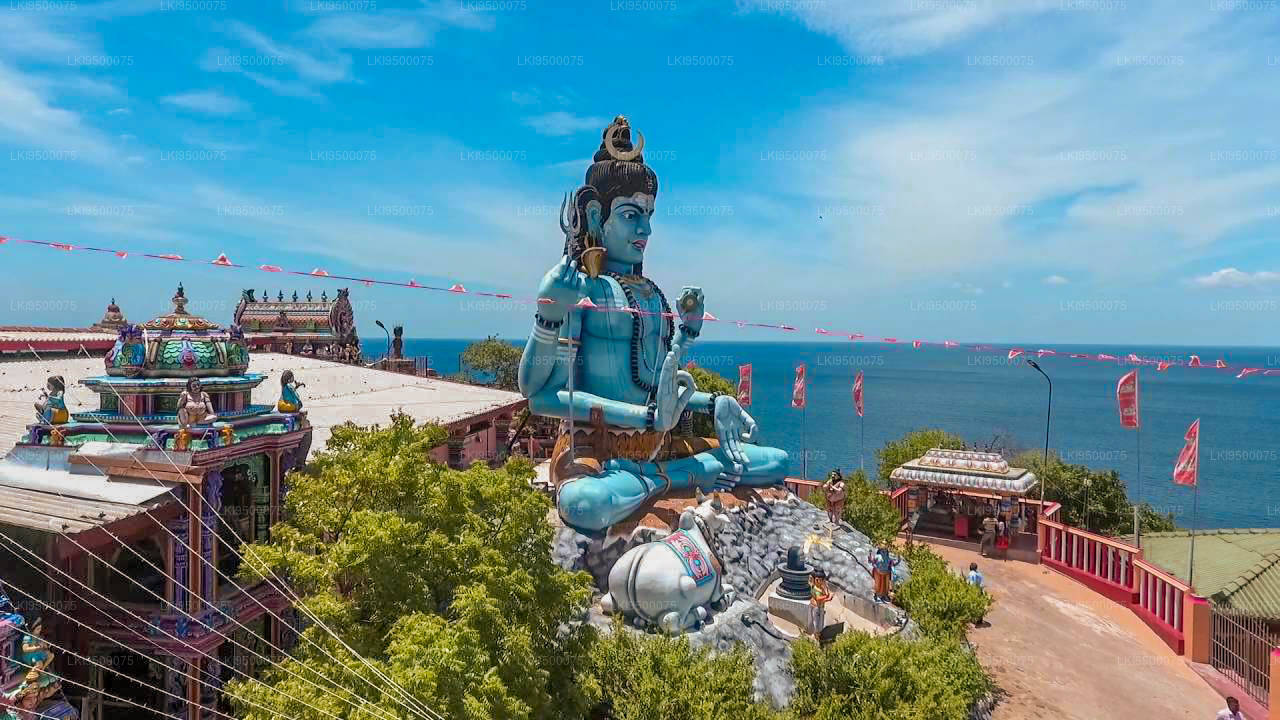
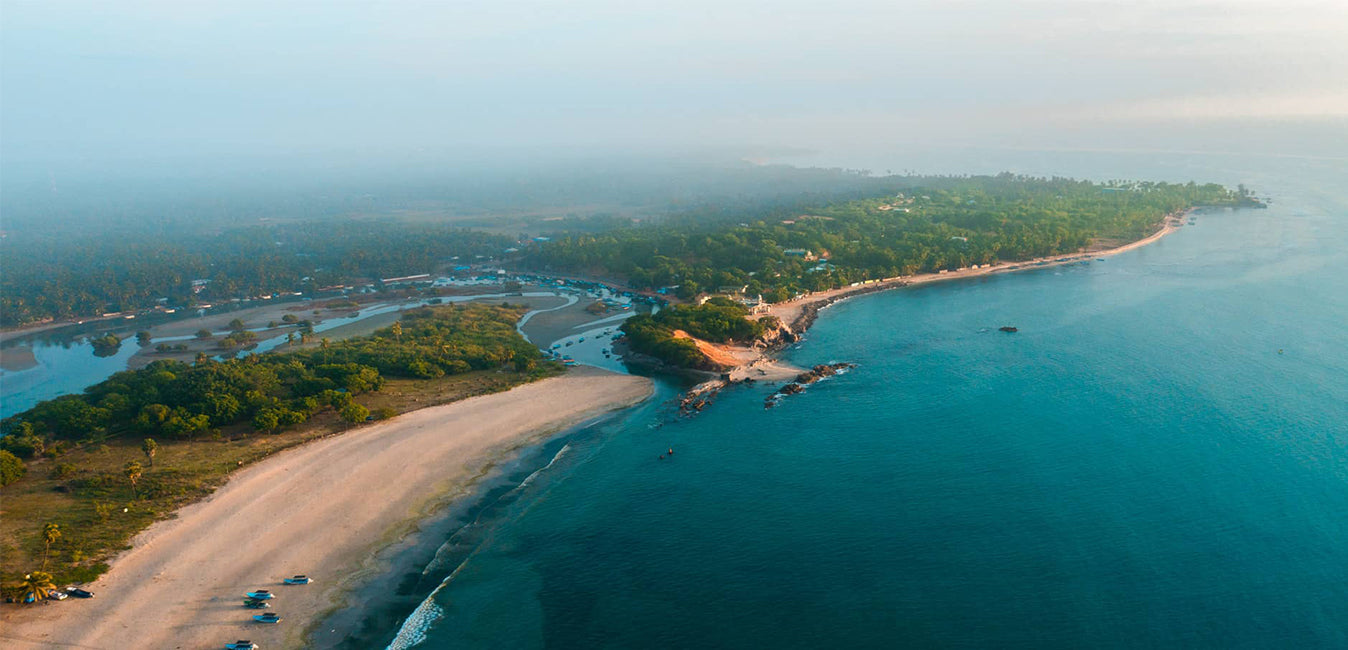
Perched on the rocky headland of Konesar Malai above Trincomalee harbour, Koneswaram Temple is one of the oldest and most revered Hindu shrines in Sri Lanka. Known formally as Thirukonamalai Konesar Temple — and historically as the Temple of the Thousand Pillars — it occupies the highest point of a promontory where the Indian Ocean and Gokarna Bay meet. For Tamil Saivite communities across Sri Lanka and the wider diaspora, it holds a significance that goes far beyond its dramatic setting.

Why is Koneswaram Temple so important to Hindu pilgrims?

Koneswaram is considered the most sacred of the Pancha Ishwarams — the five ancient abodes of Shiva believed to protect the island of Sri Lanka. The main deity is Kona-Eiswara (contracted to Konesar), a form of Shiva whose shrine sits at the very tip of the headland. In Tamil cosmology the temple is understood to symbolically crown the path of the Ganges River, connecting Shiva's feet at the coast to his head at Mount Kailash, with the Mahaweli River providing the axis between them.

The pilgrimage route begins at the foot of Konesar Road in Trincomalee town and passes through a series of courtyard shrines dedicated to Bhadrakali, Ganesh, Vishnu Thirumal, Surya, Raavana, Ambal-Shakti, and Murugan before reaching the primary Shiva shrine at the promontory's peak. This procession structure has been maintained for centuries and remains active today.

How old is Koneswaram Temple, and who built it?

Historical and inscriptional evidence places the origins of a significant shrine at this site as far back as 205 BC. The temple grew substantially during the reigns of the early Chola kings and later received patronage from the Pandyan Kingdom and the Jaffna Kingdom. Its architectural vocabulary — gopuram towers, a thousand-pillared mandapam (Aayiram Kaal Mandapam), and intricate sculptural bas-relief on black granite — reflects successive waves of Pallava, Chola, Pandyan, and Jaffna influence.

The Konesar Kalvettu inscription records that Gajabahu II, the Sinhalese king who ruled from Polonnaruwa between 1131 and 1153 AD, was a devout devotee of Shiva and a benefactor of the temple. He is said to have spent his final years in the associated Brahmin settlement of Kantalai, illustrating how the temple attracted royal patronage across ethnic and religious lines.

At its medieval peak the complex included multiple gold-plated gopuram towers and was regarded as one of the most architecturally accomplished religious structures of its era in Asia. Its fame extended through trade networks connecting South India and Southeast Asia, reflected in the variety of its Dravidian architectural styles.

What happened to the original temple?

The complex was systematically destroyed during Portuguese colonial religious attacks between 1622 and 1624. The Portuguese dismantled the gopuram towers and much of the main structure, using the debris to construct a fort — Fort Frederick — on the same promontory. A number of original idols were rescued and installed in a replacement temple built in 1632, located away from the headland within the town.

Worldwide scholarly interest in the original site was renewed during the twentieth century following the discovery of submerged ruins, sculptures, and Chola bronzes in the waters around Konesar Malai. The author and scientist Arthur C. Clarke, who lived in Sri Lanka for decades, was involved in some of the underwater investigations. Archaeological findings from both the seabed and the land surface confirmed the extraordinary scale of the original complex. Restoration work, most recently and significantly undertaken in the 1950s, has re-established an active and architecturally coherent temple on the headland.

What can visitors see at Koneswaram Temple today?

The restored temple complex sits within Fort Frederick, a Dutch and Portuguese fort that is still technically occupied by the Sri Lanka Army. Visitors pass through the fort gate to reach the promontory and are free to visit the temple during opening hours. The setting itself is extraordinary: sheer cliffs drop to the ocean on three sides, and the views across Trincomalee harbour and the open sea are among the most arresting of any religious site in Sri Lanka.

  • Main Shiva Shrine: The sanctum sanctorum housing the Konesar lingam, accessible to all devotees.
  • Courtyard Shrines: Subsidiary shrines to Bhadrakali, Ganesh, Vishnu Thirumal, Murukan, Surya, and other deities line the pilgrimage path.
  • Swami Rock Viewpoint: The cliff edge adjacent to the temple offers a panoramic view of the Indian Ocean and Trincomalee Bay.
  • Lover's Leap: A historically named rock on the promontory, associated with a colonial-era legend involving a Dutch official's daughter.
  • Pavanasam Theertham: The Papanasuchunai holy well, preserved as part of the temple's sacred geography and used during festival rituals.

When is the best time to visit Koneswaram Temple?

The temple is active year-round and receives pilgrims daily. The most significant annual event is the Koneswaram Ther Thiruvilah, a chariot festival that draws large crowds to Trincomalee. During this festival, the Bhadrakali temple of Trincomalee, the Pavanasam Theertham holy well, and the Back Bay coastline (Theertham Karatkarai) all form part of the extended ritual geography. The festival typically falls between July and August, coinciding with the Tamil month of Aadi.

For general sightseeing, the Eastern Province dry season — roughly May to September — offers reliable weather in Trincomalee. The town's famous beaches, including Nilaveli and Uppuveli, are at their best during this window, making a temple visit easy to combine with a broader east coast itinerary.

How do I get to Koneswaram Temple from Colombo?

Trincomalee is located on the northeast coast, around 260 km from Colombo by road. The most comfortable option is a private vehicle, with a journey time of roughly five to six hours depending on traffic and the route taken. Train services also run between Colombo and Trincomalee via Gal Oya junction, typically taking seven to eight hours; the route passes through scenic dry-zone countryside. Once in Trincomalee, the temple is accessible by tuk-tuk from the town centre — ask for Fort Frederick, which is the landmark most drivers recognise immediately.

What should visitors know before going?

Koneswaram Temple is a living place of worship. Modest dress is required — shoulders and knees should be covered, and shoes must be removed before entering the inner precincts. Photography is generally permitted in the outer courtyards but may be restricted near the main sanctum; follow the guidance of temple staff. Non-Hindu visitors are welcome and receive a respectful reception, particularly outside peak festival periods.

  • Arrive early in the morning to experience the temple before the midday heat builds on the exposed headland.
  • The fort gate has a military checkpoint; carry your passport or a copy of your identification.
  • A small donation at the temple office is customary but not compulsory.
  • The Theertham Karatkarai — the sacred stretch of Back Bay beach — is a short walk from the fort and worth visiting as part of the same outing.
Ask Lakpura® Agent