Mudali Kolama (High official comedy)


The Mudali (high official of rural areas) who was appointed during the British Colonial era has inspired the creation of this Kolam (comedy) dance. The verse used for the Mudali Kolama (rural official comedy) is as follows :-
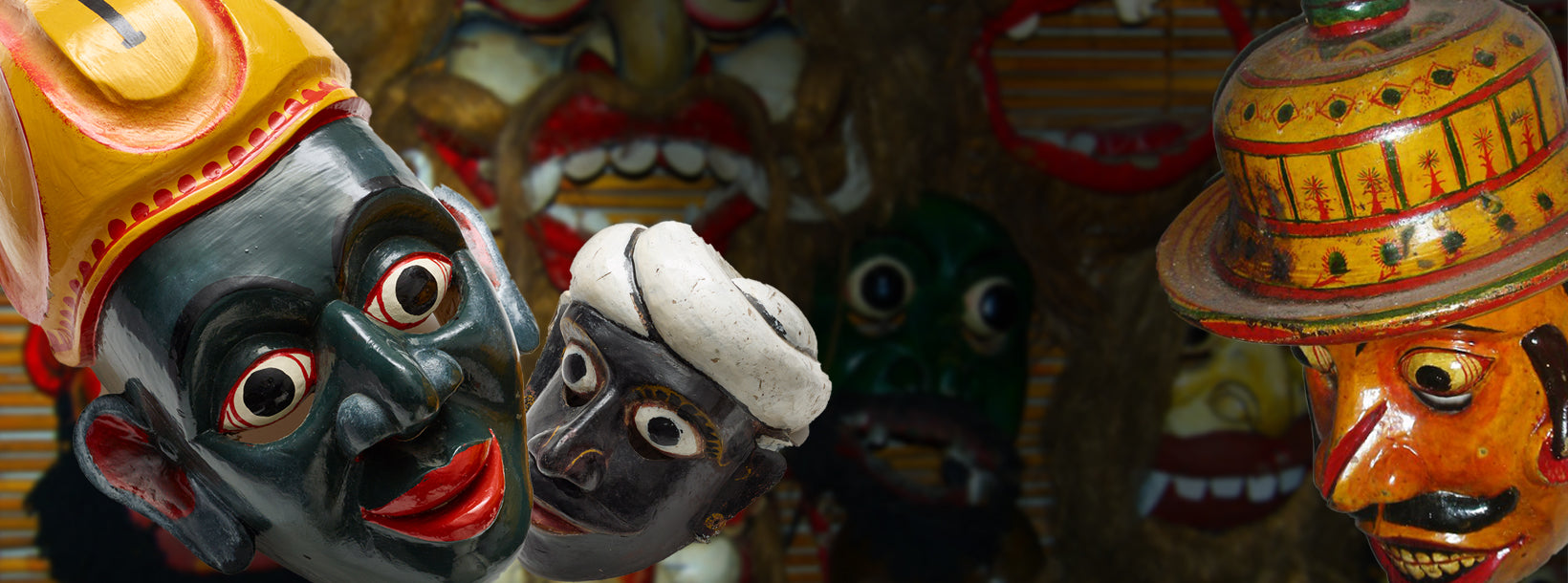
The mask of the Mudali (official) has been carved to display the arrogance and importance of a government official. Masks have been created with and without combs fitted to the head. Over the upper lip and round the two corners of the mouth was a moustache twisted and turned to two sides, and on two sides of the face are puffed up cheeks. By these mean an appearance of great dignity and importance is depicted. The mask of Mudali of the Ambalangoda, Hirewatte, Gunadasa dance troupe is square in shape, but in general this is not shown in other creation of dance troupes.
In colouring the mask some of them have been coloured white and some have been coloured yellow.
A man who comes behind the Mudali (official) is a man named Hencha (henchman) who holds a talipot a palm leaf over the Mudali head. In the Gonapola Balangoda kolam kuttama (comic dance troupe) the Henchman’s face is grey in colour and large pimple has been introduced, but in Ambalangoda Wijesuriya kolam kuttama (dance troupe) on the face of the Henchman a brown Jagalath Thoppiya (a comic hat) has been created. This face depicts the character of a person who is too loyal to the government and it too humble and cringing. The masks of these two characters are relevant to the governing class of today’s society.


Mudali Kolam Mask