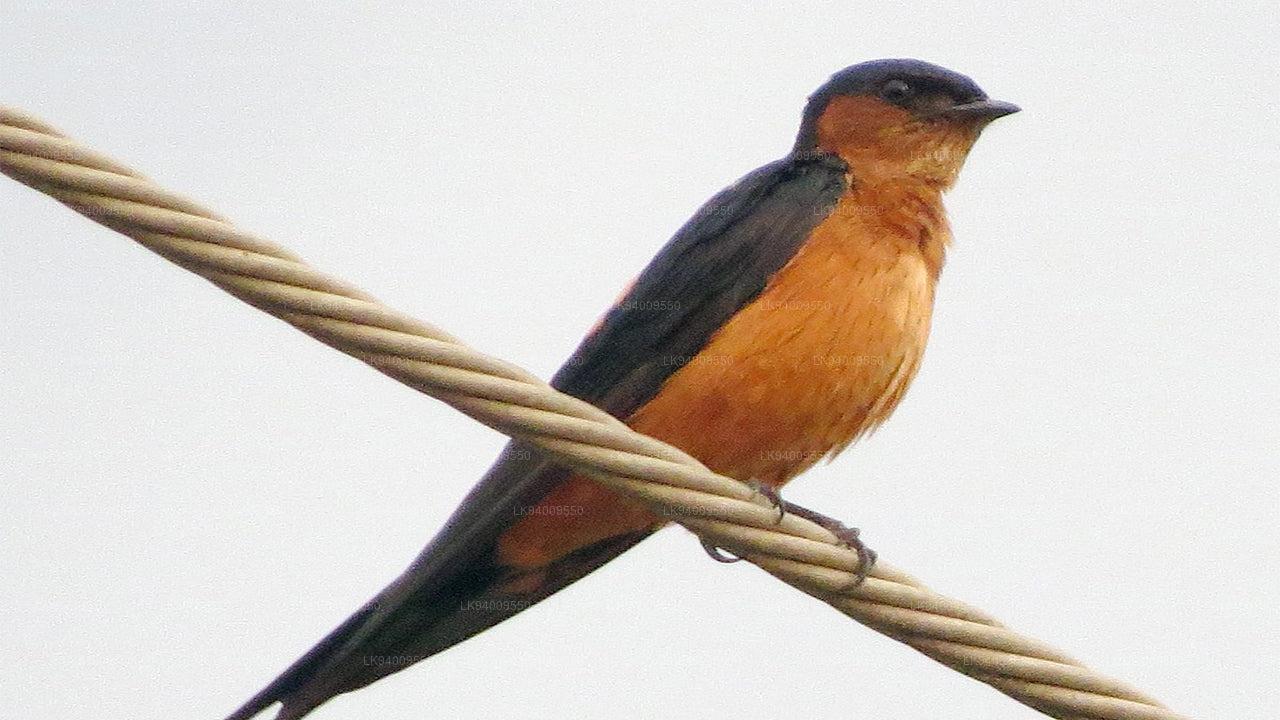
The Ceylon Swallow (Cecropis hyperythra), also called the Sri Lanka Swallow, is one of the island's most elegant aerial birds. A member of the family Hirundinidae — which encompasses swallows and martins worldwide — it is native to Sri Lanka and the southwestern tip of India. For birdwatchers visiting the island, this species is both accessible and rewarding: it favours open landscapes close to human settlement, so an encounter often happens without any special effort.
How does the Ceylon Swallow differ from similar species?
At first glance, the Ceylon Swallow resembles the more widespread Red-rumped Swallow (Cecropis daurica), and the two are frequently confused in the field. Several features help separate them reliably.
- Plumage depth: The Ceylon Swallow has noticeably darker upperparts and a richer, deeper rufous wash across the underparts.
- Tail fork: Its tail is more deeply forked than that of the Red-rumped Swallow, giving it a sleeker silhouette in flight.
- Range: Within Sri Lanka, the Ceylon Swallow is a resident breeder; the Red-rumped Swallow may occur as a migrant or visitor, so location and season provide additional context clues.
Beginners are advised to observe the bird from below as it glides overhead — the combination of dark upperparts, warm rufous underparts, and a pronounced tail fork is distinctive once learned.
Where is the Ceylon Swallow found in Sri Lanka?
The species occupies a broad range of open and semi-open habitats across the island, from sea level up into the lower hills. It shows a marked preference for areas where flying insects concentrate: wetlands, river margins, paddy fields, and the fringes of towns and villages. Bridges, cliff faces, and the eaves of buildings serve as favoured nest sites.
Productive locations for observation include the wetland edges around Udawalawe National Park, where the reservoir attracts large numbers of aerial insectivores, and the mangrove-lined waterways of Madu Ganga on the southwest coast. The bird is also regularly recorded in the agricultural lowlands of the wet zone, particularly around paddy fields and rural settlements.
In the drier north and east the Ceylon Swallow is less common, though it can appear along major waterways. Altitude is a limiting factor: the species does not routinely venture into the montane cloud forests above roughly 1,500 metres, so highland parks such as Horton Plains National Park are not typical habitat.
What does the Ceylon Swallow eat, and how does it hunt?
Like all swallows, Cecropis hyperythra is a dedicated aerial insectivore. It feeds almost exclusively on flying insects — flies, beetles, winged ants, and other small invertebrates — caught in mid-air during sustained, agile flight. Its hunting style combines rapid, shallow wingbeats with long glides, allowing it to cover wide areas efficiently.
Birds are most active in the early morning and late afternoon, when insect flight activity peaks. They are regularly seen hawking low over water or paddies, sometimes in loose associations with other swallow and swift species. The presence of a foraging flock is often a useful indicator of insect emergence events, particularly after rain.
How does the Ceylon Swallow build its nest?
The nest is a mud structure, flask-shaped or retort-shaped, with a tubular entrance passage. Both sexes collect pellets of wet mud and shape them into a cup, which they then line with feathers and plant fibres. Nests are typically plastered against a vertical surface — under the overhanging eaves of a building, beneath a bridge, against a road cutting, or on a cliff ledge. The same nest site is often reused and repaired across successive breeding seasons.
Clutch size is typically two to four eggs. Incubation and chick-rearing are shared between the pair, and fledglings are fed on the wing before becoming independent. Because the birds nest readily on human structures, they are commonly observed at close range in villages and small towns across the wet zone.
When is the best time to see the Ceylon Swallow in Sri Lanka?
The Ceylon Swallow is resident and breeds on the island year-round, so it can be encountered in any month. Activity levels are generally higher during and immediately after the southwest monsoon (roughly May to September), when rainfall stimulates insect emergence and feeding activity intensifies. Breeding behaviour — nest-building, courtship chasing, and adults ferrying food to nestlings — is most visible in the drier months of the early year, typically between January and April in the wet zone lowlands.
Morning hours consistently offer the best views: birds are vocal, energetic, and tend to perch briefly on wires or bare branches before launching into extended foraging flights. Late afternoon is equally productive near water bodies.
Is the Ceylon Swallow threatened?
The Ceylon Swallow is currently assessed as a species of least concern. Its adaptability to human-modified landscapes — willingness to nest on buildings and to forage over cultivated land — gives it a degree of resilience that many forest-specialist birds lack. Stable agricultural wetlands, flooded paddies, and rural settlements effectively function as surrogate habitat, sustaining healthy populations across the lowland wet zone.
That said, the species' relatively restricted global range (essentially Sri Lanka plus small populations in southern India) means that large-scale habitat change or pesticide use — which suppresses insect prey — could alter its status over time. Ornithologists from the Field Ornithology Group of Sri Lanka continue to monitor breeding populations as part of broader avifaunal assessments.
What does the Ceylon Swallow's call sound like?
The vocalisation is a soft, liquid twitter — a rapid series of high-pitched notes delivered both in flight and from a perch. It is quieter and less insistent than the calls of some related species, and in busy lowland environments can easily be overlooked. Birders who learn the call often find it a useful way to detect birds overhead before locating them visually. Recordings are available through several open-access bird sound databases for anyone wishing to study it before a trip.
What other birds might I see alongside the Ceylon Swallow?
The open wetland and agricultural habitats favoured by the Ceylon Swallow support a rich supporting cast of birds. Little and Indian Cormorants roost on exposed branches above water, Purple-rumped Sunbirds work the flowering trees at habitat edges, and various kingfisher species patrol the waterways. In the dry zone, foraging swallows share airspace with Barn Swallows (a winter visitor from the Palearctic) and several swift species.
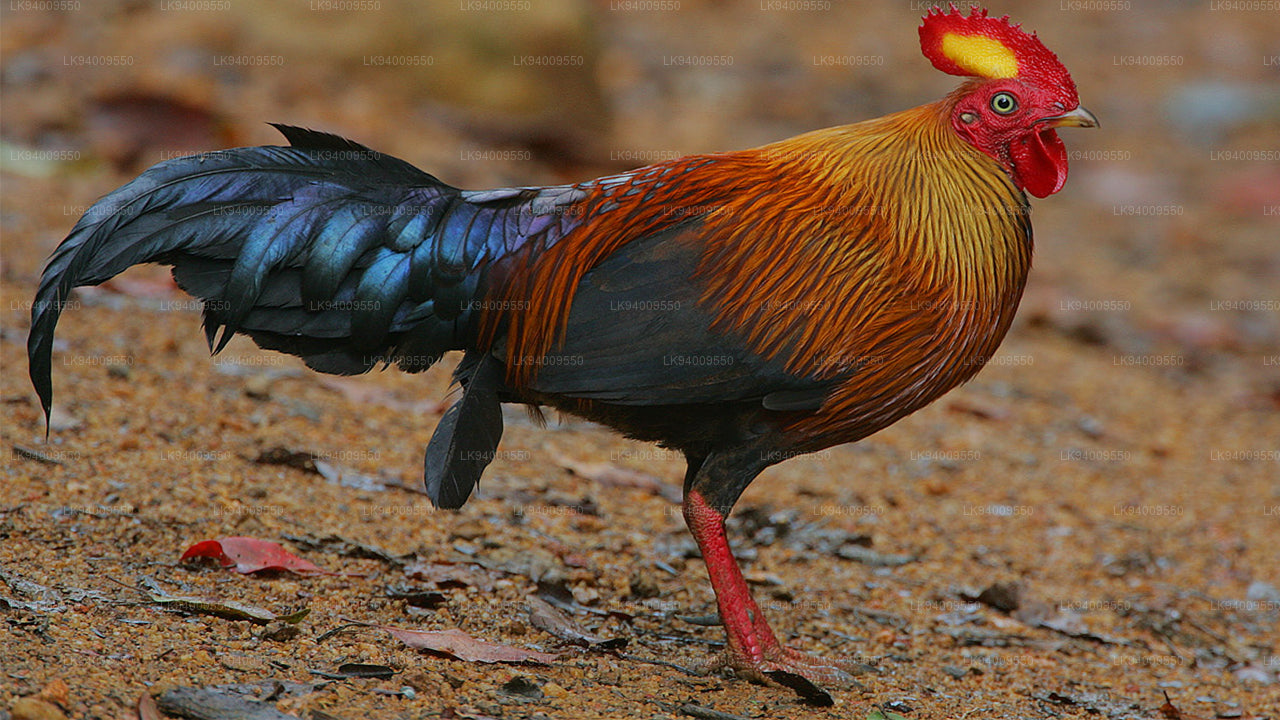
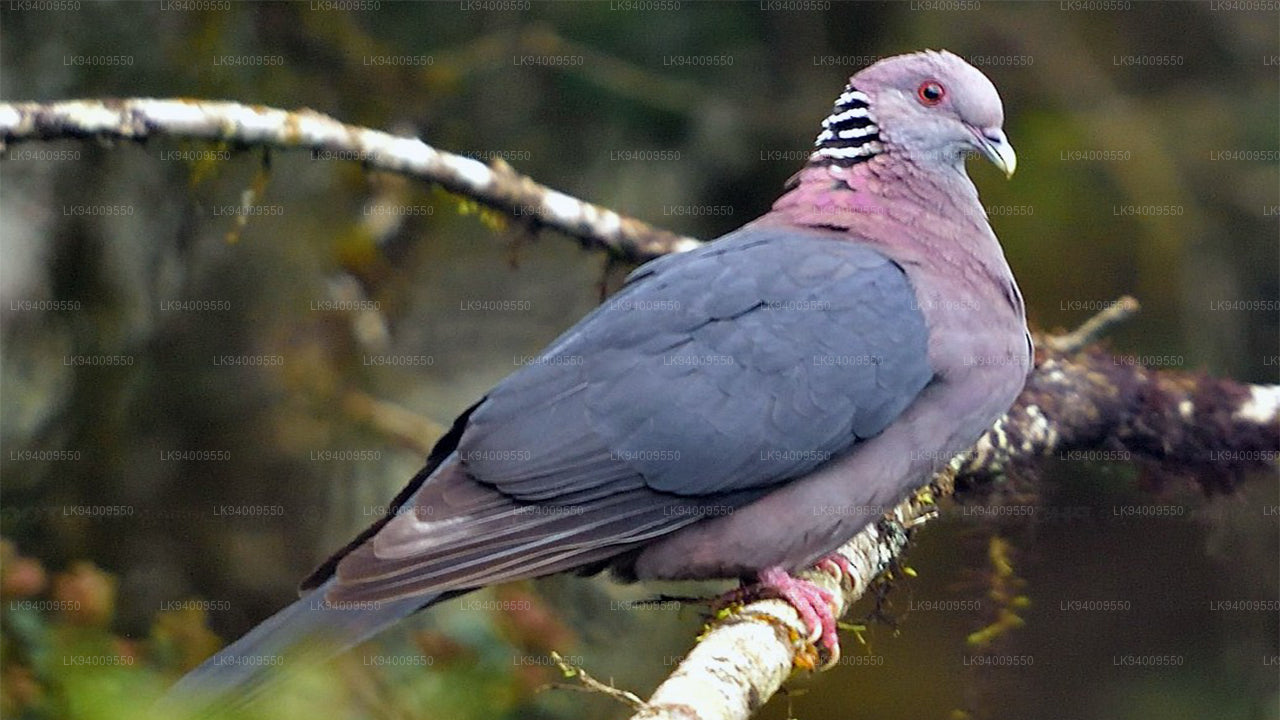
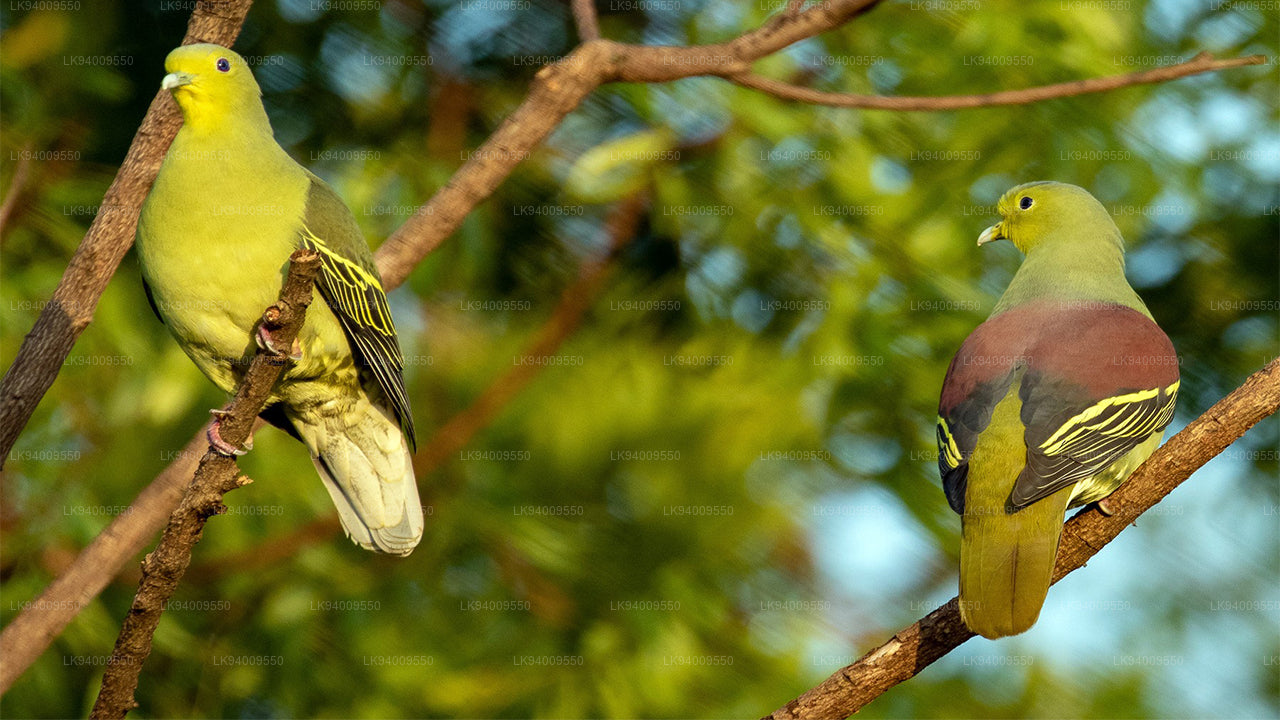
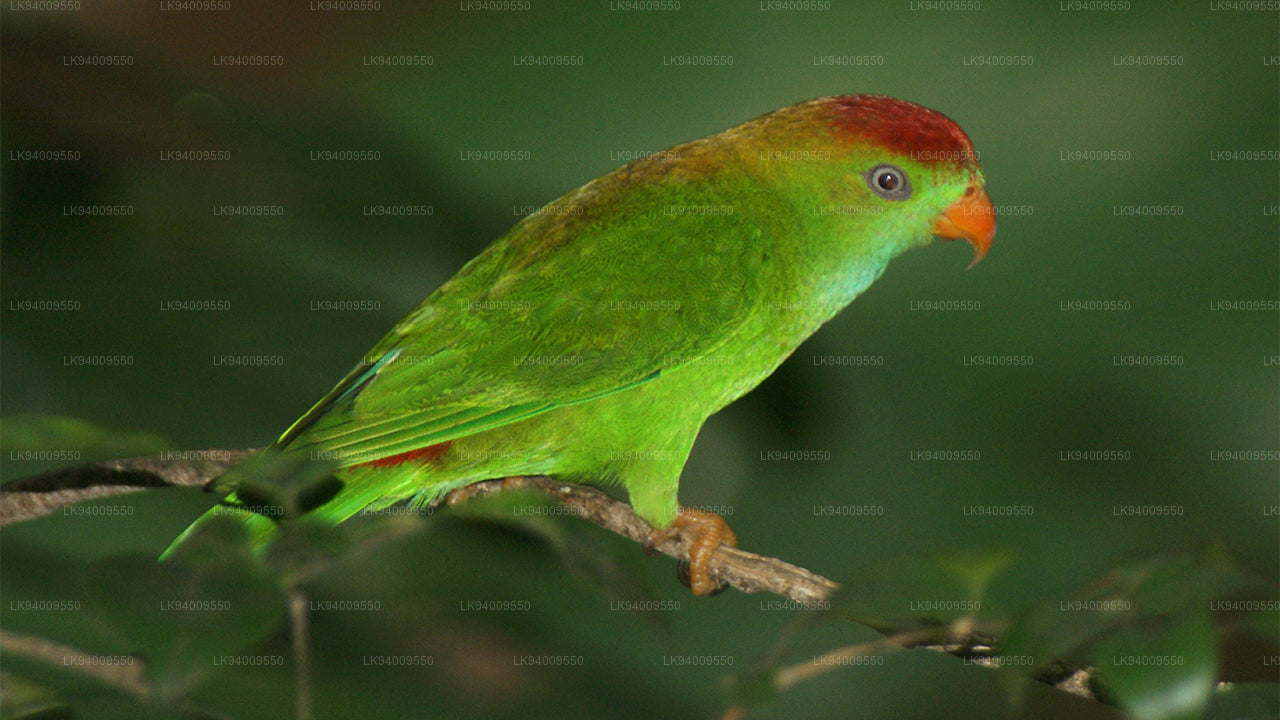
Sri Lanka holds around 35 endemic bird species, and combining a dedicated birdwatching itinerary with a visit to sites such as the Sinharaja Forest Reserve dramatically increases the chance of encountering the island's full range of endemics in a single trip.