Gara Raksha Mask


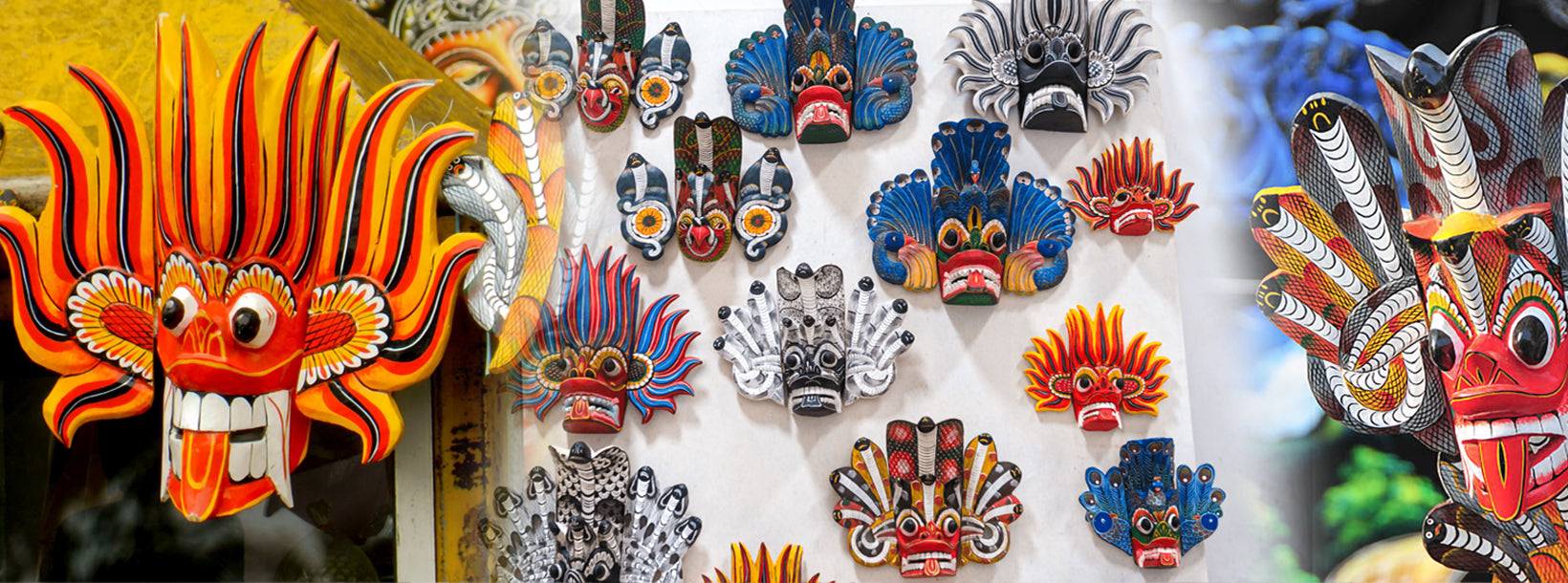
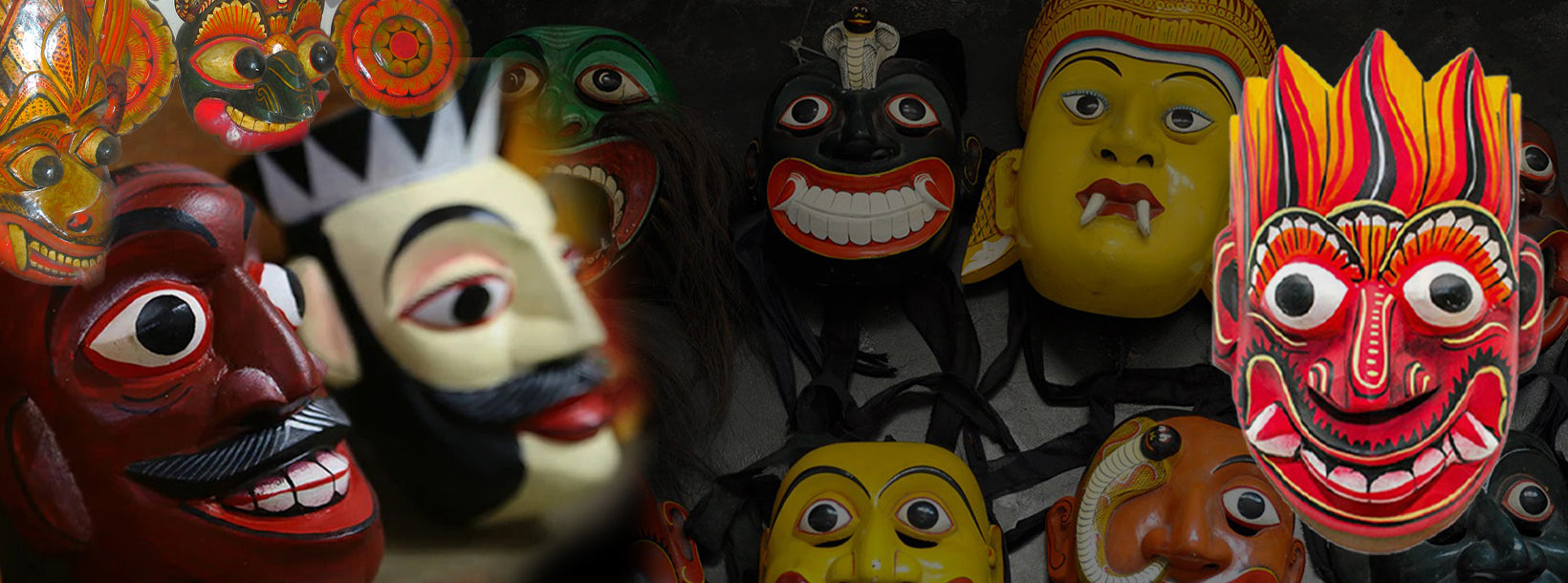
The Gara Raksha Masks is one of Sri Lanka’s most striking and symbolic traditional masks, deeply rooted in folklore, ritual practice, and village-level spiritual beliefs. Recognizable by its fierce facial features, bulging eyes, flared nostrils, and vivid colors, the Gara Raksha Masks represents a powerful demon figure believed to ward off evil influences and protect communities from misfortune. Its presence reflects the island’s long-standing relationship between art, spirituality, and everyday life.
Traditionally, the Gara Raksha Masks is associated with low-country rituals of southern Sri Lanka, especially those linked to healing ceremonies and protective rites. In local belief systems, unseen forces such as evil spirits, illness-causing demons, or negative energy were thought to disturb harmony in both individuals and households. The intimidating expression of the Gara Raksha figure was designed deliberately to frighten away these harmful entities. During ritual performances, masks like these were worn by dancers who enacted symbolic battles between good and evil, reinforcing the idea of spiritual balance and communal protection.
Crafted mainly from lightweight kaduru wood, the Gara Raksha Masks showcases the skill of Sri Lankan traditional craftsmen, particularly from areas like Ambalangoda and surrounding coastal villages. Artisans carve each mask by hand, following designs passed down through generations. Bright reds, yellows, blacks, and whites are commonly used, each color carrying symbolic meaning—red for power and energy, white for purity, and black for mystery and the unknown. The exaggerated features are not merely decorative but serve to amplify the mask’s spiritual authority.
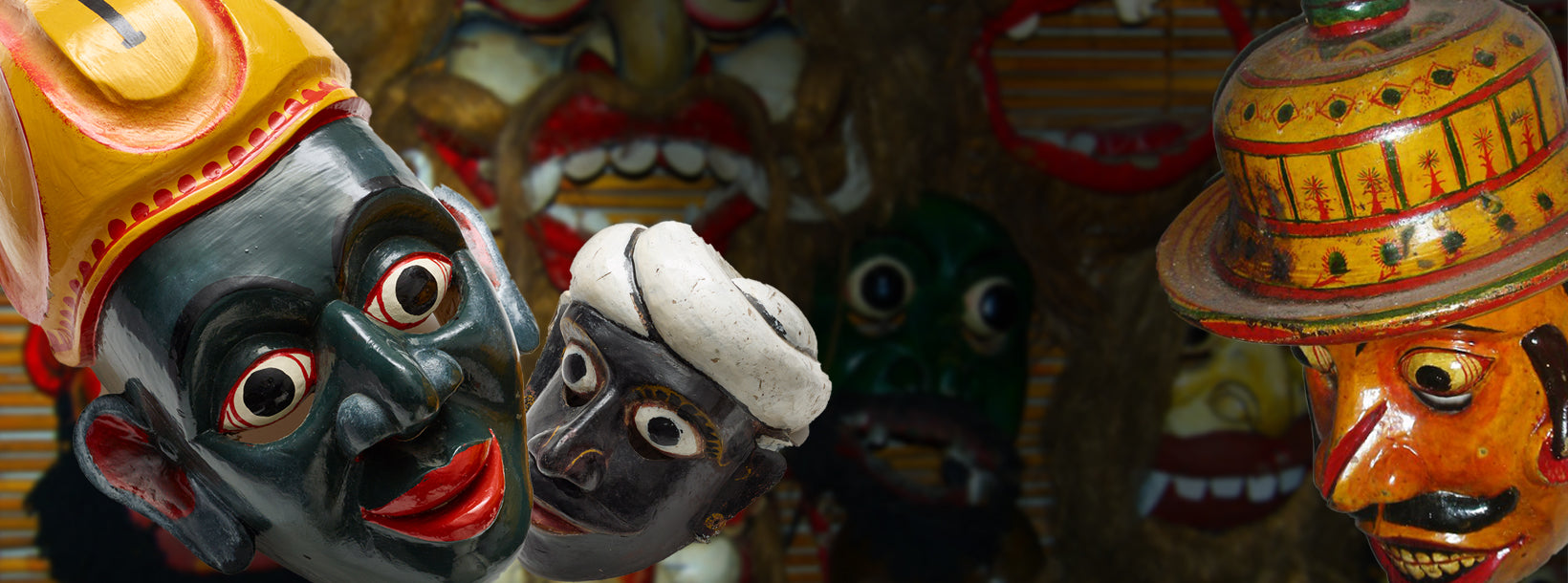
Beyond its ritual origins, the Gara Raksha Masks has evolved into a cultural icon of Sri Lanka. Today, it is widely admired as a form of folk art and is often displayed in homes, cultural centers, and museums. For many Sri Lankans, the mask represents ancestral wisdom and the enduring link between past and present. It is also a popular souvenir, appreciated by visitors not only for its dramatic appearance but for the stories and beliefs it embodies.
In contemporary Sri Lanka, the Gara Raksha Masks stands as a reminder that traditional art forms are more than visual expressions—they are carriers of history, belief, and identity. Whether used symbolically, decoratively, or educationally, the mask continues to protect its place in the cultural imagination of the island.