Fishermen’s Stilt Spot


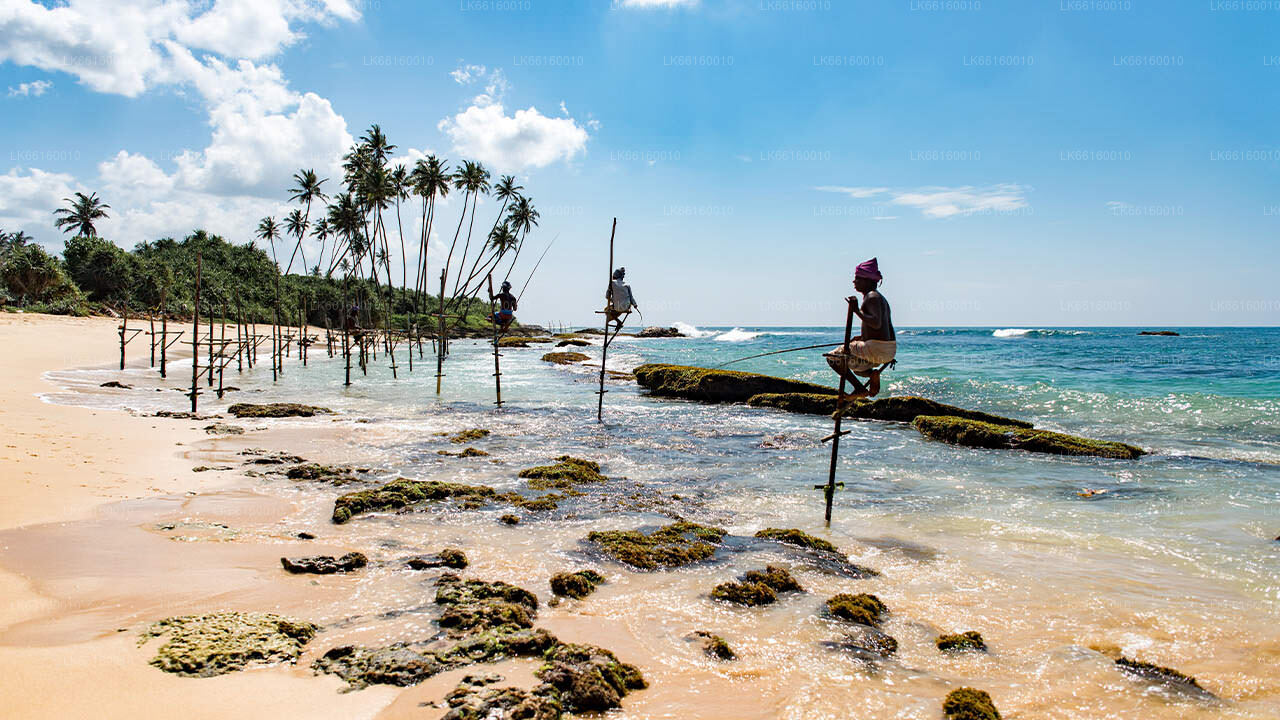
The Fishermen's Stilt Spot in Ahangama, located on the southern coast of Sri Lanka, is a unique and picturesque site where traditional stilt fishing is still practiced by local fishermen. These fishermen, perched on wooden stilts in the shallow waters, create a striking image against the backdrop of the turquoise sea and golden beaches. Stilt fishing, a centuries-old technique, is one of Sri Lanka's most iconic and visually captivating forms of fishing, attracting photographers and travelers from around the world.
The practice of stilt fishing involves fishermen balancing on narrow wooden poles, casting their nets into the ocean to catch fish. This method, passed down through generations, requires great skill and patience. The surrounding area of Ahangama is rich in natural beauty, with palm-lined beaches and crystal-clear waters that support a variety of marine life, making it an ideal location for this ancient fishing technique to thrive.
Visitors to the Fishermen's Stilt Spot can observe the fishermen in action, taking in the unique sight of men fishing from their poles amidst the gentle waves. It's a great spot for photography, where the vibrant colors of the fishermen's attire contrast beautifully with the ocean's blues and greens. The area also offers a peaceful atmosphere, making it a perfect place for a leisurely walk along the shore or a relaxing visit to the nearby cafes and seafood restaurants.
The best time to visit the Fishermen's Stilt Spot is during the dry season, from November to April, when the weather is clear, and the waters are calm. Ahangama is easily accessible from nearby towns like Galle and Mirissa, making it a perfect addition to any coastal itinerary in Sri Lanka's southern region. The location offers an authentic and cultural glimpse into the traditional fishing practices of Sri Lanka, making it a must-visit destination for those interested in local heritage and natural beauty.