
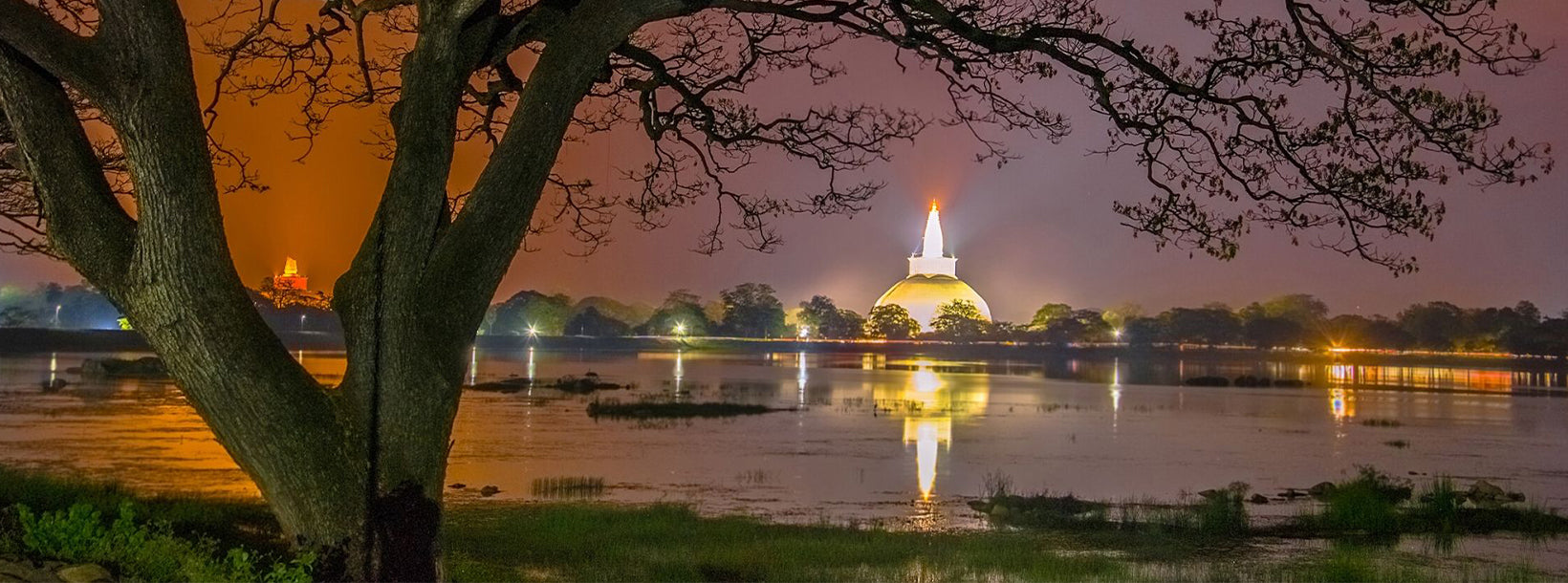
Nirvana (Nibbana)


Nirvana (???????, Sanskrit: nirva?a; Pali: nibbana, nibbana) is the goal of the Buddhist path. The literal meaning of the term is "blowing out" or "quenching". Nirvana is the ultimate spiritual goal in Buddhism and marks the soteriological release from rebirths in sa?sara. Nirvana is part of the Third Truth on "cessation of dukkha" in the Four Noble Truths, and the summum bonum destination of the Noble Eightfold Path.
In the Buddhist tradition, nirvana has commonly been interpreted as the extinction of the "three fires", or "three poisons",[note 1] greed (raga), aversion (dvesha) and ignorance (moha). When these fires are extinguished, release from the cycle of rebirth (sa?sara) is attained.
Nirvana has also been claimed by some scholars to be identical with anatta (non-self) and sunyata (emptiness) states though this is hotly contested by other scholars and practicing monks. In time, with the development of the Buddhist doctrine, other interpretations were given, such as the absence of the weaving (vana) of activity of the mind, the elimination of desire, and escape from the woods, cq. the five skandhas or aggregates. Buddhist scholastic tradition identifies two types of nirvana: sopadhishesa-nirvana (nirvana with a remainder), and parinirvana or anupadhishesa-nirvana (nirvana without remainder, or final nirvana). The founder of Buddhism, the Buddha, is believed to have reached both these states.
Nirvana, or the liberation from cycles of rebirth, is the highest aim of the Theravada tradition. In the Mahayana tradition, the highest goal is Buddhahood, in which there is no abiding in nirvana. Buddha helps liberate beings from sa?sara by teaching the Buddhist path. There is no rebirth for Buddha or people who attain nirvana. But his teachings remain in the world for a certain time as a guidance to attain nirvana.
Background
The concept of nirvana is also present in older Indian religions, including Vedic culture, Hinduism and Jainism. It is also present in Sikhism and Manichaenism.
Etymology
The origin of the term nirvana is probably pre-Buddhist, It was a more or less central concept among the Jains, the Ajivikas, the Buddhists, and certain Hindu traditions. It generally describes a state of freedom from suffering and rebirth. The ideas of spiritual liberation using different terminology, is found in ancient texts of non-Buddhist Indian traditions, such as in verse 4.4.6 of the Brihadaranyaka Upanishad of Hinduism. The term may have been imported into Buddhism with much of its semantic range from these other sramanic movements. However its etymology may not be conclusive for its meaning.
Meaning
Release and freedom from suffering; moksha, vimutti;
Nirvana is used synonymously with moksha (Sanskrit), also vimo
Buy Buddhist Books Online
-
Thripitakaya Dheeganikaya Atuwaawa - 1
Regular price $2.78 USDRegular price$3.09 USDSale price $2.78 USDSale -
Thripitakaya Dheeganikaya Atuwaawa - 2
Regular price $2.78 USDRegular price$3.09 USDSale price $2.78 USDSale -
Thripitakaya Dheeganikaya Atuwaawa - 3
Regular price $2.78 USDRegular price$3.09 USDSale price $2.78 USDSale -
Thripitakaya Majjima Nikaya Atuwaawa - 4
Regular price $2.78 USDRegular price$3.09 USDSale price $2.78 USDSale -
Thripitakaya Majjima Nikaya Atuwaawa - 3
Regular price $2.78 USDRegular price$3.09 USDSale price $2.78 USDSale -
Thripitakaya Sanyuktha Nikaya Atuwaawa - 1
Regular price $5.37 USDRegular price$5.97 USDSale price $5.37 USDSale -
Thripitakaya (Abidharma Pitakaya № 8)
Regular price $2.05 USDRegular price$2.28 USDSale price $2.05 USDSale -
Thripitakaya(Sanyuktha Nikaya-02)
Regular price $3.87 USDRegular price$4.30 USDSale price $3.87 USDSale


