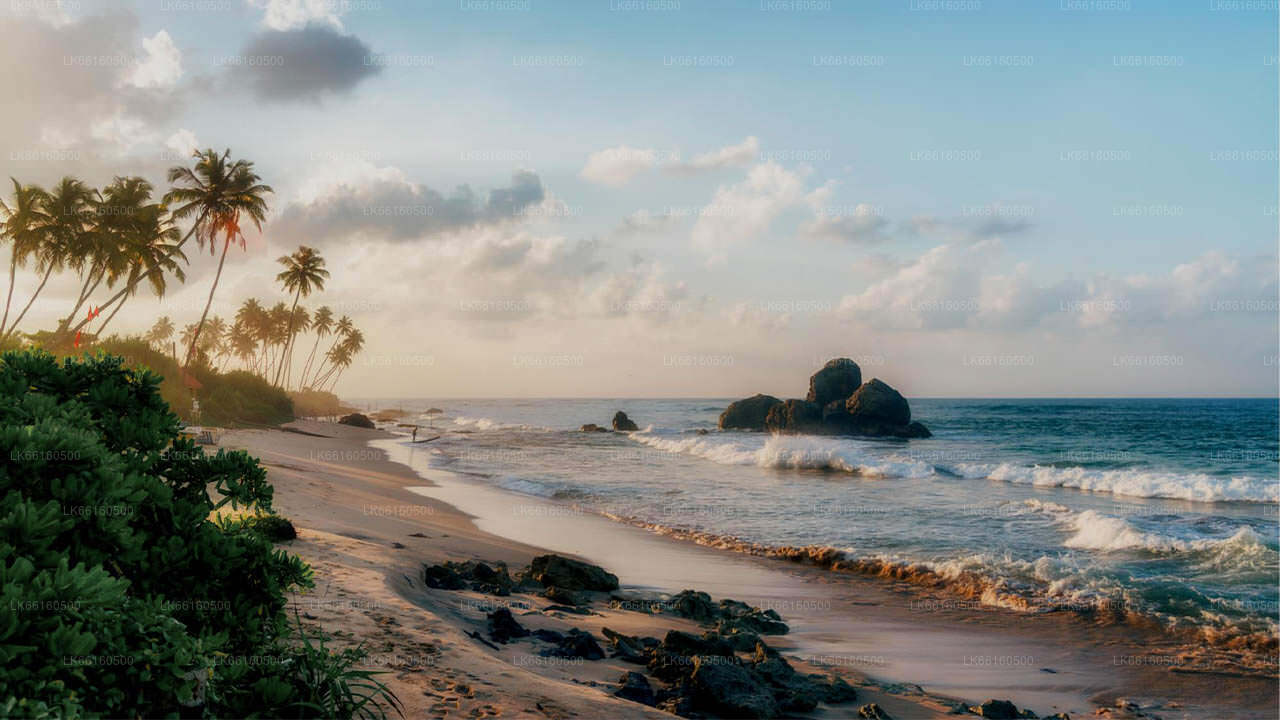
Koggala Beach sits on Sri Lanka's southern coast, roughly midway between the historic port of Galle and the surf town of Weligama. It is a long, relatively uncrowded stretch of pale-gold sand backed by coconut palms and low-rise hotels, with the calm waters of Koggala Lake lying just inland. The combination of a quiet shoreline, a working fishing community, and several worthwhile day-trip destinations makes Koggala a practical base for exploring the deep south without the congestion of more heavily visited resorts.
What is Koggala Beach like?
The beach itself extends for several kilometres, giving walkers and swimmers plenty of room even during peak season. The sea here tends to be calmer than the open stretches around Hikkaduwa, and a gentle slope into the water makes it accessible for confident swimmers. During the dry season the shoreline is wide and firm underfoot, ideal for early-morning walks before the heat builds.
The atmosphere is low-key. There are no jet-ski fleets or vendors every twenty metres. A handful of beachside cafés serve fresh seafood and Sri Lankan rice-and-curry at honest prices, and the pace of life reflects the surrounding fishing villages more than a resort strip. That quietness is precisely what draws many visitors.
What water activities are available at Koggala Beach?
The relatively protected bay supports a range of water sports. Snorkelling around nearshore coral patches is possible during calm spells, though visibility varies with the season and weather. The gentle swell makes the beach suitable for beginner surfers, while more experienced riders typically head a short distance along the coast to Midigama or Ahangama for consistent reef breaks. Kayaking is available through several hotels and can be a pleasant way to explore the shoreline at your own pace.
For anglers, the waters off Koggala reward both shore fishing and boat-based trips. Koggala is also home to a small domestic airport — Koggala Airport (KCT) — from which scenic coastal flights depart, offering an unusual perspective on the southern coastline and the lagoons below.
What is the Koggala Lake, and is it worth visiting?
Koggala Lake is one of the largest natural lakes in Sri Lanka and lies immediately adjacent to the beach, separated from the sea by a narrow strip of land. Boat rides on the lake are a popular half-day excursion: guides navigate through channels fringed with mangroves, stopping at small islands that hold a working cinnamon plantation, a Buddhist temple, and a bird sanctuary. Water monitors, kingfishers, and a variety of egrets and herons are regularly spotted. The lake has an ecological character similar to that of Madu Ganga further north, though it sees fewer visitors and feels correspondingly more relaxed.
Early morning is the best time for birdwatching from a boat, when light is soft and wildlife is most active. Most lake excursions last between 90 minutes and two hours and can be arranged through any hotel or at the lakeside jetty.
Where can I see the stilt fishermen near Koggala?
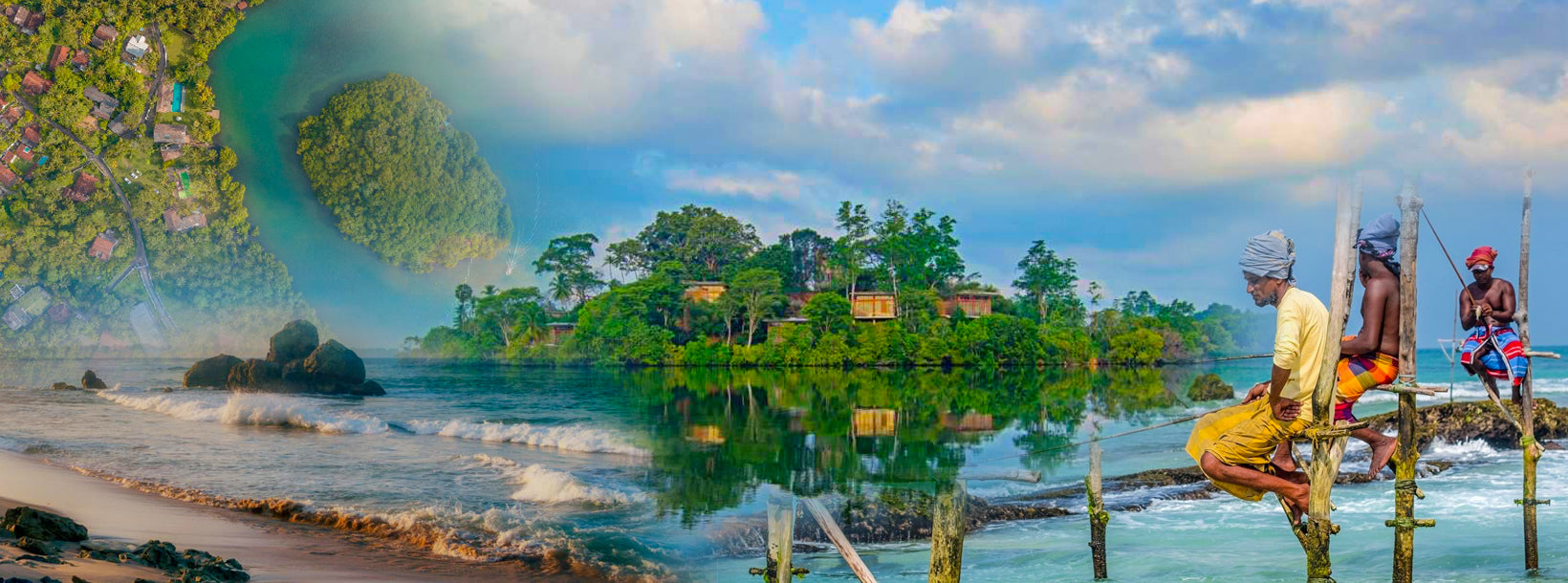
The stilt fishermen of Sri Lanka's southern coast are among the country's most photographed subjects, and the stretch of coast between Koggala and Ahangama is one of the best places to see them. Fishermen balance on a single pole driven into a shallow reef and use a rod or line to catch small fish as the tide moves. The tradition is centuries old, though today it is practised by fewer families than in previous generations. The best chance of seeing active fishing — rather than a posed display — is at dawn or dusk during the dry season, when a light catch justifies the effort.
How far is Galle Fort from Koggala Beach?
Galle Fort lies approximately 14 kilometres west of Koggala and is easily reached by tuk-tuk, taxi, or the coastal train that runs between Colombo and Matara. The fort is a UNESCO World Heritage Site built by the Dutch in the seventeenth century and later expanded; its ramparts, cobbled lanes, boutique hotels, and independent cafés make it a rewarding half-day excursion from Koggala. The Galle City Tour is a structured way to cover the fort's highlights with commentary, particularly useful for first-time visitors.
Are there turtle conservation projects near Koggala?
Yes. The Koggala Sea Turtle Conservation Project operates in the area and welcomes visitors. Five species of marine turtle — including green, leatherback, and olive ridley — nest on these southern beaches, and hatcheries protect eggs from predators and poachers. Hatchling releases, usually after dark, are among the most memorable experiences on this stretch of coast. Further along the coast, the Kosgoda Sea Turtle Conservation Project is another well-established programme worth supporting.
What is the best time to visit Koggala Beach?
The southern coast's dry season runs from roughly November through April, when skies are generally clear, winds are light, and sea conditions are calm. This is the optimal period for swimming, snorkelling, and boat trips on the lake. January and February tend to offer the most reliable weather.
The south-west monsoon arrives in May or June and persists through September, bringing heavy rain and rough seas. Swimming becomes inadvisable and some water activities stop entirely. October is transitional and can be unpredictable. Accommodation rates reflect the season, so travelling in the shoulder months of November or April can offer good value alongside reasonable weather.
How do I get to Koggala Beach from Colombo?
The most straightforward option is a private transfer, which takes around two to two-and-a-half hours depending on traffic on the Southern Expressway. The Colombo–Matara intercity express train stops at Koggala station and provides a scenic coastal route, with the journey typically taking around three hours from Fort Station. Metered taxis and app-based ride services are available from Galle town if you are already in the area.
What local food should I try near Koggala?
Seafood dominates the menus of restaurants close to the beach. Fresh-caught tuna, reef fish, prawns, and crab prepared as curry or grilled with local spices are widely available. Rice and curry served on a banana leaf — with dhal, coconut sambol, and several vegetable accompaniments — remains the most satisfying and affordable meal in the area. Hoppers (bowl-shaped rice-flour pancakes) are a popular breakfast choice at local cafés. Given the proximity to Galle's established restaurant scene, the range of cuisine within a short drive is considerable.