Kathaluwa Poorwarama Viharaya

Kathaluwa Poorwarama Viharaya Kathaluwa Poorwarama Viharaya Kathaluwa Poorwarama Viharaya

Kathaluwa Poorwarama Viharaya is a Buddhist temple located in Kathaluwa village in the Galle District of Sri Lanka. While local traditions suggest its origins date back to the Anuradhapura Period, evidence indicates the temple was established in 1840 by Kathaluwe Gunarathana Thera.

The temple is renowned for its intricate murals housed within the image house. Although the year 1886 is inscribed above the entrance, the style and details of the paintings suggest they were created earlier. The image house features an elevated platform, kabok (laterite) walls plastered with lime mortar, and comprises inner, middle, and outer chambers. A notable feature above the main entrance is the British crest with a portrait of Queen Victoria and the year 1886, possibly indicating a later addition or renovation.

The Poorwarama temple is popular among visitors for its valuable murals housed in the image house. Although the year 1886 A.D. is mentioned above the entrance door to the image house, the technique and the details in the paintings inside indicate that they have been executed much earlier than 1886.

The temple complex is divided into two terraces: the upper terrace houses the stupa, image house, Bodhi tree, belfry, and library, while the lower terrace contains the monks' dwellings.

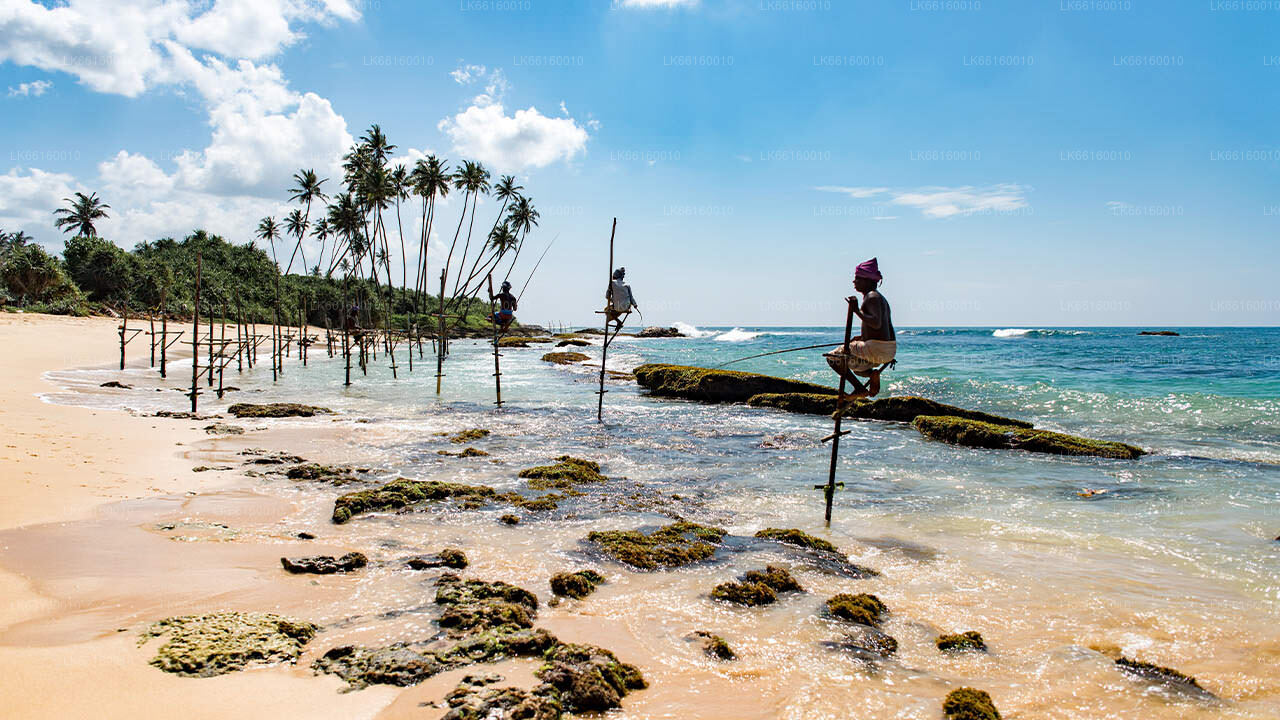
Kathaluwa Poorwarama Viharaya is located near Koggala, a small coastal town situated at the edge of a lagoon on Sri Lanka's south coast. Koggala is known for its long beaches and proximity to attractions such as the Martin Wickramasinghe Folk Museum and traditional stilt fishermen.

Kathaluwa Poorwarama Viharaya Kathaluwa Poorwarama Viharaya Kathaluwa Poorwarama Viharaya

About Galle District

Galle is a city situated on the southwestern tip of Sri Lanka, 119 km from Colombo. Galle is the best example of a fortified city built by Europeans in south and Southeast Asia, showing the interaction between European architectural styles and south Asian traditions. The Galle fort is a world heritage site and the largest remaining fortress in Asia built by European occupiers.

Galle is the best example of a fortified city built by Europeans in south and Southeast Asia, showing the interaction between European architectural styles and south Asian traditions. The Galle fort is a world heritage site and the largest remaining fortress in Asia built by European occupiers.

Galle is a sizeable town, by Sri Lankan standards, and has a population of 91,000, the majority of whom are of Sinhalese ethnicity. There is also a large Sri Lankan Moor minority, particularly in the fort area, which descend from Arab merchants that settled in the ancient port of Galle.

About Southern Province

The Southern Province of Sri Lanka is a small geographic area consisting of the districts of Galle, Matara and Hambantota. Subsistence farming and fishing is the main source of income for the vast majority of the people of this region.

Important landmarks of the Southern Province include the wildlife sanctuaries of the Yala and Udawalawe National Parks, the holy city of Kataragama, and the ancient cities of Tissamaharama, Kirinda and Galle. (Although Galle is an ancient city, almost nothing survives from before the Portuguese invasion.) During the Portuguese period there were two famous Sinhalese poets called Andare who was from Dickwella and Gajaman Nona who was from Denipitiya in Matara District, composing poems on common man.