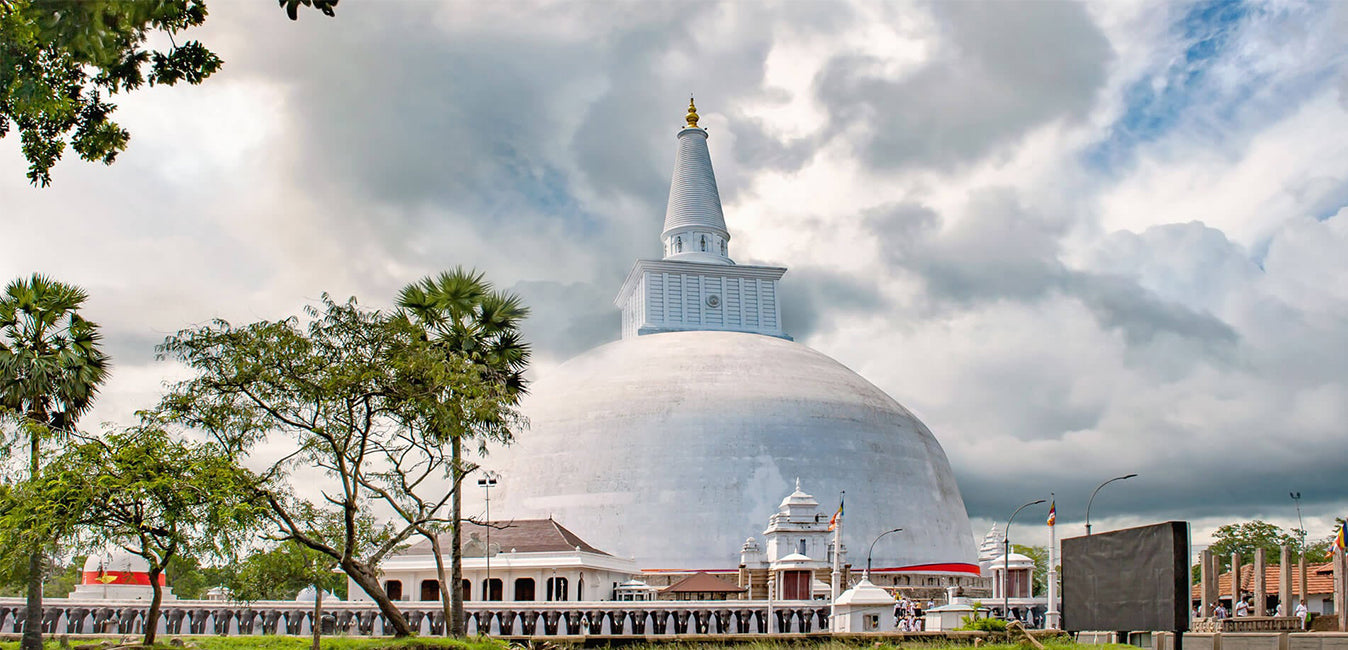
Anuradhapura City
Anuradhapura is belongs to the North Central Province in to Sri Lanka. Anuradhapura is one of the ancient capitals of Sri Lanka, famous for its well-preserved ruins of ancient Lankan civilization. The city, now a UNESCO World Heritage Site, lies 205 km north of the current capital Colombo in Sri Lanka.
Anuradhapura Kingdom
The Anuradhapura Kingdom, named for its capital city, was the first established kingdom in ancient Sri Lanka and Sinhalese people. Founded by King Pandukabhaya in 377 BC, the kingdom's authority extended throughout the country, although several independent areas emerged from time to time, which grew more numerous towards the end of the kingdom. In 543 BC, prince Vijaya (543–505 BC) arrived in Sri Lanka, having been banished from his homeland in India. He eventually brought the island under his control and established himself as king. After this, his retinue established villages and colonies throughout the country. One of these was established by Anuradha, a minister of King Vijaya, on the banks of a stream called Kolon and was named Anuradhagama.
In 377 BC, King Pandukabhaya (437–367 BC) made it his capital and developed it into a prosperous city. Anuradhapura was the capital of all the monarchs who ruled the country during in the Anuradhapura Kingdom, with the exception of Kashyapa I (473–491), who chose Sigiriya to be his capital. The city is also marked on Ptolemy's world map. The king of Anuradhapura was seen as the supreme ruler of the country throughout the Anuradhapura period. Buddhism played a strong role in the Anuradhapura period, influencing its culture, laws, and methods of governance. Society and culture were revolutionized when the faith was introduced during the reign of King Devanampiya Tissa; this cultural change was further strengthened by the arrival of the Tooth Relic of the Buddha in Sri Lanka and the patronage extended by her rulers.
Invasions from South India were a constant threat throughout the Anuradhapura period. Rulers such as Dutthagamani, Valagamba, and Dhatusena are noted for defeating the South Indians and regaining control of the kingdom. Other rulers who are notable for military achievements include Gajabahu I, who launched an invasion against the invaders, and Sena II, who sent his armies to assist a Pandyan prince. Under Dutthagamani (161–137 BC), the whole country was unified under the Anuradhapura Kingdom. He defeated 32 rulers in different parts of the country before he killed Elara, the South Indian ruler who was occupying Anuradhapura, and ascended to the throne. Because the kingdom was largely based on agriculture, the construction of irrigation works was a major achievement of the Anuradhapura Kingdom, ensuring water supply in the dry zone and helping the country grow mostly self-sufficient. Several kings, most notably Vasabha and Mahasena, built large reservoirs and canals, which created a vast and complex irrigation network in the Rajarata area throughout the Anuradhapura period. Saddha Tissa (137–119 BC), Mahaculi Mahatissa (77–63 BC), Vasabha (67–111), Gajabahu I (114–136), Dhatusena (455–473), Aggabodhi I (571–604) and Aggabodhi II (604–614) were among the rulers who held sway over the entire country after Dutthagamani and Valagamba.
The bhikkhuni Sanghamitta (daughter of King Ashoka) of arrived from India in order to establish the Bhikkhuni sasana (order of nuns) in the country. She brought along with her a sapling from the Sri Maha Bo
-
Sri Maha BodhiyaJaya Sri Maha Bodhi is a sacred bo tree in the Mahamewna Gardens, Anuradhapura, Sri Lanka. It is the southern branch from the historical Sri Maha Bodhi at Buddha Gaya in India under which Buddha attained Enlightenment. It was planted in 288 BC, and is the oldest living human-planted tree in the world with a known planting date.
-
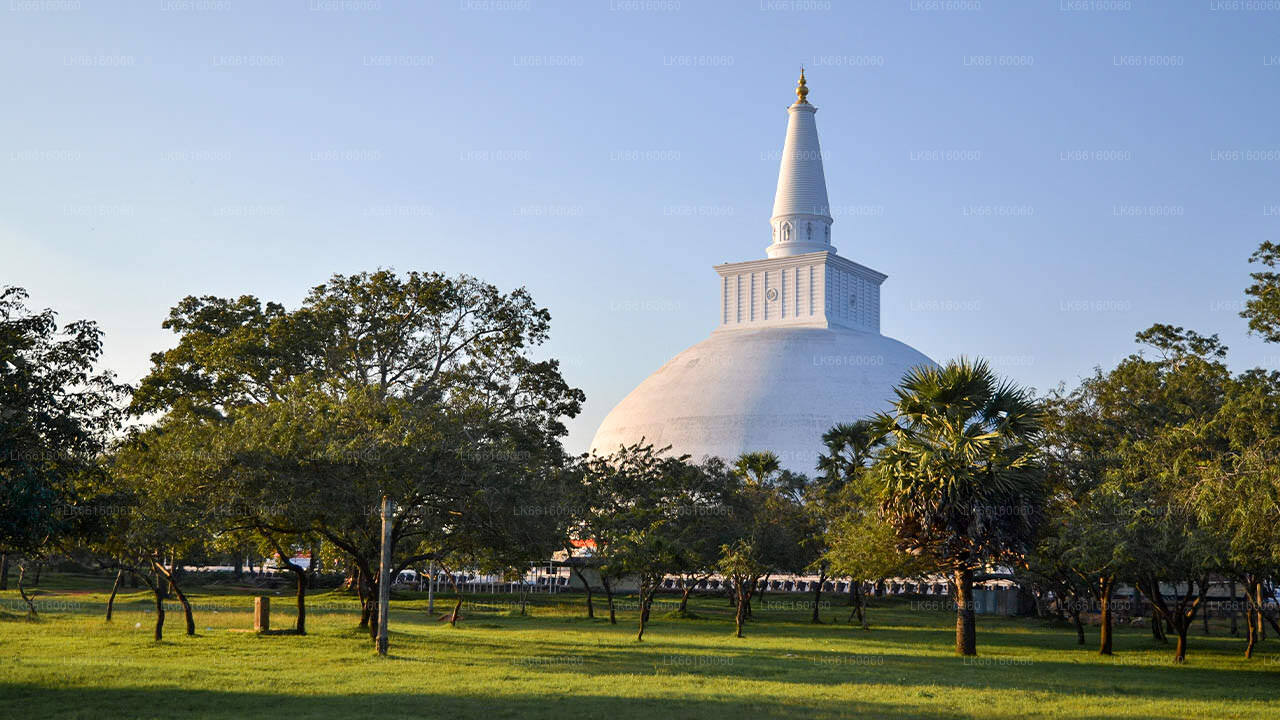
RuwanweliseyaThe Ruwanweli Maha Seya, also known as the Mahathupa (the Great Thupa) is a stupa (a hemispherical structure containing relics) in Anuradhapura, Sri Lanka. Two quarts or one Dona of the Buddha's relics are enshrined in the stupa, making it the largest collection of his relics anywhere. It was built by Sinhalese King Dutugemunu in c. 140 B.C., who became king of Sri Lanka after a war in which the Chola King Elāra (Ellalan) was defeated.
-
ThuparamayaThuparamaya is the first Buddhist temple that was constructed, after the arrival of mahinda thero(mahindagamanaya) in Sri Lanka. Located in the sacred area of Mahamewna park, the Thuparamaya Stupa is the earliest Dagoba to be constructed in the island, dating back to the reign of King Devanampiya Tissa (247-207 BC). The temple has been formally recognised by the Government as an archaeological site in Sri Lanka.
-
LovamahapayaLovamahapaya is a building situated between Ruwanweliseya and Sri Mahabodiya in the ancient city of Anuradhapura, Sri Lanka. It is also known as the Brazen Palace or Lohaprasadaya because the roof was covered with bronze tiles. In ancient times, the building included the refectory and the uposathagara (Uposatha house).
-
Abhayagiri StupaAbhayagiri Vihāra was a major monastery site of Mahayana, Theravada and Vajrayana Buddhism that was situated in Anuradhapura, Sri Lanka. It is one of the most extensive ruins in the world and one of the most sacred Buddhist pilgrimage cities in the nation.
-
JetavanaramayaThe Jetavanarama stupa or Jetavanaramaya is a stupa, or Buddhist reliquary monument, located in the ruins of Jetavana monastery in the UNESCO world heritage city of Anuradhapura, Sri Lanka. At 122 metres (400 ft), it was the world's tallest stupa, and the third tallest structure in the world when it was built by King Mahasena of Anuradhapura (273–301).
-
Mirisawetiya StupaThe Mirisaweti Stupa is a memorial building, a stupa, situated in the ancient city of Anuradhapura, Sri Lanka. King Dutugamunu (161 BC to 137 BC) built the Mirisaveti Stupa after defeating King Elara. After placing the Buddha relics in the sceptre, he had gone to Tissa Wewa for a bath leaving the sceptre.
-
LankaramaLankarama is a stupa built by King Valagamba, in an ancient place at Galhebakada in the ancient kingdom of Anuradhapura, Sri Lanka. Nothing is known about the ancient form of the stupa, and later this was renovated. The ruins show that there are rows of stone pillars and it is no doubt that there has been a house built encircling the stupa (vatadage) to cover it.
-
IsurumuniyaIsurumuniya is a Buddhist temple situated near to the Tissa Wewa (Tisa tank) in Anuradhapura, Sri Lanka. There are four carvings of special interest in this Vihara. They are the Isurumuniya Lovers, Elephant Pond and The Royal Family. The ancient Meghagiri Vihara or Meygiri Vihara is presently identified as the Isurumuni Vihara.
Anuradhapura District
Anuradhapura is belongs to the North Central Province in to Sri Lanka. Anuradhapura is one of the ancient capitals of Sri Lanka, famous for its well-preserved ruins of ancient Lankan civilization. The city, now a UNESCO World Heritage Site, lies 205 km north of the current capital Colombo in Sri Lanka.
In the sacred city of Anuradhapura and in the vicinity are a large number of ruins. The ruins consist of three classes of buildings, dagobas, monastic buildings, and pokuna (ponds). The city had some of the most complex irrigation systems of the ancient world, situated in the dry zone of the country the administration built many tanks to irrigate the land. Most of the civilians are Sinhala, while Tamils and Sri Lankan Moors live in the district.
North Central Province
North Central Province which is the largest province in the country covered 16% of total country's land area. North Central Province consist two districts called Polonnaruwa and Anuradhapure. Anuradhapura is the largest district in Sri Lanka. Its area is 7,128 km².
North Central Province has numerous potentials for Investors to start their Businesses, especially Agriculture, agro based industries and Livestock sectors. More than 65% of North Central Province's people depend on basic Agriculture and agro base industries. NCP also called "Wew Bendi Rajje" because there are more than 3,000 medium and large scale tanks situated in the province. Sri maha bodiya, Ruwanweli seya, Thuparama dageba, Abayagiri Monastry, Polonnaruwa Rankot wehera, Lankathilake are Sacred
landmarks.