Lakpura
Lakpura®

Ancient Martial Art: Angampora

Angampora is one of the world's oldest surviving martial arts, rooted deep in Sri Lankan history and still practiced today. Unlike many ancient combat systems that exist only in manuscripts, Angampora is a living tradition — taught in training halls, performed for visitors, and overseen by a national governing body. It blends empty-hand combat, traditional weaponry, meditation, and an indigenous system of healing into a single, highly structured discipline.

What is Angampora and where does it come from?

The name draws from two distinct branches. Angam refers to unarmed, hand-to-hand combat techniques, while ilangam covers combat using traditional weapons — among them the flexible urumi sword (ethunu kaduwa), battle axes, staves, daggers, and maces. Together they form a comprehensive system designed for both warfare and self-defense.

Tracing Angampora's precise origins is difficult because the art straddles legend and documented history. Two ancient Sinhala manuscripts, the Varga Purnikawa and the Pancha Rakkhawaliya, attribute its earliest roots to nine hermits. Other oral traditions connect it to the Yaksha, one of the early tribal groups of the island. One of the most vivid figures in its mythology is Rana Ravana, described as a master warrior of extraordinary ability.

A medieval story that resonates across generations concerns a woman known as Menike or Disapathiniya. She disguised herself as a man and entered an ura linda — a combat pit — to avenge her father's murder, defeating his killer using Angampora techniques. Her story is credited with reviving public interest in the art and ensuring its survival through a turbulent period.

How was Angampora used in Sri Lankan warfare?

Historical evidence, including carvings at the Embekke Devalaya temple and references in royal chronicles, confirms that Angampora was an active battlefield discipline for roughly two millennia. Fighters trained in the art served in the armies of King Bhuvanekabahu VI during his campaign against the Jaffna Kingdom, and in the forces of Mayadunne of Sitawaka at the 1562 Battle of Mulleriyawa — one of the most significant military engagements of the Kotte–Sitawaka era.

At its peak the art was maintained by two rival schools, the Maruwalliya and the Sudhaliya, which competed against each other in formal bouts held before the king. Practitioners trained in purpose-built huts called angam madu, constructed according to Gebim Shasthraya, the traditional Sri Lankan system of architectural philosophy.

Why did Angampora nearly disappear — and how did it survive?

The British colonial administration regarded Angampora as a serious threat. Authorities prohibited the practice outright, burned training huts wherever they were found, and — according to documented accounts — shot practitioners in the kneecaps to prevent them from continuing. Despite these measures, knowledge of the art was preserved in secret by families and lineages who passed it down quietly through the generations.

After independence in 1948, Angampora gradually re-emerged into public life. The Jathika Hela Angam Shilpa Kala Sangamaya, the national governing body of the art, was formally established in 2001 and has since worked to standardise training, certify instructors, and protect the tradition's integrity.

What techniques does Angampora involve?

The unarmed branch — known as amaraya — encompasses locks and grips, strikes, blocks, and a sophisticated system of pressure-point attacks. Correctly applied, some of these techniques can cause intense pain; the most advanced are said to be capable of halting blood flow to vital organs, causing paralysis or, in extreme cases, death. A separate tradition called maya angam describes secretive techniques that allegedly involved incantations — though this branch is little documented.

Alongside combat, students learn an indigenous medical practice called beheth pārawal (medicinal shots), which is used to reverse the physiological effects of pressure-point strikes. This pairing of harm and remedy reflects a philosophical approach to combat that values restraint as much as skill.

The weaponed branch covers sixty-four types of arms, including thirty-two variants of the sword. Among the most distinctive is the urumi — a long, flexible steel whip-sword that requires years of dedicated practice to use safely and effectively.

What does Angampora training look like?

A training session begins with meditation and an offering of merit to the master. The student lights three oil lamps before entering the training hall and takes formal pledges to use the techniques only for the defense of self, family, or country. These rituals are not ceremonial formalities — they reflect the ethical code that runs through the entire system.

Physical training starts with basic warm-up exercises before progressing to mulla panina, the foundational footwork drill that underpins everything else in Angampora. Correct foot positioning and movement are considered the cornerstone of the system; without mastering them, advanced techniques cannot be applied effectively.

From footwork the curriculum moves through unarmed combat, then into weapons training. Mastery of the full curriculum culminates in a graduation ceremony held at a Buddhist temple. Practitioners who continue beyond this point may train to become fencing masters, or ultimately Pannikiralas — the highest rank in Angampora.

Where can visitors watch or learn Angampora in Sri Lanka?

The Angampora Training Centre in Athurugiriya, located on the eastern edge of Colombo, is the most accessible venue for visitors. The centre offers live demonstrations by professional practitioners and welcomes new students. Visitors can speak directly with experienced masters, learn about the art's history, and — on request — try a small number of basic self-defense techniques under instruction.

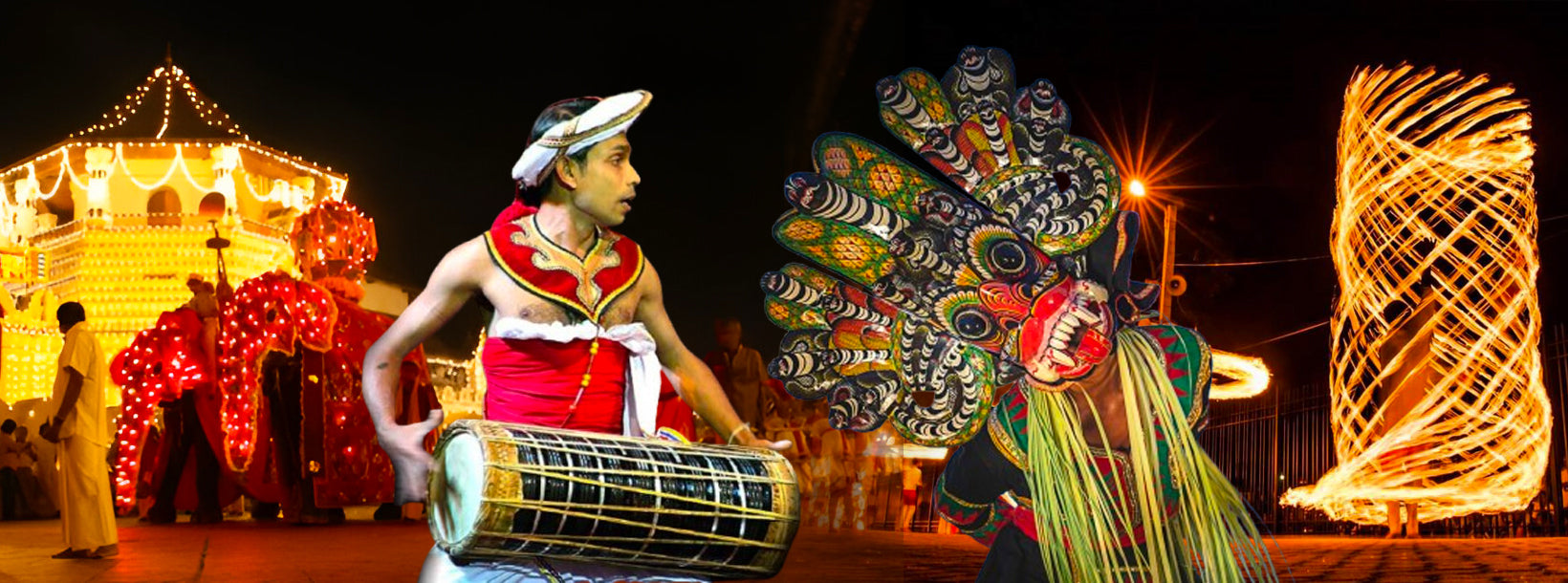
For those who want a more structured experience without committing to ongoing study, dedicated Angampora demonstration tours are available from Colombo. These are typically arranged as private half-day visits and include a performance showcasing both unarmed and weapons techniques. Cultural enthusiasts visiting Kandy may also find links to the tradition through the city's broader offering of classical Sri Lankan arts — the Esala Perahera Festival is one event that has historically drawn on the full spectrum of traditional Sinhala martial and performing arts.

Is Angampora related to other Asian martial arts?

Angampora is considered an entirely indigenous tradition. Unlike some regional martial arts that share documented cross-cultural exchange, Angampora's techniques, philosophy, and training structure developed independently within Sri Lanka. Scholars note certain structural parallels with other South and Southeast Asian systems — particularly in pressure-point methodology — but no direct lineage has been established. The art is listed among Sri Lanka's intangible cultural heritage and has attracted growing academic interest in recent years.

Book this experience with Lakpura

Curated by our local team. Direct booking, instant confirmation.

Ask Lakpura® Agent