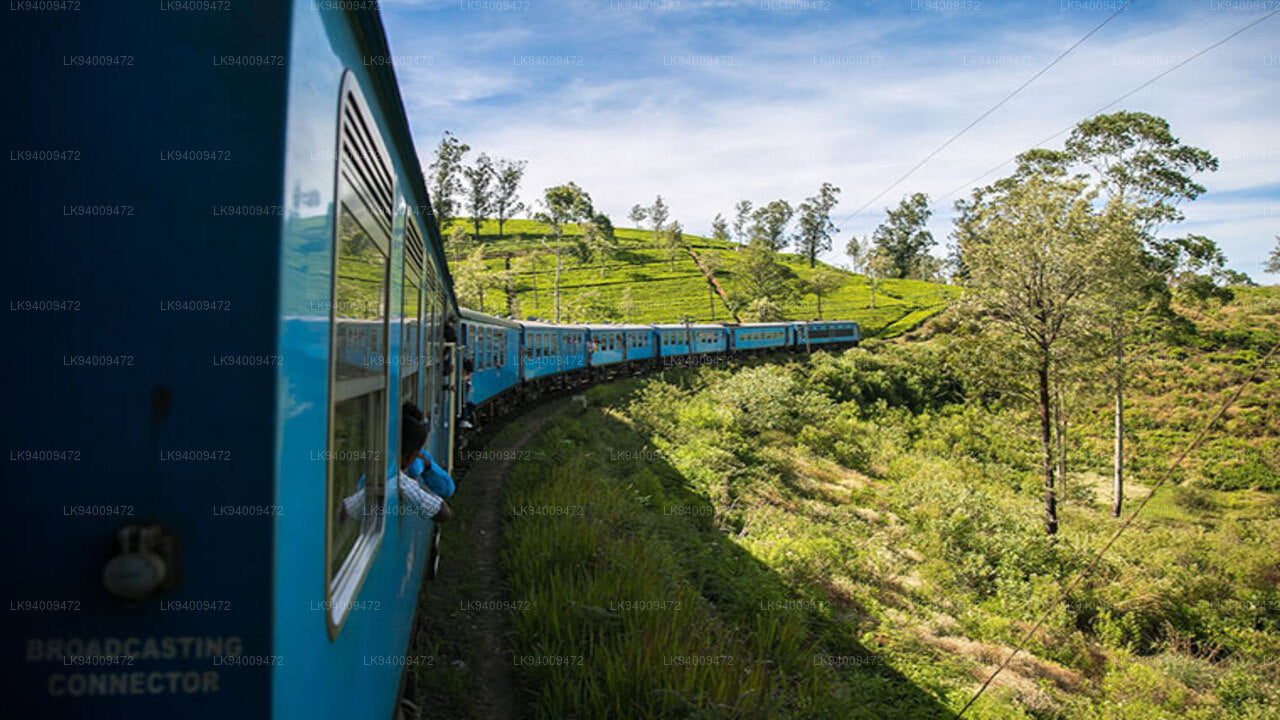
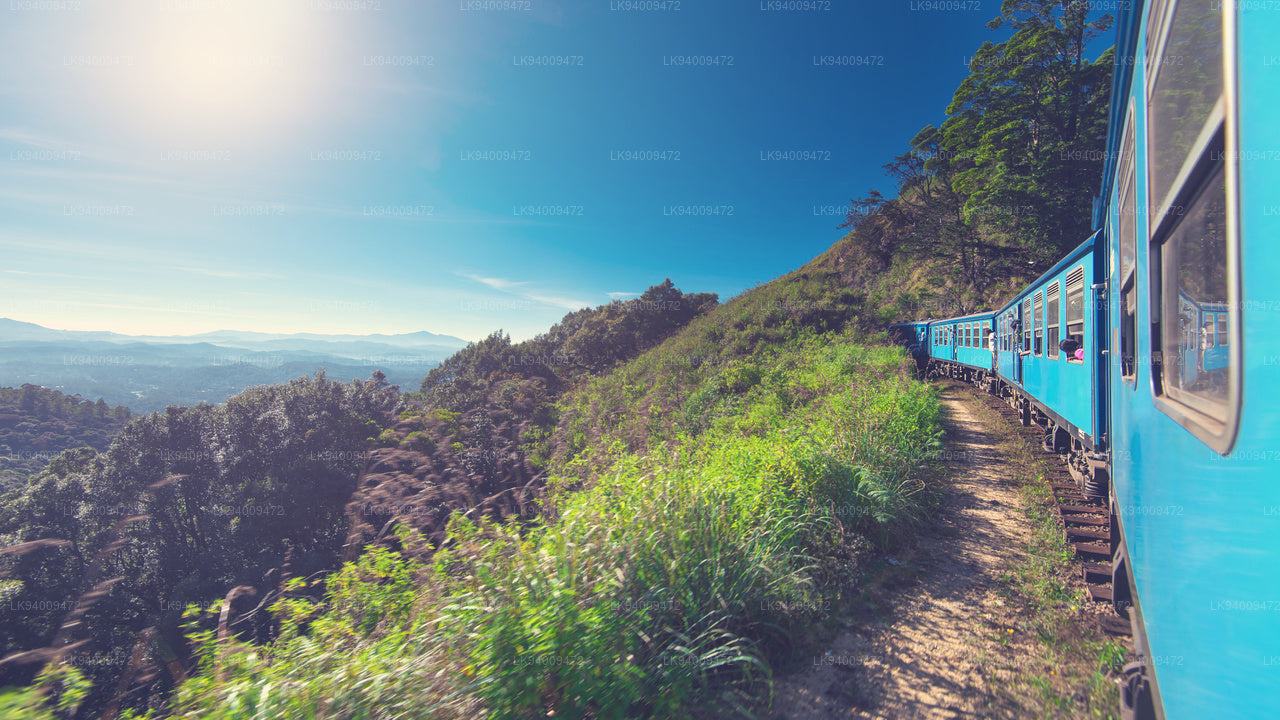
Few experiences in South Asia match the pleasure of travelling by train through Sri Lanka. For roughly the cost of a short tuk-tuk ride, you can spend several hours drifting past tea gardens, cloud-wrapped ridges, colonial-era viaducts, and rice paddies that glow an almost unreal shade of green. Rail travel here is both a practical mode of transport and a journey worth taking for its own sake.
What makes Sri Lanka's train journeys special?
Sri Lanka's railway network was largely built during the British colonial period to move tea and other produce from the highlands to Colombo's port. The narrow-gauge hill-country lines, in particular, were engineered through genuinely difficult terrain, which means today's passengers inherit a route full of dramatic curves, tunnels, and open-sided carriages that frame the landscape like a slow-moving panorama.
The rolling stock varies from air-conditioned intercity expresses to older carriages where you can ride with the doors open and feel the mountain air directly. Both have their advocates. The older observation carriages — sometimes called "scenic class" — let photographers and landscape enthusiasts hang near the doorways for unobstructed views, while the reserved air-conditioned coaches suit those who want a guaranteed seat on a busy departure.
Which is the most scenic train route in Sri Lanka?
The Colombo Fort to Badulla line is widely regarded as one of the most scenic rail journeys in Asia. The route climbs from sea level near Colombo through Kandy, continues past Ella, and terminates at Badulla in the Uva highlands. The stretch between Nanu Oya (the station for Nuwara Eliya) and Ella is the section most travellers single out: the train threads through dense tea country, crosses the Nine Arches Bridge near Ella, and descends through a series of tunnels carved into the hillside.
Key stations along this route and what they connect to:
- Colombo Fort — the main terminus, well connected to the rest of the city
- Kandy — gateway to the Cultural Triangle and the Kandy city tour circuit
- Nanu Oya — the alighting point for Nuwara Eliya and the tea estates, including Bluefield Tea Gardens
- Haputale / Bandarawela — quieter hill towns popular with hikers heading to Horton Plains National Park
- Ella — one of Sri Lanka's most popular stops for independent travellers
- Badulla — the end of the line, a market town in the Uva province
Total journey time from Colombo to Badulla on an express service is around eight to nine hours, though delays are common and should be built into your itinerary.
Are there other scenic rail routes worth taking?
The hill-country line gets most of the attention, but Sri Lanka has several other routes that reward the curious traveller.
- Colombo to Galle and Matara (Southern Line) — the coastal stretch south of Colombo runs close enough to the Indian Ocean that waves occasionally wash near the tracks during rough weather. The section between Ambalangoda and Hikkaduwa is particularly striking at sunset.
- Colombo to Anuradhapura / Jaffna (Northern Line) — restored in stages after the civil conflict ended, this line now runs all the way to Jaffna. It passes through the dry zone, a landscape of scrubland and ancient tanks very different from the south and centre.
- Colombo to Trincomalee / Batticaloa (Eastern Line) — another post-conflict restoration, offering access to the east coast and passing near Polonnaruwa, the medieval capital whose ruins are among Sri Lanka's finest.
- Puttalam Line — a slower, less-touristed route running up the northwest coast through coconut groves, useful for travellers heading to Wilpattu National Park.
When is the best time to travel Sri Lanka's hill-country train?
The hill-country train can be taken year-round, but visibility matters. From roughly January to April, skies over the central highlands tend to be clearer and the tea gardens are at their most photogenic. The southwest monsoon (May to July) brings mist and rain to the hills, which creates atmospheric conditions but can obscure the longer views. The northeast monsoon (October to January) affects the east and north more than the hill country, so the Badulla line is usually less disrupted.
Early morning departures from Colombo typically arrive in the hill country during the clearest part of the day, making them preferable to afternoon services from a photography standpoint.
How do I book a seat on a Sri Lanka train?
Sri Lanka Railways operates the national network and tickets can be purchased at station booking offices. For the popular Colombo–Ella corridor, first-class and second-class reserved seats sell out weeks ahead during the high season (December to April and July to August). It is strongly advisable to book in advance rather than travelling on an unreserved basis, which can mean standing for several hours on busy services.
Tickets for foreigners are priced slightly higher than local fares but remain very affordable by international standards. The Sri Lanka Railways website and several authorised third-party booking platforms accept online reservations, though the system can be unreliable during peak demand — booking in person at the station a day or two ahead remains one of the more dependable methods.
What class of travel should I choose?
| Class | Seats | Air-Con | Best for |
|---|---|---|---|
| First Class (Observation Saloon) | Reserved, panoramic glass | Yes (some carriages) | Photography, comfort, guaranteed seat |
| Second Class Reserved | Reserved, cushioned | Rarely | Budget-conscious travellers who still want a seat |
| Third Class Unreserved | Unreserved, wooden benches | No | Short hops, last-minute travel, open-door experience |
What should I know before I board?
- Delays are normal. Sri Lanka's trains run on broad and narrow gauge lines that share infrastructure with freight. Factor extra time into your day.
- Food vendors board at stations. Short-eats, fruit, and tea are sold through the windows and in the aisles — no need to bring a full lunch.
- Luggage space is limited. Overhead racks exist but are narrow. Soft bags are far easier to manage than hard-sided cases.
- The left side of the carriage (when travelling from Colombo towards Badulla) generally offers better views of the valleys on the steeper sections between Nanu Oya and Ella.
- Mobile signal drops in many tunnels and remote highland sections — download offline maps before you travel.
How does train travel compare with other transport options in Sri Lanka?
Private cars and taxis with private drivers offer door-to-door flexibility and can stop at viewpoints along the way, which trains cannot. Buses reach many places trains do not, but can be cramped on mountain roads. The train's advantage is the journey itself: the tracks traverse terrain that roads bypass, the pace is slow enough to absorb the scenery, and the social atmosphere in the carriages — locals, backpackers, families — is part of the experience in a way that a private transfer is not.
For most Sri Lanka itineraries, a combination works well: take the train for the famous scenic segments (particularly the Kandy–Ella stretch), and use private transport for destinations that are not well served by the rail network, such as Sinharaja Forest Reserve or the national parks of the south.