Ambalantota sits on the southern coast of Sri Lanka, tucked between the towns of Matara and Hambantota in the Hambantota District of the Southern Province. The Valave River meets the Indian Ocean close to the town, shaping both the local landscape and its long history as a coastal settlement. Though modest in size today, Ambalantota carries considerable historical weight as one of the key centres of the ancient Kingdom of Ruhuna.
What is the historical significance of Ambalantota?
In ancient chronicles, Ambalantota was known as Manaulu Pura, a city that flourished under the patronage of notable rulers of Ruhuna. King Vijayaba, the warrior Therapuththabhaya, and the divisional king Mahanagha all left their mark here, and nearby Ridiyagama served as a major commercial hub during that era. The town's connection to the ancient port of Godavaya — visible from Ambalantota's shore — adds further historical depth: it was through Godavaya that King Gajaba is said to have returned from his campaigns abroad.
The ruins scattered across this region are reminders of a kingdom that predates the more widely visited northern heritage sites. Travellers interested in early Sri Lankan civilisation will find Ambalantota a rewarding, less-crowded alternative to well-documented sites further north such as Polonnaruwa.
Where exactly is Ambalantota, and how do I get there?
Ambalantota lies roughly 240 km south of Colombo along the Southern Expressway (E01), making it accessible in around three hours by car — considerably less than the old coastal road. The town sits between Matara to the west and Hambantota to the east, so it is naturally included in most southern Sri Lanka itineraries.
The nearest major transport hub is Hambantota, which has developed rapidly as a port city and commercial centre. Mattala Rajapaksa International Airport, one of Asia's quieter airports, is located nearby and occasionally offers domestic connections, though most travellers arrive overland from Colombo or Galle.
What can I see and do near Ambalantota?
The surrounding Hambantota District is one of Sri Lanka's richest areas for wildlife viewing. Several protected areas lie within easy reach of the town.
- Bundala National Park – A UNESCO-designated Ramsar wetland approximately 20 km east of Hambantota, renowned for migratory shorebirds and resident flamingos. Jeep safaris here offer a quieter alternative to the more crowded parks.
- Yala (Ruhuna) National Park – One of the world's most densely populated leopard habitats. The park's Block I entrance is around 40 km east of Hambantota and operates year-round, though the driest months (February to July) offer the best wildlife sightings.
- Weerawila Sanctuary – A bird-rich tank and marshland a short drive from Ambalantota, particularly attractive during the northern winter when migratory waterfowl arrive.
- Udawalawe National Park – About 60 km north of Ambalantota, Udawalawe is home to one of Sri Lanka's largest wild elephant populations and is considered one of the best places on the island to observe elephants in open grassland habitats.
- Kataragama – A multi-religious pilgrimage town of deep significance to Buddhists, Hindus, and Muslims alike, located roughly 45 km northeast. The Kataragama Devalaya draws pilgrims throughout the year and is especially lively during the July–August festival season.
What is the Hambantota District known for?
Hambantota District occupies the southeastern corner of Sri Lanka's Southern Province, characterised by dry-zone scrub forests, shallow lagoons, and long sandy beaches that see relatively few tourists compared with the southwestern coast. The landscape shifts noticeably from the lush vegetation around Matara and Galle to a drier, more open terrain as you travel east — a change that suits the region's concentration of wildlife parks.
Over the past two decades, Hambantota has undergone significant infrastructure development, including the construction of a deep-water port and the expansion of road networks. These changes have improved access to the area without substantially altering the character of smaller towns like Ambalantota, which retains a quiet, working coastal feel.
The coastline around Ambalantota and Hambantota is sheltered and relatively calm, and local fishing remains an important livelihood. For visitors interested in active marine experiences, deep sea fishing excursions operate from ports along this stretch of coast.
When is the best time to visit Ambalantota?
The southern and southeastern coast of Sri Lanka falls within the dry zone, meaning the region receives most of its rainfall between October and January via the northeast monsoon. The most reliable period for visiting Ambalantota is from February through August, when skies are largely clear and wildlife in the surrounding national parks congregates around shrinking water sources — making game drives particularly rewarding.
The shoulder months of September and February can also offer good conditions and tend to be quieter. Avoid planning extended beach or safari days during late November and December when intermittent heavy showers are common in this district.
Are there places to stay near Ambalantota?
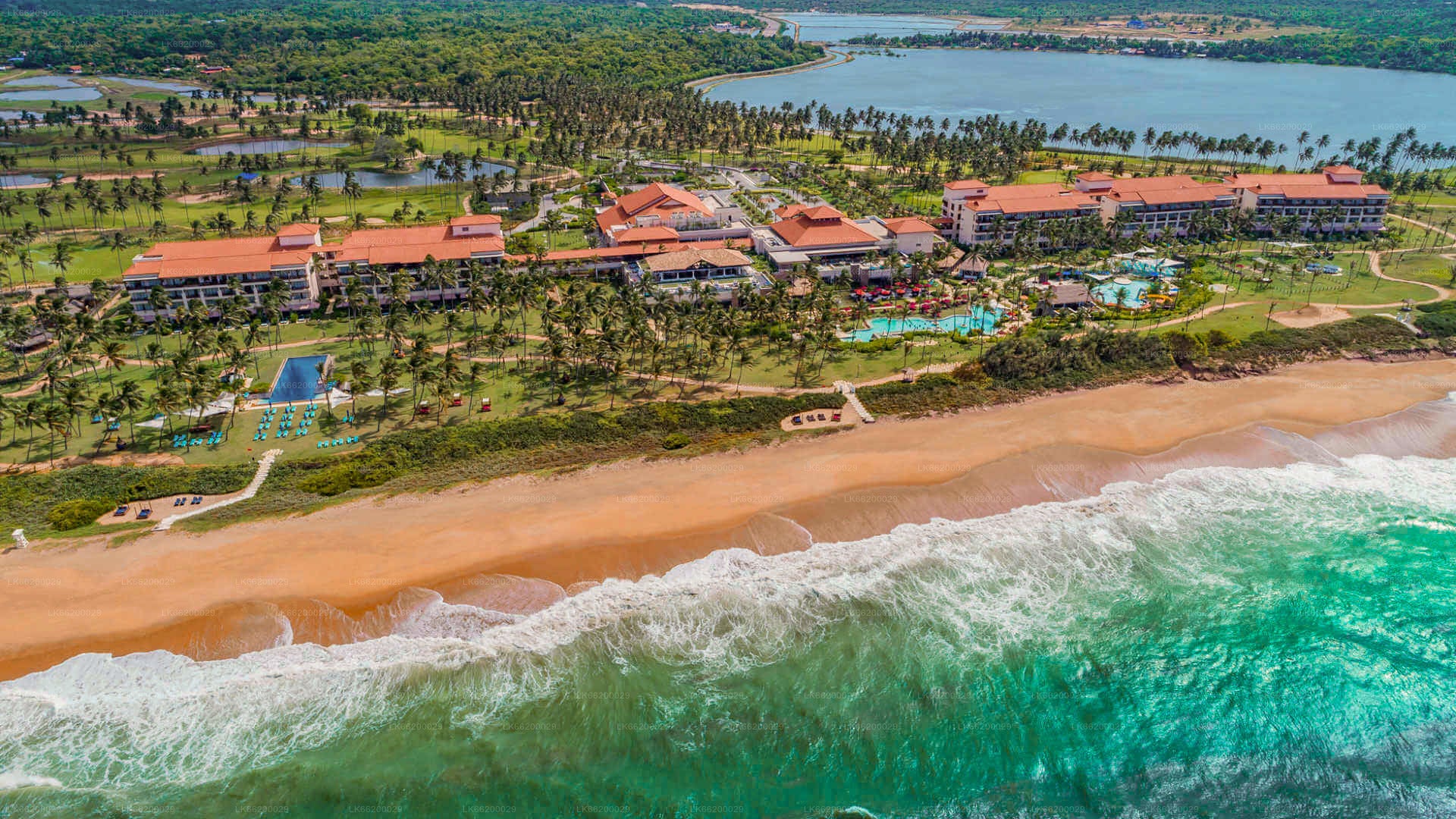
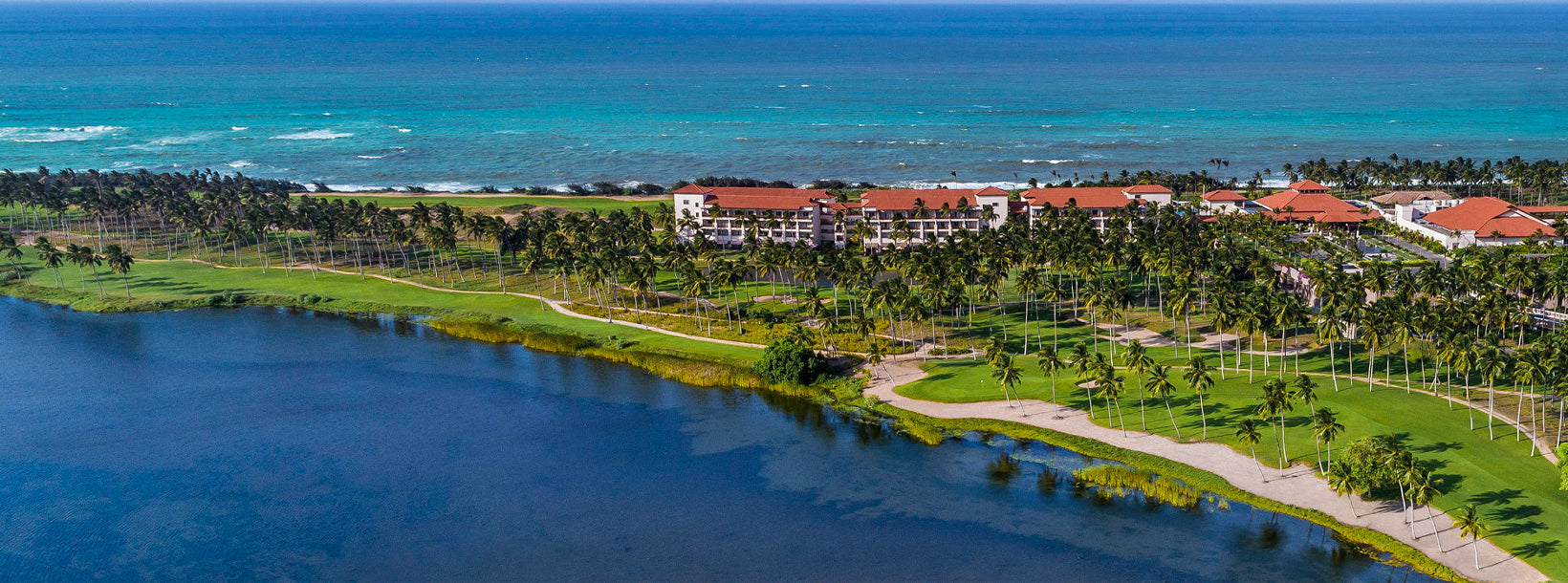
Accommodation options range from luxury beach resorts — notably the Shangri-La Hambantota, which sits on a private stretch of coastline a short drive from the town — to smaller guesthouses and boutique properties in the surrounding area. The concentration of resorts in this part of the south has grown steadily, offering good choices for travellers who want a comfortable base from which to explore Yala, Bundala, and the cultural sites of the Ruhuna region.
For travellers moving between Colombo and this part of the south, a private transfer is typically the most convenient option, particularly given the distance and the limited frequency of express train services to Hambantota.
What else should I know before visiting?
Ambalantota itself is a small town with a local market, a few restaurants, and basic services. Most of what draws visitors here is within the wider district rather than the town centre. Hiring a vehicle for the duration of your stay in the south is strongly recommended — distances between attractions are significant, and public buses, while available, run on irregular schedules to some of the more remote wildlife areas.
Sri Lankan currency (rupees) is preferred in local shops and smaller eateries; card acceptance is more reliable at resort properties. A basic knowledge of Sinhala greetings is appreciated by residents in this largely rural district.