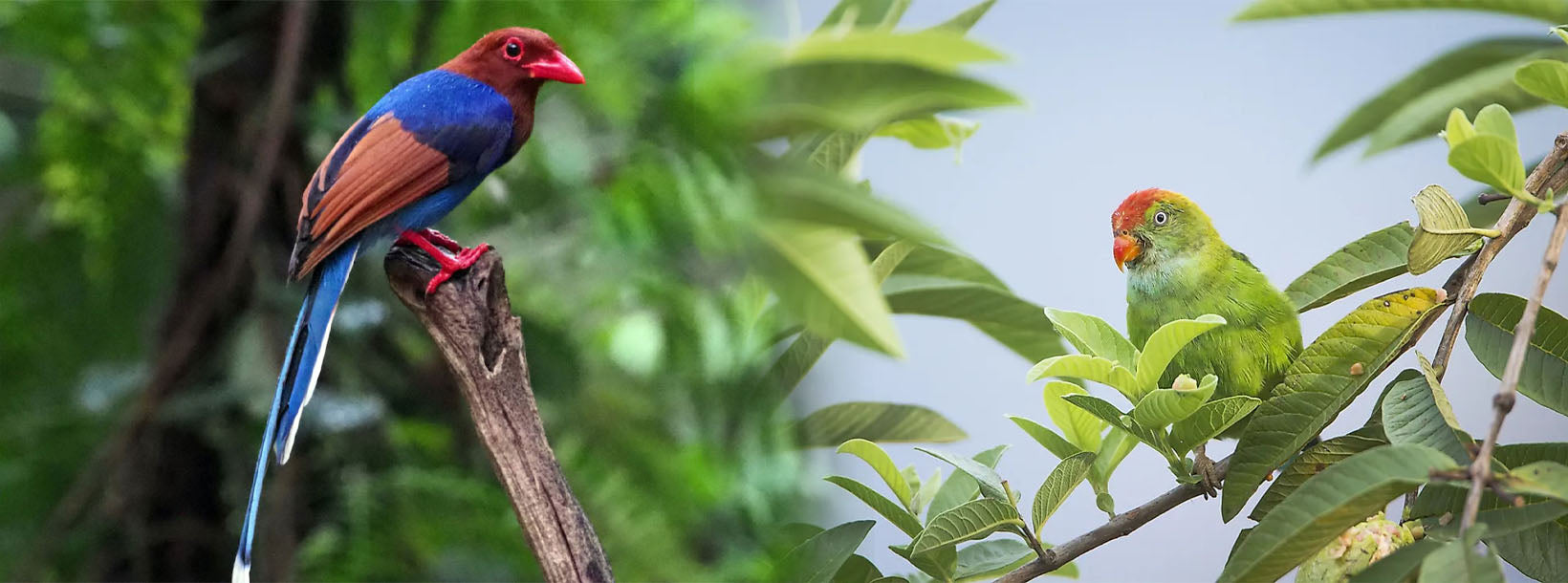
Junglefowl


The Sri Lankan Junglefowl is a member of the Galliformes bird order which is endemic to Sri Lanka, where it is the national bird. The Sri Lankan Junglefowl is common in every part of Sri Lanka, wherever jungle or dense scrub of any extent is to be found, but it is mostly spotted at sites such as Kitulgala, Yala and Sinharaja.
As with other junglefowl, the Sri Lankan junglefowl is strongly sexually dimorphic. The male is much larger than the female, with more vivid plumage and a highly exaggerated wattle and comb. It has orange-red body plumage, and dark purple to black wings and tail. The feathers of the mane descending from head to base of spine are golden, and the face has bare red skin and wattles. The comb is red with a yellow centre. The female is much smaller, with dull brown plumage with white patterning on the lower belly and breast.
It lays 2-4 eggs in a nest either on the forest floor in steep hill country or in the abandoned nests of other birds and squirrels. Male Sri Lankan Junglefowl play an active role in nest protection and chick rearing.
It feeds on grain, weed-seeds, berries, various succulent leaves and a large proportion of small animals, such as crickets, centipedes and termites.
Highlights
- National Tree - Mesua Nagassarium (na)
- National Flower - Blue Water Lily (nil manel)


-
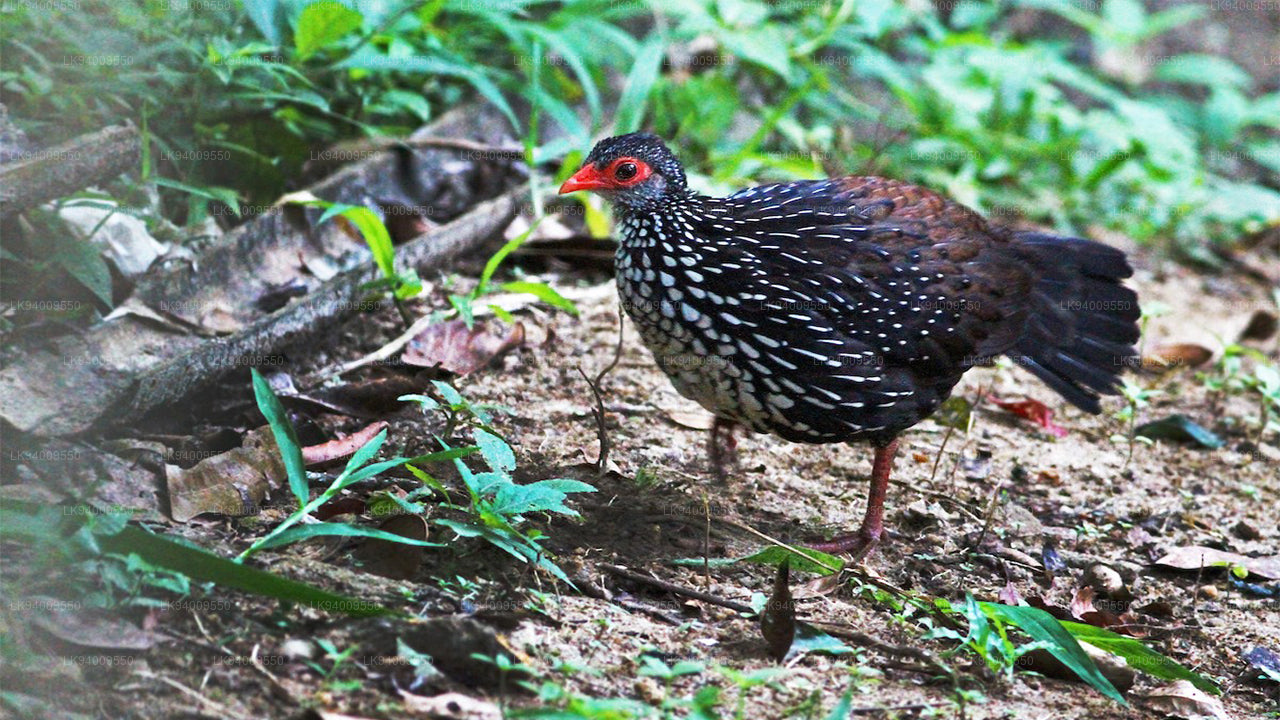 Ceylon Spurfowl
Galloperdix bicalcarata
-
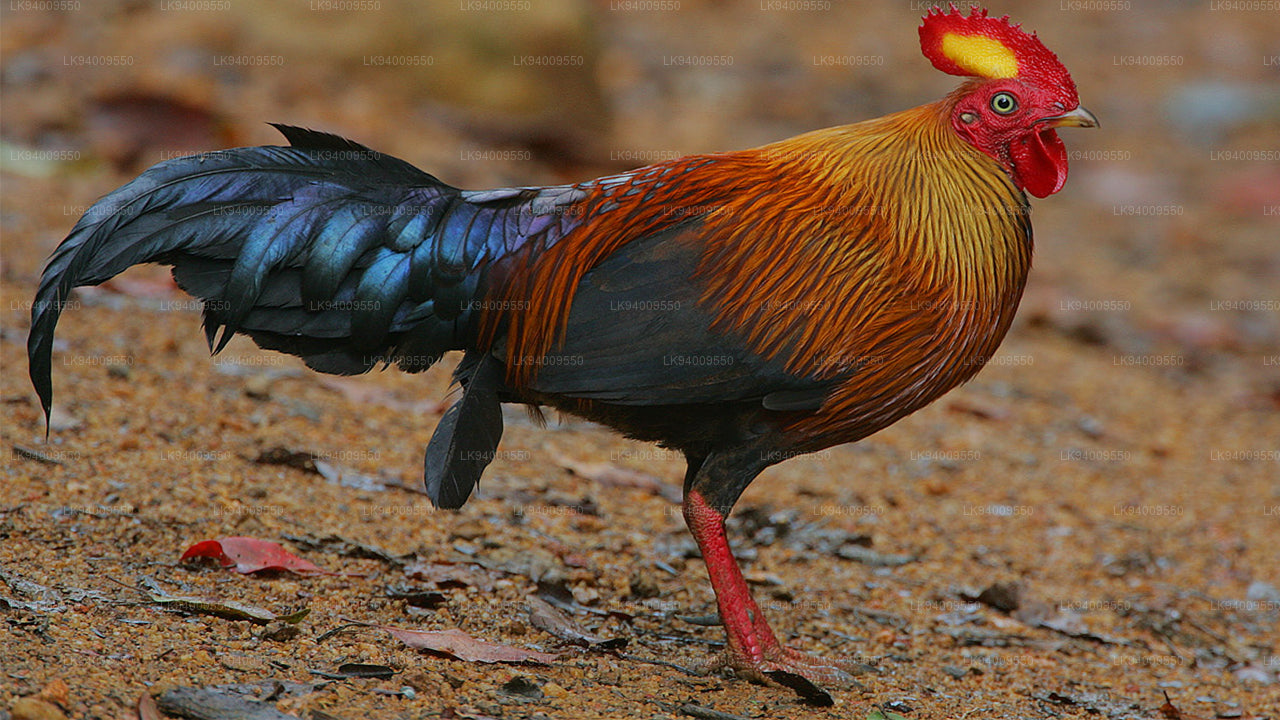 Junglefowl
Gallus lafayetii
-
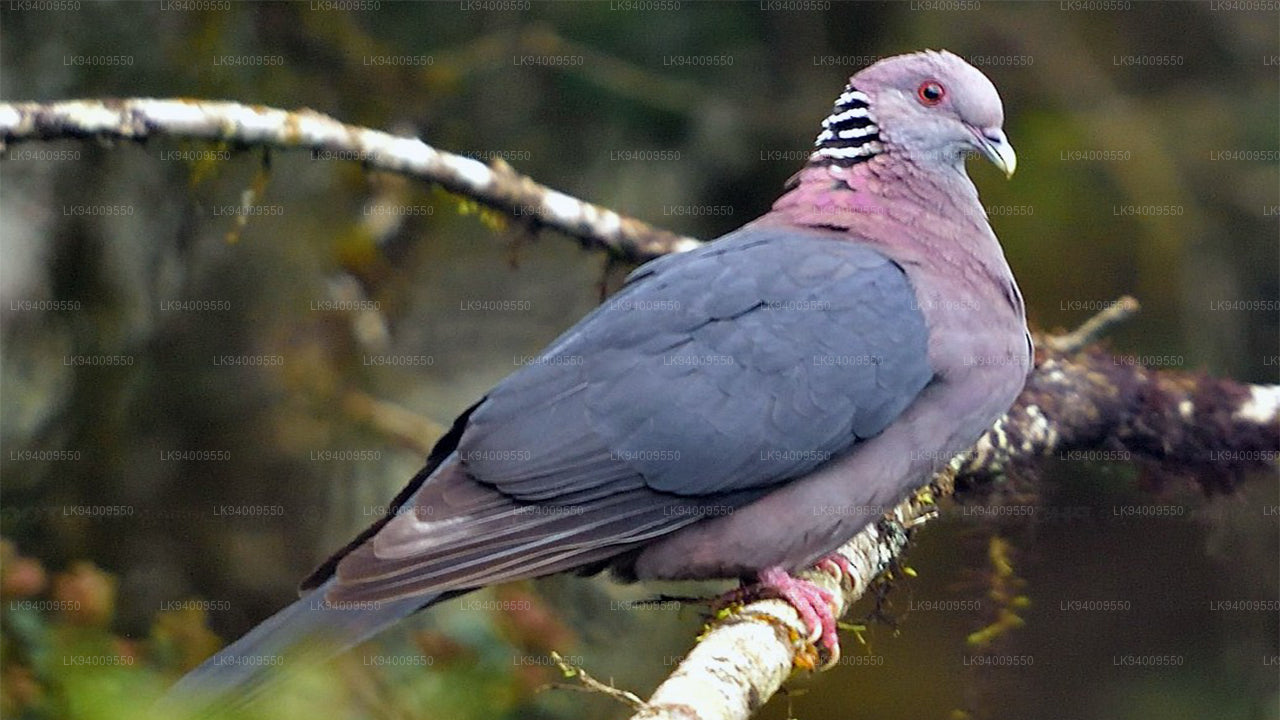 Ceylon Woodpigeon
Columba torringtoniae
-
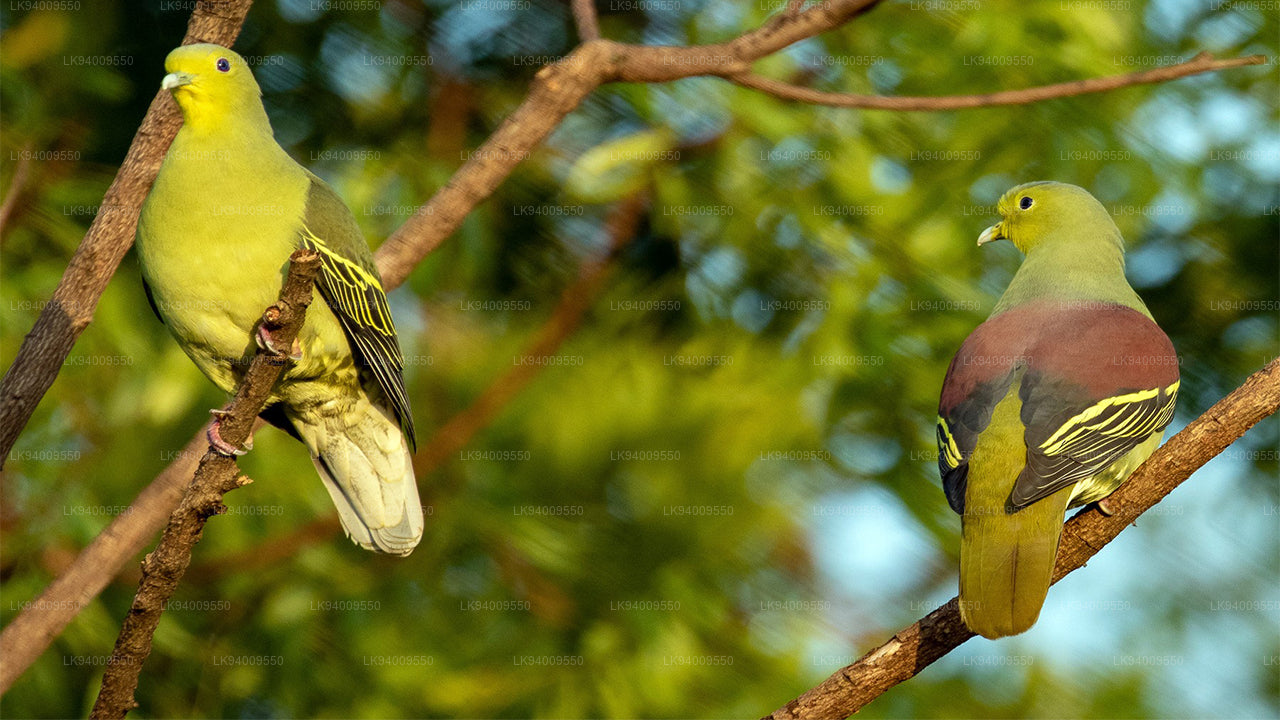 Ceylon Green Pigeon
Treron pompadora
-
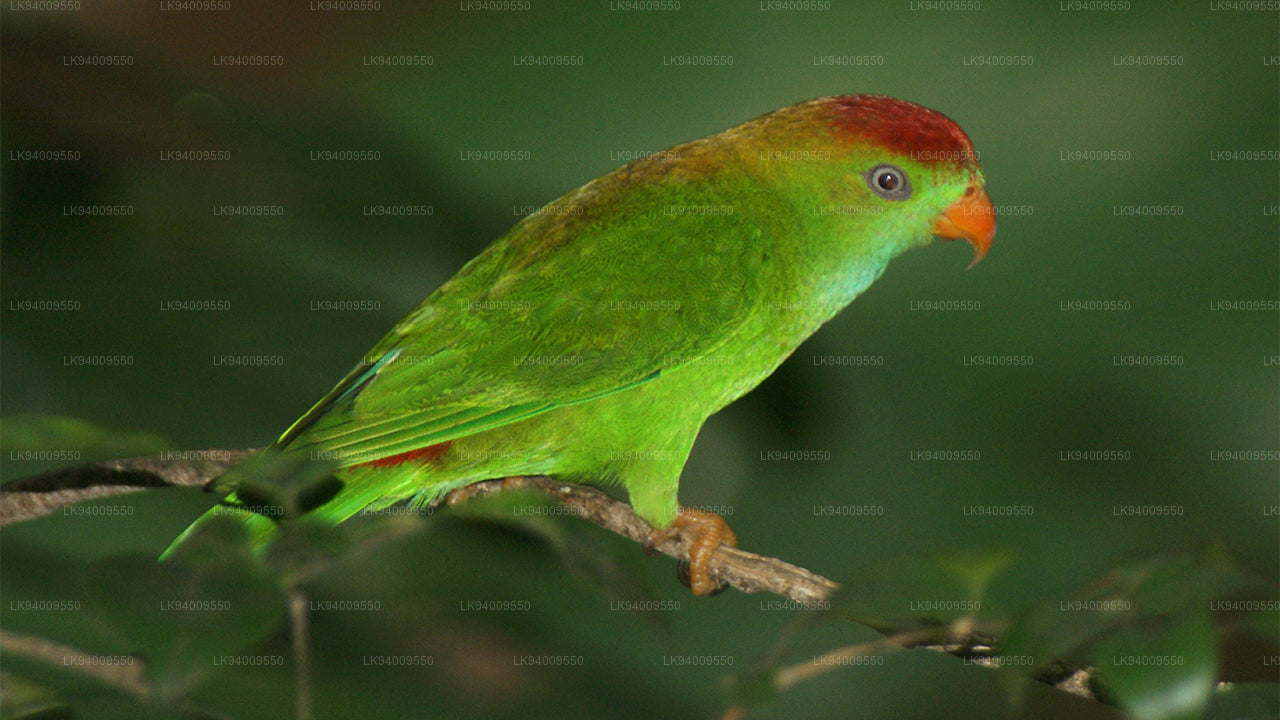 Ceylon Hanging Parrot
Loriculus beryllinus
-
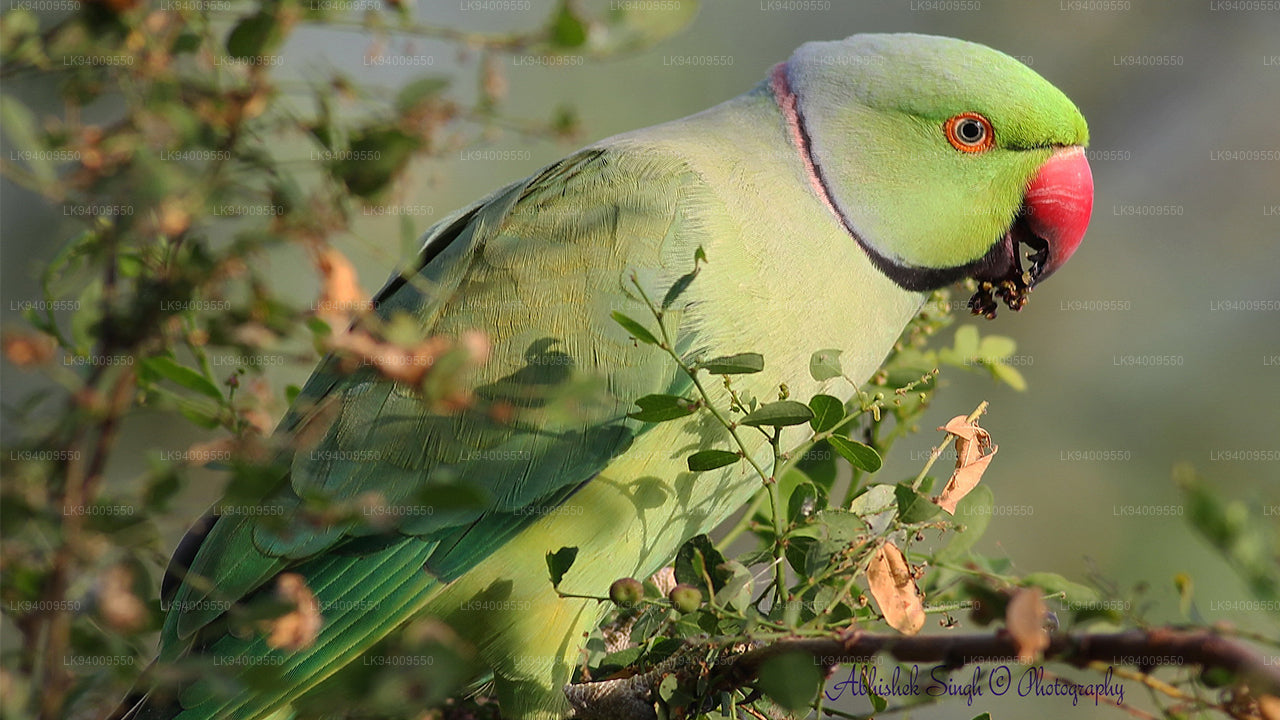 Layard’s Parakeet
Psittacula calthrapae
-
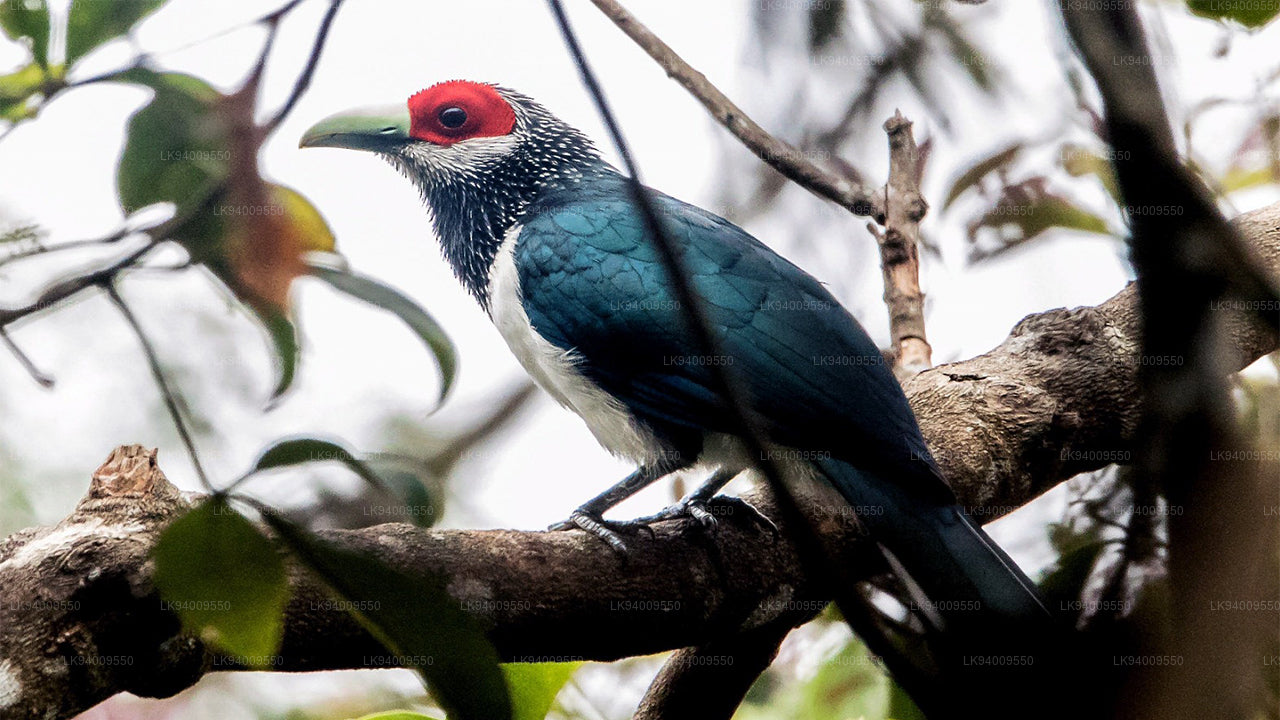 Red Faced Malkoha
Phaenicophaeus pyrrhocephalus
-
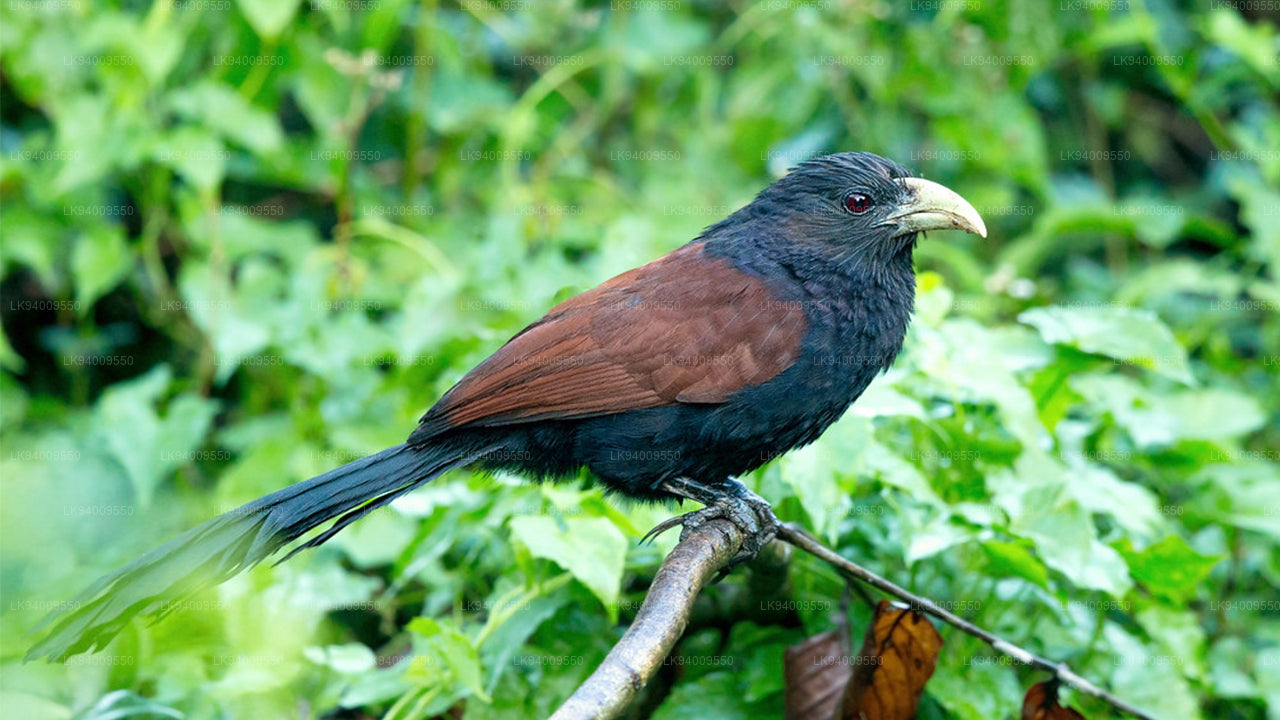 Green Billed Couca
Centropus chlororhynchos
-
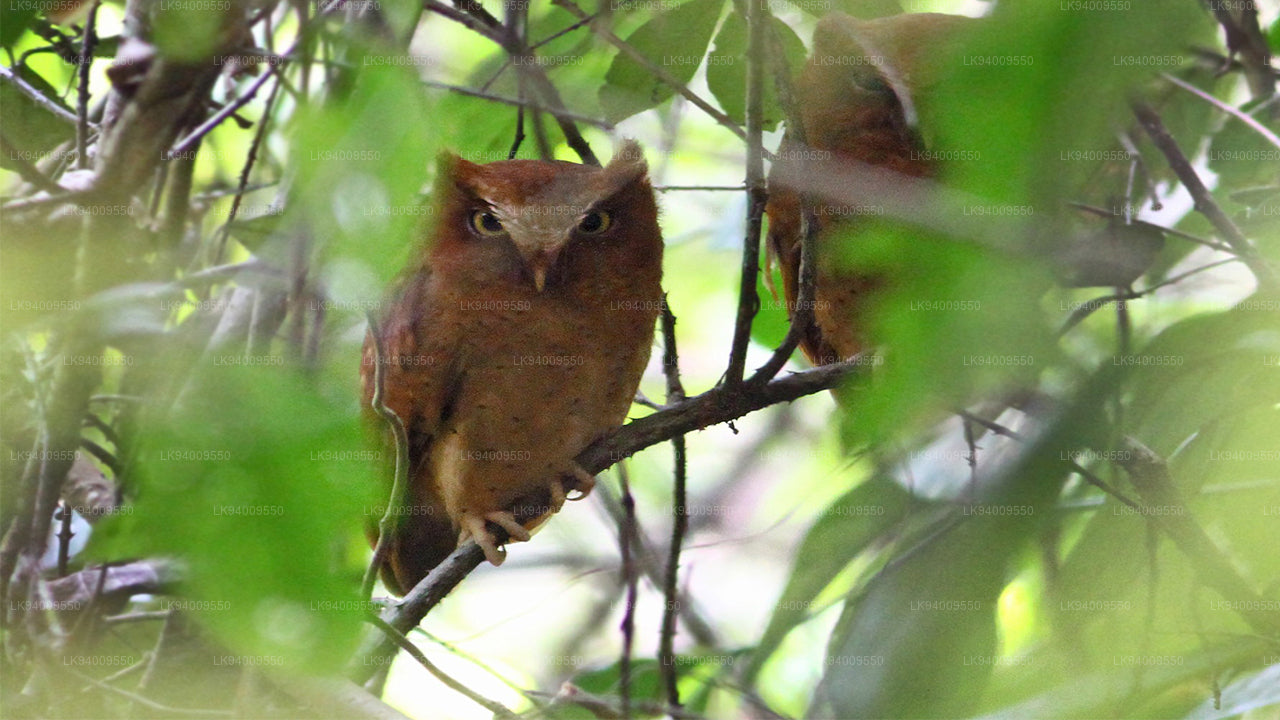 Serendib Scops Owl
Otus thilohoffmanni
-
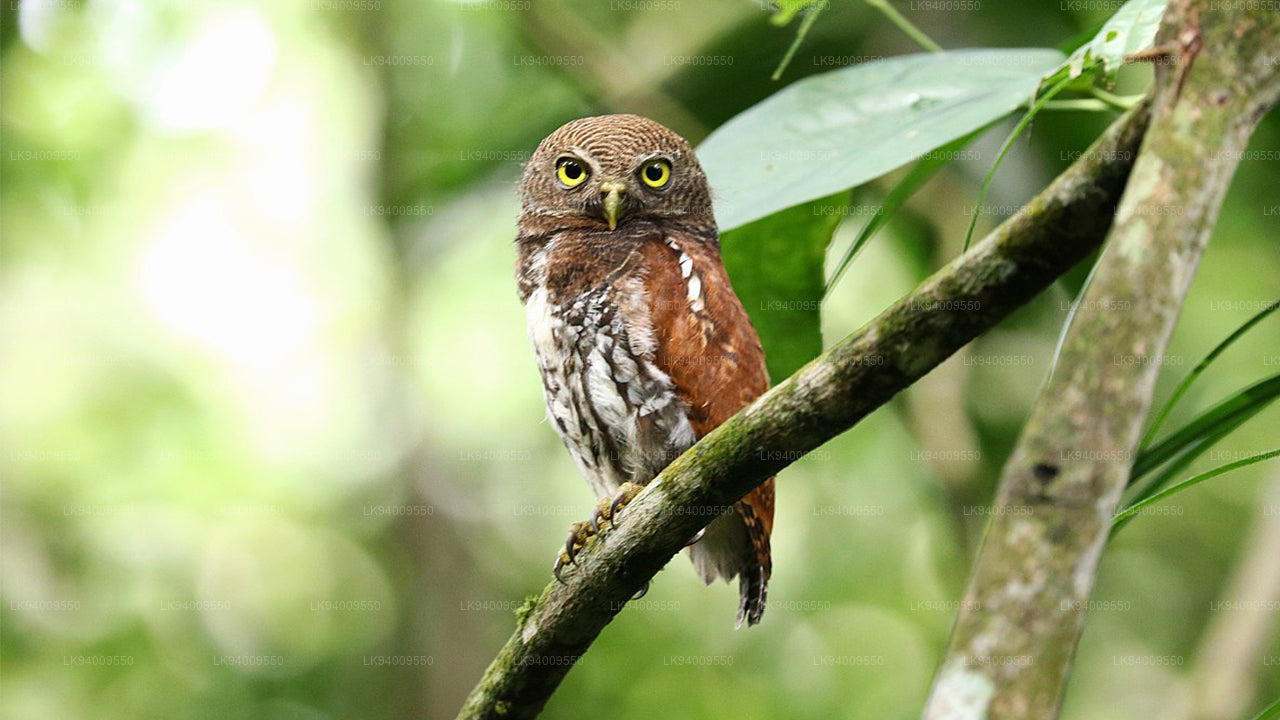 Chestnut Backed Owlet
$Glaucidium castanotum
-
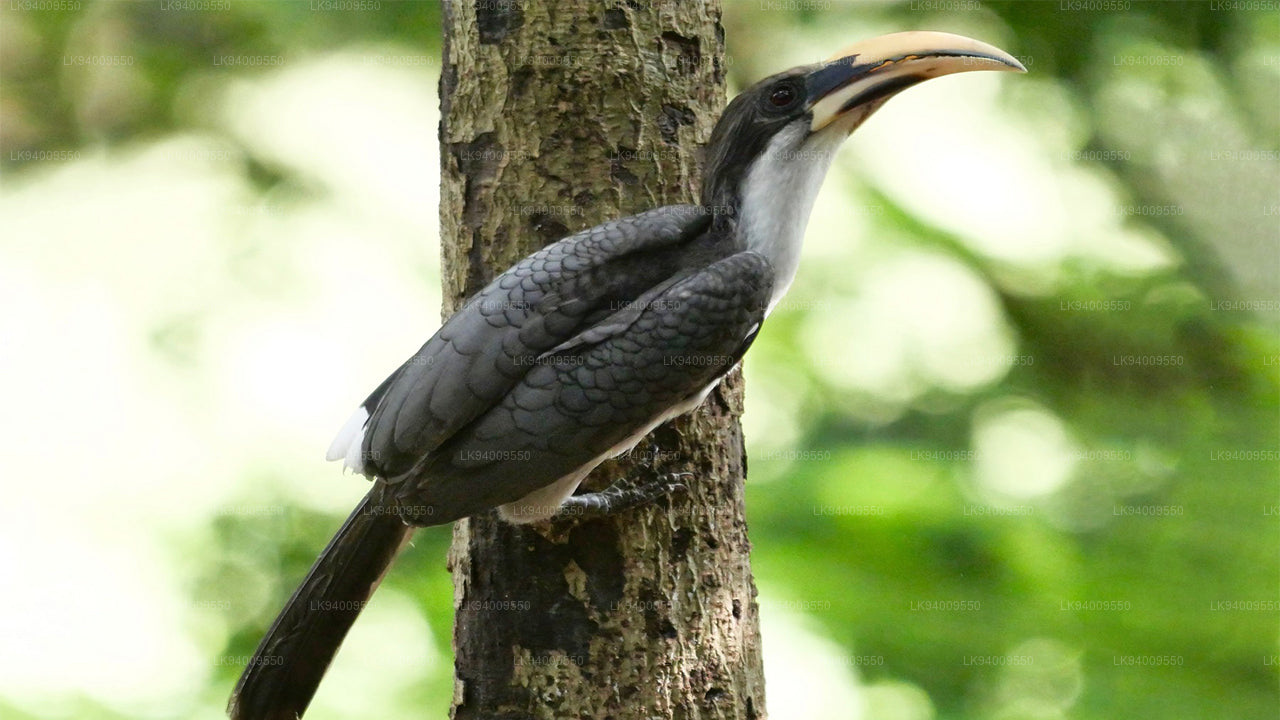 Ceylon Grey Hornbill
Ocyceros gingalensis
-
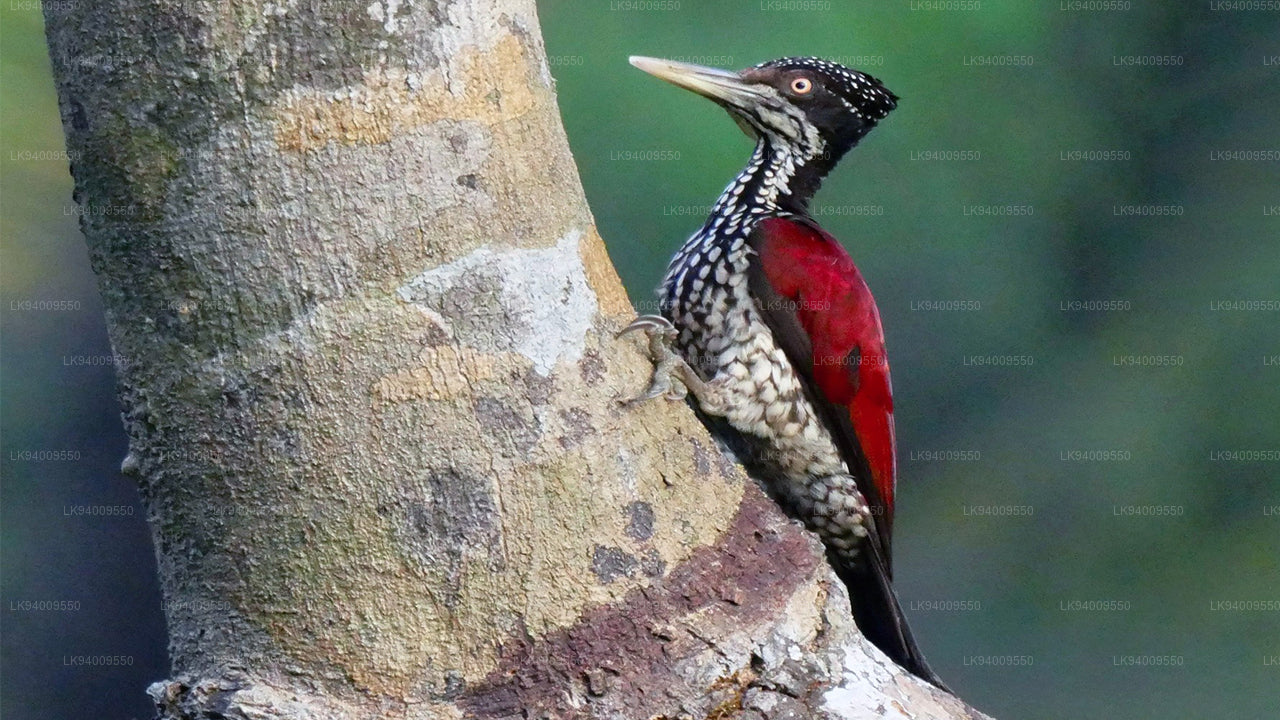 Crimson Backed Flameback
Chrysocolaptes stricklandi
-
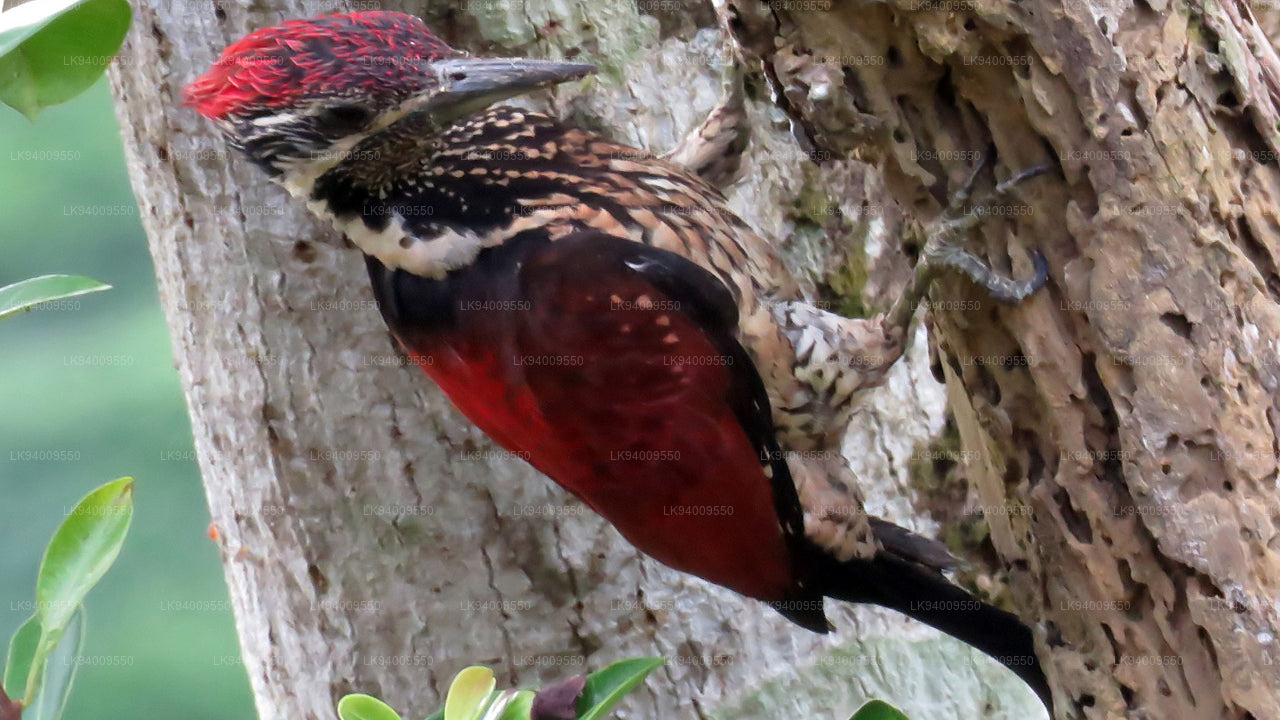 Red backed flameback
Dinopium psarodes
-
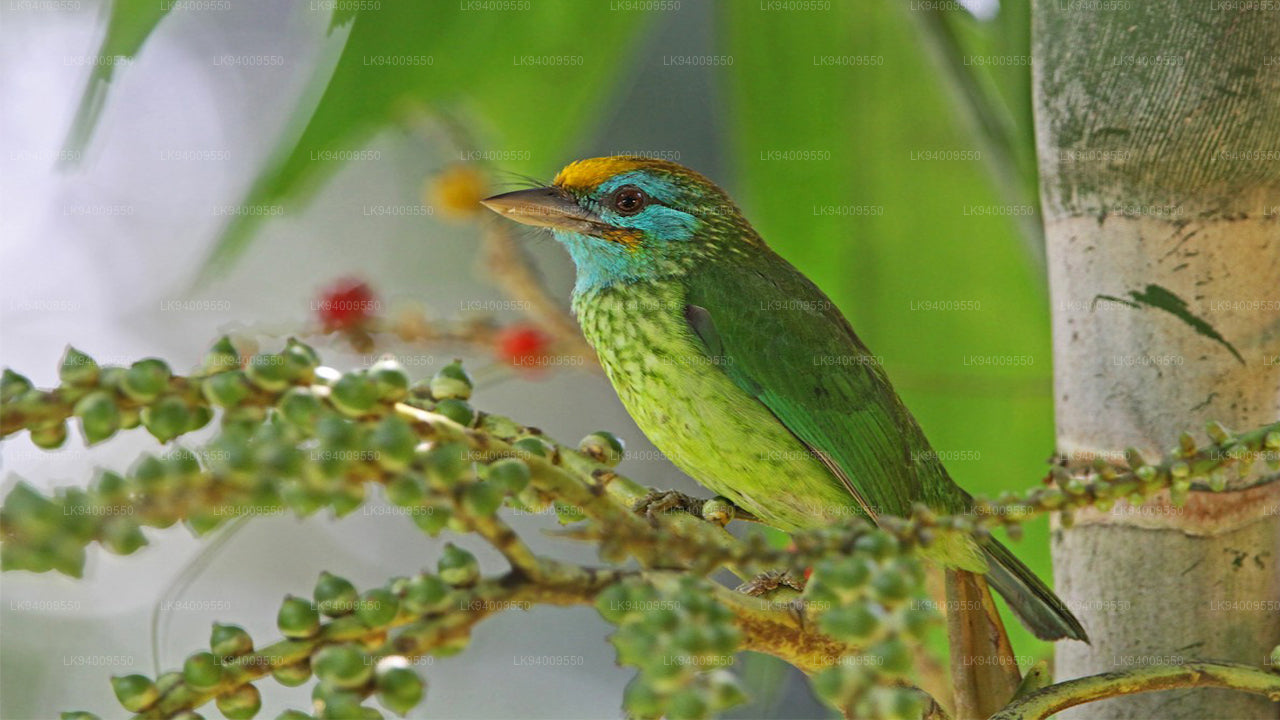 Yellow Fronted Barbet
Psilopogon flavifrons
-
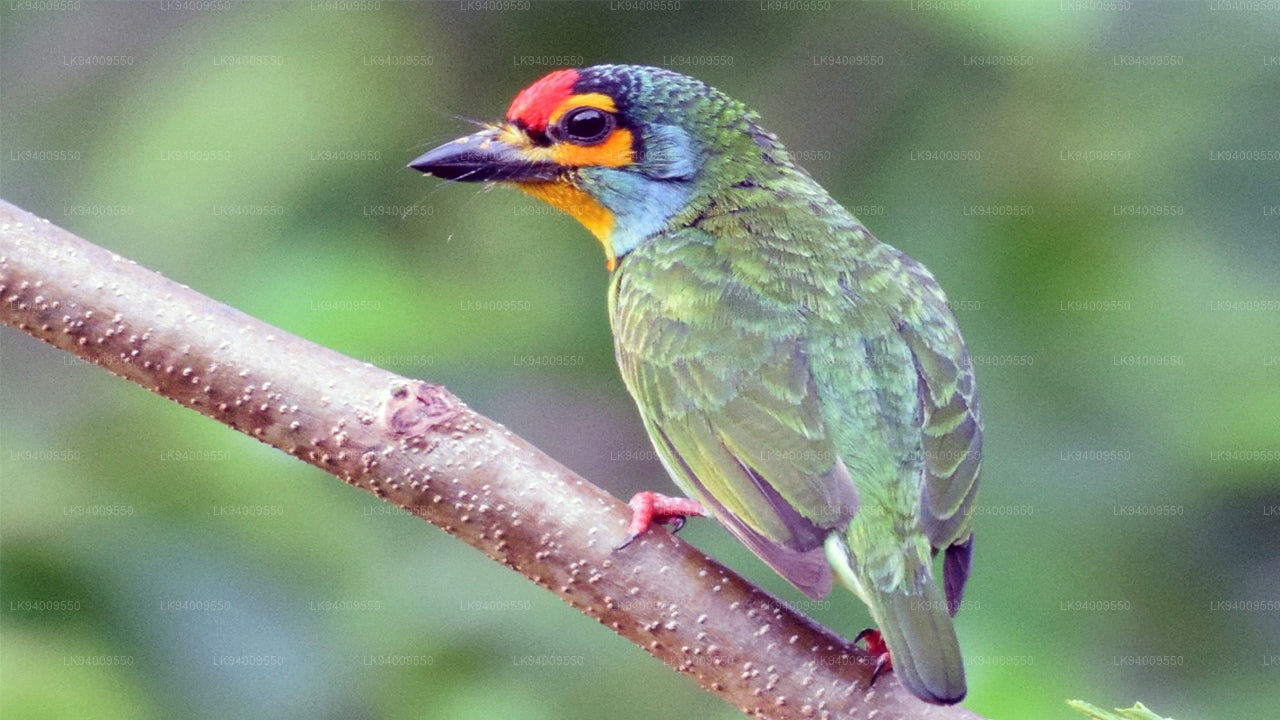 Crimson Fronted Barbet
Psilopogon rubricapillus
-
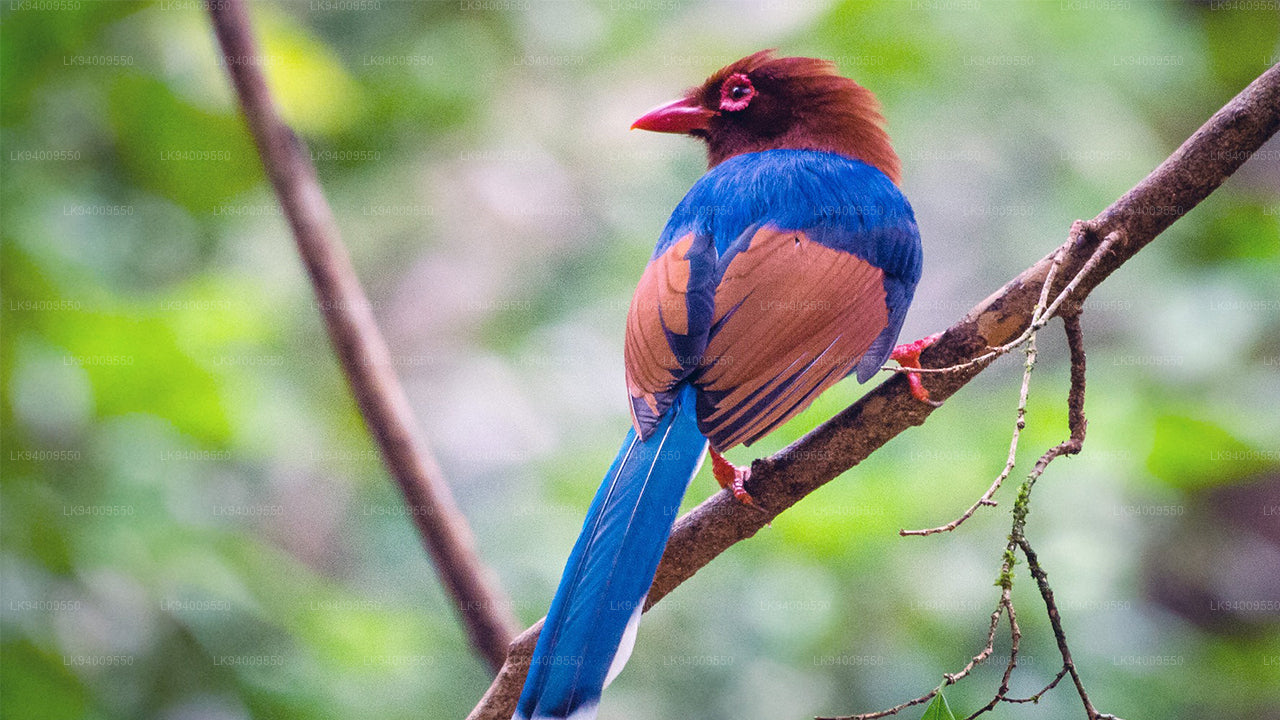 Ceylon Blue Magpie
Urocissa ornata
-
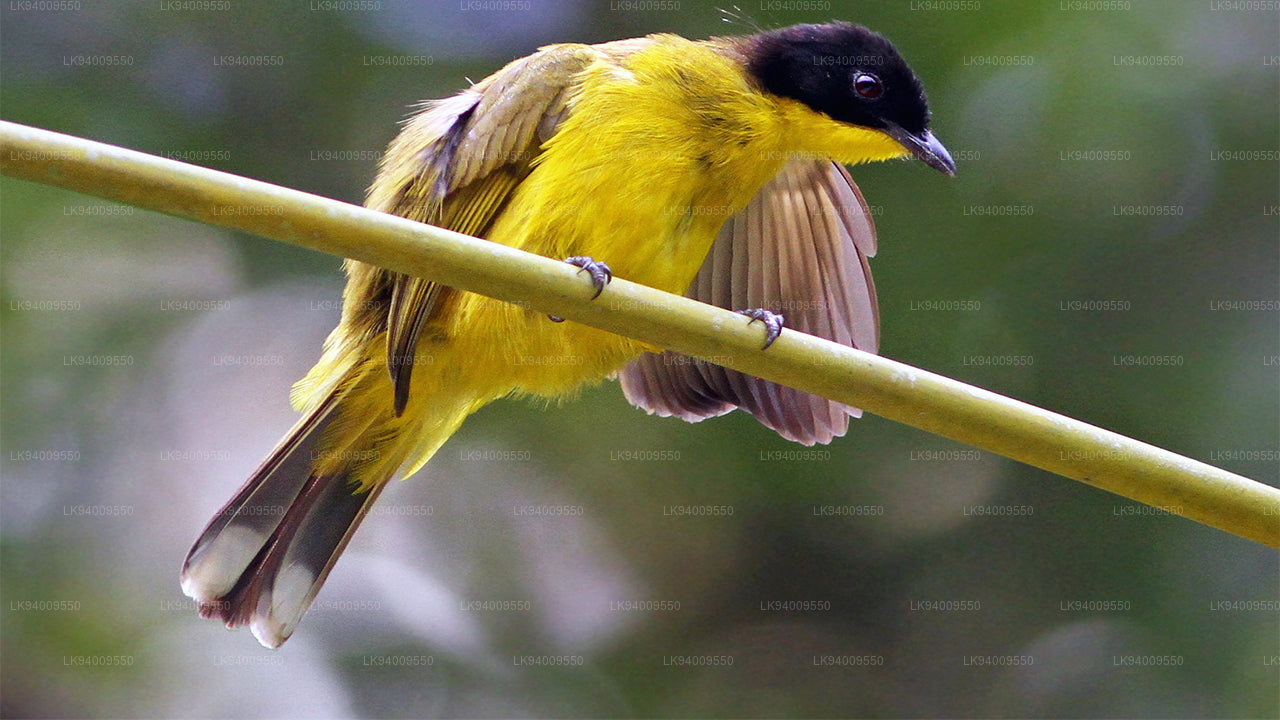 Black Capped Bulbul
Rubigula melanictera
-
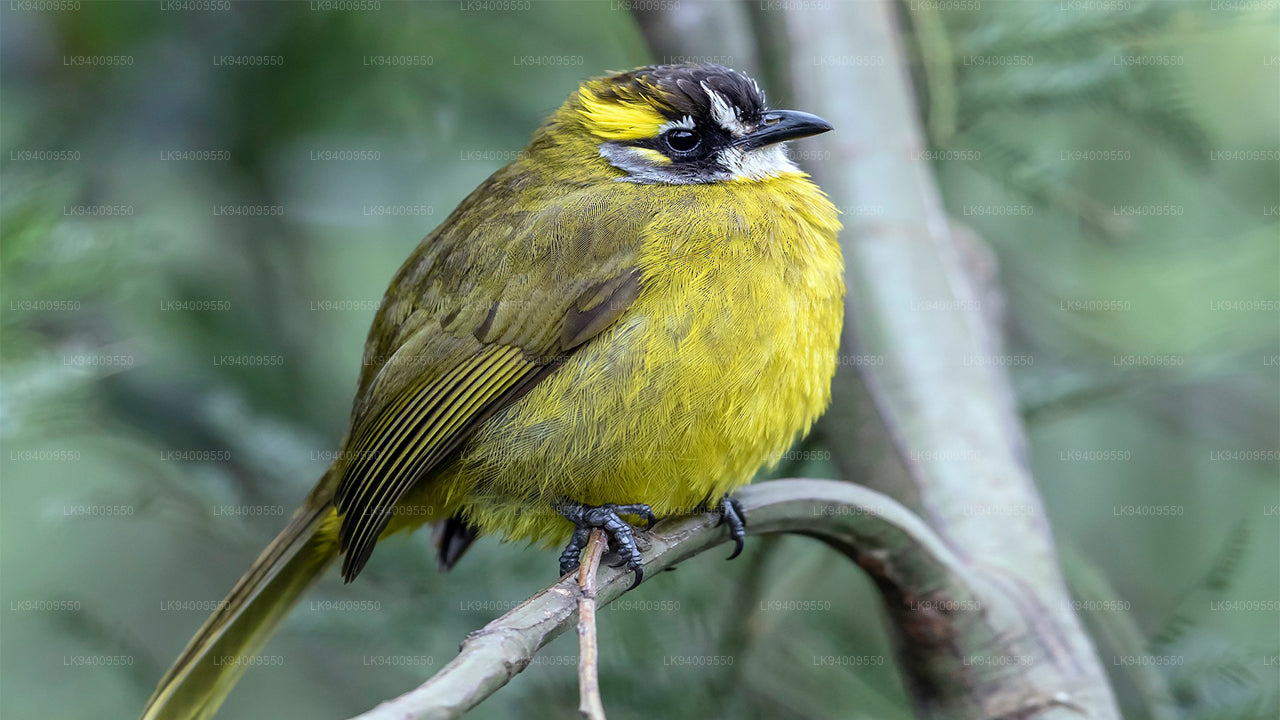 Yellow Eared Bulbul
Pycnonotus penicillatus
-
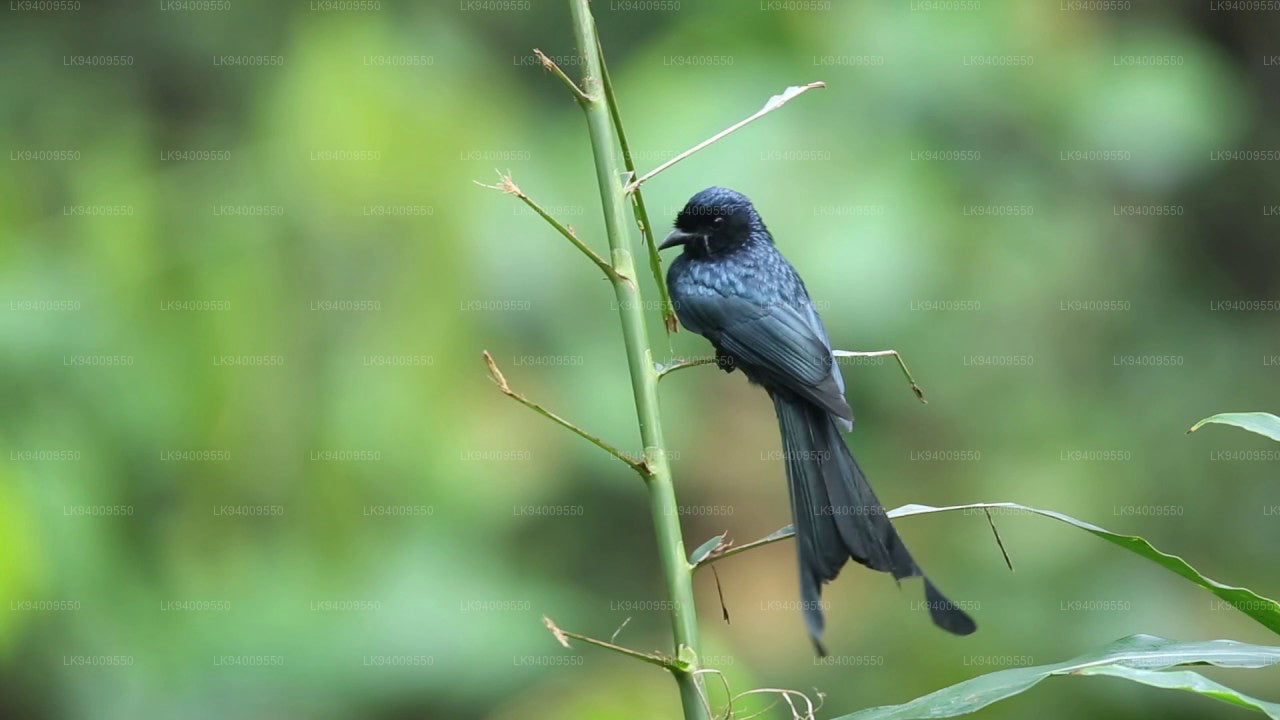 Ceylon Crested Drongo
Dicrurus lophorinus
-
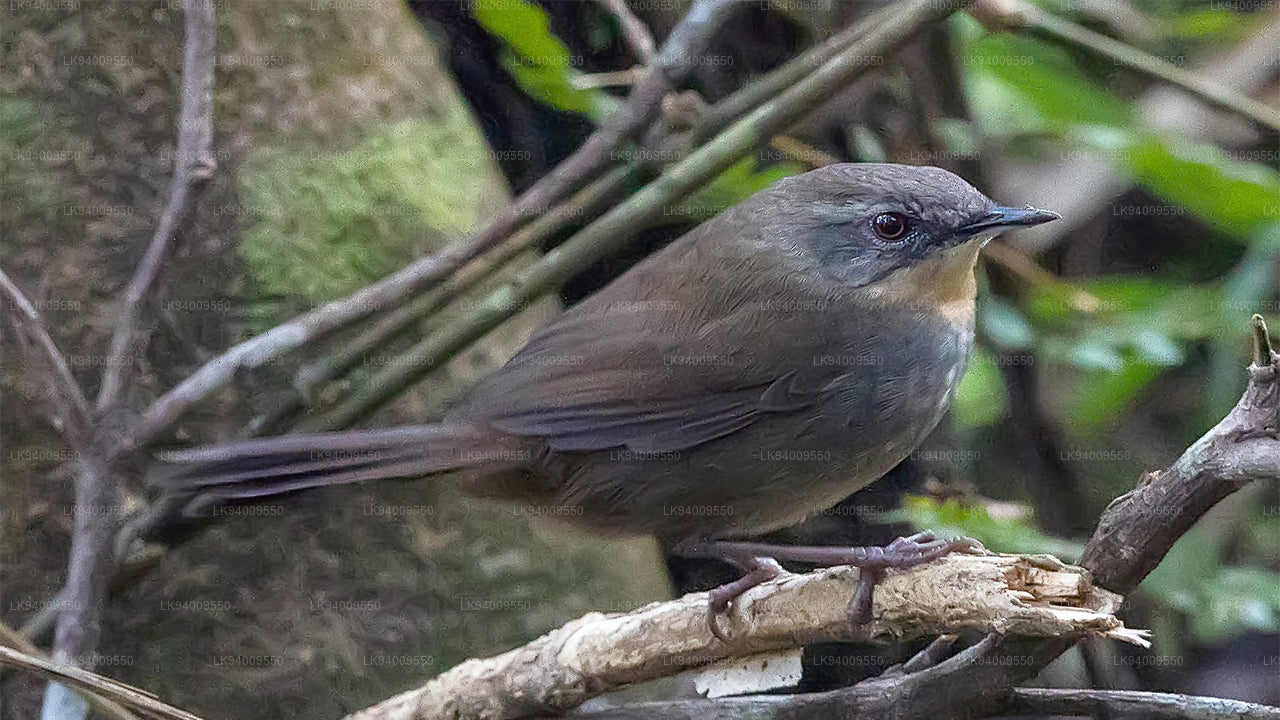 Ceylon Bush Warbler
Elaphrornis palliseri
-
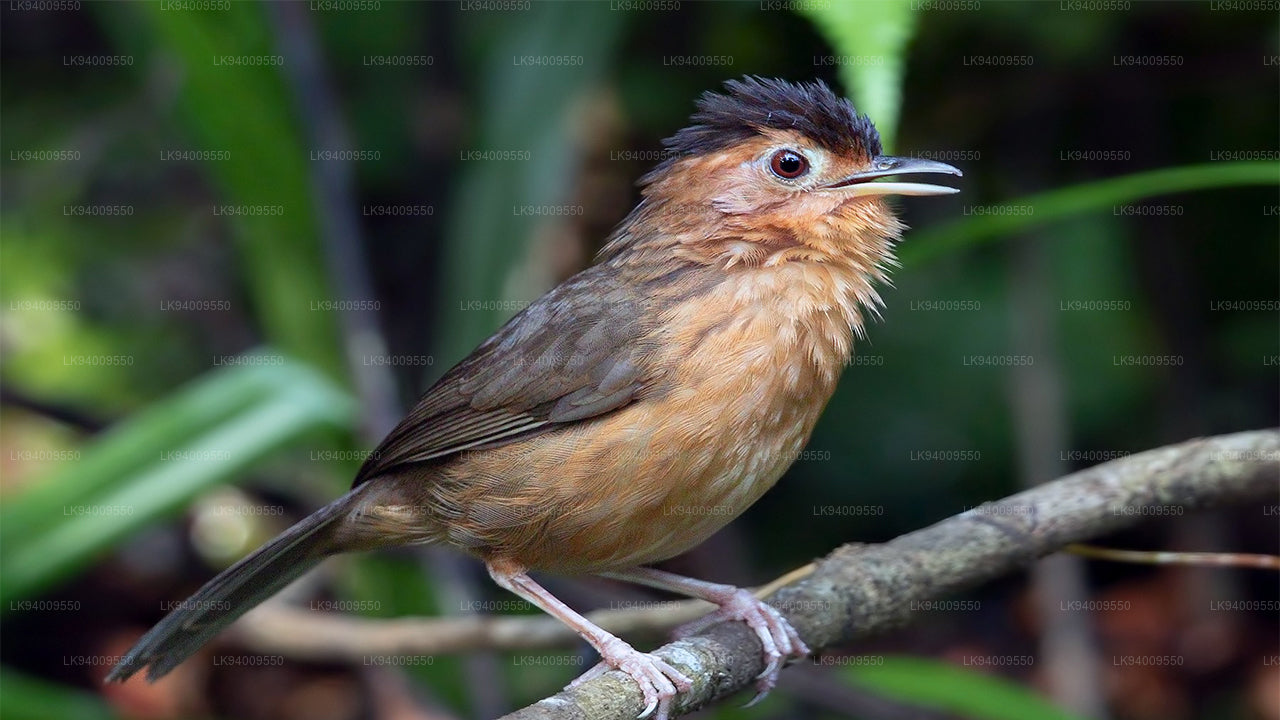 Brown Capped Babbler
Pellorneum fuscocapillus
-
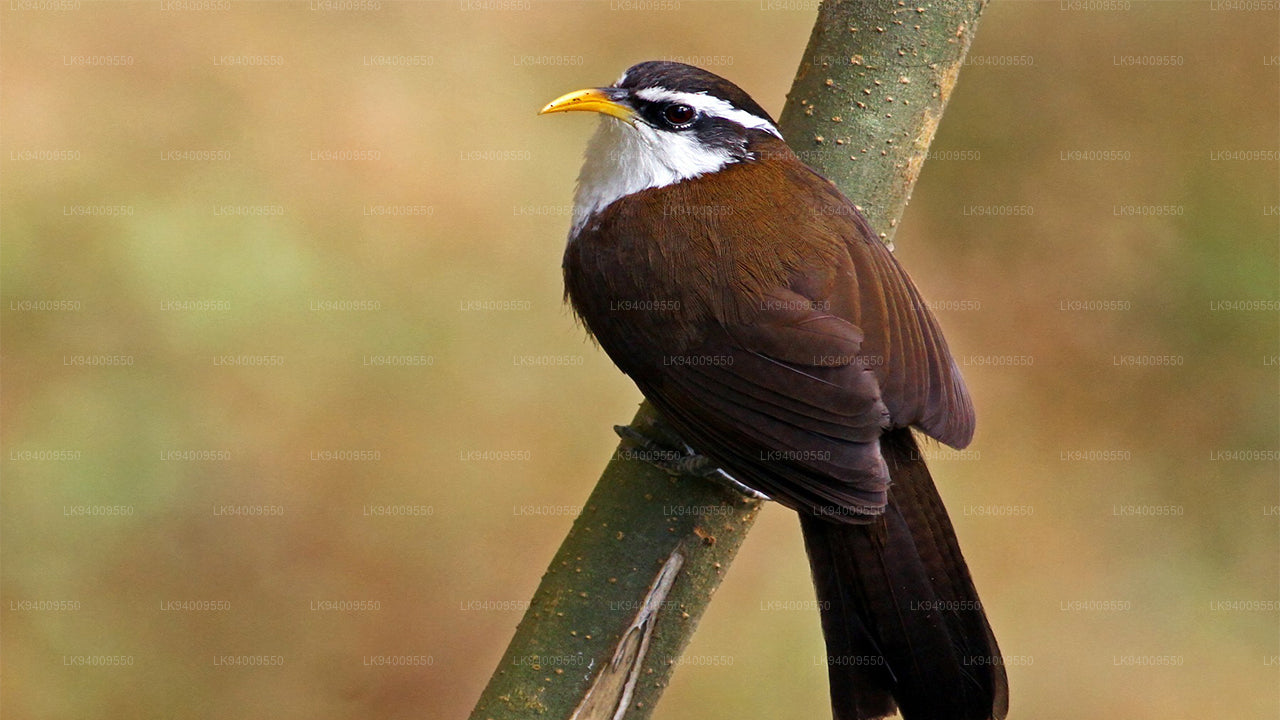 Ceylon Scimitar Babbler
Pomatorhinus melanurus
-
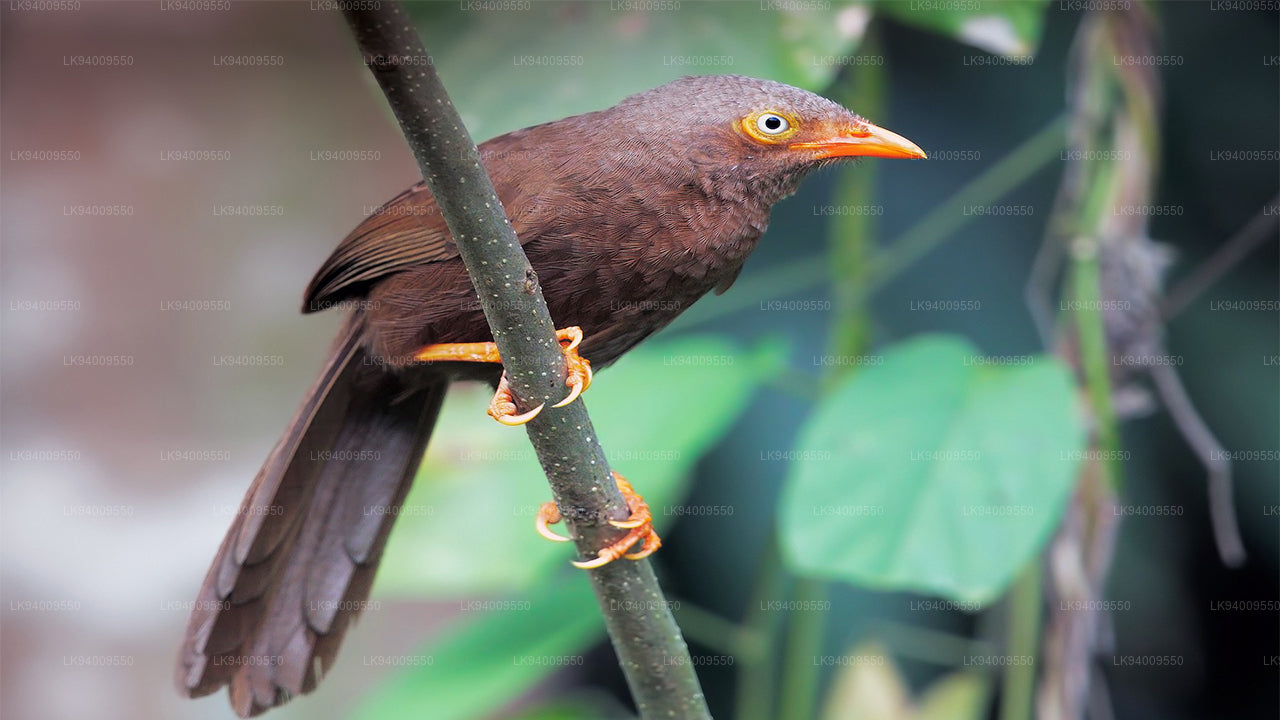 Ceylon Rufous Babbler
Argya rufescens
-
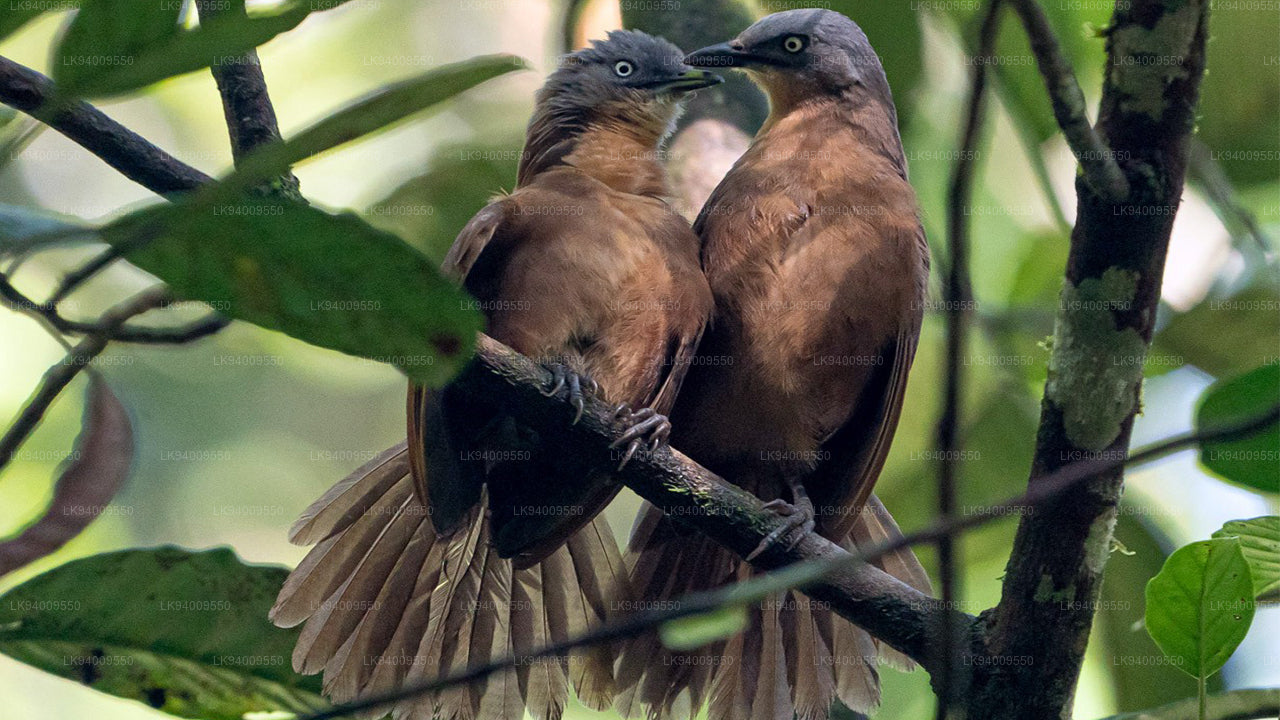 Ashy Headed Laughingthrush
Argya cinereifrons
-
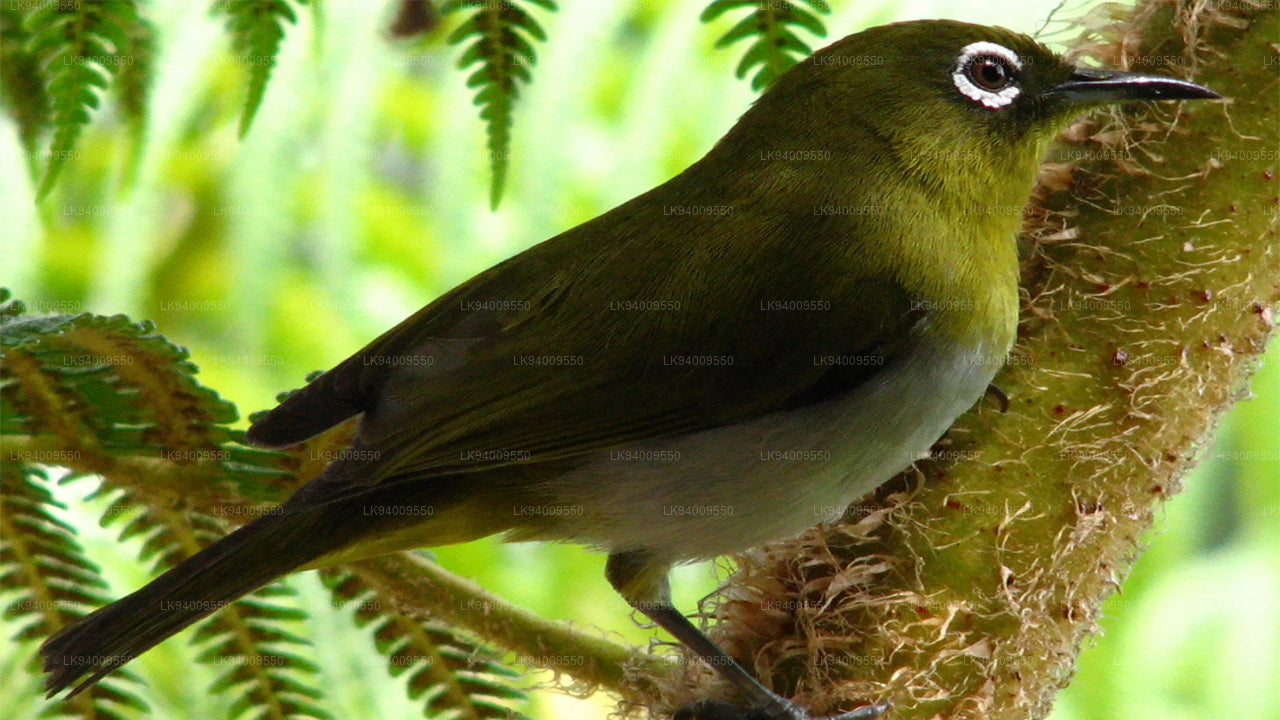 Ceylon White Eye
Zosterops ceylonensis
-
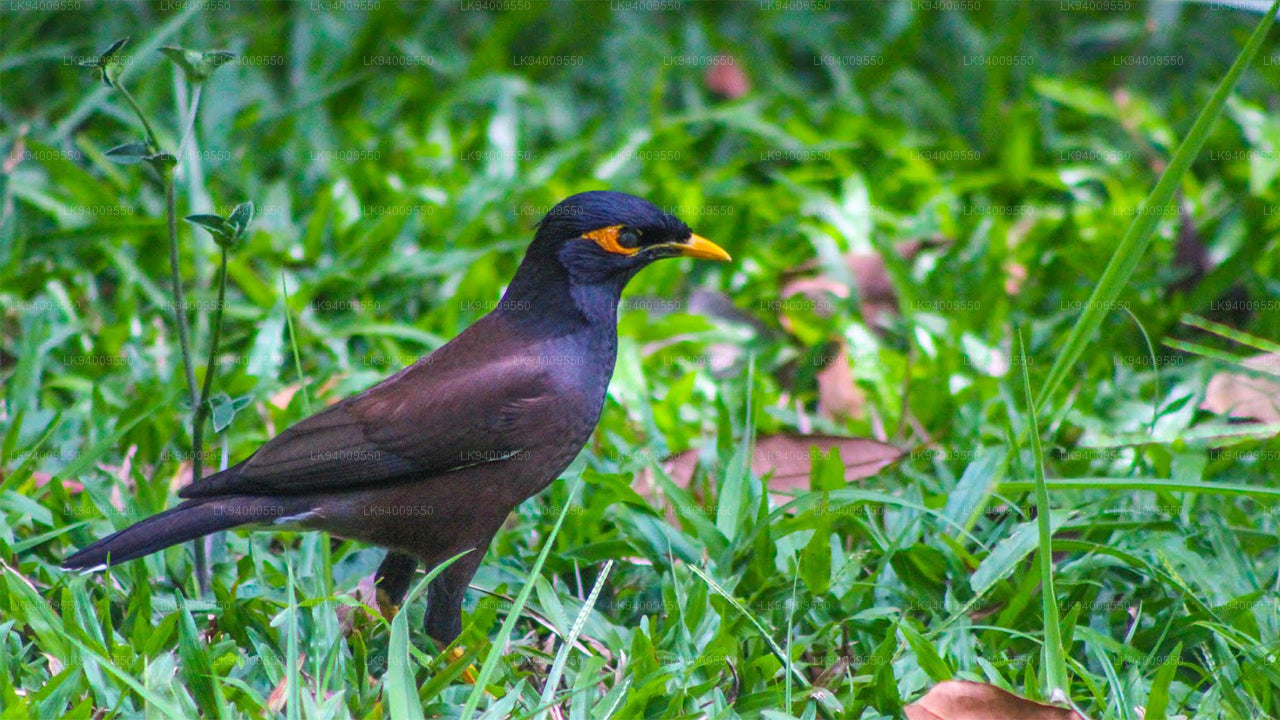 Ceylon Hill Myna
Gracula ptilogenys
-
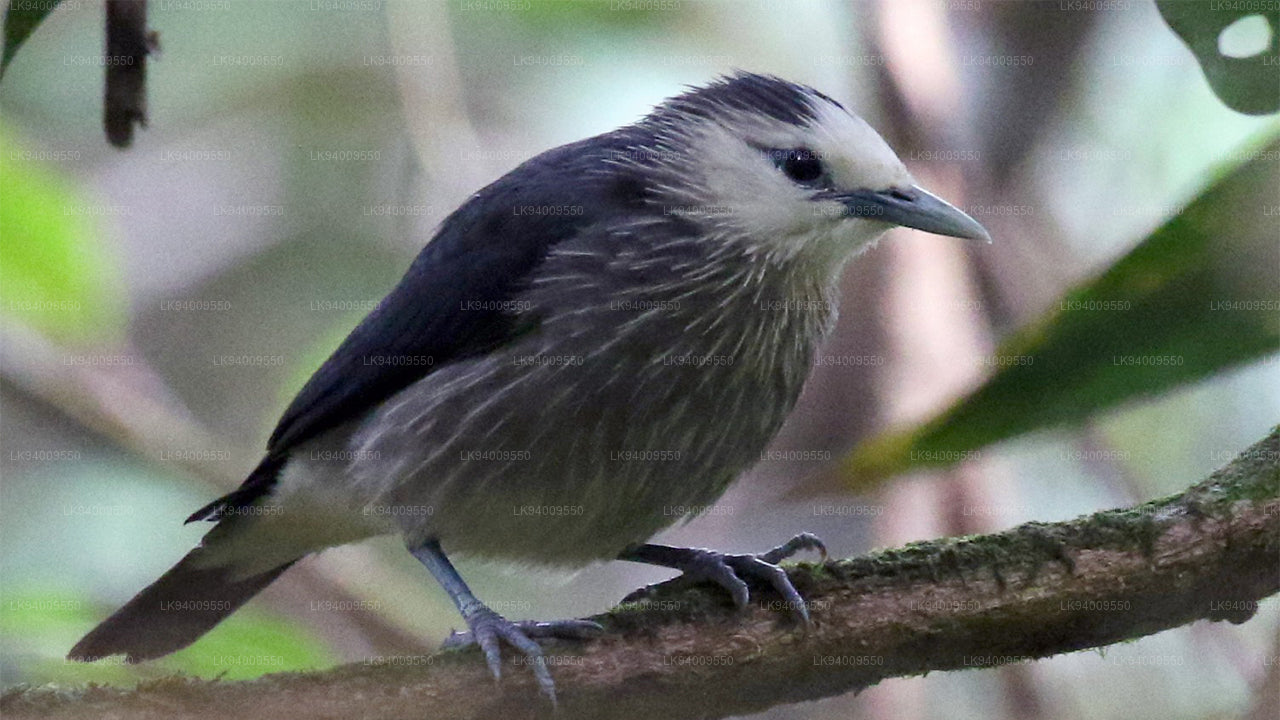 White Faced Starling
$Sturnornis albofrontatus
-
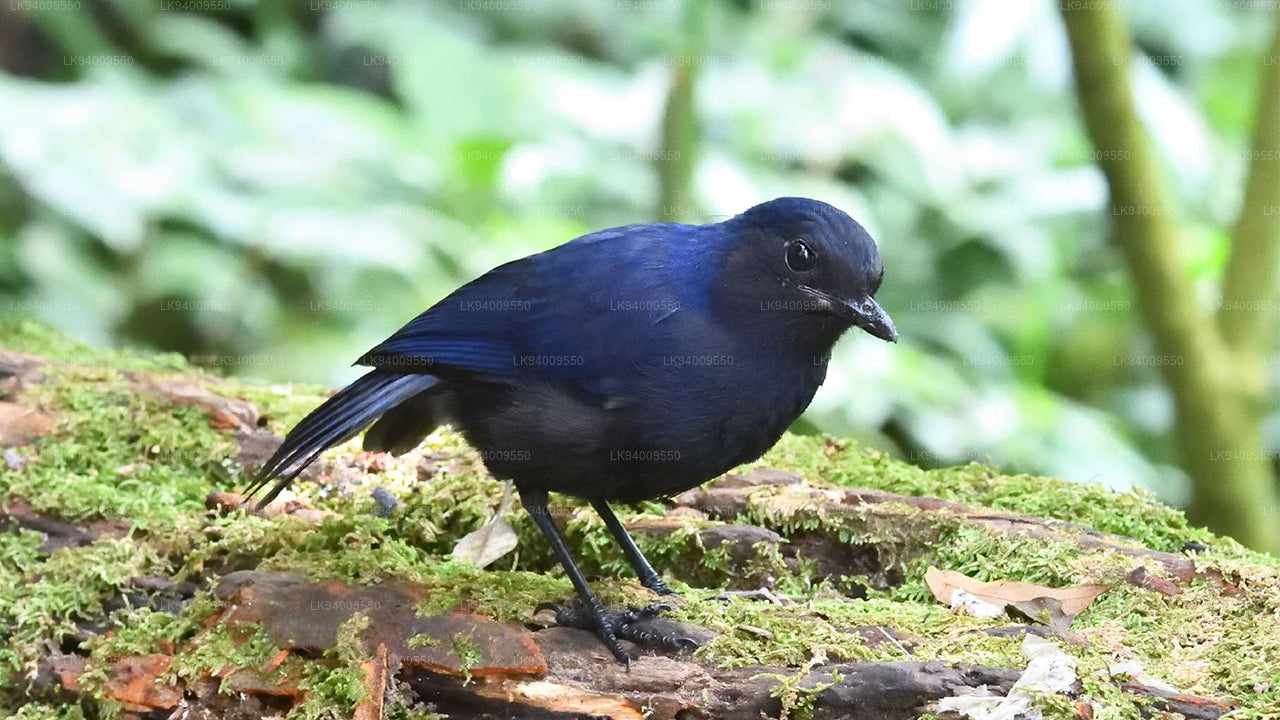 Ceylon Whistling Thrush
Myophonus blighi
-
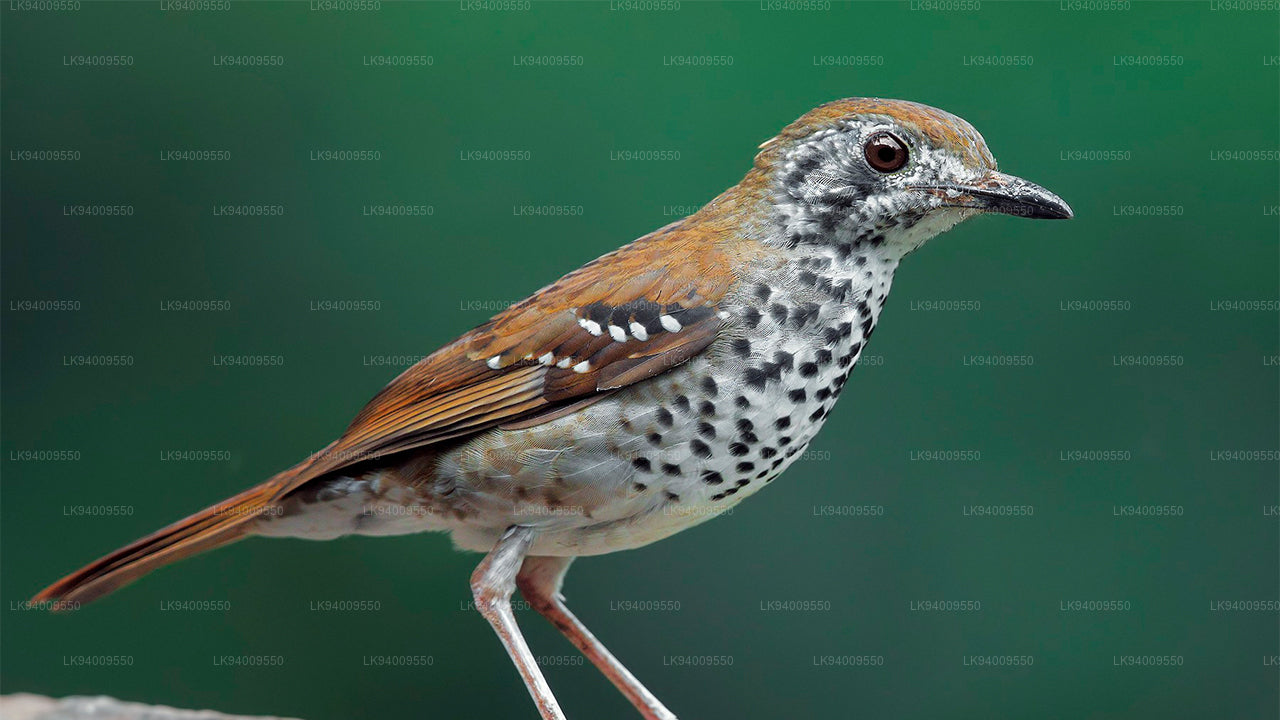 Spot Winged Ground Thrush
Geokichla spiloptera
-
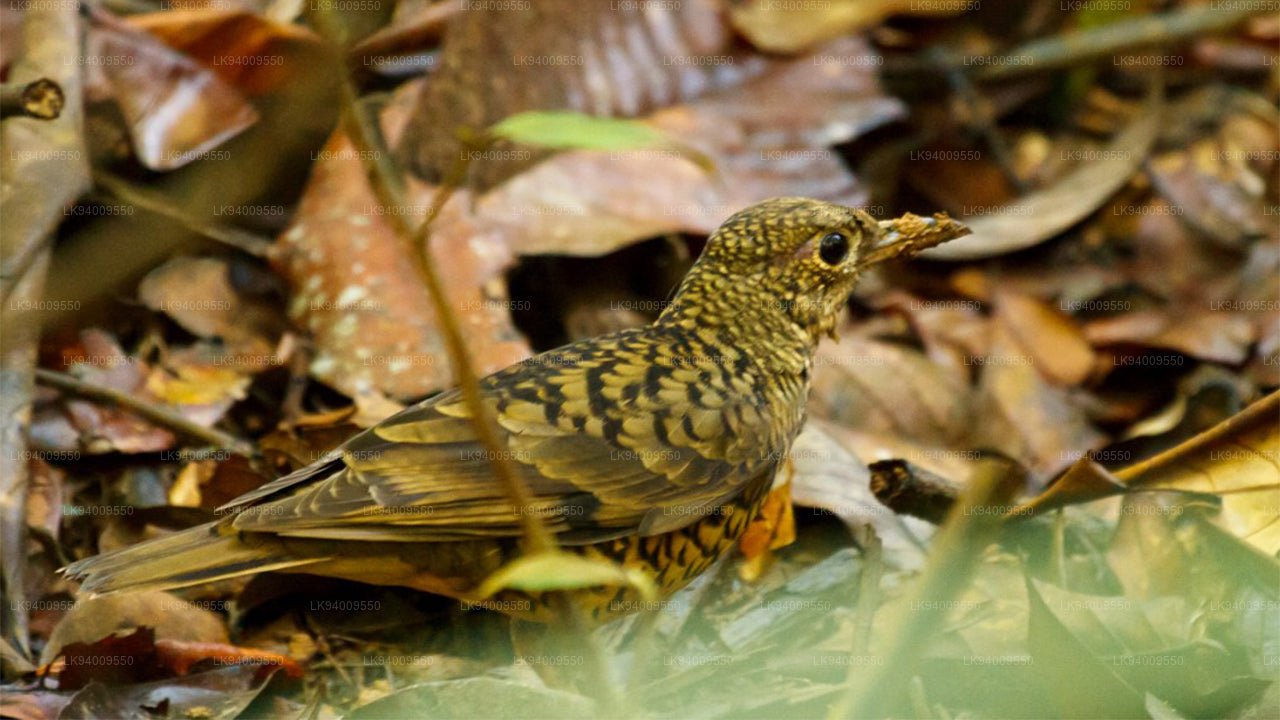 Ceylon Scaly Thrush
Zoothera imbricata
-
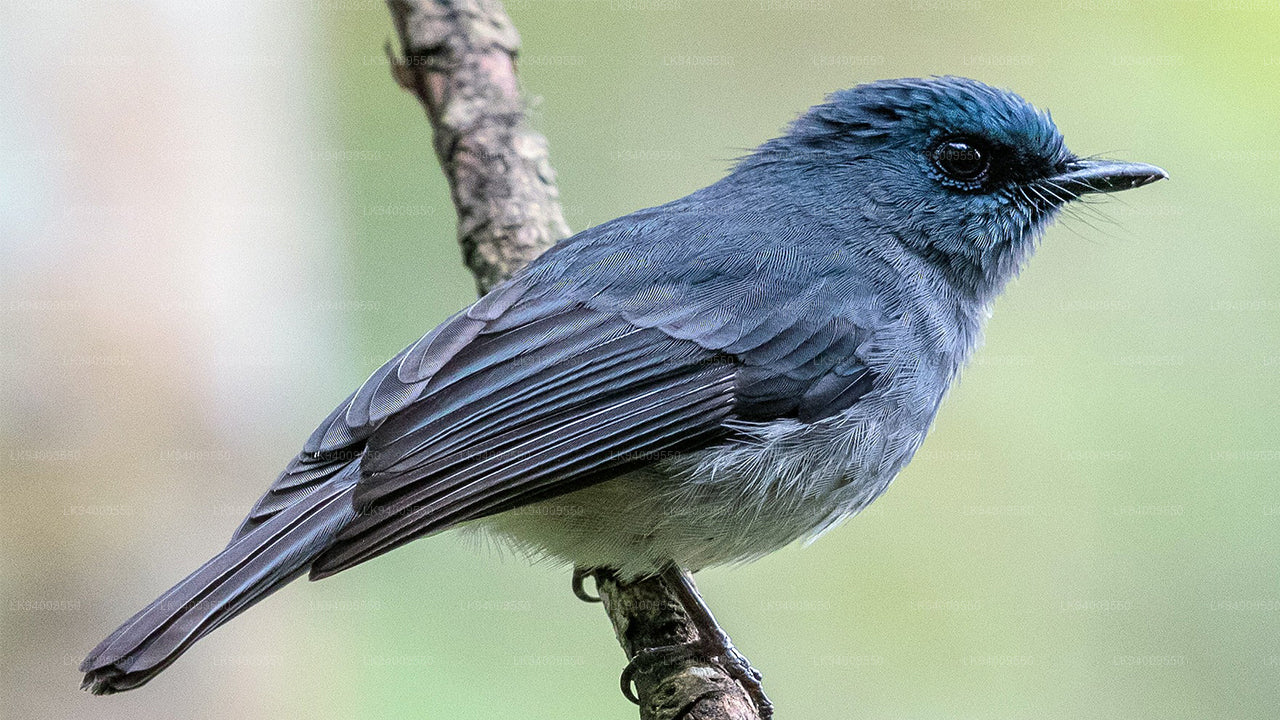 Dusky Blue Flycatcher
Eumyias sordidus
-
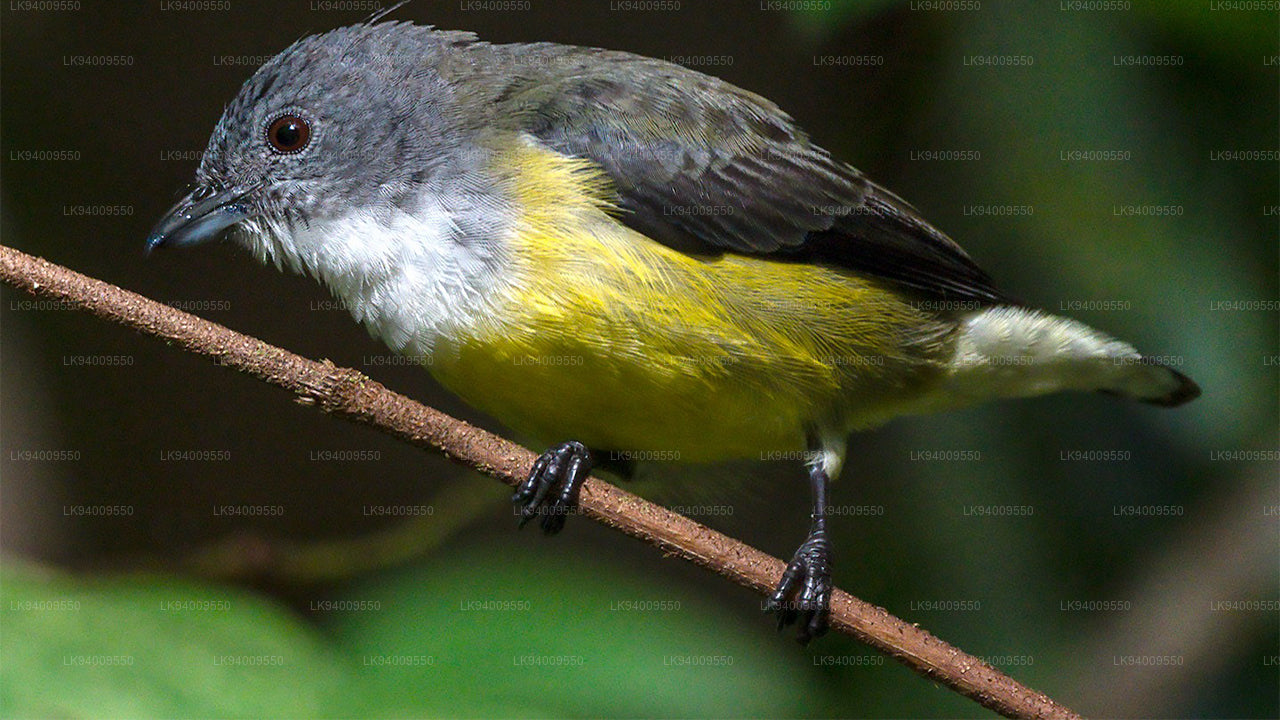 Legge's Flowerpecker
Dicaeum vincens
-
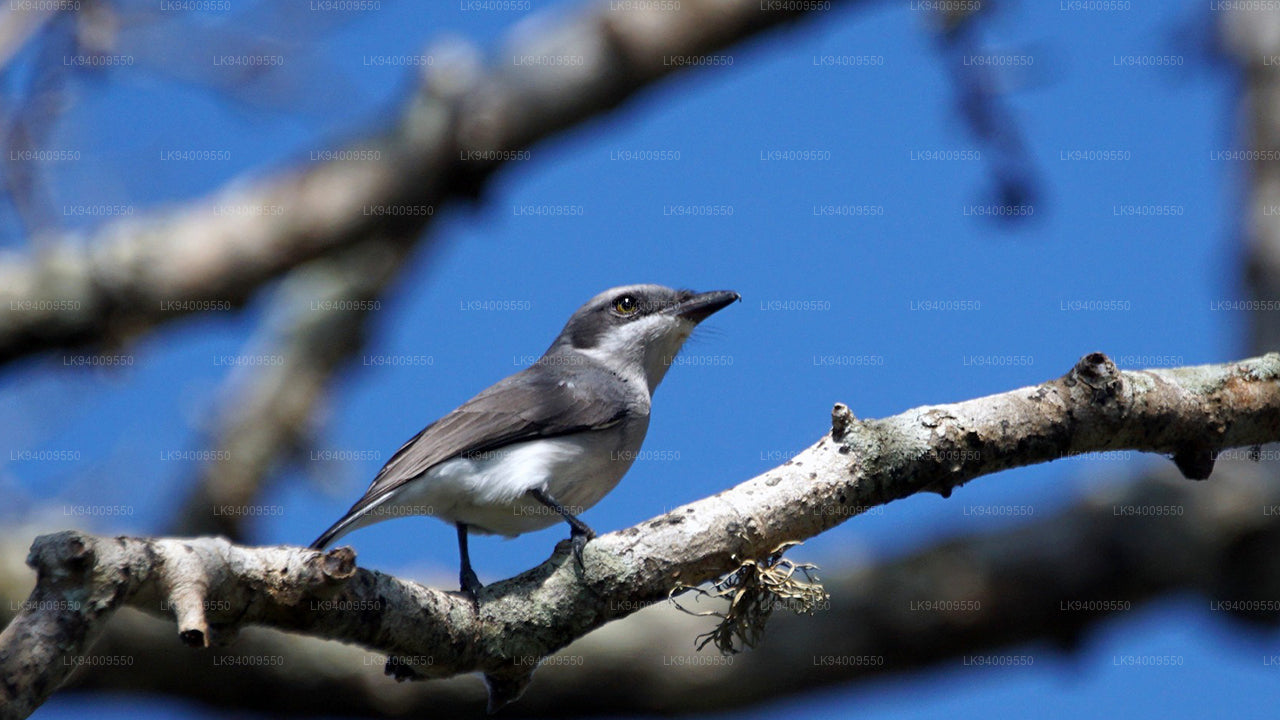 Ceylon Woodshrike
Tephrodornis affinis
-
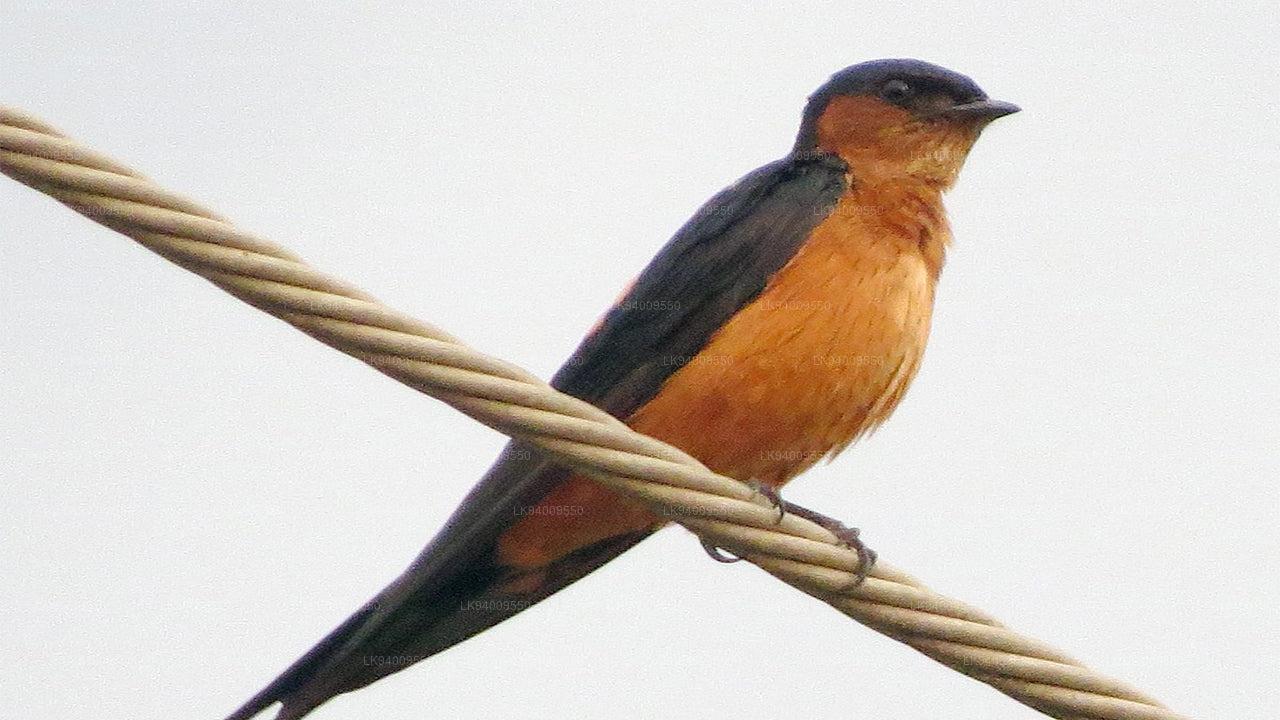 Ceylon Swallow
Cecropis hyperythra