Lakpura
Lakpura®

Canoeing

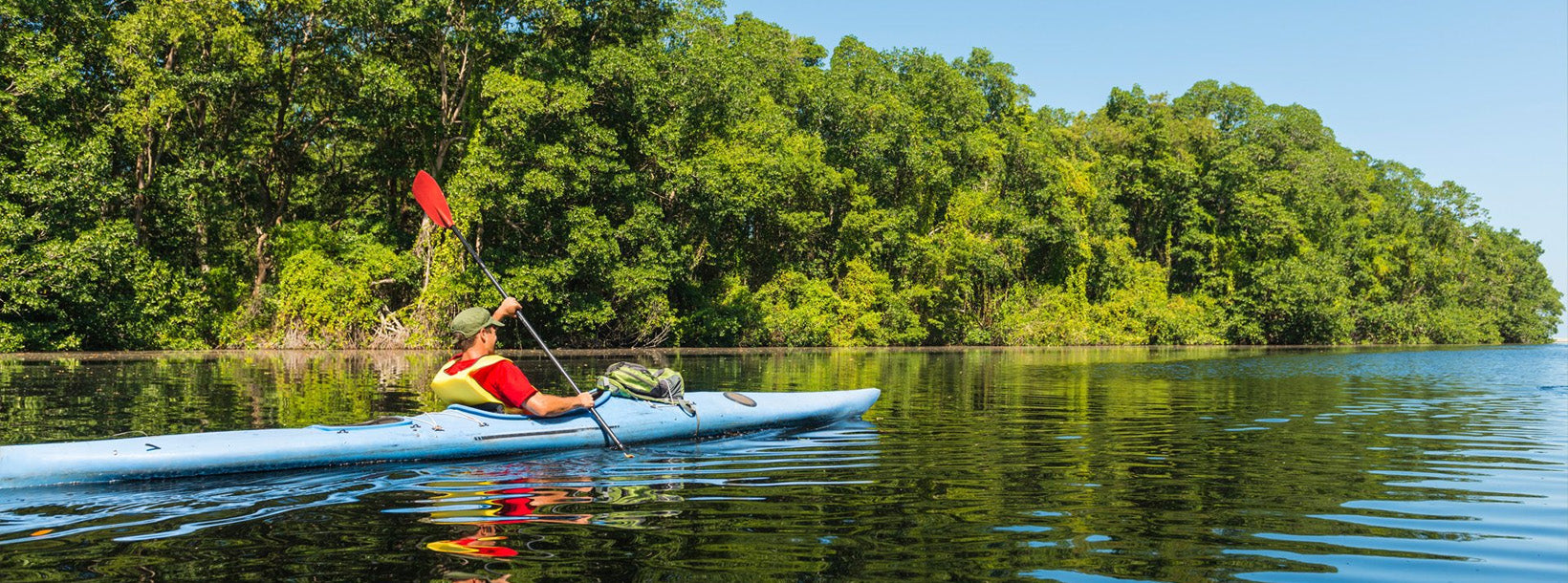
Canoeing in Sri Lanka puts you on the water at eye level with the island's ecosystems — sliding quietly past mangrove roots, watching a kingfisher dart ahead of the bow, or drifting through a lagoon as a fishing cormorant surfaces nearby. Using a single-bladed paddle and a lightweight canoe, the activity suits first-timers as readily as seasoned paddlers, and it slots naturally into almost any Sri Lanka itinerary, whether you are based in the highlands, the cultural triangle, or along the southern coast.

Where can you go canoeing in Sri Lanka?

Sri Lanka offers a surprisingly varied set of paddling environments across its compact geography. The most accessible locations fall into three broad categories: river runs in the hill country, lagoon circuits on the south and west coasts, and reservoir paddles in the dry zone interior.

  • Mahaweli River, Kandy: Sri Lanka's longest river curves through forest and farmland near Kandy. The stretch accessible for canoeing is gentle enough for beginners and offers close views of riverine birdlife, including herons and bee-eaters. It is a short drive from Kandy town, making it an easy half-day addition to a cultural triangle tour.
  • Kitulgala: Best known as a white-water rafting hub on the Kelani River, Kitulgala also has calmer channels suitable for canoe exploration. The surrounding rainforest — part of the wet zone — shelters endemic bird species that appear at the water's edge in the early morning.
  • Southern lagoons, Galle area: The sheltered lagoons between Galle and Koggala offer flat-water paddling through mangrove corridors and past small fishing communities. Water conditions here are generally calm, and the mangroves act as a nursery for numerous fish and crab species. The Madu Ganga wetland system, a Ramsar-listed site, is a particularly rich paddling environment where the water weaves between islets thick with tropical vegetation.
  • Dambulu Oya and dry-zone reservoirs: For paddlers visiting the cultural triangle, the Dambulu Oya River and several nearby tanks (ancient reservoirs) provide calm, open water surrounded by dry-zone scrub forest. Crocodiles are present in some reservoirs; always follow local guide instructions regarding safe zones.

What wildlife can you expect to see while canoeing?

The slow, quiet nature of canoe travel makes it one of the most effective ways to encounter Sri Lanka's waterway wildlife without disturbing it. On any given outing, you are likely to spot water birds — purple herons, little cormorants, and jacanas on inland waterways; brahminy kites and terns near the coast. Freshwater monitor lizards are common on riverbanks throughout the island and frequently slip into the water as canoes pass.

In the southern lagoons, the mangrove channels shelter mudskippers, fiddler crabs, and estuarine crocodiles. Canoeing through mangroves at low tide exposes the intricate root systems that give these ecosystems their ecological value, and a knowledgeable guide can explain the species-level detail. If you are interested in combining paddling with broader wildlife observation, pairing a canoeing session with a visit to Crocodile Watching sites or the wetlands around Balapitiya adds measurable depth to the day.

Is canoeing in Sri Lanka suitable for beginners?

Most commercially operated canoeing routes in Sri Lanka are designed for people with no prior experience. Guides provide a brief on-shore orientation covering paddle grip, basic strokes, and how to steer the canoe before you enter the water. The rivers and lagoons used for tourist canoeing are selected for their calm conditions, so you are not navigating rapids or open ocean swells.

Children from around eight years old can typically participate, though minimum age and weight requirements vary by operator and location — confirm at the time of booking. Life jackets are standard equipment on all reputable guided tours. Solo paddling is possible for confident adults; tandem canoes work well for couples or a parent and child sharing the experience.

When is the best time to go canoeing in Sri Lanka?

Sri Lanka's two monsoon seasons affect different coasts at different times of year, so canoeing conditions shift depending on where you are.

RegionBest monthsAvoid
Southwest coast (Galle lagoons)November – AprilMay – September (southwest monsoon)
Hill country rivers (Kandy, Kitulgala)January – April, August – SeptemberPeak monsoon months can raise water levels
Dry zone (Dambulu Oya, reservoirs)May – SeptemberDecember – January (northeast monsoon can bring heavy rains)

For most visitors who are combining canoeing with a broader Sri Lanka tour, the best overall window is December to March, when the southwest coast, cultural triangle, and hill country are simultaneously in good condition. Always check current river levels and local weather before heading out.

What should you bring on a canoeing trip?

Preparation for a canoeing outing in Sri Lanka is light — the canoes, paddles, and life jackets are supplied by the operator. What you carry on the water should be minimal and secured against accidental immersion.

  • Lightweight, quick-dry clothing (long sleeves help with sun protection and minor scrapes in narrow mangrove channels)
  • Closed-toe sandals or sports shoes that can get wet
  • Sunscreen applied before boarding — reapplication mid-river is awkward
  • A small dry bag for your phone and camera; waterproof phone cases are useful on open-water sections
  • Drinking water — paddling in Sri Lanka's heat is more demanding than it looks
  • Insect repellent for mangrove and wetland routes, particularly in the morning

How does guided canoeing work with Lakpura?

Lakpura arranges canoeing excursions as standalone half-day activities or as segments within a longer itinerary. Most tours are led by local guides who know the waterway, can identify wildlife, and are trained in first aid and water safety. Routes are chosen to match the group's experience level, and the pace is set by the paddlers — there is no requirement to keep up with a fixed schedule on the water.

The excursion typically includes a canoe, paddle, life jacket, a guide, and transport from your accommodation in the area. For the southern lagoon routes, some tours combine canoeing with a boat-based section through the mangroves, giving participants a fuller picture of the ecosystem. For those drawn to broader water-based adventures, Deep Sea Fishing is another activity that pairs well on a multi-day coastal itinerary.

How do I get to the main canoeing locations from Colombo?

Distances from Colombo are manageable for day trips or overnight excursions:

  • Kandy (Mahaweli River): Roughly 115 km by road — around 3 hours depending on traffic. An early departure from Colombo allows a full morning on the river.
  • Kitulgala: Around 90 km from Colombo, typically 2.5 hours. Often combined with the Kelani River activity corridor.
  • Galle lagoons: Approximately 120 km south of Colombo via the Southern Expressway — under 2 hours. A natural addition to a Galle-area stay.

Lakpura's private driver network can arrange comfortable point-to-point transfers so the travel itself requires no planning effort on your part.

Book this experience with Lakpura

Curated by our local team. Direct booking, instant confirmation.

Ask Lakpura® Agent