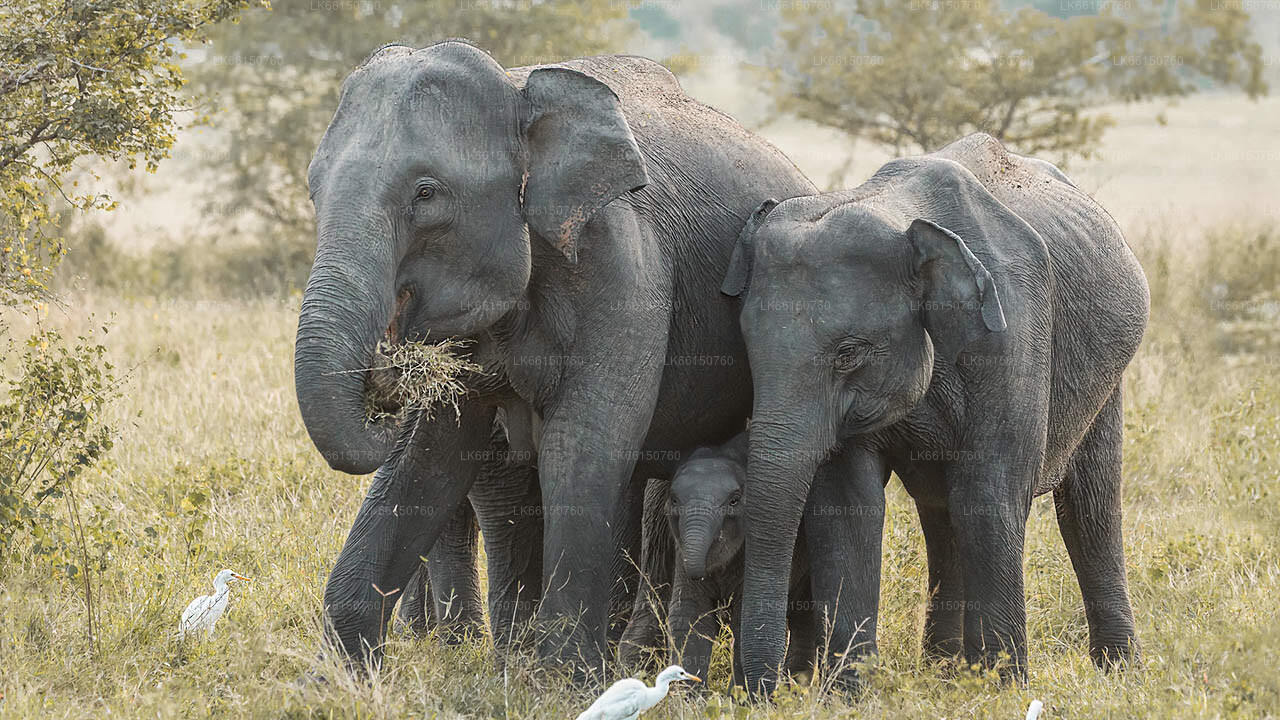
On the western edge of Udawalawe National Park, beside the broad sheet of the Udawalawe reservoir, a modest government facility quietly runs one of the most serious wild-elephant rehabilitation programmes in Asia. The Elephant Transit Home (ETH) — known locally as Ath Athuru Sevana — was established in 1995 by Sri Lanka's Department of Wildlife Conservation, and it works to a simple but demanding principle: take in orphaned elephant calves, nurse them back to health, let them learn to be elephants among their own kind, and release them into the wild before any dependency on people takes hold. It is not an elephant orphanage in the conventional sense, and that distinction shapes everything a visitor sees here.
What is the Elephant Transit Home and how did it begin?
The programme was founded under the direction of Dr. Nandana Atapattu, at a time when sceptics doubted that genuine rehabilitation and wild release — rather than lifetime captivity — was achievable for elephants. The first resident was Komali, a one-year-old female found alone in the Meegalawa area of Anuradhapura District. Her arrival set the template for everything that followed: rapid intake assessment, veterinary care, graduated socialisation with other calves, and a deliberate reduction of human interaction as the animal matures.
Since that first intake the ETH has cared for more than 250 orphaned elephants, and over 100 of them have been released back into the wild. That makes it one of the most productive wild-release programmes for a large mammal anywhere in the world, and the reason the model is cited well beyond Sri Lanka.
Where exactly is the Elephant Transit Home located?
The ETH stands on the B427 Udawalawe–Thanamalwila road, a short drive from the national park's main entrance, in the Ratnapura District of Sabaragamuwa Province. The nearest town of any size is Embilipitiya, roughly 20 km to the west.
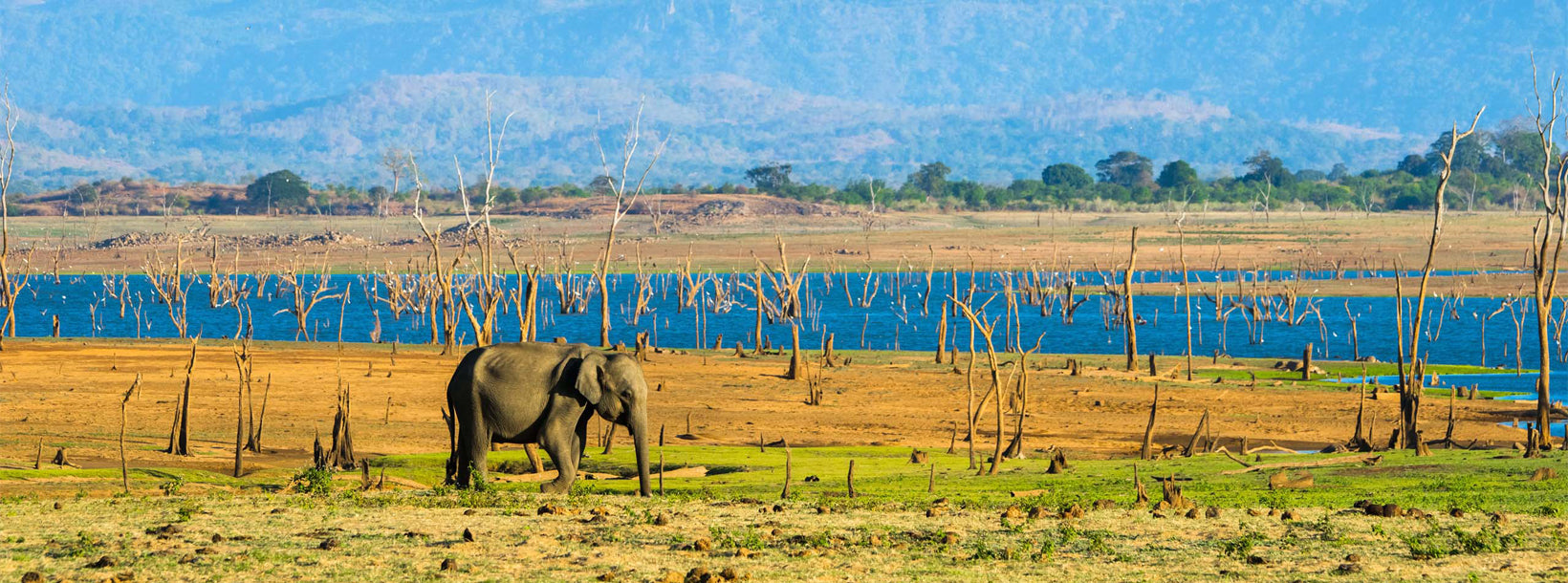
The adjacent Udawalawe reservoir is a defining feature of the site. Seasonal changes in water level create a shifting shoreline that gives the calves grasses, mud wallows and open water — conditions close to what they will meet after release. Wild elephants from the surrounding 30,000-hectare park also use the reservoir margins, so the resident calves grow up with passive exposure to animals living entirely without human support.
How does the rehabilitation process work?
Rehabilitation at the ETH is built around two priorities: physical health and behavioural independence. On arrival each calf is assessed by a veterinarian. Many are severely malnourished or dehydrated; some present complications such as digestive upset or milk intolerance. Staff then formulate an individual feeding plan. The standard feed is a specially prepared milk formula, with alternatives including soy milk, rice broth and the oral rehydration supplement Jeevanee used where clinically indicated.
In the early stages of care, feeding happens every three hours around the clock. As calves grow, the interval lengthens and solid browse is gradually introduced. Keepers are trained to provide that care while keeping affection and handling to a minimum — deliberate bonding between keeper and calf slows social re-integration with other elephants and can compromise a successful release.
Calves live together in age-cohort groups. This communal arrangement lets younger animals learn from older peers and develop the herd dynamics — hierarchy, communication, cooperative grazing — that they will need in the wild. When a resident reaches roughly four to five years of age and is judged physically and socially ready, the release process begins. Released animals are monitored afterwards, in some cases by GPS collar, to confirm that they are moving normally and integrating with wild herds; a number have been recorded doing exactly that, and some released females have since calved in the wild.
What can visitors see at the Elephant Transit Home?
The ETH is open to the public throughout the year, but only at scheduled feeding times. Visitors watch from a designated viewing platform as the calves are brought into an open field and given their milk ration from large bottles. The sessions are unhurried and take place at close range, which makes this a genuinely informative wildlife encounter rather than a performance. Interpretive boards around the viewing area explain how individual calves came to be here and how they are getting on.
| Feeding session | Time |
|---|---|
| Morning | 09:00 |
| Midday | 12:00 |
| Afternoon | 15:00 |
| Evening | 18:00 |
Each session runs for roughly 20 to 30 minutes. The midday feeding draws fewer visitors than the morning slot, which tends to fill with safari groups returning from the park. The 18:00 session is often the most atmospheric, as the light softens and the calves — tired from a day of roaming the grounds — are visibly more settled. Arriving five to ten minutes early secures a good position at the railing.
There is no elephant riding here, no bathing interaction and no direct physical contact of any kind between visitors and animals. If you are looking for an experience consistent with responsible wildlife tourism, that restraint is precisely the point.
What is the best time of year to visit?
The ETH operates year-round and the viewing area is covered, so rain has little practical effect on the feeding experience itself. Udawalawe and the surrounding dry zone take most of their rain between October and January. The drier months from May to September give clearer sightlines on a game drive in the adjoining park, and wildlife sightings there are arguably best from June to September, when shrinking waterholes concentrate animals.
How does the Elephant Transit Home differ from Pinnawala?
The distinction matters, and it is the question visitors ask most often. Pinnawala Elephant Orphanage, established earlier and far more widely known, sits near Kegalle in the hill-country foothills and keeps its elephants long-term, with close visitor interaction. The ETH's mandate is the opposite: every admission is treated as temporary, with release into the wild as the stated goal. Calves are kept in semi-wild conditions, discouraged from bonding with people, and visitor access is deliberately limited to the feeding windows.
No elephant at the ETH is trained to perform, give rides or interact with visitors beyond that supervised observation. The programme's success is measured not by visitor numbers but by how many animals are successfully returned to wild populations. Researchers and wildlife veterinarians generally regard the ETH model as the one better aligned with current best practice in elephant welfare, because the animals retain wild behaviour and are demonstrably capable of surviving independently after release.
How do I get to the Elephant Transit Home from Colombo?
The ETH lies roughly 165 km south-east of Colombo — about four to five hours by road, depending on traffic and route. The quickest approach is the Southern Expressway (E01) towards Matara, then inland via Nonagama; the alternative runs overland on the A4 through Ratnapura and down the A18 past Embilipitiya. From either direction you turn onto the B427 at Udawalawe.
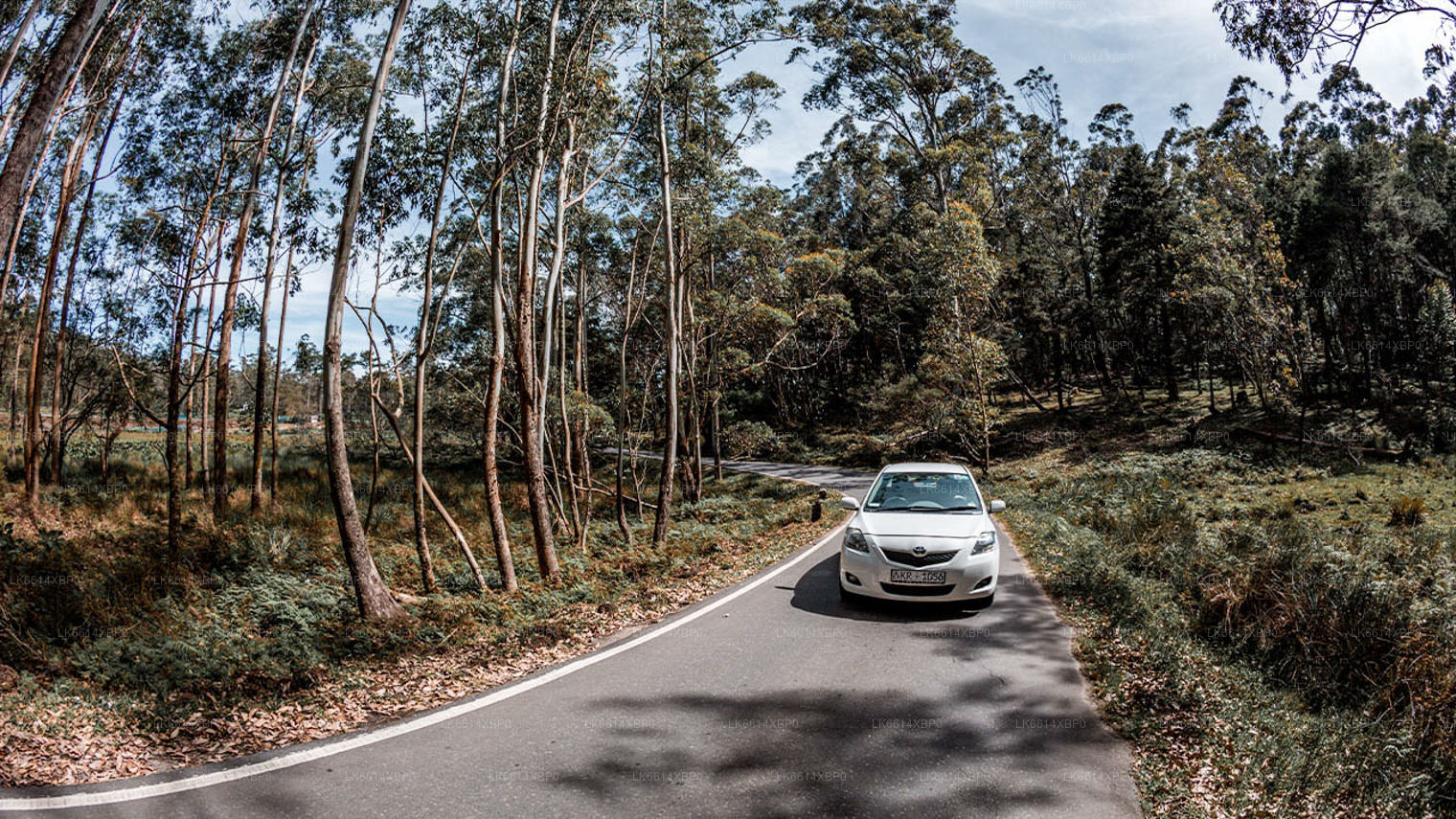
Most visitors combine the ETH with a morning or afternoon game drive in Udawalawe National Park, which shares the same junction. A private car with a knowledgeable driver is the practical choice for independent travellers; public bus connections exist but involve several changes. Dedicated transfers and guided day trips from Colombo, Galle or Ella can be arranged through a destination management company.
Is visiting the Elephant Transit Home suitable for children?
The feeding sessions suit children of most ages. The viewing area is paved, shaded and compact enough that young children can see clearly from the front rail, and the 20-to-30-minute duration is about right for younger visitors. Basic facilities are available on site. The drive from the coast or the hill country is long, so pairing the visit with an overnight stay in the Udawalawe area makes the itinerary far less tiring for families.
What else can I combine with a visit?
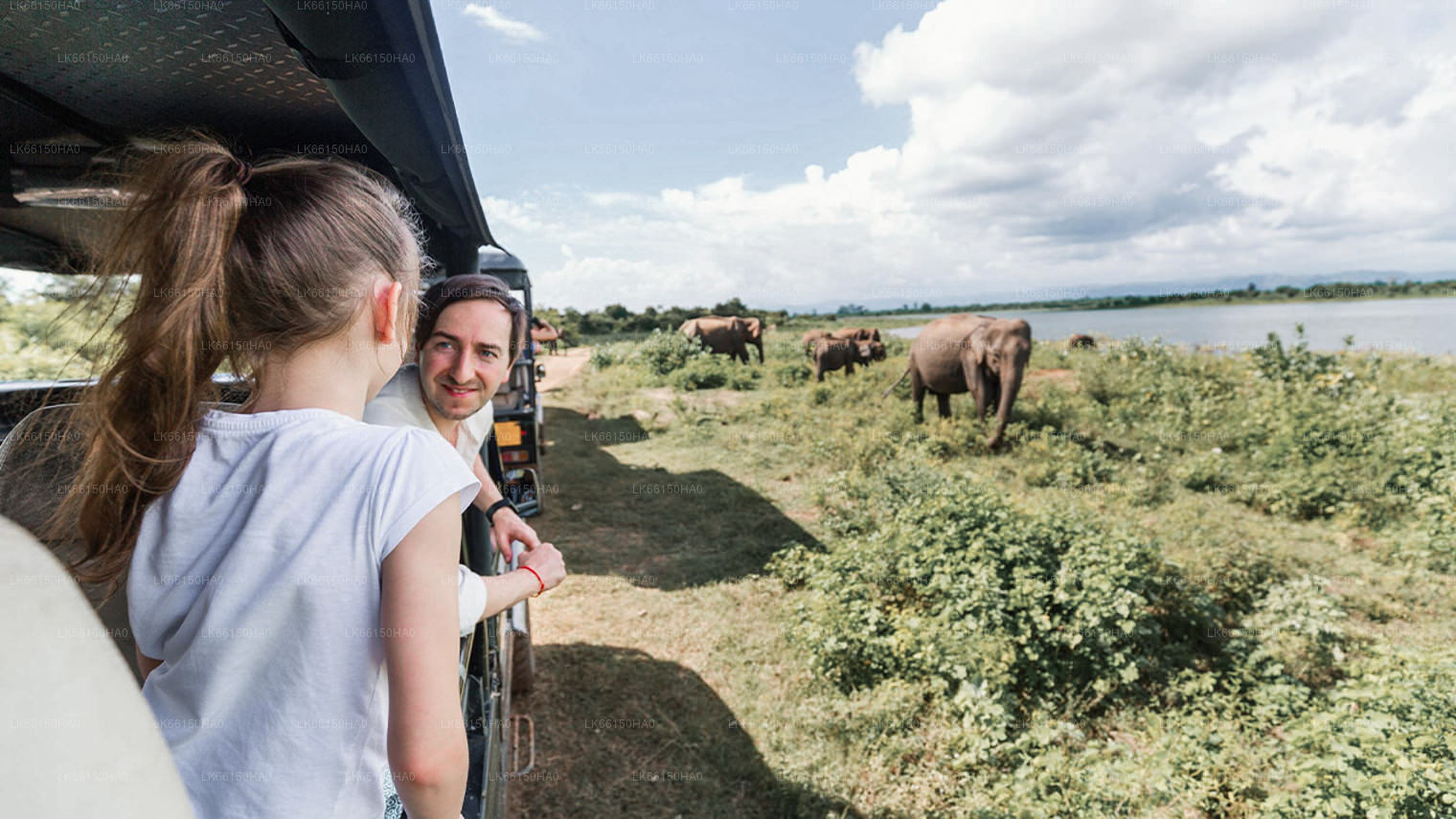
Because the ETH sits within the Udawalawe ecosystem, pairing a feeding-time visit with a jeep safari through the national park is the obvious combination — and the most rewarding one. Udawalawe holds one of Sri Lanka's densest wild-elephant populations, so seeing calves at the ETH in the morning and a wild herd on the open grasslands in the afternoon gives an unusually complete picture of the species' life stages. The park's flat terrain and reliable elephant sightings also make it one of the country's most accessible wildlife destinations for a first safari.
From Udawalawe it is a manageable drive to the hill-country town of Ella, and to the rainforest biodiversity of Sinharaja Forest Reserve — which makes the region a natural pivot between the southern coast and the highlands on a longer itinerary.
Is the Elephant Transit Home ethical to visit?
The ETH is a government-operated conservation facility, not a commercial attraction. Entrance fees contribute directly to the programme's running costs. Visitors stay on the viewing platform during feeding sessions and do not touch, ride or otherwise interact with the animals. Conservation organisations and wildlife veterinarians consistently cite the ETH as a model for humane, science-led rehabilitation. Travellers who are selective about wildlife experiences — and rightly so — can visit here with confidence.
Practical information at a glance
| Also known as | Ath Athuru Sevana; ETH |
|---|---|
| Location | B427 Udawalawe–Thanamalwila road, Ratnapura District, Sabaragamuwa Province |
| Managed by | Department of Wildlife Conservation, Sri Lanka |
| Established | 1995 |
| Feeding sessions | 09:00, 12:00, 15:00 and 18:00 daily |
| Entry fee | A modest fee applies; confirm current rates on arrival |
| Distance from Colombo | Approximately 165 km (four to five hours by road) |
| Photography | Permitted from the public viewing area |
| Interactions | No touching, feeding, riding or direct contact with the animals |
The Elephant Transit Home is one of the more quietly important conservation projects in Sri Lanka. A visit rewards patience more than spectacle, and that measured quality is what tends to stay with travellers long after the journey home.