Ville de Koggala
Emplacement : Koggala est située à quelques kilomètres au sud de Colombo dans la bande côtière sud de Sri Lanka.
Comment se rendre à Koggala : On peut se rendre à Koggala par la route principale Colombo-Galle-Matara (A2) ainsi que par la ligne de chemin de fer côtier sud de Colombo à Matara.
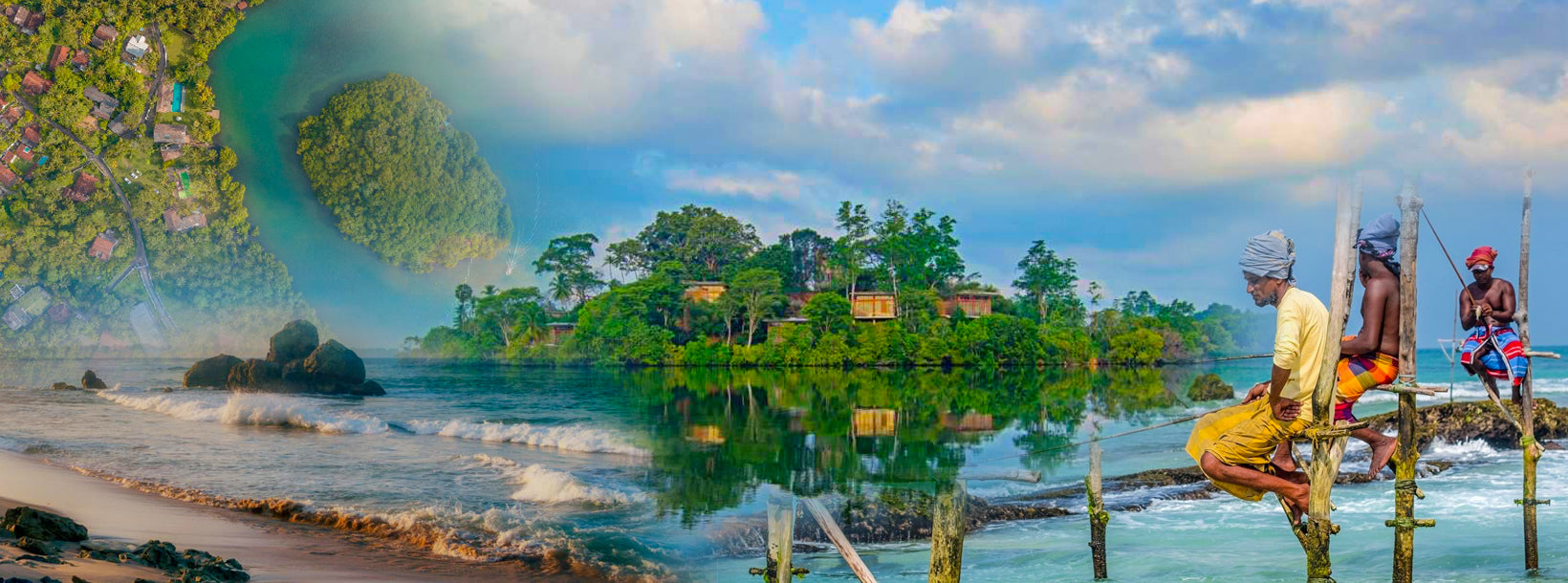
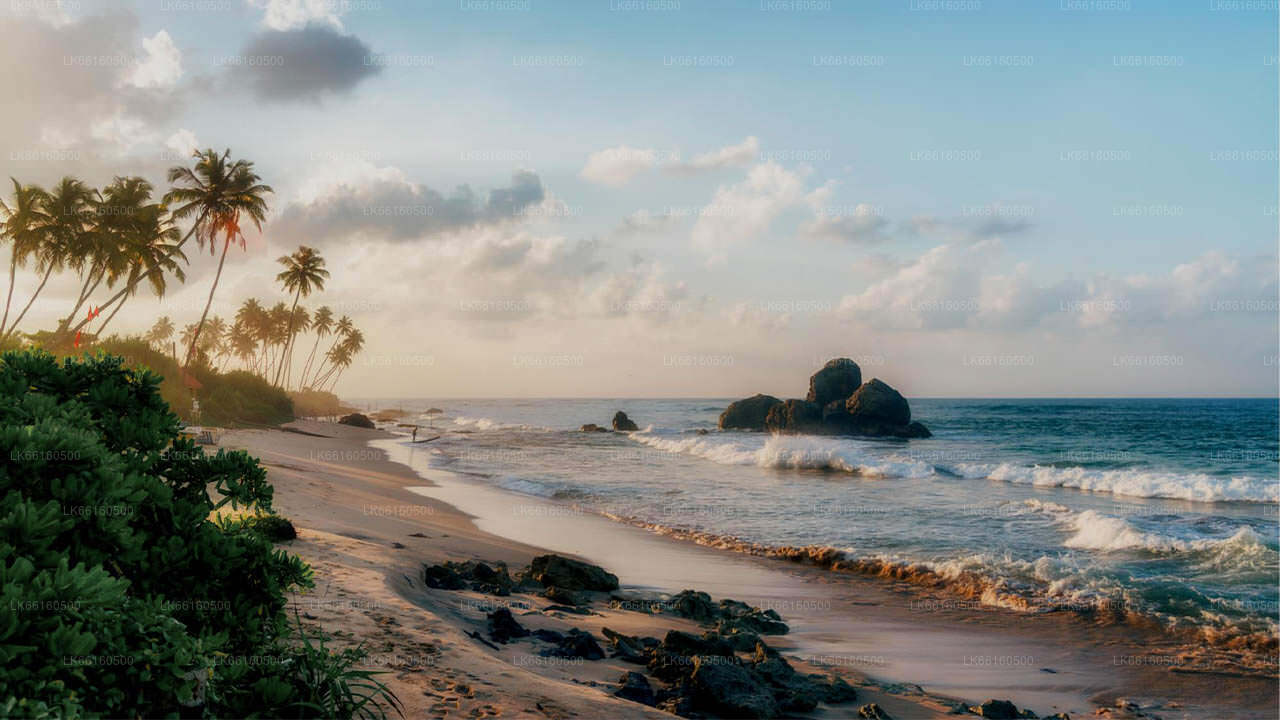
Le village et la plage de Koggala : Koggala, un village avec une plage tropicale magnifique, est enrichie d'un paradis écologique : le lac pittoresque de Koggala à côté de la route.
Lac de Koggala : Le lac, avec un groupe de petites îles à l'intérieur, offre de nombreuses opportunités d'observer les oiseaux au coucher du soleil pour les touristes qui ont apprécié la plage de Koggala. Autour du lac, on trouve plusieurs jardins d'épices.
Le musée Martin Wickramasinghe de la culture folklorique : Le musée Martin Wickramasinghe de la culture folklorique de Koggala, situé hors de la route, présente une collection rare d'outils, d'ustensiles et d'instruments utilisés dans les industries et l'agriculture cinghalaises, ainsi que dans l'art folklorique, la médecine traditionnelle et les costumes.
Le temple Purwarama à Kataluwa, Koggala : À 5 km à l'est de Koggala, le temple Purwarama à Kataluwa est célèbre pour ses peintures murales représentant des histoires des vies antérieures de Bouddha.
Le domaine de thé Handunugoda : Le domaine de thé Handunugoda, situé à 4 km à l'intérieur des terres de Kataluwa, Koggala, est l'une des rares plantations de thé des basses terres qui produit du thé de haute qualité, similaire aux montagnes centrales de Sri Lanka.
Koggala est également présent sur TripAdvisor, Viator et GetYourGuide