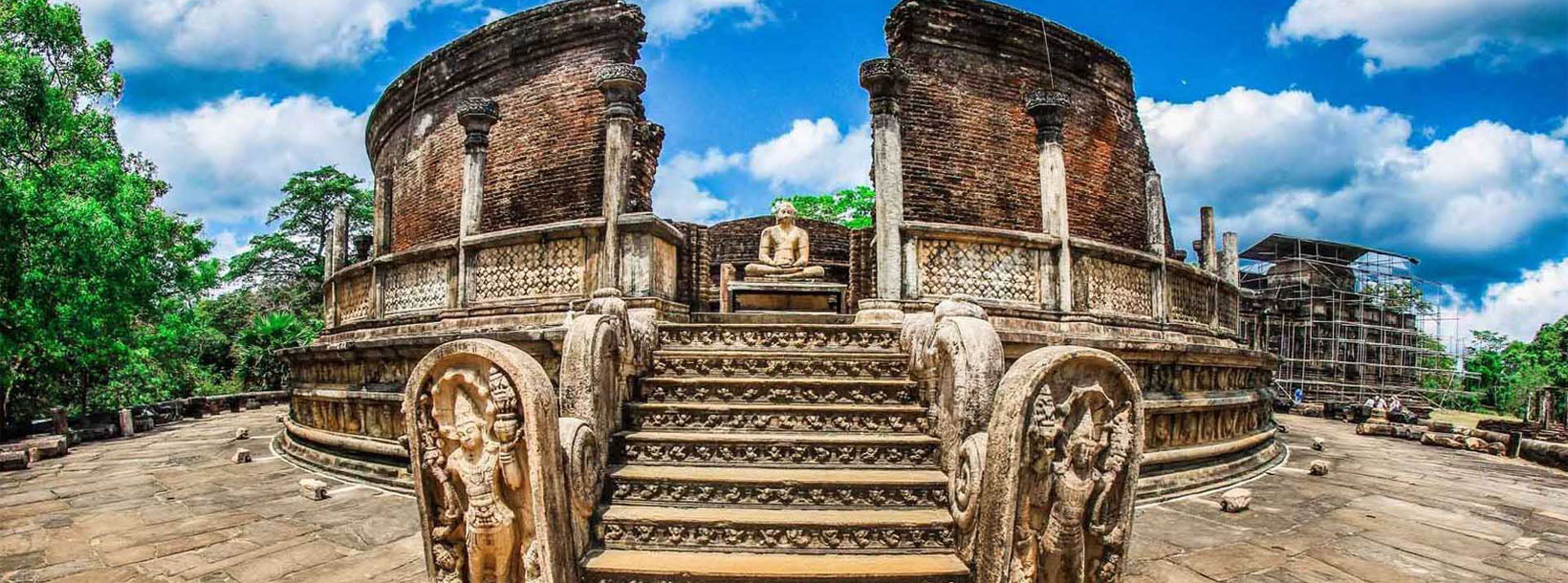
Polonnaruwa City
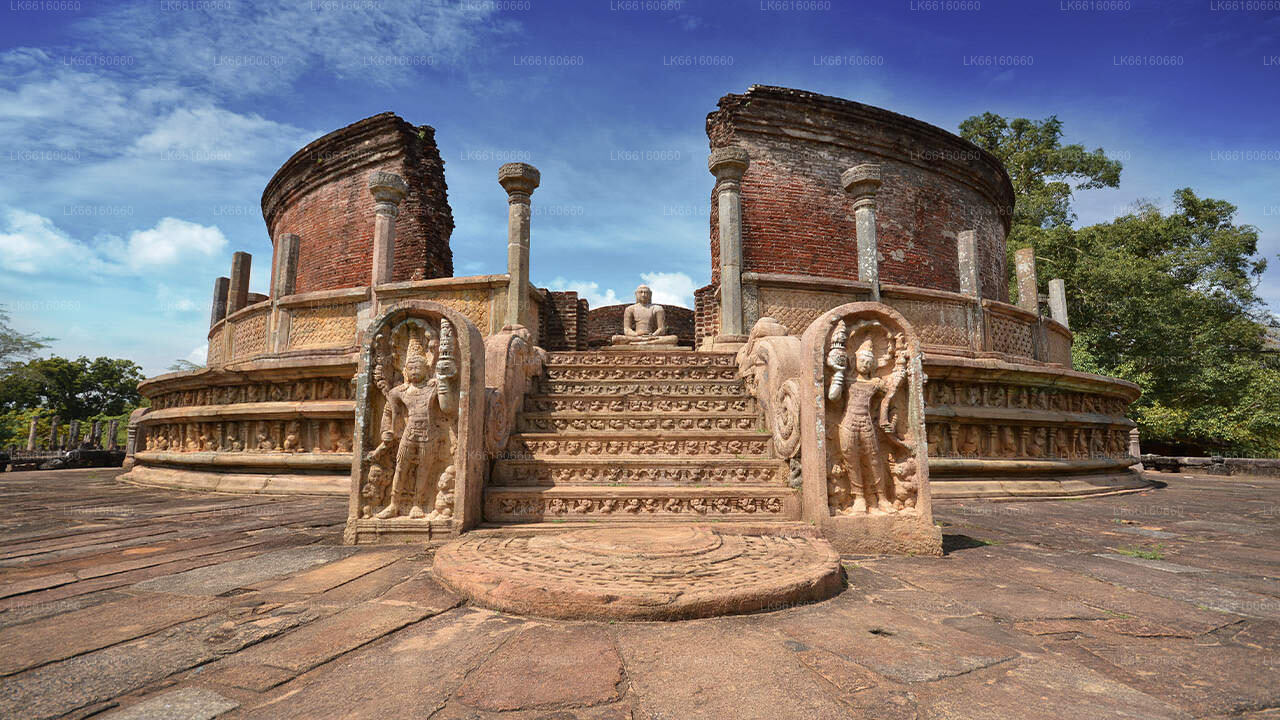
Polonnaruwa, a UNESCO World Heritage Site in Sri Lanka, was the country's medieval capital (11th-13th century). Renowned for its well-preserved ruins, including the iconic Gal Vihara statues, it showcases impressive architecture, reflecting the grandeur of the ancient Sinhalese civilization.
Estupa Kiri Vehera
La Stupa de Kiri Vehera es un antiguo monumento budista ubicado en la ciudad histórica de Polonnaruwa, Sri Lanka. Esta sagrada estupa fue construida durante el reinado del rey Parakramabahu I en el siglo XII, y es uno de los sitios religiosos más importantes y mejor conservados de la región. El nombre "Kiri Vehera" se traduce como "Estupa de la leche", lo que refleja su apariencia blanca y su importancia en la herencia budista de Sri Lanka.
La estupa es conocida por su gran estructura en forma de cúpula, rodeada por hermosas columnas de piedra talladas y ruinas antiguas. Se cree que alberga reliquias de Buda, lo que la convierte en un importante sitio de peregrinaje para los budistas. El entorno circundante, con su vegetación exuberante y su atmósfera tranquila, añade al significado espiritual del lugar, ofreciendo a los visitantes un lugar de paz y reflexión.
Los visitantes de la Stupa de Kiri Vehera pueden explorar los restos arqueológicos del sitio, incluidas inscripciones en piedra, pequeños santuarios y complejos monásticos antiguos. El entorno sereno de la estupa, en el triángulo cultural de Sri Lanka, la convierte en un destino popular para turistas y peregrinos por igual, ofreciendo una visión de la rica historia budista de la isla.
El mejor momento para visitar la Stupa de Kiri Vehera es durante la temporada seca, de diciembre a abril, cuando el clima es ideal para hacer turismo y explorar las ruinas de Polonnaruwa. El sitio es fácilmente accesible desde la ciudad, lo que brinda una experiencia significativa para aquellos interesados en la arquitectura budista antigua y la historia de Sri Lanka.
About Polonnaruwa District
Polonnaruwa is the 2nd largest city in north central province in Sri Lanka. The ancient city of Polonnaruwa has been declared a World Heritage site by UNESCO Polonnaruwa has a great history of conquest and struggle behind it and rightfully forms the third element in the Cultural Triangle. Located about 140 kms north east from Kandy,Polonnaruwa offers hours of endless pleasure for history and culture lovers, as there are numerous sights of significance.
Much of the physical ruins standing today are credited to King Parakrama Bahu I who spent many royal resources on town planning, including parks, edifices, irrigation systems and so on. The period of his rule is considered a golden age where the kingdom thrived and prospered under a visionary ruler. The Parakrama Samudra is a mammoth tank and named after its patron. The popular kings Royal Palace, the Audience Hall encircled by beautifully carved stone elephants and the Bathing Pool reflect the superior engineering capabilities of the time.
About North Central Province
North Central Province which is the largest province in the country covered 16% of total country's land area. North Central Province consist two districts called Polonnaruwa and Anuradhapure. Anuradhapura is the largest district in Sri Lanka. Its area is 7,128 km².
North Central Province has numerous potentials for Investors to start their Businesses, especially Agriculture, agro based industries and Livestock sectors. More than 65% of North Central Province's people depend on basic Agriculture and agro base industries. NCP also called "Wew Bendi Rajje" because there are more than 3,000 medium and large scale tanks situated in the province. Sri maha bodiya, Ruwanweli seya, Thuparama dageba, Abayagiri Monastry, Polonnaruwa Rankot wehera, Lankathilake are scared