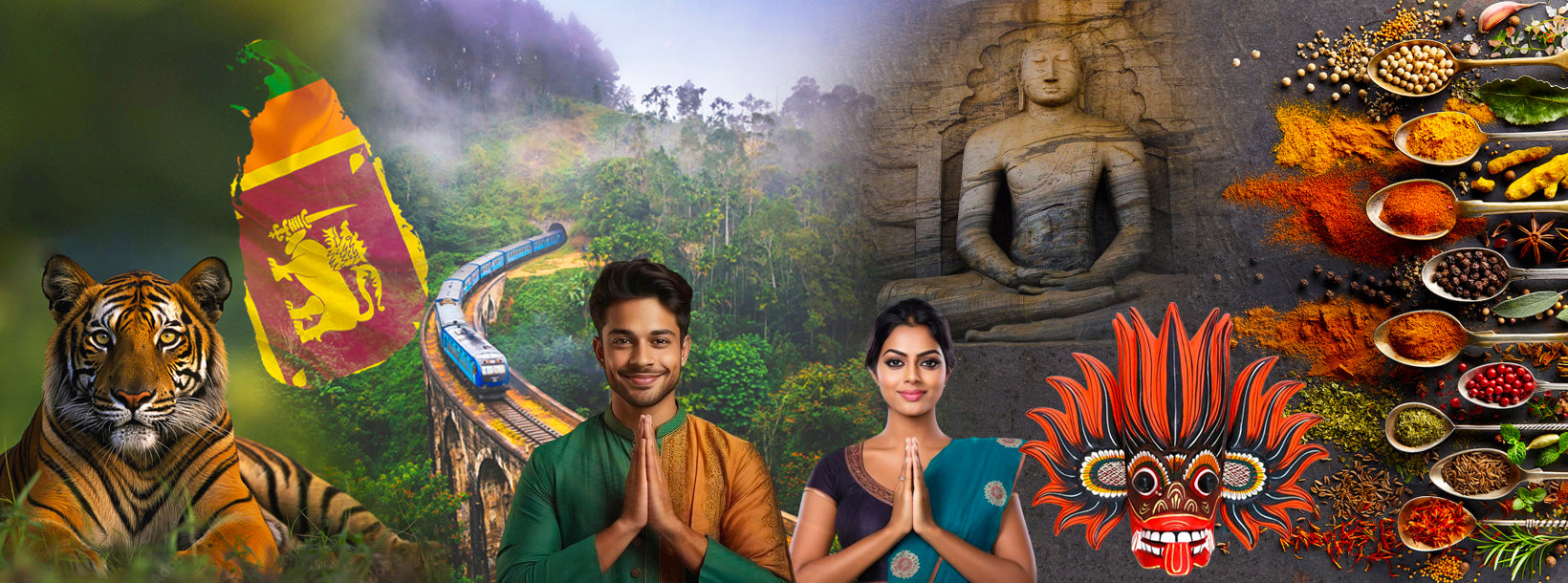
Sri Lanka punches far above its weight in global biodiversity. Despite covering just 65,610 sq km — roughly the size of Ireland — the island supports an extraordinary variety of habitats, from cloud-draped montane forests and lowland rainforests to coastal mangroves and semi-arid scrubland. The result is one of the highest rates of biological endemism in Asia: around 16% of fauna species and 23% of flowering plants are found nowhere else on Earth.
What makes Sri Lanka's conservation story particularly compelling is its antiquity. A region in north-central Sri Lanka — near what is now Polonnaruwa — was declared a wildlife sanctuary by royal decree in the 3rd century BC, making it arguably the world's oldest recorded wildlife preserve. Today, more than 8% of the island's land area is formally protected, encompassing 22 national parks and around 1.86 million hectares of gazetted forest.
What mammals live in Sri Lanka?
Sri Lanka is home to around 123 mammal species, of which 16 are endemic and 41 are classified as threatened. The Sri Lankan elephant is perhaps the island's most iconic animal — a sub-species of the Indian elephant that is generally larger-bodied and noted for the high proportion of tuskless males among the population. The Udawalawe National Park hosts one of the most reliable elephant-watching experiences in Asia, with herds frequently seen in the open grasslands around the reservoir.
Beyond elephants, Sri Lanka supports leopards (in notably high densities in Wilpattu National Park), sloth bears, sambar deer, spotted deer, and the water buffalo. The island's bat fauna is particularly diverse, with 30 recorded species across all major mammalian orders. Sri Lanka's surrounding waters are equally productive — 28 cetacean species have been documented, including blue whales, sperm whales, and spinner dolphins, most reliably observed off the southern coast near Mirissa between November and April.
Which bird species are endemic to Sri Lanka?
Sri Lanka's checklist runs to around 227 bird species, of which 33 are endemic. Birders target species such as the Sri Lanka junglefowl (the national bird), the Sri Lanka blue magpie, the Sri Lanka hanging parrot, and the Layard's parakeet. Wetland and coastal areas attract significant migratory traffic between October and March, with the island serving as a critical stop on the Central Asian Flyway.
The Sinharaja Forest Reserve — a UNESCO World Heritage Site — is widely regarded as the finest birdwatching destination on the island. Mixed-species feeding flocks led by racket-tailed drongos are a signature phenomenon here, drawing along dozens of other species in a single, extraordinary wave.
How diverse are Sri Lanka's reptiles and amphibians?
Sri Lanka's herpetofauna statistics are remarkable. The island currently records around 185 reptile species, of which 115 are endemic — one of the highest reptile endemism rates in the world. Most are snakes and lizards, but the island also supports two crocodilian species: the mugger (marsh) crocodile, found in freshwater habitats, and the saltwater crocodile, which inhabits brackish coastal lagoons and estuaries. Crocodile watching excursions in mangrove waterways offer close-up encounters with both species.
Amphibian diversity is even more striking. Sri Lanka records around 122 amphibian species, with approximately 112 of them endemic — a proportion that places the island among the global hotspots for frog endemism. Many of these species have been described only in recent decades, and scientific surveys continue to add to the list.
What freshwater and marine fish can be found in Sri Lanka?
Sri Lanka's rivers and reservoirs contain around 93 freshwater fish species, of which roughly 50 are endemic. The country's ancient hydraulic civilisation created thousands of man-made tanks (reservoirs) that now double as freshwater habitats supporting endemic fish, waterbirds, and other wildlife. An additional eight species tolerate brackish conditions and move between coastal lagoons and freshwater systems. The Madu Ganga estuary is one of the best places to observe the intersection of freshwater, brackish, and marine fauna in a single protected wetland.
Offshore, Sri Lanka's waters are productive enough to support deep sea fishing for yellowfin tuna, dorado, and wahoo, particularly on the island's southern and western coasts.
What are Sri Lanka's main plant communities and forest types?
Sri Lanka's flora counts around 3,210 flowering plant species in 1,052 genera. Some 916 species and 18 genera are endemic. The island's natural forests are classified into eight broad types — from tropical lowland rainforest and intermediate zone forests to montane cloud forests, riverine forests, mangroves, and the dry-zone thorny scrub of the north and east.
- Tropical wet evergreen forest — the most species-rich type, concentrated in the south-west lowlands and the Sinharaja basin.
- Sub-montane and montane forests — found above roughly 1,000 m in the central highlands, including the Horton Plains National Park.
- Cloud forest — a rare and ecologically distinct formation at higher elevations, characterised by persistent mist and epiphyte-draped trees.
- Dry-zone forests — dominated by deciduous species and thorny scrub, covering much of the north, north-west, and east.
- Mangroves — fringing coastal lagoons and estuaries, providing critical nursery habitat for fish and nesting birds.
Dipterocarp trees — the towering emergents that define many South and South-East Asian rainforests — are particularly notable here: Sri Lanka has more than 55 dipterocarp species, almost all of which are endemic to the island.
What plants are economically and culturally important in Sri Lanka?
Sri Lanka's agricultural landscape is as much a part of its botanical identity as its wild forests. The cool, mist-catching hills of the central highlands — around Nuwara Eliya, Ella, and the Uva basin — provide ideal conditions for Ceylon tea, one of the island's most celebrated exports. Tea is produced from Camellia sinensis, and the terraced estates that cover these hillsides form a distinctive cultural landscape in their own right.
The same upland zone produces cool-climate vegetables — cabbages, carrots, leeks, tomatoes, and peppers — that supply much of the island. The coastal lowlands, by contrast, are the domain of the coconut palm, which lines roads, fills home gardens, and underpins a vast range of Sri Lankan food and craft traditions. Ceylon black pepper — one of Sri Lanka's oldest spice exports — grows in the wetter low-country and is often cultivated on home plots alongside cinnamon, cloves, and cardamom.
Rice paddy, known locally as kumbura, remains central to Sri Lankan rural life and is cultivated across both wet and dry zones, often in elaborate ancient irrigation landscapes. Spice gardens in the Kandy and Matale districts offer visitors a guided introduction to the island's living pharmacopoeia of Ayurvedic and culinary plants.
Why is the wet zone so much richer in biodiversity than the dry zone?
Sri Lanka's south-west quarter — the wet zone — receives between 2,500 mm and 5,000 mm of rainfall annually, fuelled by the south-west monsoon from May to September. This sustained moisture drives dense, layered forest growth and supports the highest concentrations of endemic species. The dry zone, covering the north, east, and south-east, receives far less rain — often under 1,500 mm per year — and supports a different but equally important set of ecosystems, including the tank-cascade landscapes that sustain large mammal populations in parks such as Wilpattu and Minneriya.
The Makandawa Rainforest near Kithulgala is an accessible wet-zone forest where canopy walks and guided hikes bring visitors into direct contact with endemic birds, reptiles, and tree species without requiring a long journey into the interior.
How can I see Sri Lanka's wildlife responsibly?
The Department of Wildlife Conservation manages Sri Lanka's national parks and sets entry rules that have evolved to reduce vehicle crowding and off-road driving. Choosing smaller-group safaris with experienced naturalist guides significantly increases sighting quality and reduces disturbance to animals. The Elephant Transit Home in Udawalawe district is run by the Department of Wildlife Conservation and rehabilitates orphaned wild elephants for eventual release — a visit here supports that programme directly.
Marine turtle conservation is another area where responsible tourism makes a measurable difference. Nesting beaches along the south-west coast are protected by community-run hatcheries, and visits during hatching season can be arranged through reputable operators who follow no-flash, no-handling protocols.
