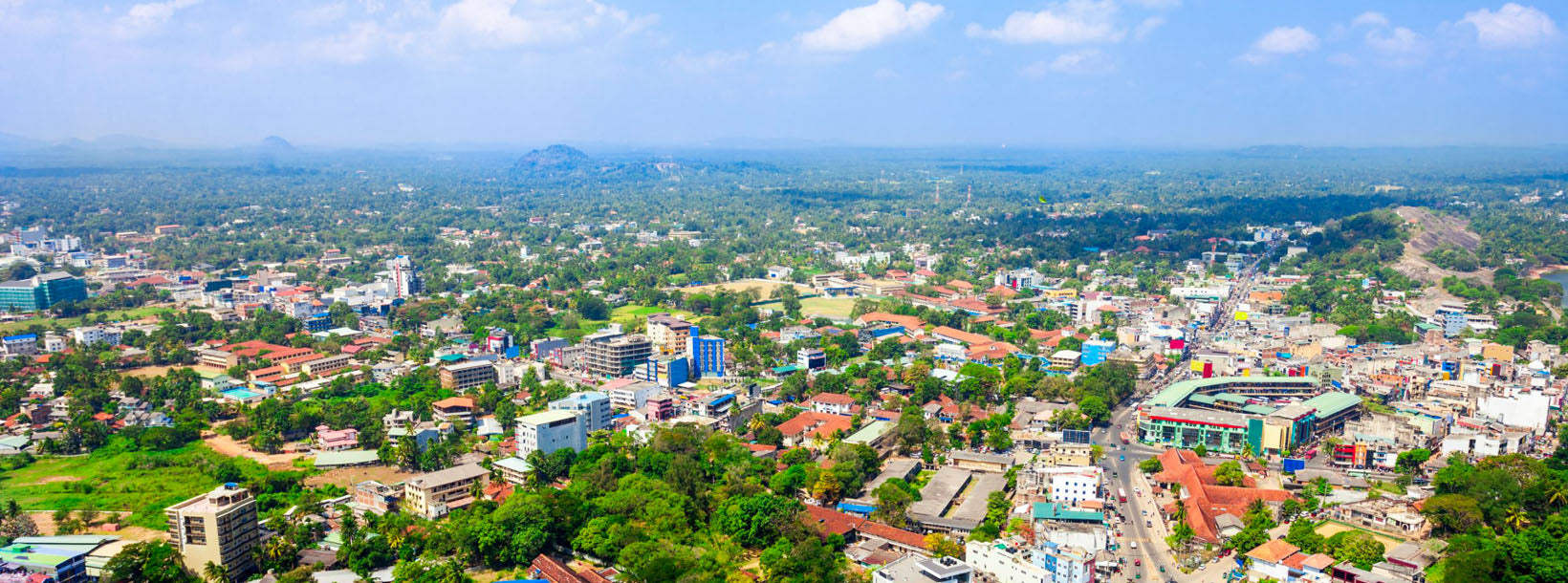
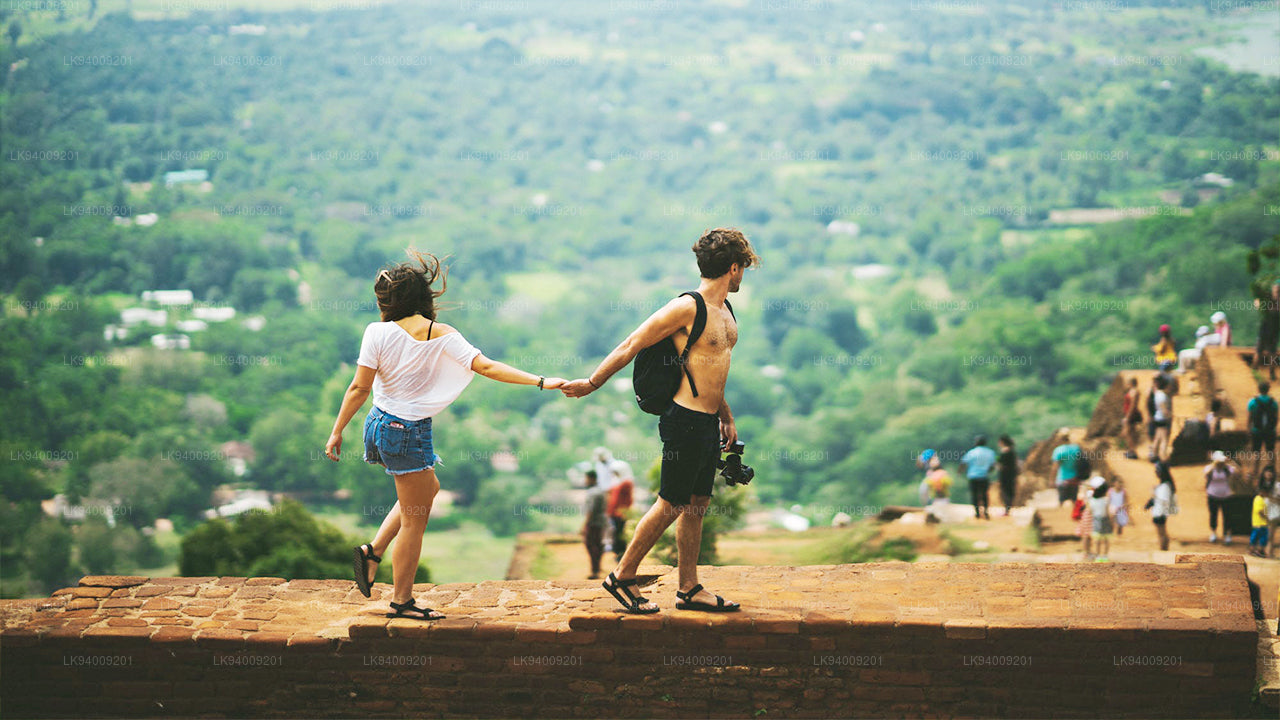
Kurunegala sits roughly 93 km northeast of Colombo in Sri Lanka's North Western Province, where a cluster of dramatic granite outcrops rises above an otherwise flat agricultural plain. Today it functions as a busy commercial and transport hub, but its surroundings hold a remarkable concentration of medieval archaeology, working temples, and quiet rural scenery that rewards travellers who linger beyond the town itself.
What is Kurunegala known for?
The city is most immediately recognisable for its rock outcrops. The two largest — Kuruviniyagala (Tortoise Rock) and Etagala (Elephant Rock) — rise to the east of the town centre. Atop Etagala stands a large modern Buddha statue and the Etagala Vihara temple, which can be seen from much of the city and draws local pilgrims throughout the year.
Historically, Kurunegala served as the seat of Sinhalese royal power for roughly half a century. King Buvanekabahu II ruled from here between 1293 and 1302, followed by Parakramabahu IV until 1326. That royal chapter was brief, and little remains within the town limits today, but it seeded a district now scattered with significant archaeological sites.
Economically, the broader Kurunegala district is one of Sri Lanka's most productive coconut-growing regions — the landscape between towns is often a continuous canopy of coconut palms, and the crop underpins much of the local economy.
What can I see and do in Kurunegala?
Within the town, the Kurunegala Reservoir to the north provides a pleasant setting for an early-morning walk. The reservoir also irrigates the district's agricultural land and gives the town a softer edge that contrasts with the rocky skyline.
The more compelling attractions lie within a 25 km radius and make straightforward half-day or full-day excursions:
- Yapahuwa Rock Fortress — A 13th-century fortified palace complex built on a 100-metre granite outcrop. The ornate carved stairway leading to the upper terrace is among the finest examples of medieval Sinhalese decorative stonework.
- Panduwas Nuwara — A pre-medieval royal city enclosed by earthen ramparts, canals, and a moat. Largely unrestored, it gives a genuine sense of archaeological discovery.
- Padeniya Raja Mahavihara — A living Buddhist temple complex known for its elaborately painted interior and carved wooden columns. Visitors are welcome outside of puja times.
- Arankele Ancient Monastery — A forest hermitage dating to the 6th century, where stone pathways connect meditation platforms and ruined stupa bases in a quiet jungle setting.
- Ridi Viharaya — A cave temple complex near Ridigama, traditionally said to have been founded after silver ore was discovered on the site. The inner cave houses a large reclining Buddha and walls studded with Dutch-era tiles — an unusual cultural layering.
How do I get to Kurunegala from Colombo?
By road, Kurunegala is typically around two to two-and-a-half hours from Colombo under normal traffic conditions on the A1/A6 highway. By train, the Colombo–Vauniya rail line calls at Kurunegala station, which sits about a kilometre southeast of the main bus station. Intercity express services from Colombo Fort reduce journey time and offer a more comfortable alternative to the bus.
Kurunegala also functions as a natural stopover on routes between Colombo and the Cultural Triangle cities of Dambulla and Sigiriya, or between the coast and Kandy. Travelling by private vehicle is the most practical option if you plan to explore the outlying archaeological sites.
When is the best time to visit Kurunegala?
Kurunegala's climate is shaped by both monsoons. The heaviest rainfall tends to arrive between October and January with the northeast monsoon. The drier months from February through to early April and again from June to September are generally more comfortable for outdoor exploration. Even in wetter periods, rain is usually confined to afternoon showers, leaving mornings clear for visiting sites.
The surrounding district is lush year-round, and the reservoir and rock outcrops look particularly atmospheric just after rain, when the rock faces darken and the vegetation deepens in colour.
What archaeological sites are near Kurunegala?
The Kurunegala district is arguably one of the most archaeology-dense areas in Sri Lanka relative to its tourist footfall. Most sites see far fewer visitors than equivalent monuments near Sigiriya or Polonnaruwa, which means quieter access and a more contemplative experience. The sites are spread across rural roads, so hiring a driver for the day is strongly recommended over relying on public transport connections.
Key sites at a glance:
| Site | Approx. distance from Kurunegala | Period |
|---|---|---|
| Yapahuwa Rock Fortress | ~50 km northwest | 13th century |
| Panduwas Nuwara | ~20 km south | Pre-medieval |
| Padeniya Raja Mahavihara | ~15 km northeast | Medieval |
| Arankele Monastery | ~25 km northeast | 6th century |
| Ridi Viharaya | ~20 km south | Ancient, with later additions |
Where should I stay in Kurunegala?
Accommodation options range from small guesthouses in the town centre to rural eco-properties and estate stays in the surrounding countryside. The district's coconut and agricultural estates have increasingly opened to guests, offering a quieter and more immersive experience than a standard hotel room. Properties outside town are generally better positioned for early-morning site visits before the day heats up.
Is Kurunegala worth visiting on a Sri Lanka itinerary?
For travellers focused solely on the headline attractions, Kurunegala is most often a transit point rather than a destination. But travellers with an interest in lesser-visited archaeology, rural Sri Lanka, or the medieval Sinhalese kingdoms will find the district genuinely rewarding. It pairs naturally with a night in the area before continuing to Wilpattu National Park to the northwest or looping back through the Cultural Triangle. The relative absence of tour buses at the main sites is, in itself, a reason to include a stop here.